BIOL 351 Lab Exam 1
 Call Kai
 Learn
Learn Practice Test
 Spaced Repetition
 Match
Match Flashcards
 Knowt Play
1/127

There's no tags or description
Looks like no tags are added yet.
Name | Mastery | Learn | Test | Matching | Spaced | Call with Kai | Chat |
|---|
No analytics yet
Send a link to your students to track their progress
128 Terms
what does it mean that microorganisms are “ubiquitous in nature?”
found everywhere that other lifeforms exist
*doesnt apply to every species, but applies to microorganisms as a whole
Most organisms are _____ and ______
free-living and nonpathogenic
saprophytes
important role in decomposition
pathogens
cause damage to host
mutualism
both host and microbe benefit
commensals
microbe benefits but no effect on host
opportunistic pathogens
inhabit our bodies and are capable of producing a disease state if introduced into a suitable part of the body
reservoir
any area where a microbe with the potential to cause infection resides
purpose of blood agar
to differentiate bacteria based on their hemolytic characteristics
blood agar composition
includes 5% sheep blood in a tryptic soy agar (TSA) base
theory of blood agar
several species of gram-positive cocci produce exotoxins called hemolysins, which are able to destroy RBCs and Hb
beta hemolysis
complete destruction; results in clearing/yellowing of the medium
alpha hemolysis
partial destruction; results in greenish discoloration of the medium
gamma hemolysis
no hemolysis

identify the letters
A — beta hemolysis
B — alpha hemolysis
C — gamma hemolysis
germicide
refers to substances or systems, both chemical and physical, that prevent the spread of pathogens; most are broad-spectrum
3 categories of germicides
decontamination
disinfection
sterilization
decontamination
lowest level of control; reduction of pathogenic microorganisms to a level at which items are safe to handle without protective attire
disinfection
kill most, if not all, of the targeted pathogens but typically do not kill large numbers of spores
chemical sterilant
high-level disinfectants that have the ability to reduce or eliminate pathogens on or in living tissue
antiseptics
disinfectants designed to reduce or eliminate pathogens on or in living tissue
sterilization
highest level of control; complete elimination of viable organisms including spores
steam sterilization
most effective and most common method of sterilization
autoclave
device most commonly used for steam sterilization; use superheated steam under pressure to kill heat-resistant organisms
range for sterilizing temperature?
121-127 ºC
how long must something reach optimum temperature in the autoclave?
at least 15 mins (time varies according to the size and consistency of the material)
biological indicators
the only way, with certainty, to determine that sterilization has been achieved
*purple = success
aseptic transfer
transfer of living microbes from one place to another without contamination of the culture, the sterile medium, or the surroundings
culture
a medium that contains living microbes
pure culture
contains a single species
mixed culture
contains multiple species
*all cultures are assumed to be mixed prior to obtaining isolation
broths
used to grow microbes when fresh cultures or large number of cells are required
agar slants
generally used to grow stock cultures that can be refrigerated after incubation and maintained for several weeks
plated media
typically used for obtaining isolation of species, differential testing, and quantifying bacterial densities
3 methods of isolation
streak plate
pour plate
spread plate
who developed the concept of a pure culture?
Louis Pasteur
who developed a procedure for “streaking for isolation"?”
Robert Koch
whats the primary purpose for streaking for isolation?
obtaining isolated colonies
how is a pure culture obtained?
a single colony composed of identical cells is used to inoculate another culture
quadrant streak
used with samples suspected of high cell density

properly streaked

not sterilizing loops between quadrants

improperly streaked quadrants

not rotating plate properly

either loop was not cooled or loop did not pass through previous quadrant
growth characteristics are influenced by:
nutrient availability
temperature
incubation time
shape
round
irregular
punctiform
punctiform
tiny pinpoint dots
margin
entire
undulate
lobate
filamentous
rhizoid
entire
smooth with no irregularities
undulate
wavy
lobate
lobed
filamentous
unbranched strands
rhizoid
branched like roots
elevation
flat
raised
convex
pulvinate
umbonate
texture
moist
mucoid
butyrous
dry
shiny
dull
other properties of colony morphology
color and optical properties
agar slants
primarily used for cultivation, maintenance, and storage of stock cultures
filiform
dense and opaque with a smooth edge
friable
crusty
spreading edge
produced by motile organisms
pellicle
growth floats on top of medium
sediment
growth sinks to the bottom
flocculent
clumped growth
uniform fine turbidity
cloudy
spread plate technique
method of isolation in which a diluted microbial sample is deposited on an agar plate and spread uniformly across the surface
cell density formula
CFU/mL = # colonies / (volume plated (mL) x dilution)
1st dilution formula
1st dilution = volume transferred / total volume of tube
subsequent dilutions formula
nth dilution = concentration from the previous tube x (volume transferred (mL) / total volume)
bright field microscopy
produces an image made from light transmitted through a specimen
total magnification formula
total magnification = magnification of ocular lens x magnification of objective lens
dark field microscopy
light travels in a path past the objective unless scattered into it
phase contrast microscopy
make phase shifts visible as differences in brightness
fluorescence microscopy
high energy light outside the visible spectrum strikes the sample, molecules absorb that light and emit lower energy, visible light back to the viewer

cocci/coccus
spheres

bacilli/bacillus
rods

spirilla/spirillum
spirals

vibrios
slightly curved rods

coccobacilli
ovoid shape between cocci and bacilli
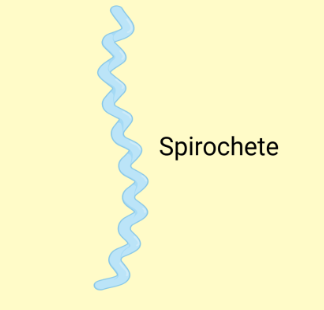
spirochetes
flexible spirals
pleomorphism
a single species that exhibits a variety of cell shapes within a given sample (ex: C. xerosis)

diplococci

sarcina

tetrad

staphylococci

streptococci

diplobacilli

palisades

streptobacilli
Diplococci
one plane of division
Streptococci
one plane of division, but cells do not separate and instead form a long chain
tetrad
two planes of division, one perpendicular to the other
Sarcina
three planes of division results in cube
Staphylococci
irregular division leads to a cluster of cells
diplo
diplococcus
strepto
streptococcus, enterococcus
tetrads
micrococcus
palisade and angular
corynebacterium
bacterial strains
solutions consisting of solvent (water/ethanol) and chromogen
chromophore
gives it color