heat transfer in buildings
 Call Kai
 Learn
 Practice Test
 Spaced Repetition
 Match
 Flashcards
 Knowt Play
1/15

There's no tags or description
Looks like no tags are added yet.
16 Terms
how is the building energy balance calculated?
QE = QL - (QS + QI+ QC)
Heat supplied by system = total heat loss (fabric & ventilation) - total heat gain (solar + internal + stored)
what might supply internal heat gains?
occupants, heat generating equipment
how does heat transfer?
from warmer to colder areas
at a greater rate of transfer when there is a greater temperature difference
what are the 3 methods of heat transfer?
conduction
convection- through fluid particles in a convection current
radiation - through EM waves
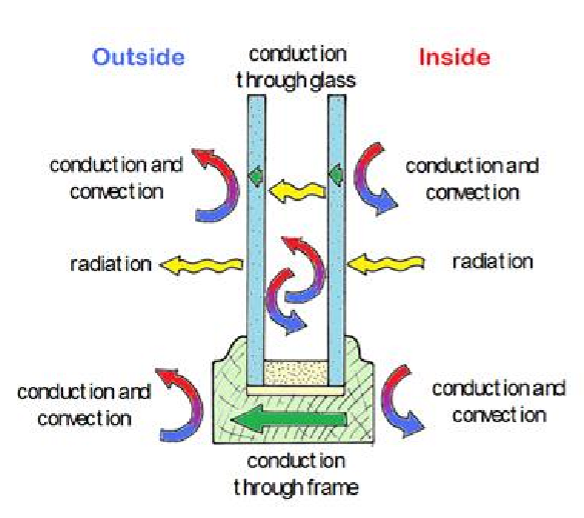
where and how might heat transfer occur in double glazed windows?
what element of a building is responsible for the greatest amount of heat loss?
the walls - approx 35%
define U-Value
the rate of transfer of heat through a structure, divided by the difference in temperature across that structure
the better insulated a structure is, the lower it’s U-Value will be
define R Value
a measure of opposition to heat transfer - thermal resistance
the higher an R value, the more insulating a material is
what’s the relationship between a U Value and R Value?
U = 1/R
what’s the relationship between R Value and Conductivity
R = thickness of material / thermal conductivity
R = d/λ
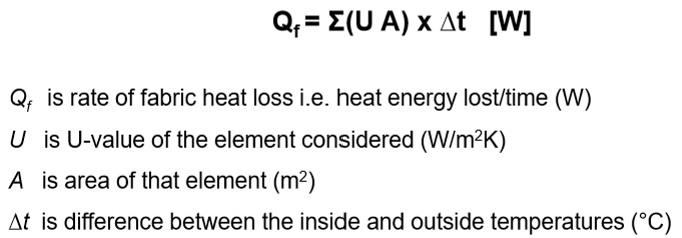
how do you calculate fabric heat loss (from each element)?
what assumption are you making?
assumption: steady state conditions
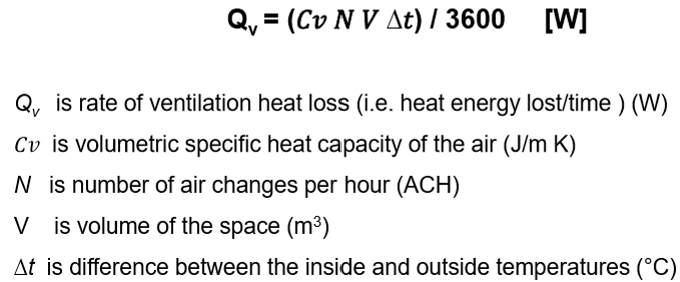
what does N - the number of air changes per hour actually mean?
the number of times in an hour that the original volume of air in a room has been entirely removed and completely replaced
how do you calculate ventilation heat loss?
how does thermal bridging occur?
when material that are poor thermal insulators (low R Values) come into contact
allows heat to flow through points of least thermal resistance
define thermal mass
the ability of a material to store heat
why are materials with high thermal mass useful in buildings?
reduce temperature fluctuations throughout the day
reduce heating and cooling demands of the building itself
concrete, bricks and tiles absorb and store heat