chapter 7: principles of design

0.0(0)
Studied by 0 people
call kaiCall Kai
learnLearn
examPractice Test
spaced repetitionSpaced Repetition
heart puzzleMatch
flashcardsFlashcards
GameKnowt Play
Card Sorting

1/11

encourage image

There's no tags or description

Looks like no tags are added yet.

12 Terms

1
New cards

symmetrical balance

-same on each side

<p><strong>-same on each side</strong></p>
2
New cards

asymmetrical balance

-different but still has unity

<p><strong>-different but still has unity</strong></p>
3
New cards

radial balance

-visual elements spread outwards from a central point
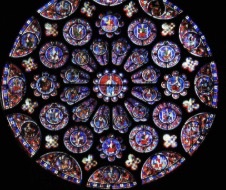
<p><strong>-visual elements spread outwards from a central point</strong></p>
4
New cards

focal point

-area with main center of attention

<p><strong>-area with main center of attention</strong></p>
5
New cards

afocal

-no focal point

<p><strong>-no focal point</strong></p>
6
New cards

multiple focal points

⬅

<p><span data-name="arrow_left" data-type="emoji">⬅</span></p>
7
New cards

scale

-relative size of an object compared to standard norm

<p><strong>-relative size of an object compared to standard norm</strong></p>
8
New cards

proportion

-size & relationship between different parts

<p><strong>-size &amp; relationship between different parts</strong></p>
9
New cards

pattern

-repeating the same shape

<p><strong>-repeating the same shape</strong></p>
10
New cards

repetition

-reacurence of visual elements

<p><strong>-reacurence of visual elements</strong></p>
11
New cards

unity & variety relationship

unity → harmony & order

variety → different contrasting elements

<p><strong>unity → harmony &amp; order</strong></p><p><strong>variety → different contrasting elements </strong></p>
12
New cards

why have postmodernists tended to emphasize variety over unity?

-they believe that universal, all-encompassing frameworks inevitably suppress individual differences, unique local cultures, & marginalized voices



