a&p muscular review
0.0(0)
Studied by 1 person Call Kai
 Learn
 Practice Test
 Spaced Repetition
 Match
 Flashcards
 Knowt Play
Card Sorting
1/83

Earn XP
Description and Tags
84 Terms
1
New cards
Be able to list muscle from deep to superficial
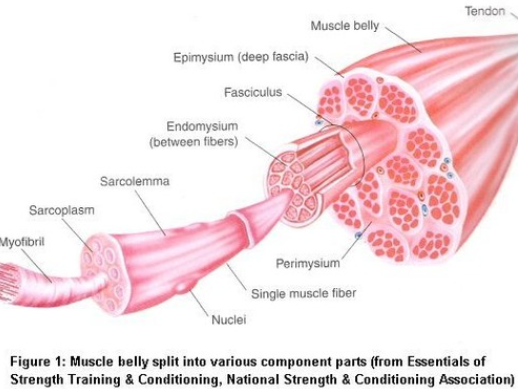
Endomysium
Perimysium
Epimysium
Perimysium
Epimysium
2
New cards
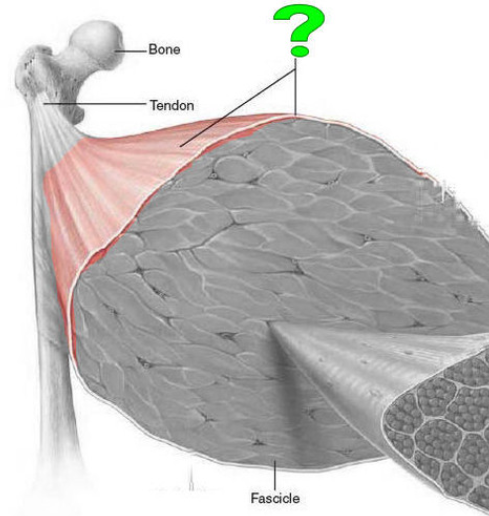
Epimysium
surrounds whole muscle; lies beneath fascia
3
New cards
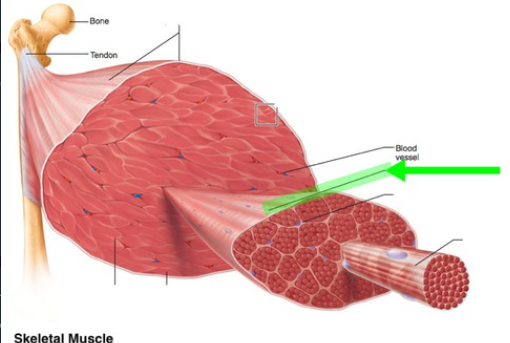
Perimysium
surrounds fascicles within a muscle.
4
New cards
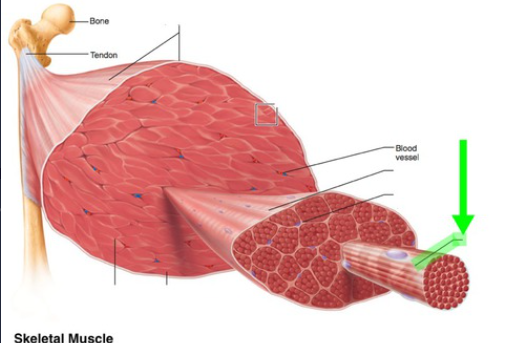
Endomysium
surrounds muscle fibers (cells) within a fascicle
5
New cards
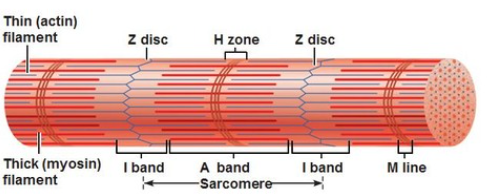
Where do you find myosin and actin?
in a sarcomere which is inside a myofibril
6
New cards
Define muscle fiber
Muscle fibers consist of a single muscle cell. They help to control the physical forces within the body. When grouped together, they can facilitate organized movement of your limbs and tissues. There are several types of muscle fiber, each with different characteristics.
7
New cards
Skeletal muscle fiber (cell)
Multinucleated
Sarcolemma
Sarcoplasm
Many myofibrils
Sarcolemma
Sarcoplasm
Many myofibrils
8
New cards
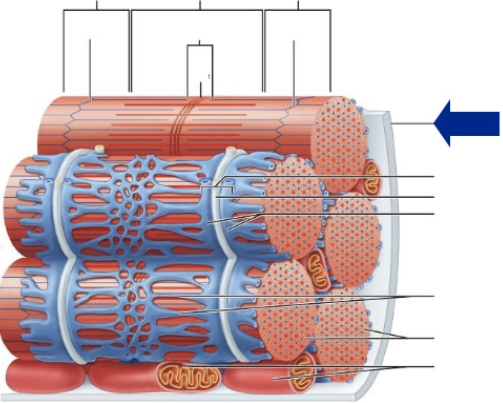
Sarcolemma
Cell membrane of muscle fiber
9
New cards
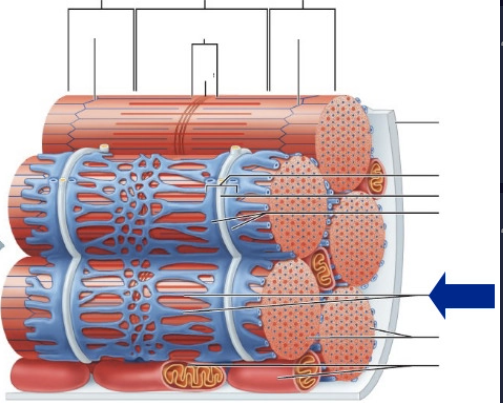
Sarcoplasm
Cytoplasm of muscle fiber
10
New cards
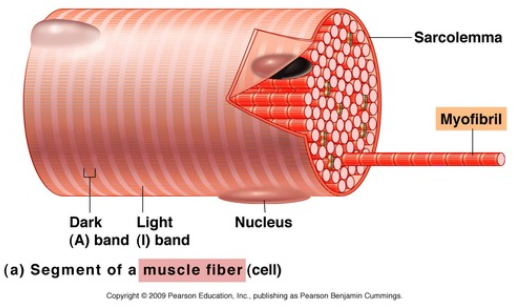
myofibrils
Long, parallel structures that run down fiber
Consist of thin actin filaments and thick myosin filaments
Sarcomeres
Consist of thin actin filaments and thick myosin filaments
Sarcomeres
11
New cards
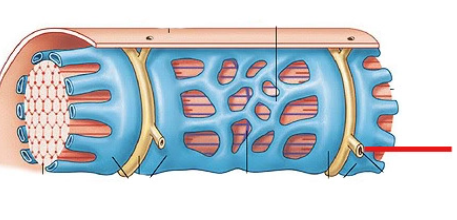
Define transverse tubules
Transverse ("T") tubule: Relays electrical impulses to the SR
12
New cards
Tendon
Cord-like mass of connective tissue that connects muscle to a bone
13
New cards
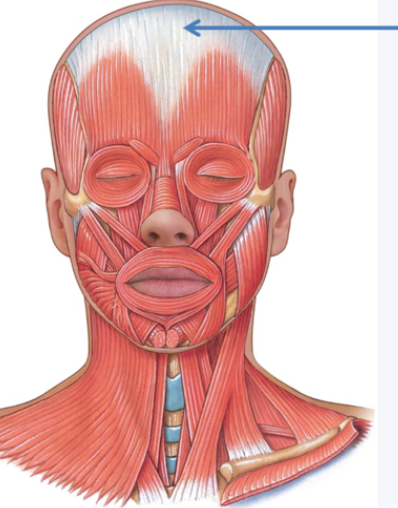
Aponeurosis
Sheet-like mass of connective tissue that connects a muscle to bone, skin, or another muscle
14
New cards
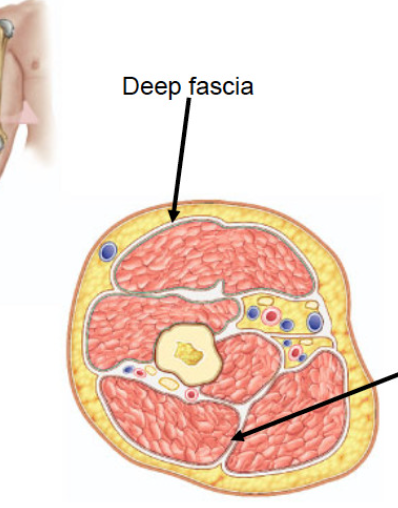
Fascia
Thin covering of connective tissue around a muscle
15
New cards
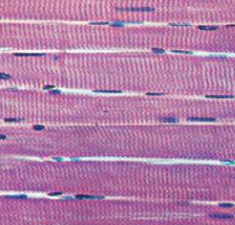
Skeletal muscle
Attached to bones of skeleton
Voluntary (consciously controlled)
Voluntary (consciously controlled)
16
New cards
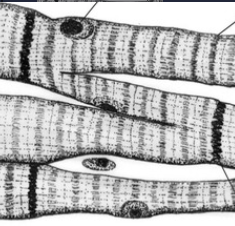
Cardiac muscle
Makes up most of the wall of the heart
Involuntary (non-consciously controlled)
Responsible for pumping action of the heart
Involuntary (non-consciously controlled)
Responsible for pumping action of the heart
17
New cards
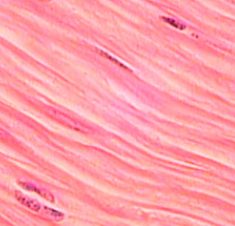
Smooth muscle
Found in walls of internal organs, such as those of digestive tract
Involuntary (non-consciously controlled)
Involuntary (non-consciously controlled)
18
New cards
Be able to place muscle structures in order from largest to smallest and vice versa.
muscle
fascicle
muscle fiber
myofibril
sarcomere
myofilament
fascicle
muscle fiber
myofibril
sarcomere
myofilament
19
New cards
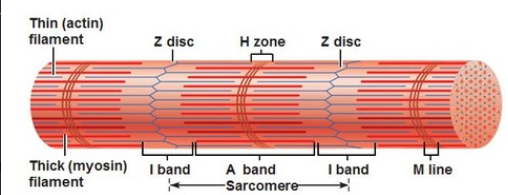
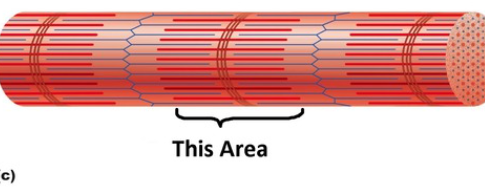
sarcomere
Units that connect end-to-end, to make up myofibrils
20
New cards
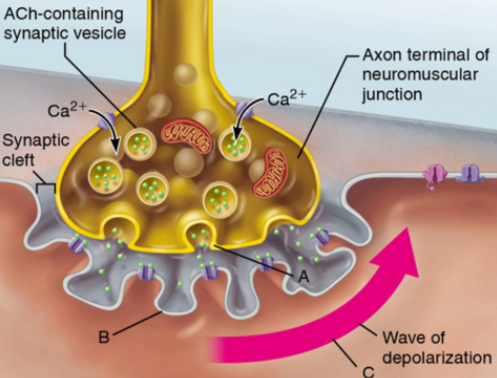
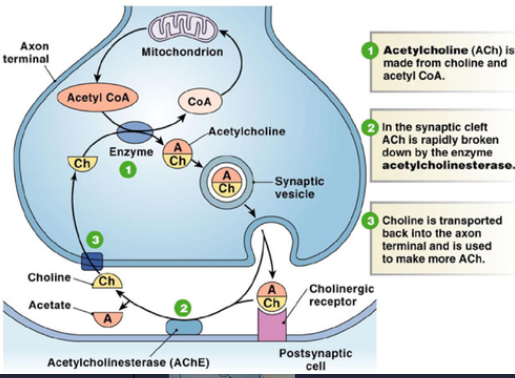
acetylcholinesterase
neurotransmitter rapidly decomposes ACh remaining in the synapse.
21
New cards
steps for acetylcholinesterase
* Action potential arrives at the terminal end of a motor neuron
* That action potential or electrical signal opens a channel. A voltage-gated channel.
* Calcium rushes into the end of the motor neuron.
* Calcium stimulates the release of ACh from synaptic vesicles via exocytosis
* ACh diffuses across the synaptic cleft and binds to receptors located on the sarcolemma
* Binding of AcH to those receptors opens ion channels. There is a simultaneous passage of Na into the muscle fiber and K out of the muscle fiber. More Na (sodium) ions enter than K (potassium) exiting.
* A change occurs in the membrane potential called the end plate potential.
22
New cards
function of creatine phosphate?
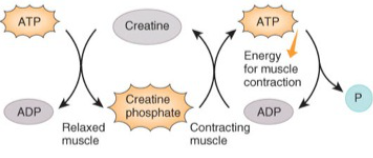
-Initial source of energy to regenerate ATP from ADP and P Stores energy in phosphate bond, like ATP
-ATP + creatine phosphate can only fuel ~10 seconds of intense muscle contraction
-ATP + creatine phosphate can only fuel ~10 seconds of intense muscle contraction
23
New cards
Define oxygen debt and why does it develop?
During rest or moderate exercise, respiratory and cardiovascular systems supply enough O2 to support aerobic respiration. It happens when the body can no longer distribute oxygen to muscle cells to aid the processes that make them function, resulting in muscular fatigue.
24
New cards
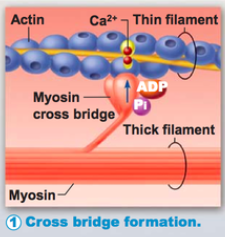
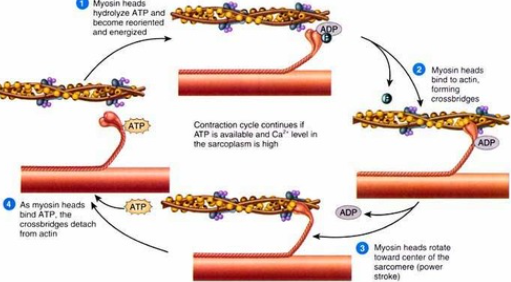
crossbridge
Thick and thin filaments create a
25
New cards
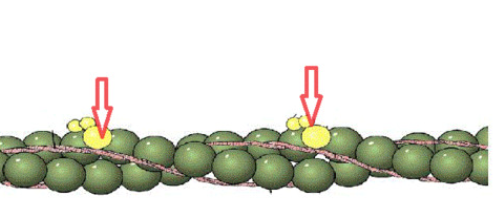
troponin
regulatory proteins bound to actin
26
New cards
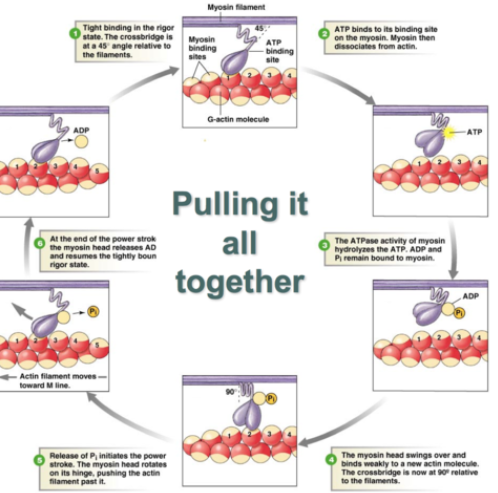
ATP and myosin
ATP then binds to myosin, moving the myosin to its high-energy state, releasing the myosin head from the actin active site. ATP can then attach to myosin, which allows the cross-bridge cycle to start again; further muscle contraction can occur
27
New cards
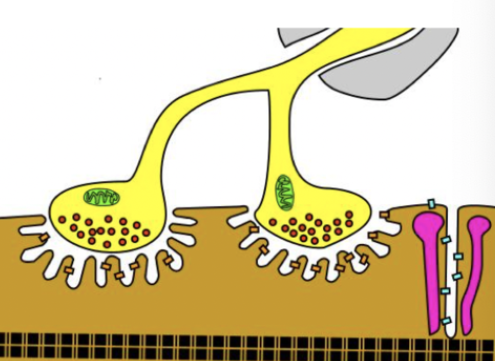
motor end plate
Specialized folded portion of skeletal muscle fiber, where fiber binds to neurotransmitter
28
New cards
Clostridium Botulinum
Anaerobic bacteria that produce a toxin that causes food poisoning
29
New cards
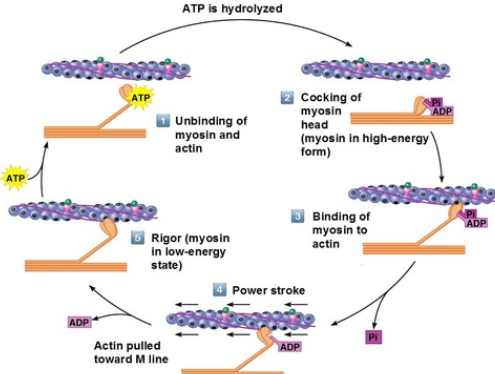
rigor mortis
In the absence of ATP, myosin heads will not detach, causing rigor mortis.
30
New cards
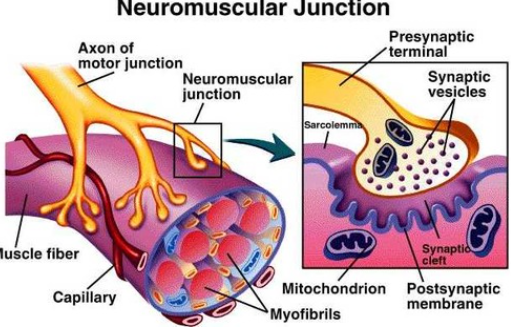
neuromuscular junction
is a synaptic connection between the terminal end of a motor nerve and a muscle
31
New cards
steps in a muscle contraction
-Depolarisation and calcium ion release
-Actin and myosin cross-bridge formation
-Sliding mechanism of actin and myosin filaments
-Sarcomere shortening (muscle contraction)
-Actin and myosin cross-bridge formation
-Sliding mechanism of actin and myosin filaments
-Sarcomere shortening (muscle contraction)
32
New cards
What action is happening at the muscle fiber level during a contraction?
-shorten sarcomeres within a fiber
33
New cards
Define recruitment. Why is recruitment important for muscle contraction?
-different motor units are activated to produce a given level and type of muscle contraction
-The higher the recruitment the stronger the muscle contraction will be
-The higher the recruitment the stronger the muscle contraction will be
34
New cards
Define lactic acid threshold
-Shift in metabolism from aerobic to anaerobic, during strenuous muscle activity, when the above systems cannot supply the necessary O2
-Lactic acid is produced which goes to liver to be converted to glucose. Requires ATP
-Lactic acid is produced which goes to liver to be converted to glucose. Requires ATP
35
New cards
How many motor end plates does a muscle fiber usually have?
one motor end plate
36
New cards
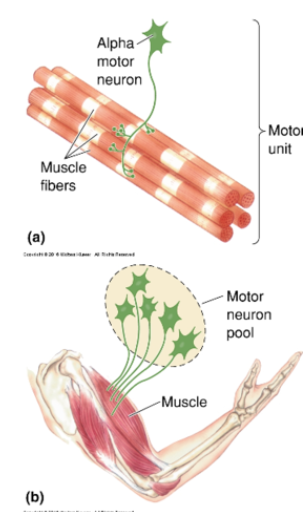
motor neuron
A nerve cell which conducts a nerve impulse to a group of muscle fibres
37
New cards
What is the relationship between ATP and creatine phosphate?
ATP supplies energy to synthesize creatine phosphate from creatine and phosphate. creatine phosphate supplies energy to regenerate ATP from ADP and phosphate.
38
New cards
Define myoglobin
Myoglobin stores extra oxygen in muscles-(increases the amount of oxygen available in the muscle cells to support aerobic respiration)
Important because blood flow may decrease when contracting muscle fibers compress blood vessels.
Important because blood flow may decrease when contracting muscle fibers compress blood vessels.
39
New cards
Is there a color associated with myoglobin?
red pigment that stores oxygen within muscle cells
40
New cards
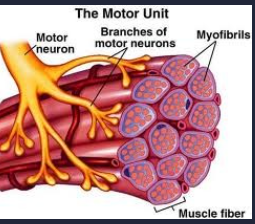
What is a motor unit?
-A motor neuron plus all of the muscle fibers it controls
-A whole muscle consists of many motor units
-Precise movements are produced with fewer muscle fibers in a motor unit
-Coarse movements are produced with large numbers of fibers in a motor unit
-A whole muscle consists of many motor units
-Precise movements are produced with fewer muscle fibers in a motor unit
-Coarse movements are produced with large numbers of fibers in a motor unit
41
New cards
How do skeletal muscles help maintain body temperature?
Skeletal muscle produces heat when it contracts
42
New cards
Define threshold stimulus.
The minimum strength required for the stimulus to initiate the response of muscle contraction
43
New cards
Define myogram
Records events of a muscle twitch
44
New cards
Isotonic contraction
Muscle contracts and changes length
Means "equal force"
Types: Concentric, Eccentric
Means "equal force"
Types: Concentric, Eccentric
45
New cards
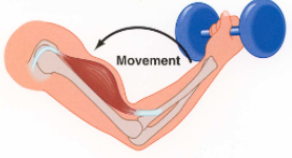
Concentric
shortening contraction; occurs when lifting an object
46
New cards
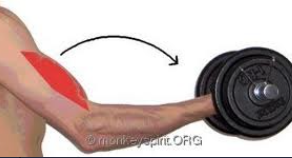
Eccentric
lengthening contraction; occurs when force not sufficient to lift object (lowering a hand weight)
47
New cards
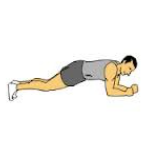
Isometric contraction
Muscle contracts but does not change length
Means "equal length"
Tension develops, but parts attached to muscle do not move (no movement-holding object in place)
Means "equal length"
Tension develops, but parts attached to muscle do not move (no movement-holding object in place)
48
New cards
white, red
__ fibers have less myoglobin;____ fibers have more myoglobin
49
New cards
Latent period
Delay between stimulation and start of contraction (approximately 2 milliseconds)
50
New cards
Period of contraction
Fiber pulls at attachments
51
New cards
Period of relaxation
Pulling force decreases
52
New cards
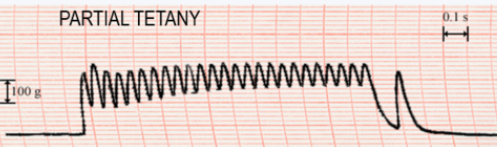
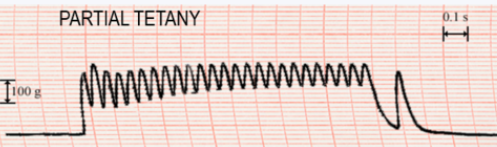
Partial tetany
Occurs at higher frequencies of stimulation
Time spent in relaxation between twitches becomes very brief
Time spent in relaxation between twitches becomes very brief
53
New cards
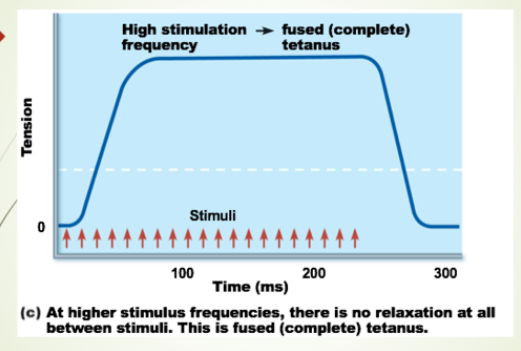
Complete (fused) tetany
Occurs at very high frequencies of stimulation
Does not occur in body, only in laboratory
Forceful sustained contraction has no relaxation between twitches
Does not occur in body, only in laboratory
Forceful sustained contraction has no relaxation between twitches
54
New cards
Slow-twitch fibers (Type I)
Always oxidative
Resistant to fatigue (due to high ATP production)
Red fibers (high myoglobin)
Abundant myoglobin-(stores oxygen in muscles)
Good blood supply
Many mitochondria
Slow ATPase activity; slow to contract
Resistant to fatigue (due to high ATP production)
Red fibers (high myoglobin)
Abundant myoglobin-(stores oxygen in muscles)
Good blood supply
Many mitochondria
Slow ATPase activity; slow to contract
55
New cards
Fast-twitch glycolytic fibers (Type IIb)
Anaerobic respiration (glycolysis)
White fibers (less myoglobin)
Poorer blood supply than slow-twitch fibers
Fewer mitochondria than slow-twitch
More SR than slow-twitch (SR to store and absorb calcium ions)
Susceptible to fatigue
Fast ATPase activity; contract rapidly
White fibers (less myoglobin)
Poorer blood supply than slow-twitch fibers
Fewer mitochondria than slow-twitch
More SR than slow-twitch (SR to store and absorb calcium ions)
Susceptible to fatigue
Fast ATPase activity; contract rapidly
56
New cards
Define atrophy
Decrease in cell size (actin and myosin filaments) and strength of skeletal muscle that is unused. Can happen if neurons no longer supply a signal
57
New cards
contract characteristic of skeletal muscle
contracts and relaxes relatively rapid
58
New cards
contract characteristic of smooth muscle
contracts and relaxes relatively slowly, some types self-exciting; rhythmic
59
New cards
contract characteristic of cardiac muscle
network of cells contracts s a unit; self-exciting; rhythmic; remains refractry unitl contraction endds
60
New cards
cellular characteristics of skeletal muslce
Presents multiple nuclei
Transverse tubule system is well developed
Transverse tubule system is well developed
61
New cards
cellular characteristics of smooth muslce
Absent single nucleus
Lacks transverse tubules
Lacks transverse tubules
62
New cards
cellular characteristics of cardiac muslce
Present
Single nucleus
Transverse tubule system is well developed; intercalated discs connected cells
Single nucleus
Transverse tubule system is well developed; intercalated discs connected cells
63
New cards
What neurotransmitter is in skeletal muscle and smooth muscle?
acetylcholine (ACh)
64
New cards
Define intercalated disc
gap junctions that link adjacent cardiac muscles so that electrical impulses can travel between cells and causes to contract almost simultaneously
65
New cards
Does cardiac muscle need a motor neuron?
no, because this muscles contain pacemaker cells
66
New cards
When bones are body parts move, bones and muscle act as....
levers
67
New cards
Define origin and insertion
The origin is the fixed attachment, while the insertion moves with contraction.
68
New cards
Agonist
Muscle that causes an action
69
New cards
Prime mover
Agonist primarily responsible for movement (In some cases, the terms "agonist" and "prime mover" are used interchangeably)
70
New cards
Synergists
Muscles that assist agonist/prime mover
71
New cards
Antagonist
Muscles whose contraction causes movement in the opposite direction of the prime mover
72
New cards
What change occurs with aging?
almost half of muscle mass has atrophied (wasted away)
73
New cards
myasthenia gravis
-An autoimmune disorder
-Antibodies attack acetylcholine receptors on skeletal muscle fibers (motor end plates) in neuromuscular junctions
-Person may have only one-third normal number of ACh receptors
-Leads to widespread muscle weakness and muscle fatigue
-Antibodies attack acetylcholine receptors on skeletal muscle fibers (motor end plates) in neuromuscular junctions
-Person may have only one-third normal number of ACh receptors
-Leads to widespread muscle weakness and muscle fatigue
74
New cards
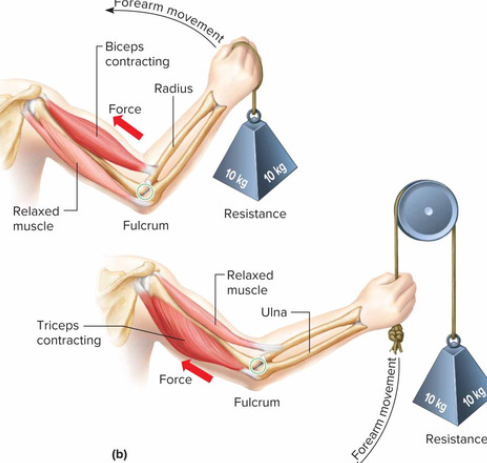
Flexion and Extension at Elbow
75
New cards
calcium ions
What is stored in the sarcoplasmic reticulum?
76
New cards
Acetylcholine
\-Plays a role in memory, learning, attention, arousal, and involuntary muscle movement
\-sodium and calcium
\-calcium movies
\-neurotransmitter
\-sodium and calcium
\-calcium movies
\-neurotransmitter
77
New cards
What are the two types of smooth muscle and how are they organized?
-single-unit and multi-unit
-Single-unit smooth muscle; cells respond as a unit
-Multi-unit Smooth Muscle: Cells are less organized
-Single-unit smooth muscle; cells respond as a unit
-Multi-unit Smooth Muscle: Cells are less organized
78
New cards
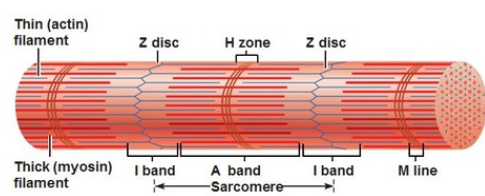
I band
Light band; composed of thin actin filaments
79
New cards
A band
Dark band; composed of thick myosin filaments with portions overlapped with thin actin filaments
80
New cards
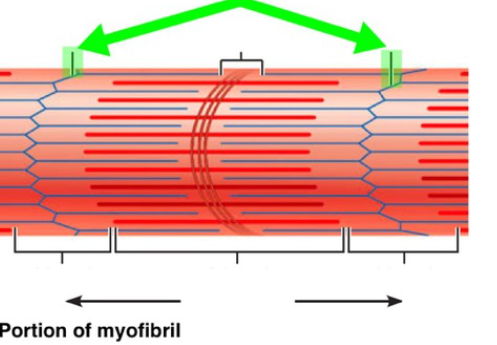
Z line (Z disc)
Sarcomere boundary; in center of I band anchors filaments in place
81
New cards
What is the thin filament?
actin, tropomyosin (Tm), and troponin (Tn)
82
New cards
What is the thick filament?
mysoin
83
New cards
Define fascicles
bundles of muscle fibers
84
New cards
What causes a striation pattern in skeletal muscle?
The proteins (actin and myosin) in myofibrils make of the striation pattern.