APES Chapter 6 Study Guide
 Note
Note Call Kai
 Learn
Learn Practice Test
 Spaced Repetition
 Match
Match Flashcards
 Knowt Play
1/48

There's no tags or description
Looks like no tags are added yet.
Name | Mastery | Learn | Test | Matching | Spaced | Call with Kai | Chat |
|---|
No analytics yet
Send a link to your students to track their progress
49 Terms
What are the Major factors determining biodiversity in aquatic systems?
Light, Food, Temperature, Nutrients, dissolved Oxygen
Why are Marine Ecosystems Important? + Ecosystems Services & Economic Services: a sampling
They provide biodiversity, supply our oxygen levels, part of the water cycle, and provide food for our economical services.
What are the Major Human Activities / Interventions / Impacts on Marine Ecosystems:
Runoff nutrients from fertilizers and cattle waste, coastal developments, overfishing, weighted nets that destroy habitats, invasive species.
Why are Freshwater Ecosystems Important?
Water storage, provide habitats, increase biodiversity, nutrient cycling, flood control, and climate regulation, pollution filtration, agriculture.
What are the Major Human Activities / Interventions / Impacts on Freshwater Ecosystems
Dams and canals, flood control levees create too much runoff (channelization), pollutants runoff nutrients, drained wetlands for agriculture.
We have grown up knowing that Coral Reefs are the Tropical rainforests of the Oceans;
How / Why is this possible? Briefly Explain:
Coral Reefs yield a high biodiversity, they are found in shallow and warm waters which allow polyps to form coral structures that provide habitats for different species.
What are the Major Stressors on Coral, globally / regionally?
Ocean Temperature, Coral Bleaching, and Pollution
Ocean Acidification:
Ocean acidification happens when CO₂ from the air dissolves in seawater, forming carbonic acid (H₂CO₃). This acid breaks down into hydrogen ions (H⁺) and bicarbonate (HCO₃⁻), lowering the ocean's pH. The increase in H⁺ makes it harder for marine life to form calcium carbonate (CaCO₃) structures, like shells and coral.
Major Ocean Zones:
Coastal Zone: The coastal zone is the area where the land meets the ocean, characterized by shallow waters, high nutrient levels, and diverse marine life.
Pelagic Zone (Open Sea): The pelagic zone refers to the open ocean waters beyond the continental shelf, where life depends on sunlight and currents for food and nutrients.
Euphotic Zone: The euphotic zone is the top layer of the ocean where sunlight penetrates, allowing photosynthesis and supporting most marine life.
Bathyal Zone: The bathyal zone lies below the euphotic zone, with minimal light, cooler temperatures, and limited marine life adapted to low-light conditions.p
Abyssal Zone: The abyssal zone is the deep ocean layer with complete darkness, near-freezing temperatures, and high pressure, where life is scarce and adapted to extreme conditions.
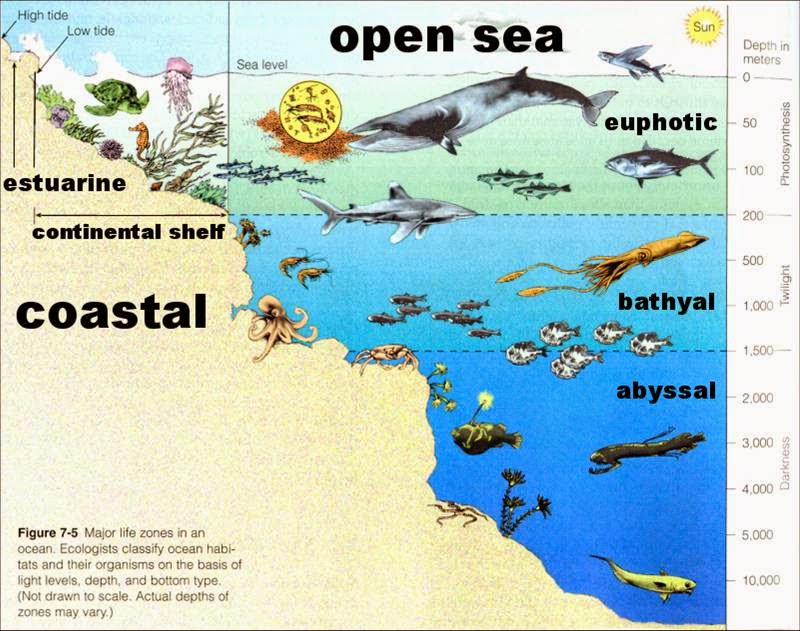
What makes the Most Productive Ocean Zone So Productive?
The coastal zone is the most productive ocean zone due to its shallow waters,and sunlight amount, it receives nutrient-rich runoff from rivers and land, it stimulates the growth of phytoplankton and supports diverse marine ecosystems.
Major Oceanic Ecosystem Services include:
Climate regulation, oxygen production (more than 50%), nutrient cycling (hydrolytic cycle), food, coastal protection
Major Oceanic Economic Services include:
Tourism, fishing, shipping and transportation, oil and gas extraction, renewable energy, medicine.
Major Water Quality Parameters / Tests / factors: (you read about several, and we might add to these . . .)
pH, dissolved oxygen, turbidity, temperature, salinity, nutrients, pollutants
Salt- & Fresh- Reminders re: Water Quality Test of D.O., what are the Big 5 Factors that DIRECTLY (not indirectly) impact Dissolved Oxygen?
Wave action, atmospheric pressure, water temperature, photosynthesis, salinity
Aquatic Ecosystem Variety and Examples of Niche Specialization
Freshwater, saltwater, lakes, ponds, rivers, streams, coral reefs, open ocean, estuaries, wetlands. Niches include top predators, habitat builders and more.
Major Human Impacts on Marine Ecosystems:
Overfishing, weighted nets, pollutants, coastal development, invasive species.
Surface Water
freshwater that flows or is stored in bodies of water on the earth’s surface.
Lentic and Lotic freshwater body examples & “services” of each
Lentic is standing water while lotic is moving water, lotic helps move nutrients and delivers runoff while lentic helps with biodiversity and providing habitats or breeding grounds.
Watershed “anatomy”
Or drainage basin, delivers runoff, sediment, and dissolved substances into a stream, lake, or wetland.
Ecosystem services of freshwater systems
Water filtration nutrient recycling, habitat, flood control, ground water, food, climate, soil formation
Economic services of freshwater services
Water, irrigation, clean power (dams), fishing, tourism, transportation, agriculture.
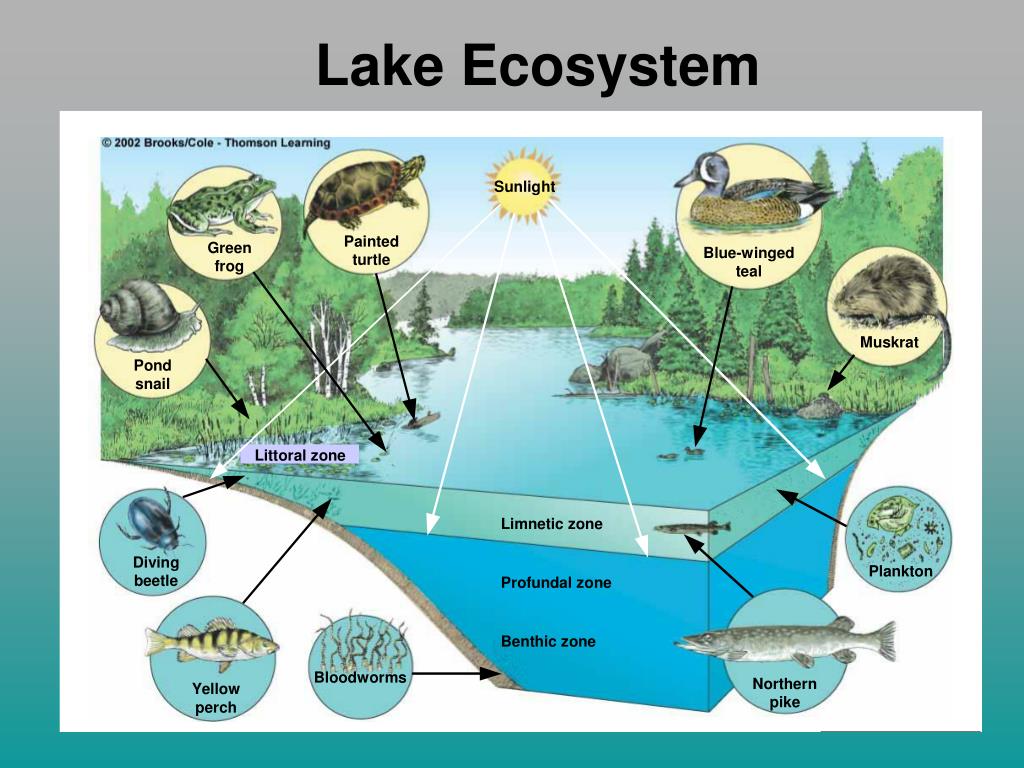
Lake Zones, w/ a brief description of each
Littoral Zone: The littoral zone is the shallow, nearshore area of a freshwater body where sunlight reaches the bottom, supporting aquatic plants and diverse wildlife.
Limnetic Zone: The limnetic zone is the open, well-lit surface water in a freshwater body, where photosynthesis primarily occurs, supporting plankton and fish.
Profundal Zone: The profundal zone is the deep, dark layer of a freshwater body where sunlight does not penetrate, leading to colder temperatures and limited oxygen, affecting fish habitat.
Benthic Zone: The benthic zone is the bottom layer of a freshwater body, inhabited by organisms that thrive on the sediment, like decomposers and bottom-dwelling species.
Lake “Ages”: Lakes and Nutrients: Oligotrophic, Mesotrophic, Eutrophic
Oligotrophic Lakes: These are young, nutrient-poor lakes with clear water, low productivity, and high oxygen levels, supporting fewer aquatic plants and fish.
Mesotrophic Lakes: These lakes have moderate nutrient levels, increased plant growth, and a balanced level of productivity, making them a middle stage between oligotrophic and eutrophic conditions.
Eutrophic Lakes: These are older, nutrient-rich lakes with high productivity, murky water, dense plant and algae growth, and often lower oxygen levels, especially near the bottom.
The Processes of Eutrophication and Cultural Eutrophication
Eutrophication occurs when a freshwater system receives excess nutrients, like nitrates and phosphates, leading to rapid plant growth and algal blooms. Cultural is Human interventions
Major Human Impacts on Lentic and Lotic Freshwater bodies
Polluting, eutrophication, water drainage, invasive species,habitat destruction
Cultural Eutrophication: Steps/Phases
A. Inflow of Nitrate/Phosphate-rich Effluent: Nutrient-rich runoff from agricultural, urban, and industrial sources enters the water body.
H. Increase in Plant Growth/Producer Growth (NPP Increases) = Bloom/Algal Bloom: The influx of nutrients promotes rapid growth of algae and aquatic plants, leading to algal blooms.
B. Plant/Producer Die-off/Crash: The excessive growth of algae eventually leads to depletion of resources, resulting in their die-off.
F. Increase in Aerobic Bacteria Numbers: Decomposing bacteria thrive on the dead plant material, leading to a surge in their population.
C. Decline in Dissolved Oxygen Levels: The decomposition process consumes large amounts of oxygen, causing a significant drop in dissolved oxygen levels.
E. Increase in Anaerobic Bacteria Numbers: With reduced oxygen levels, anaerobic bacteria begin to dominate, as they thrive in low-oxygen environments.
D. Decline in (“Large”) Aerobic Organisms (Reduced Activity & Numbers): The low oxygen levels lead to the death and decline of larger aerobic organisms, such as fish and invertebrates.
G. Decrease in N/P Levels in Water (Decrease in N/P for Plant Uptake): Eventually, as the algae and larger organisms die off, the nutrient levels decrease, impacting the overall nutrient dynamics of the water body.
Preventing or Mitigating Cultural Eutrophication
Reducing Fertilizer Use, Improving Wastewater Treatment, Creating Buffer Zones,Promoting Sustainable Agriculture, Stormwater Runoff
Floodplains: “anatomy”, a description, Ecol. & Econ. Services, Why We have historically been “drawn” to them, potential concerns / Environmental Problems / challenges
Description: Floodplains are flat areas adjacent to rivers, periodically flooded, characterized by rich soils, diverse ecosystems, and features like natural levees and wetlands.
Ecological Services: They support biodiversity, improve water quality, mitigate floods, and cycle nutrients.
Economic Services: Floodplains provide fertile land for agriculture, recreational opportunities, and tourism.
Historical Attraction: Humans are drawn to floodplains for their fertile soils, water resources, and biodiversity.
Challenges: Concerns include flooding risks, urbanization impacts, pollution, wetland loss, and climate change effects.
Wetlands: types w/ brief descriptions, ecological services, economic services
Marshes, swamps, prairie potholes, floodplains. Inland wetlands: filtering, reducing flooding, stream flows, recharging ground aquifers, biodiversity, fish, photos of birds and species.
Identify and describe three anthropogenic negative impacts on coastal wetlands.
Dam and Canal Construction: Dams and canals disrupt river flows, destroy wildlife habitats, and degrade coastal wetlands by reducing sediment supply.
Flood Control Structures: Levees and dikes disconnect rivers from floodplains, harming aquatic habitats and preventing natural sediment deposition.
Pollution and Nutrient Runoff: Runoff from urban and agricultural areas introduces pollutants and excess nutrients, leading to harmful algal blooms that deplete oxygen and reduce biodiversity.
Wetland Destruction: The drainage and filling of inland wetlands for agriculture and development have resulted in significant ecosystem loss, contributing to increased flood risks.
Select one of the negative impacts noted above (in #24), and provide a description of one environmental policy and one economic incentive that could potentially prevent that
anthropogenic negative impact.
The Clean Water Act (CWA) is a federal law in the U.S. that regulates pollutant discharges into navigable waters, including rivers and lakes. It requires permits for point-source discharges and sets water quality standards to protect aquatic ecosystems, aiming to reduce nutrient runoff by regulating agricultural practices and promoting best management practices (BMPs) to minimize fertilizer use.
Describe two roles that coastal wetlands play that are ecologically important.
Barricade for natural disasters like hurricanes, filter for pollutants
Describe two roles that coastal wetlands play that are economically important.
Fisheries, and tourism
Describe the two major causes for the variation in temperature and salinity in an estuary over the course of time, from a given 24-hour period to a 12-month time period.
Freshwater inflow and tidal action
How does an Oligotrophic Lake become a Mesotrophic Lake?
An oligotrophic lake becomes a mesotrophic lake through nutrient enrichment from runoff, leading to increased phytoplankton growth and changes in water quality, resulting in higher productivity and a different aquatic ecosystem.
How does a Mesotrophic Lake become a Eutrophic Lake?
A mesotrophic lake becomes eutrophic through increased nutrient inputs, leading to excessive algal blooms, oxygen depletion from decomposition, and shifts in the aquatic ecosystem favoring eutrophic species.
Lentic and Lotic Freshwater bodies: which would be more susceptible to C.E. and Why?
lentic freshwater bodies are more susceptible to cultural eutrophication due to their ability to accumulate nutrients, reduced water movement, and environmental conditions that favor algal growth.
Watersheds / Watersheds and People:
watersheds are vital ecological and hydrological units that support human life and the environment, and effective management is essential to address the impacts of human activities and protect these critical resources.
Channelization: Why we sometimes “channelize” and impacts on freshwater ecosystems
channelization can provide benefits such as flood control and improved navigation, it has significant negative impacts on freshwater ecosystems, including habitat destruction, altered hydrology, increased pollution, and reduced biodiversity.
Dams and Levees: impacts on freshwater ecosystems
Dams and levees disrupt natural water flow, leading to habitat loss for aquatic species, altered sediment transport, and barriers to fish migration. They reduce floodplain habitats and biodiversity, worsen water quality, and diminish ecosystem services, negatively impacting freshwater ecosystems.
Wetlands: various ways to “classify”: Inland, Coastal, Seasonal, Year-round, Marshes, Swamps, Prairie Potholes, “Floodplains”, Estuaries
Through, the location, species, temperature and water type
It is the major photosynthetic zone of the open ocean.
euphotic
sometimes called the twilight zone, as it can receive some sunlight penetration
bathyal
These coastal areas contain producers characterized by having roots that curve up from the mud and water to obtain oxygen from the air, working somewhat like a snorkel
mangroves
There are FOUR Key Factors that determine the degree of Aquatic Biodiversity:
A.) Access to light and nutrients necessary for photosynthesis and B.) Availability of Food, (Temp and Dissolved O2)
Besides spring & summer snowmelt and spring rains bringing increased amounts of freshwater into an estuary, identify the other Major reason why both temperature and salinity vary over time
the daily rhythm of the tides
As done in class, and in very few words, state HOW a Mesotrophic lake "becomes" a Eutrophic lake
weathering & Erosion
The area of shoreline between low and high tides is called the ?
intertidal
Most of the organisms in the abyssal zone get their food from "showers of dead and decaying organisms called by this collective name
marine snow