First Aid - ENDOCRINOLOGY - Pathology

0.0(0)
Studied by 0 people
call kaiCall Kai
learnLearn
examPractice Test
spaced repetitionSpaced Repetition
heart puzzleMatch
flashcardsFlashcards
GameKnowt Play
Card Sorting

1/349

encourage image

There's no tags or description

Looks like no tags are added yet.

350 Terms

1
New cards

What conditions increase GH release

  • Deep sleep

  • Hypoglycemia

  • Stress

  • Puberty

  • Exercise.


2
New cards

What conditions decrease GH secretion

  • Aging

  • Obesity

  • Hyperglycemia

  • Somatostatin

  • Somatomedin (regulatory molecule secreted by liver in response to GH acting on target tissues)

  • Pituitary adenomas (cause acromegaly in adults, and gigantism in children)


3
New cards
How do ADH levels differ in central vs nephrogenic diabetes insipidus (DI)?
  • Central DI: ↓ ADH secretion (hypothalamic/posterior pituitary defect).

  • Nephrogenic DI: normal/↑ ADH (renal resistance to ADH).


4
New cards

How is Central DI treated

With Desmopressin, an ADH analog (primarily V2 agonist).
Also used in nocturnal enuresis.

5
New cards
Why does desmopressin treat central DI but not nephrogenic DI?

Central DI: ↓ ADH → desmopressin activates renal V2 receptors → ↑ AQP2 insertion → ↑ water reabsorption.
Nephrogenic DI: kidneys are ADH-resistant → little/no response.

6
New cards

What the best usage for vasopressin

Septic Shock, since it’s a potent vasopressor

V1 receptor activation → vascular smooth muscle contraction → ↑ systemic vascular resistance and MAP → supports organ perfusion.

7
New cards
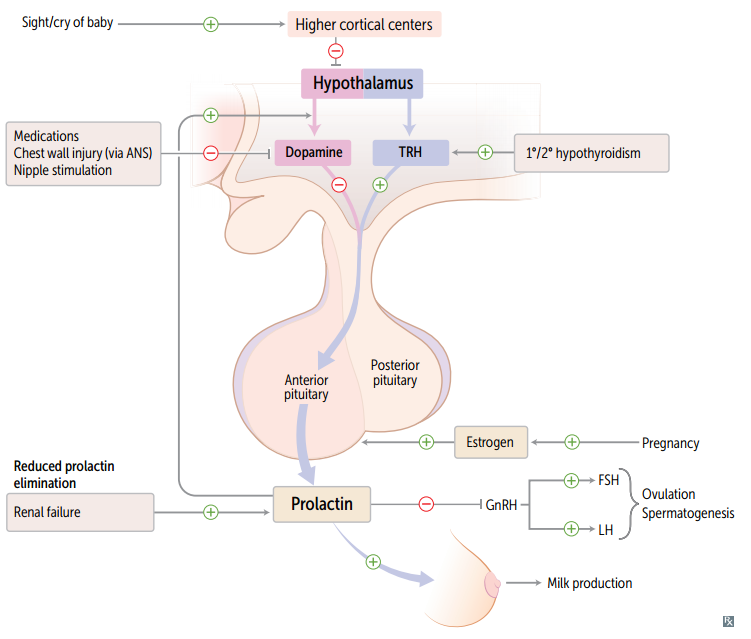
What causes hyperprolactinemia?
  • Prolactinoma

  • Primary hypothyroidism (↑ TRH)

  • Pregnancy.

  • Dopamine antagonists (eg, antipsychotics, metoclopramide)

PPPD

8
New cards
What are the clinical manifestations of hyperprolactinemia?
  • Galactorrhea

  • Amenorrhea

  • Infertility

  • Osteoporosis (females)

  • Gynecomastia

  • ↓ libido & erectile dysfunction (males).


9
New cards
Why does hyperprolactinemia cause infertility and amenorrhea?
↑ Prolactin → ↓ GnRH secretion → ↓ LH/FSH → anovulation, amenorrhea, infertility (± hypogonadism).
10
New cards
How is hyperprolactinemia treated?
Dopamine D2 agonists (cabergoline, bromocriptine) → ↓ prolactin secretion; first-line for prolactinomas.
11
New cards
Why can primary hypothyroidism cause hyperprolactinemia?
↓ T3/T4 → ↑ hypothalamic TRH → ↑ TSH + ↑ prolactin secretion.
12
New cards
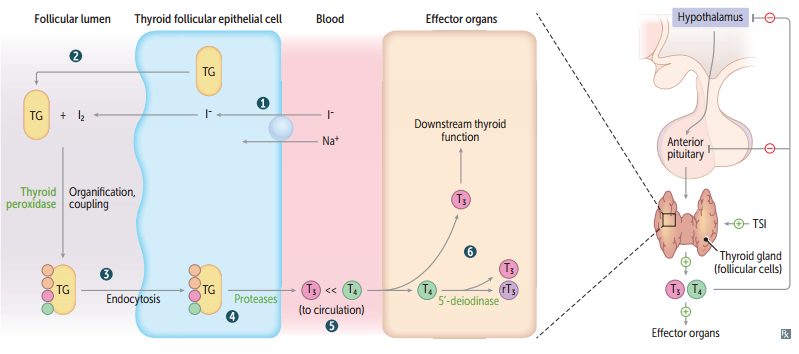
Why can glucocorticoids, β-blockers, and PTU decrease T3 levels?
They inhibit peripheral 5′-deiodinase → ↓ conversion of T4 to active T3.
13
New cards
What is the Wolff–Chaikoff effect?
Sudden ↑ iodine exposure → transient inhibition of thyroid peroxidase-mediated organification → ↓ thyroid hormone synthesis (protective autoregulation).
14
New cards
Why can pregnancy and estrogen-containing OCPs increase total T3/T4 without causing hyperthyroidism?

↑ ↑ Estrogen → ↑ TBG → transient ↓ free T3/T4 → ↑ TSH → ↑ thyroid hormone production until free T3/T4 normalize (without causing hyperthyroidism)

Result: ↑ bound and total T3/T4, but normal free T3/T4 and TSH.
<p>↑ ↑ Estrogen → ↑ TBG → transient ↓ free T3/T4 → ↑ TSH → ↑ thyroid hormone production until free T3/T4 normalize (without causing hyperthyroidism)</p><p><strong><u>Result</u></strong>: ↑ bound and total T3/T4, but normal free T3/T4 and TSH.</p>
15
New cards
How does Graves disease cause hyperthyroidism?
Thyroid-stimulating immunoglobulins (TSI) activate TSH receptors on follicular cells → ↑ T3/T4 synthesis and release despite ↓ TSH.
16
New cards

Why does hypomagnesemia cause hypocalcemia?

  • Severe ↓ Mg²⁺ → impaired PTH secretion + PTH resistance → ↓ serum Ca²⁺.

  • Mild ↓ Mg²⁺ can initially stimulate PTH secretion.


<ul><li><p>Severe ↓ Mg²⁺ → impaired PTH secretion + PTH resistance → ↓ serum Ca²⁺.</p></li><li><p>Mild ↓ Mg²⁺ can initially stimulate PTH secretion.</p></li></ul><p></p>
17
New cards

Why can chronic kidney disease cause secondary hyperparathyroidism?

↓ Renal 1α-hydroxylase activity → ↓ calcitriol → ↓ intestinal Ca²⁺ absorption.
Additionally, ↓ phosphate excretion → ↑ serum PO₄³⁻ → ↓ free Ca²⁺ → ↑ PTH.

<p>↓ Renal 1α-hydroxylase activity → ↓ calcitriol → ↓ intestinal Ca²⁺ absorption.<br>Additionally, ↓ phosphate excretion → ↑ serum PO₄³⁻ → ↓ free Ca²⁺ → ↑ PTH.</p>
18
New cards

How can vitamin D deficiency affect the Parathyroid?

It can cause secondary hyperparathyroidism

↓ Vitamin D → ↓ intestinal Ca²⁺ absorption → ↓ serum Ca²⁺ → compensatory ↑ PTH secretion.

<p>It can cause secondary hyperparathyroidism</p><p>↓ Vitamin D → ↓ intestinal Ca²⁺ absorption → ↓ serum Ca²⁺ → compensatory ↑ PTH secretion.</p>
19
New cards

Why can hypoalbuminemia cause low total serum calcium despite normal ionized calcium?

~40% of circulating Ca²⁺ is albumin-bound → ↓ albumin reduces bound Ca²⁺ → ↓ total serum Ca²⁺, while biologically active ionized Ca²⁺ may remain normal (pseudohypocalcemia).

<p>~40% of circulating Ca²⁺ is albumin-bound → ↓ albumin reduces bound Ca²⁺ → ↓ total serum Ca²⁺, while biologically active ionized Ca²⁺ may remain normal (pseudohypocalcemia).</p>
20
New cards
How can C-peptide distinguish endogenous from exogenous insulin in hypoglycemia?
  • Endogenous hyperinsulinemia (eg, insulinoma, sulfonylureas): ↑ insulin + ↑ C-peptide.

  • Exogenous insulin administration: ↑ insulin + ↓ C-peptide (because injected insulin lacks C-peptide).
<ul><li><p>Endogenous hyperinsulinemia (eg, insulinoma, sulfonylureas): ↑ insulin + ↑ C-peptide.</p></li><li><p>Exogenous insulin administration: ↑ insulin + ↓ C-peptide (because injected insulin lacks C-peptide).</p></li></ul><p></p>
21
New cards
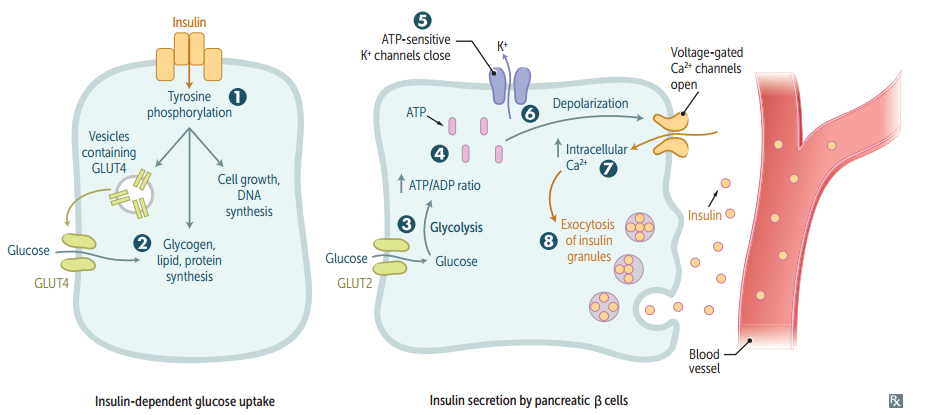
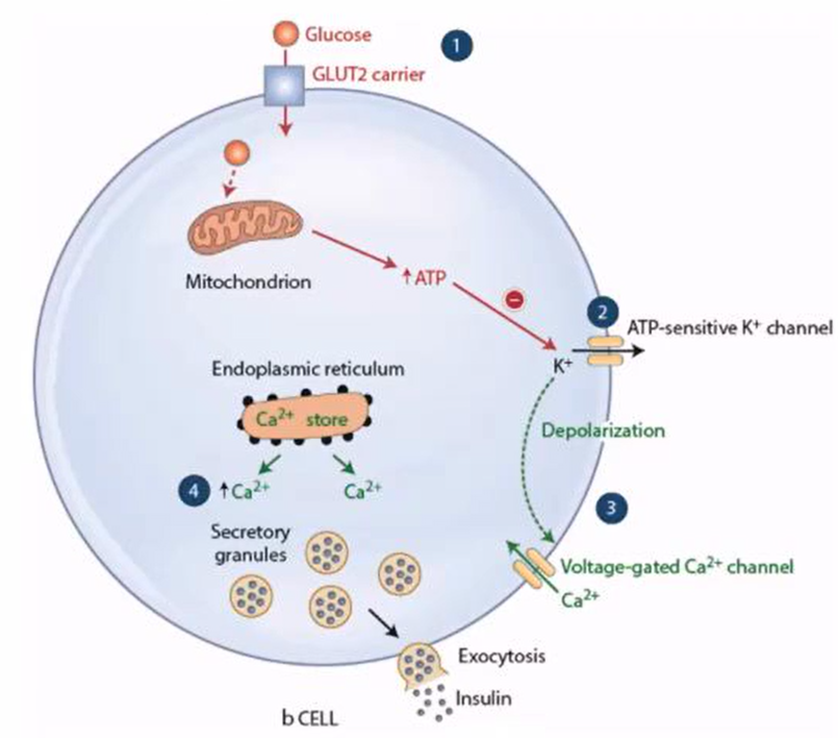
Why do sulfonylureas stimulate insulin secretion?
Sulfonylureas close ATP-sensitive K⁺ channels in pancreatic β cells → membrane depolarization → voltage-gated Ca²⁺ channels open → ↑ Ca²⁺ influx → insulin exocytosis.
22
New cards
Why can sulfonylureas cause hypoglycemia?
They stimulate β-cell insulin secretion independently of blood glucose levels → excessive insulin release even during low glucose.
23
New cards
Which glucose transporters are insulin-dependent vs insulin-independent?
  • Insulin-dependent: GLUT4 (skeletal muscle, adipose tissue).

  • Insulin-independent: GLUT1 (RBCs, BBB), GLUT2 (liver, β cells, kidneys), GLUT3 (neurons), GLUT5 (fructose absorption).


24
New cards
Why can maternal diabetes cause fetal hyperinsulinemia?
Maternal glucose crosses placenta, but insulin does not → fetal hyperglycemia → ↑ fetal pancreatic insulin secretion → hyperinsulinemia (contributes to fetal macrosomia).
25
New cards
Why does diabetic ketoacidosis develop despite marked hyperglycemia?
  • Insulin deficiency → ↓ GLUT4-mediated glucose uptake in muscle/adipose tissue + ↑ hepatic glucose output → hyperglycemia.

  • Meanwhile, ↑ lipolysis → ↑ free fatty acids → hepatic ketogenesis → metabolic acidosis.


26
New cards
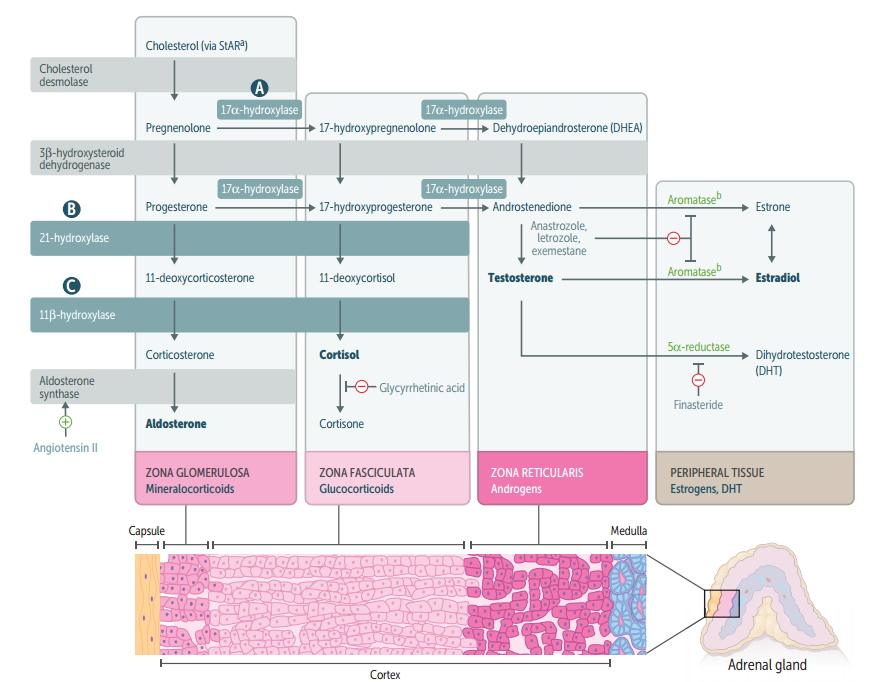
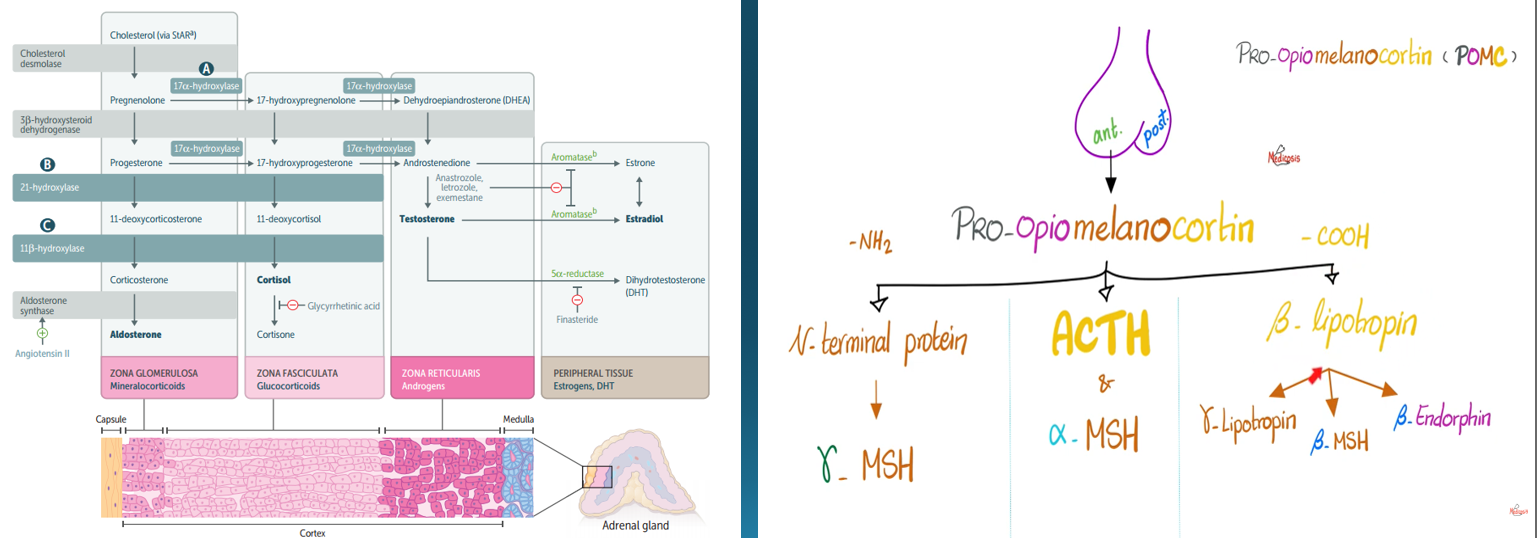
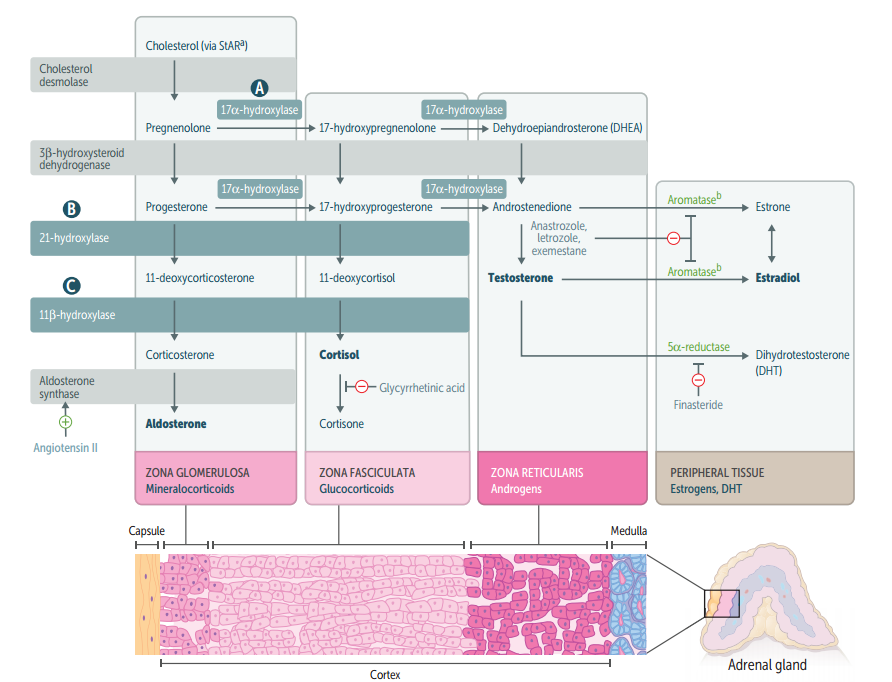
What is the underlying pathophysiology of congenital adrenal hyperplasia (CAH)?

Autosomal recessive steroidogenic enzyme deficiencies → ↓ cortisol → ↑ ACTH (loss of negative feedback) → bilateral adrenal hyperplasia + accumulation of steroid precursors.


Most cause ↑ androgen production, except 17α-hydroxylase deficiency.

<p>Autosomal recessive steroidogenic enzyme deficiencies → ↓ cortisol → ↑ ACTH (loss of negative feedback) → bilateral adrenal hyperplasia + accumulation of steroid precursors.</p><p><br>Most cause ↑ androgen production, except 17α-hydroxylase deficiency.</p>
27
New cards
Compare the hormonal patterns of the 3 major CAH enzyme deficiencies.
  • 17α-hydroxylase: ↑ mineralocorticoid activity, ↓ cortisol, ↓ androgens.

  • 21-hydroxylase: ↓ aldosterone, ↓ cortisol, ↑ androgens.

  • 11β-hydroxylase: ↑ mineralocorticoid activity (11-deoxycorticosterone has some mineralocorticoid activity), ↓ cortisol, ↑ androgens.


<ul><li><p><strong><u>17α-hydroxylase</u></strong>: ↑ mineralocorticoid activity, ↓ cortisol, ↓ androgens.</p></li><li><p><strong><u>21-hydroxylase</u></strong>: ↓ aldosterone, ↓ cortisol, ↑ androgens.</p></li><li><p><strong><u>11β-hydroxylase</u></strong>: ↑ mineralocorticoid activity (11-deoxycorticosterone has some mineralocorticoid activity), ↓ cortisol, ↑ androgens.</p></li></ul><p></p>
28
New cards
What are the clinical manifestations of 21-hydroxylase deficiency?
  • Classic salt-wasting CAH: neonatal dehydration, hypotension, hyponatremia, hyperkalemia ± shock; virilization/ambiguous genitalia in 46,XX infants.

  • Non-classic or less severe forms: premature pubarche, precocious puberty, hirsutism, irregular menses.


<ul><li><p><strong><u>Classic salt-wasting CAH:</u></strong> neonatal dehydration, hypotension, hyponatremia, hyperkalemia ± shock; virilization/ambiguous genitalia in 46,XX infants.<br></p></li><li><p><strong><u>Non-classic or less severe forms</u></strong>: premature pubarche, precocious puberty, hirsutism, irregular menses.</p></li></ul><p></p>
29
New cards
Why does 21-hydroxylase deficiency cause salt wasting and virilization?

↓ Cortisol + ↓ aldosterone → ↑ ACTH + renal Na⁺ loss (hypotension, ↑ K⁺).

Accumulated steroid precursors are diverted toward androgen synthesis → virilization.

<p><strong><u>↓ Cortisol + ↓ aldosterone → ↑ ACTH</u> </strong>+ renal Na⁺ loss (hypotension, ↑ K⁺).<br><br>Accumulated steroid precursors are diverted toward androgen synthesis → virilization.</p>
30
New cards
What laboratory marker is characteristically elevated in 21-hydroxylase deficiency?

↑ 17-hydroxyprogesterone (substrate of 21-hydroxylase); ↑ renin in salt-wasting forms.

<p><strong><u>↑ 17-hydroxyprogesterone</u></strong> (substrate of 21-hydroxylase); ↑ renin in salt-wasting forms.</p>
31
New cards

A 10-day-old infant presents with vomiting, dehydration, hypotension. Labs show hyponatremia, and hyperkalemia.

Examination reveals clitoromegaly and labioscrotal fusion. What is the most likely enzyme deficiency?

21-hydroxylase deficiency (salt-wasting congenital adrenal hyperplasia).
32
New cards
What are the clinical manifestations of 11β-hydroxylase deficiency?
Hypertension ± hypokalemia (↑ 11-deoxycorticosterone); androgen excess → virilization in 46,XX infants and precocious puberty in children.
33
New cards
Why does 11β-hydroxylase deficiency cause hypertension despite ↓ aldosterone?
Blocked conversion of 11-deoxycorticosterone (DOC) → corticosterone → ↑ DOC (mineralocorticoid activity) → Na⁺/water retention → hypertension, ↓ renin, ↓ aldosterone.
34
New cards

A young girl presents with premature pubic hair, rapid growth, virilization, hypertension. Labs reveal low renin levels. Which adrenal enzyme is deficient?
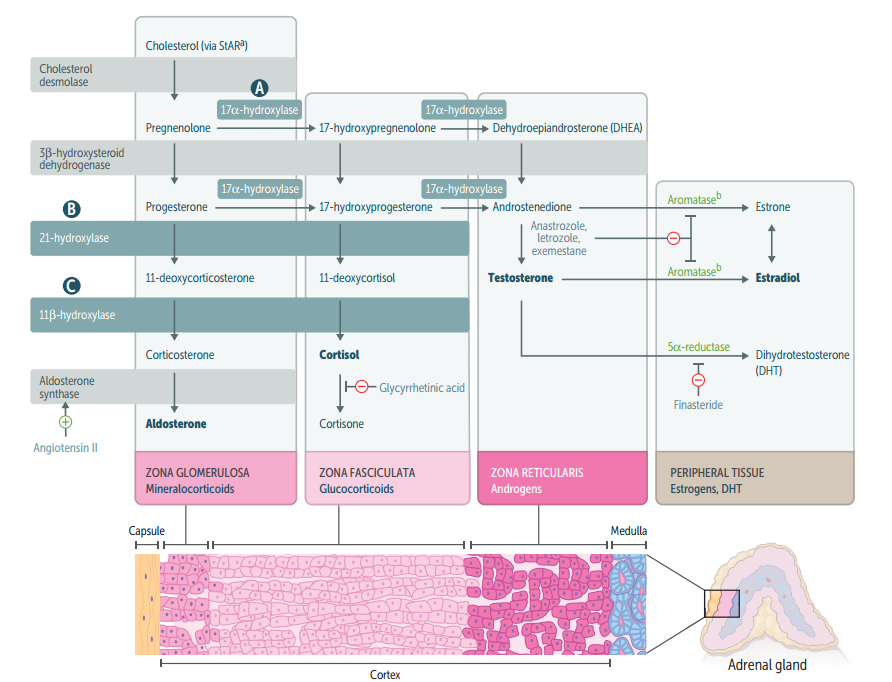
11β-hydroxylase deficiency → ↑ 11-deoxycorticosterone + ↑ adrenal androgens.
35
New cards
What are the clinical manifestations of 17α-hydroxylase deficiency?

Hypertension ± hypokalemia (↑ mineralocorticoid precursors) + ↓ sex hormones.

  • 46,XY: undervirilized/typically female external genitalia, undescended testes.

  • 46,XX: absent/delayed secondary sexual development, primary amenorrhea.


<p>Hypertension ± hypokalemia (↑ mineralocorticoid precursors) + ↓ sex hormones.</p><ul><li><p><strong><u>46,XY</u></strong>: undervirilized/typically female external genitalia, undescended testes.</p></li><li><p><strong><u>46,XX</u></strong>: absent/delayed secondary sexual development, primary amenorrhea.</p></li></ul><p></p>
36
New cards
Why does 17α-hydroxylase deficiency cause hypertension and sexual infantilism?
Blocked cortisol + androgen synthesis → precursors diverted toward DOC/corticosterone → ↑ mineralocorticoid activity → hypertension.<br>↓ Androgens/estrogens → impaired sexual development.
37
New cards
A 16-year-old phenotypic female presents with primary amenorrhea, absent breast development, hypertension, and hypokalemia. Genetic testing reveals 46,XY. What enzyme deficiency explains the findings?
17α-hydroxylase deficiency → ↓ sex steroids + ↑ mineralocorticoid activity.
38
New cards
Which CAH enzyme deficiencies cause hypertension, and how can they be distinguished?
  • 11β-hydroxylase: hypertension + ↑ androgens → virilization.

  • 17α-hydroxylase: hypertension + ↓ androgens → undervirilization/sexual infantilism.

  • 21-hydroxylase: classically salt wasting + hypotension.


<ul><li><p><strong><u>11β-hydroxylase</u></strong>: hypertension + ↑ androgens → virilization.</p></li><li><p><strong><u>17α-hydroxylase</u></strong>: hypertension + ↓ androgens → undervirilization/sexual infantilism.</p></li><li><p><strong><u>21-hydroxylase</u></strong>: classically salt wasting + hypotension.</p></li></ul><p></p>
39
New cards

Why do patients with congenital adrenal hyperplasia develop skin hyperpigmentation?

↓ Cortisol → ↑ POMC-derived ACTH and α-MSH signaling → melanocortin receptor activation → ↑ melanin production.

<p>↓ Cortisol → ↑ POMC-derived ACTH and α-MSH signaling → melanocortin receptor activation → ↑ melanin production.</p>
40
New cards

How is classic 21-hydroxylase deficiency treated?

Glucocorticoid replacement (eg, hydrocortisone) → replaces cortisol and suppresses excess ACTH/androgens.

Salt-wasting forms additionally require fludrocortisone ± salt supplementation.

<p>Glucocorticoid replacement (eg, <strong><u>hydrocortisone</u></strong>) → <strong><u>replaces cortisol</u></strong> and suppresses excess ACTH/androgens.<br><br>Salt-wasting forms additionally require fludrocortisone ± salt supplementation.</p>
41
New cards
Why can excess cortisol cause hyperglycemia and muscle wasting?
↑ Cortisol → ↑ gluconeogenesis + ↑ insulin resistance → hyperglycemia.<br>↑ Proteolysis → muscle wasting and proximal muscle weakness.
42
New cards
Why can excess cortisol cause hypertension?

↑ α₁-adrenergic receptor expression and vascular sensitivity to catecholamines → ↑ vasoconstriction.


At high concentrations, cortisol also activates mineralocorticoid receptors → ↑ Na⁺/water retention.

<p>↑ α₁-adrenergic receptor expression and vascular sensitivity to catecholamines → ↑ vasoconstriction.</p><p><br>At high concentrations, cortisol also activates mineralocorticoid receptors → ↑ Na⁺/water retention.</p>
43
New cards
How do glucocorticoids suppress inflammation and immunity?
↓ Prostaglandins/leukotrienes, ↓ inflammatory cytokines (eg, IL-2), ↓ leukocyte migration and T-cell activation.<br>Associated with lymphopenia, eosinopenia, and ↑ susceptibility to infections.
44
New cards
Why can prolonged glucocorticoid exposure cause osteoporosis and poor wound healing?

↓ Osteoblast activity → ↓ bone formation (osteoporosis).

↓ Fibroblast activity → ↓ collagen synthesis → skin thinning, striae, impaired wound healing.

45
New cards
Why can prolonged glucocorticoid therapy cause adrenal insufficiency after abrupt withdrawal?

Exogenous glucocorticoids → negative feedback on hypothalamus/pituitary → ↓ CRH/ACTH → adrenal cortical atrophy.

***Abrupt withdrawal → insufficient endogenous cortisol production (secondary/tertiary adrenal insufficiency).

46
New cards
Why can severe leptin deficiency or leptin resistance cause obesity?
Leptin normally signals energy sufficiency to the hypothalamus → ↓ appetite.<br>Leptin deficiency/resistance → impaired satiety signaling → hyperphagia and obesity.
47
New cards
Which endocrine hormones signal through Gs → cAMP → PKA?
  • FSH

  • LH

  • ACTH

  • TSH

  • CRH

  • hCG

  • ADH (V2)

  • MSH

  • PTH

  • Calcitonin

  • Histamine (H2 receptor)

  • Glucagon

  • GHRH.

FLAT ChAMPs CHuGG

48
New cards
Which hormones signal through Gq → IP₃/DAG → ↑ intracellular Ca²⁺?
GnRH, oxytocin, ADH (V1), TRH, angiotensin II, gastrin.<br>Also: histamine (H1 receptor).
49
New cards
Which hormones signal through receptor tyrosine kinases vs JAK/STAT?

Receptor tyrosine kinase:

  • IGF-1

  • Insulin

  • FGF

  • EGF.

  • PDGF

*I...I… Found the E-maP of RTKs

JAK/STAT (nonreceptor tyrosine kinase):

  • GH

  • EPO

  • TPO

  • Prolactin

  • Immunomodulators (Cytokines)

  • G-CSF

*GET a JAKed PIG

50
New cards
Which hormones act through intracellular receptors to regulate gene transcription?
  • Steroid hormones

  • T3/T4

  • VitD


51
New cards
How do changes in SHBG affect free testosterone and its clinical manifestations?
  • ↑ SHBG (eg, estrogen exposure) → ↓ free testosterone → may contribute to reduced androgen activity.

  • ↓ SHBG → ↑ free testosterone → may contribute to hirsutism in females and gynecomastia in males
    (↓ SHBG → ↑ free testosterone → ↑ testosterone available for tissue uptake and aromatization → potentially ↑ estradiol depending on androgen–estrogen balance).


52
New cards
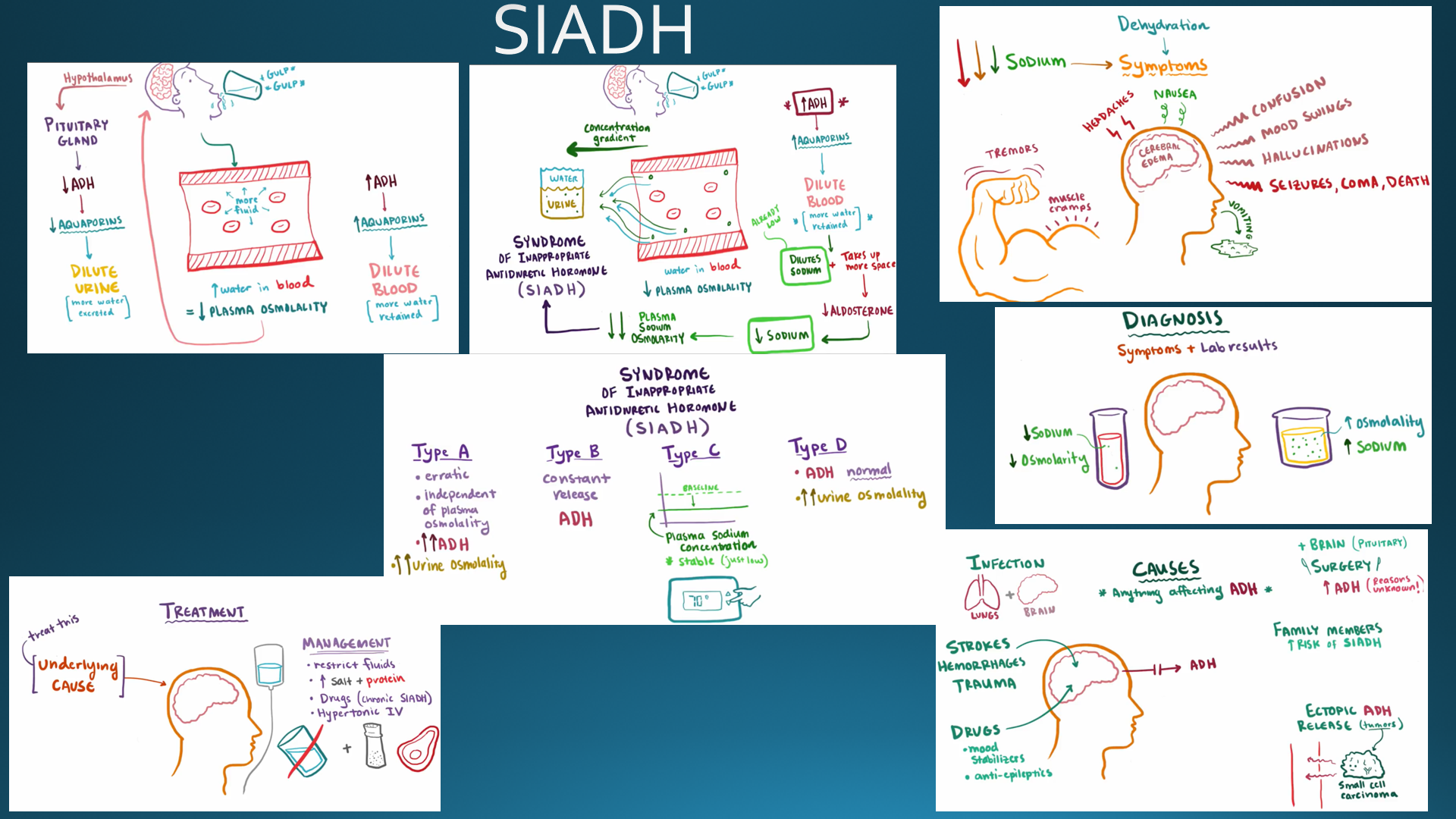
What is the pathophysiology of SIADH?
Excess ADH → ↑ water reabsorption in collecting ducts → dilutional hyponatremia + ↓ serum osmolality.<br>Mild ECF expansion → ↑ ANP/BNP + ↓ aldosterone → ↑ urinary Na⁺ excretion → clinically euvolemic hyponatremia.
53
New cards
What are the characteristic laboratory findings in SIADH?
  • ↓ Serum Na⁺

  • ↓ serum osmolality

  • Inappropriately concentrated urine (urine osmolality > serum osmolality)

  • ↑ urinary Na⁺ excretion.


<ul><li><p>↓ Serum Na⁺</p></li><li><p>↓ serum osmolality</p></li><li><p>Inappropriately concentrated urine (urine osmolality &gt; serum osmolality)</p></li><li><p>↑ urinary Na⁺ excretion.</p></li></ul><p></p>
54
New cards
What are the major causes of SIADH?
  • CNS disorders (eg, trauma, hemorrhage)

  • ectopic ADH secretion:

    • Small cell lung carcinoma

  • Pulmonary disease

  • Exogenous ADH-related drugs:

    • Vasopressin

    • Desmopressin

    • Oxytocin

  • Other drugs:

    • SSRIs

    • Carbamazepine

    • Cyclophosphamide


<ul><li><p>CNS disorders (eg, trauma, hemorrhage)</p></li><li><p>ectopic ADH secretion: </p><ul><li><p>Small cell lung carcinoma </p></li></ul></li><li><p>Pulmonary disease</p></li><li><p>Exogenous ADH-related drugs: </p><ul><li><p>Vasopressin</p></li><li><p>Desmopressin</p></li><li><p>Oxytocin</p></li></ul></li><li><p>Other drugs: </p><ul><li><p>SSRIs</p></li><li><p>Carbamazepine</p></li><li><p>Cyclophosphamide</p></li></ul></li></ul><p></p>
55
New cards
How is SIADH treated?
  • Stable patients/mild disease: Fluid restriction (first-line for many stable patients).

  • Severe symptomatic hyponatremia: IV hypertonic saline with controlled correction.

  • Other options:

    • Salt tablets

    • Loop diuretics

    • ADH antagonists

      • Olvaptan

      • Demeclocycline


<ul><li><p><strong><u>Stable patients/mild disease</u></strong>: Fluid restriction (first-line for many stable patients).</p></li><li><p><strong><u>Severe symptomatic hyponatremia</u></strong>: IV hypertonic saline with controlled correction.</p></li><li><p><strong><u>Other options</u></strong>: </p><ul><li><p>Salt tablets</p></li><li><p>Loop diuretics</p></li><li><p>ADH antagonists </p><ul><li><p>Olvaptan</p></li><li><p>Demeclocycline</p></li></ul></li></ul></li></ul><p></p>
56
New cards
What is the underlying defect in central vs nephrogenic diabetes insipidus?
  • Central DI: ↓ ADH secretion (hypothalamic/posterior pituitary dysfunction).

  • Nephrogenic DI: renal resistance to ADH (eg, V2 receptor defects, lithium, demeclocycline, hypercalcemia, hypokalemia).


57
New cards
Compare the laboratory findings of central DI, nephrogenic DI, and primary polydipsia.

Central DI: ↑ serum osmolality, ↓ ADH, dilute urine.
Nephrogenic DI: ↑ serum osmolality, normal/↑ ADH, dilute urine.
Primary polydipsia: ↓ serum osmolality, ↓/normal ADH, dilute urine.

58
New cards
How do water deprivation and desmopressin distinguish central DI, nephrogenic DI, and primary polydipsia?
  • Primary polydipsia: urine concentrates with water deprivation (>700 mOsm/kg in the classic pattern).

  • Central DI: little response to deprivation, marked ↑ urine osmolality after desmopressin (>50% in complete DI).

  • Nephrogenic DI: little response to either.


59
New cards
What are the treatments for central and nephrogenic DI?
  • Central DI: desmopressin (ADH analog).

  • Nephrogenic DI:

    • correct underlying cause

    • Low-solute diet

    • Thiazides (eg, HCTZ)

    • Amiloride (particularly lithium-induced DI)

    • ± indomethacin.


60
New cards
Why do thiazide diuretics paradoxically reduce polyuria in nephrogenic DI?

Thiazides → mild volume contraction → ↑ proximal Na⁺/water reabsorption → ↓ fluid delivery to collecting ducts → ↓ urine volume despite persistent ADH resistance.

61
New cards
A patient with small cell lung cancer develops hyponatremia, low serum osmolality, and inappropriately concentrated urine without peripheral edema. What is the most likely diagnosis?
SIADH due to ectopic ADH secretion.
62
New cards
A patient develops marked polyuria and polydipsia following head trauma. Urine remains dilute after water deprivation but concentrates markedly after desmopressin. What is the diagnosis?
Central diabetes insipidus (impaired ADH secretion).
63
New cards
A patient taking lithium develops polyuria, hypernatremia, and dilute urine that fails to concentrate after desmopressin. What is the diagnosis?
Nephrogenic DI due to renal ADH resistance.
64
New cards
Why does SIADH cause hyponatremia without significant peripheral edema?

↑ ADH → ↑ free water retention → mild ECF expansion → ↓ aldosterone + ↑ ANP/BNP → ↑ urinary Na⁺ excretion (natriuresis).


Result: dilutional hyponatremia with clinically euvolemic status.

65
New cards
What are the clinical manifestations of SIADH?

Primarily manifestations of hypotonic hyponatremia:

  • Nausea

  • Headache

  • Confusion

  • Lethargy

  • Muscle cramps

  • Severe/acute cases → seizures, cerebral edema, coma.


66
New cards
Why must severe hyponatremia in SIADH be corrected carefully?

Chronic hyponatremia → brain adapts by losing intracellular osmolytes.
Rapid correction → water leaves brain cells → osmotic demyelination syndrome.

67
New cards
What are the major causes of central diabetes insipidus?
  • Idiopathic

  • Head trauma

  • Pituitary/hypothalamic surgery

  • Tumors

  • Hypoxic injury & Infiltrative diseases → impaired ADH secretion.


68
New cards
What are the major causes of nephrogenic diabetes insipidus?
  • Hereditary V2 receptor mutations

  • Acquired causes include:

    • Lithium

    • Demeclocycline

    • Hypercalcemia & hypokalemia → renal resistance to ADH.


69
New cards
What are the clinical manifestations of diabetes insipidus?
  • Polyuria (large volumes of dilute urine)

  • Polydipsia

  • Nocturia ± dehydration

  • Hypernatremia

  • Hypotension

  • Neurologic symptoms if water intake cannot compensate for losses.


70
New cards
Why can hypercalcemia and hypokalemia cause nephrogenic DI?
Hypercalcemia and hypokalemia impair renal concentrating mechanisms, including ↓ collecting duct AQP2 expression/activity → reduced responsiveness to ADH → polyuria.
71
New cards
What causes primary polydipsia, and how does it affect ADH secretion?
Excessive water intake (eg, psychiatric illness or hypothalamic thirst-center dysfunction) → ↓ serum osmolality → suppression of ADH → excretion of large volumes of dilute urine.
72
New cards
Why is amiloride particularly useful in lithium-induced nephrogenic DI?
Amiloride blocks ENaC channels in collecting duct principal cells → ↓ lithium entry into cells → reduces lithium-associated renal toxicity and improves polyuria.
73
New cards
What are the major causes of hypopituitarism?

• Hypothalamic disease (masses, radiation, infiltrative lesions)
• Pituitary surgery
• Pituitary masses (nonfunctioning adenomas, craniopharyngiomas)
• Empty sella syndrome
• Sheehan syndrome

74
New cards
How can a nonfunctioning pituitary adenoma cause hypopituitarism?
Tumor expansion → compression of normal pituitary tissue → ↓ secretion of anterior pituitary hormones despite the tumor itself being hormonally inactive.
75
New cards
What is empty sella syndrome?

CSF herniation into the sella turcica → flattening/compression of the pituitary gland.


Often incidental, but may cause hypopituitarism.

<p>CSF herniation into the sella turcica → flattening/compression of the pituitary gland.</p><p><br>Often incidental, but may cause hypopituitarism.</p>
76
New cards

What is Sheehan syndrome, and why does it occur postpartum?

Severe postpartum hemorrhage → hypovolemic shock → ischemic infarction of the enlarged anterior pituitary.


Pregnancy-induced pituitary enlargement increases susceptibility to ischemia.

<p>Severe postpartum hemorrhage → hypovolemic shock → ischemic infarction of the enlarged anterior pituitary.</p><p><br>Pregnancy-induced pituitary enlargement increases susceptibility to ischemia.</p>
77
New cards

What are the clinical manifestations of Sheehan syndrome?

• Failure to lactate (↓ prolactin)
• Amenorrhea (↓ LH/FSH)
• Cold intolerance (↓ TSH → ↓ T3/T4)
• Fatigue/hypotension (↓ ACTH → ↓ cortisol)
Usually affects anterior pituitary hormones.

<p>• Failure to lactate (↓ prolactin)<br>• Amenorrhea (↓ LH/FSH)<br>• Cold intolerance (↓ TSH → ↓ T3/T4)<br>• Fatigue/hypotension (↓ ACTH → ↓ cortisol)<br>Usually affects <strong><u>anterior</u></strong> pituitary hormones.</p>
78
New cards

Why is the anterior pituitary particularly susceptible to ischemia in Sheehan syndrome?

Anterior pituitary receives much of its blood supply through a low-pressure portal venous system → vulnerable to hypoperfusion during severe postpartum hemorrhage.


Posterior pituitary has a more direct arterial supply.

<p>Anterior pituitary receives much of its blood supply through a low-pressure portal venous system → vulnerable to hypoperfusion during severe postpartum hemorrhage.</p><p><br>Posterior pituitary has a more direct arterial supply.</p>
79
New cards
How is hypopituitarism treated?

Hormone replacement according to affected axes:
• Glucocorticoids
• Levothyroxine
• Sex steroids
• ± GH


****If ACTH and TSH are both deficient, replace glucocorticoids BEFORE levothyroxine.

80
New cards
Why must glucocorticoids be administered before levothyroxine in combined ACTH and TSH deficiency?

Levothyroxine → ↑ cortisol metabolism/clearance and metabolic demand → worsens preexisting cortisol deficiency → risk of acute adrenal crisis.


Give glucocorticoids first.

81
New cards
What causes acromegaly and gigantism?

Excess GH secretion (usually pituitary somatotroph adenoma).

  • Before epiphyseal closure → Gigantism (↑ linear growth)

  • After epiphyseal closure → Acromegaly (acral enlargement + soft tissue/bone overgrowth)


82
New cards
What are the clinical manifestations of acromegaly?
  • Acral enlargement (hands/feet)

  • Coarse facial features (frontal bossing, prognathism)

  • Hypertrophic arthropathy

  • Macroglossia, deep voice

  • Diaphoresis

  • Insulin resistance/impaired glucose tolerance

  • Hypertension, LVH, HFpEF


83
New cards
Why does GH excess cause insulin resistance in acromegaly?
GH antagonizes insulin's metabolic actions → ↓ peripheral glucose uptake + ↑ hepatic glucose production/lipolysis → insulin resistance and impaired glucose tolerance.
84
New cards
Why does acromegaly cause enlarged hands, feet, and facial features rather than increased height?
After epiphyseal closure, long bones cannot undergo further linear growth.<br>GH/IGF-1 excess → periosteal bone growth + soft tissue hypertrophy → acral enlargement, frontal bossing, prognathism.
85
New cards

What are the major cardiovascular complications of acromegaly?

• Hypertension
• LVH
• Cardiomyopathy (often diastolic dysfunction/HFpEF)


Cardiovascular complications are a major cause of mortality in untreated acromegaly.

86
New cards

How is acromegaly diagnosed?

• Screening: ↑ Serum IGF-1
• Confirmation: Failure of GH suppression following oral glucose tolerance test
• Imaging: Pituitary MRI to identify adenoma

87
New cards
Why is IGF-1 preferred over GH as the initial screening test for acromegaly?
GH secretion is pulsatile and fluctuates throughout the day → random GH levels are unreliable.<br>IGF-1 reflects integrated GH activity and is more stable.
88
New cards

Why does GH normally decrease after oral glucose, and what happens in acromegaly?

Glucose normally suppresses GH secretion.
**Acromegaly: autonomous GH secretion from pituitary adenoma → failure of GH suppression following oral glucose.

89
New cards

How is acromegaly treated?

• First-line: Transsphenoidal pituitary adenoma resection
• If persistent/unresectable:
 ◦ Somatostatin analogs (octreotide)
 ◦ GH receptor antagonists (pegvisomant)
 ◦ Dopamine agonists (cabergoline)

<p>• <strong><u>First-line</u></strong>: Transsphenoidal pituitary adenoma resection<br>• <strong><u>If persistent/unresectable</u></strong>:<br> ◦ Somatostatin analogs (octreotide)<br> ◦ GH receptor antagonists (pegvisomant)<br> ◦ Dopamine agonists (cabergoline)</p>
90
New cards

How do octreotide, pegvisomant, and cabergoline treat acromegaly?

• Octreotide: Somatostatin analog → ↓ GH secretion
• Pegvisomant: GH receptor antagonist → ↓ IGF-1 production
• Cabergoline: Dopamine D2 agonist → ↓ GH secretion in responsive adenomas

<p>• <strong><u>Octreotide</u></strong>: Somatostatin analog → ↓ GH secretion<br>• <strong><u>Pegvisomant</u></strong>: GH receptor antagonist → ↓ IGF-1 production<br>• <strong><u>Cabergoline</u></strong>: Dopamine D2 agonist → ↓ GH secretion in responsive adenomas</p>
91
New cards

A woman develops inability to breastfeed, persistent amenorrhea, fatigue, and cold intolerance after severe postpartum hemorrhage. What is the most likely diagnosis?

Sheehan syndrome → ischemic necrosis of anterior pituitary → multiple pituitary hormone deficiencies.

<p>Sheehan syndrome → ischemic necrosis of anterior pituitary → multiple pituitary hormone deficiencies.</p>
92
New cards

A 48-year-old develops progressively larger shoe and ring sizes, coarse facial features, sweating, and hypertension.

Labs show elevated IGF-1 and failure of GH suppression after oral glucose. What is the diagnosis?

Acromegaly due to GH-secreting pituitary adenoma.

93
New cards
What are the clinical manifestations of hypothyroidism?

• Metabolic: Cold intolerance, ↓ sweating, weight gain
• Skin/hair: Dry coarse skin, brittle hair, diffuse alopecia, brittle nails, myxedema
• GI: Constipation, ↓ appetite
• Musculoskeletal: Proximal weakness, myalgias, carpal tunnel syndrome, delayed relaxation of deep tendon reflexes
• Reproductive: Abnormal uterine bleeding, ↓ libido, infertility
• Neuropsychiatric: Fatigue, lethargy, depression, slowed cognition
• Cardiovascular: Bradycardia, ↓ cardiac output, exertional dyspnea
• Ocular: Periorbital edema

94
New cards
What are the clinical manifestations of hyperthyroidism?

• Metabolic: Heat intolerance, ↑ sweating, weight loss despite ↑ appetite
• Skin/hair: Warm moist skin, fine hair, onycholysis
• GI: Hyperdefecation/diarrhea
• Musculoskeletal: Proximal weakness, osteoporosis, fine tremor, brisk reflexes
• Reproductive: Abnormal uterine bleeding, ↓ libido, infertility, ± gynecomastia
• Neuropsychiatric: Anxiety, restlessness, insomnia, hyperactivity
• Cardiovascular: Tachycardia, palpitations, atrial fibrillation, systolic hypertension
• Graves-specific: Ophthalmopathy, pretibial myxedema

95
New cards
Compare the characteristic thyroid function tests in primary hypothyroidism vs hyperthyroidism.

• Primary hypothyroidism: ↑ TSH, ↓ free T4
• Primary hyperthyroidism: ↓ TSH, ↑ free T4 and/or T3

96
New cards
Why does hypothyroidism cause weight gain and cold intolerance?
↓ T3/T4 → ↓ basal metabolic rate + ↓ thermogenesis (↓ Na⁺/K⁺-ATPase activity) → ↓ heat production + reduced energy expenditure → cold intolerance and weight gain.
97
New cards
Why does hypothyroidism cause myxedema and periorbital edema?

↓ T3/T4 → altered fibroblast GAG metabolism (↓ degradation ± altered synthesis) → accumulation of hydrophilic GAGs (eg, hyaluronic acid) → water retention within a gel-like extracellular matrix → nonpitting edema.

98
New cards
How does hypothyroid myxedema differ from pretibial myxedema in Graves disease?

• Hypothyroidism: Generalized GAG accumulation in interstitial tissues → nonpitting edema
• Graves disease: TSH receptor antibody-mediated activation of dermal fibroblasts → localized GAG accumulation, typically over the shins.

99
New cards

Why does hypothyroidism cause delayed relaxation of deep tendon reflexes?

↓ Thyroid hormone → impaired skeletal muscle Ca²⁺ reuptake into sarcoplasmic reticulum → prolonged muscle relaxation following contraction (hung-up reflexes).
100
New cards
Why does hyperthyroidism cause brisk reflexes and fine tremor?
↑ Thyroid hormone → ↑ β-adrenergic sensitivity + ↑ neuromuscular excitability → fine tremor, hyperreflexia, and shortened reflex relaxation.