B lymphocytes and role in specific immune response
 Call Kai
 Learn
 Practice Test
 Spaced Repetition
 Match
 Flashcards
 Knowt Play
1/19

There's no tags or description
Looks like no tags are added yet.
20 Terms
humoral immunity
blood = humor
antibodies are released into blood lymph
how do b lymphocytes respond
B lymphocytes respond to antigens found outside the organisms cells eg:
on surface of bacteria
on surface of fungi
soluble antigens eg toxins from bacteria + toxins from snake venom
clonal selection of b lymphocytes
the antibody receptors on b lymphocytes bind to specific antigens (complementary binding)
interleukins from helper t cells are also required to activate the B cell
clonal expansion of B cells
B cells divide rapidly by mitosis to from cones
what do B cell differentiate into
plasma cells
B memory cells
plasma cells
quickly synthesise and secret antibodies
B memory cells
remain in body for a long time
reactivate quickly during the secondary response
giving immunological memory

immunological memory primary response
antigen presentation, clonal selection and expansion takes time
infection has time to take hold and we often suffer effects
immunological memory in secondary response
there is a more rapid response with higher concentration of antibody produced
what are the basis of immunological memory
memory cells
last for may years often a lifetime
clonal expansion happens more quickly in the presence of memory cells
immunological memory graph

antibody structure
2 long (heavy) and 2 short (light) polypeptide chains held together by disulphide bridges
constant region
variable region
hinge region

constant strucutre
the same (same amino acid sequence) in every antibody
enable the antibody to bind to phagocytes + induce phagocytosis
variable region
different (diff amino acid sequence) in every type of antibody
ie they are specific
their shapes are complementary to that of the antigen which they bind to
binge regions
these allow flexibility to bind / attach to more than one antigen
1 way antibodies work
agglutination- large antibodies called agglutin’s can cause pathogens to stick together
they form a group too large to enter a host cell or are less mobile and easier for phagocytes to engulf

2nd way antibodies work
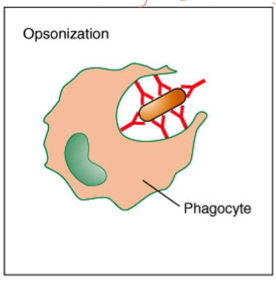
opsonisation: antibodies called opsonins bind t pathogens + tag them for recognition by phagocytes
what do antibodies act as
anti toxins
they bind to toxins produced by pathogens
the toxins are made harmelss
how can antibodies cause immobilisation
if they bind to the bacteria flagella
it can stop the bacterium moving
how can antibodies cause neutralisation
antibodies cover the pathogen binding sites
this prevents the pathogen from binding to a host cell (and therfore entering)