art history 1 - test 2
 Call Kai
 Learn
 Practice Test
 Spaced Repetition
 Match
 Flashcards
 Knowt Play
1/53

There's no tags or description
Looks like no tags are added yet.
54 Terms

The Dipylon Krater
Greek Geometric
c. 750-700 BCE

Krater with the Death of Sarpedon
Greek Archaic
c. 515 BCE

Anavysos Kouros
Greek Archaic
c. 530 BCE

Riace Warrior A
Greek Classical
c. 460 BCE

The Parthenon
Greek Classical
c. 447-432 BCE

Athena Attacking Giants
Greek Hellenistic
c. 175-150 BCE
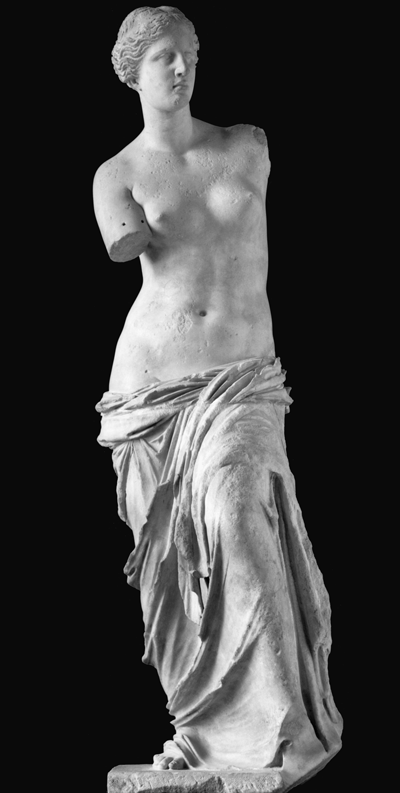
Aphrodite of Melos
Greek Hellenistic
c. 150-100 BCE

Sarcophagus of the Spouses
Etruscan
c. 520 BCE

Ficorini Cista
Etruscan
c. 350-300 BCE

Portrait of an Elder
Roman Republic
c. 1st century BCE

Pont Du Gard
Roman Republic
c. late 1st century BCE

Augustus of Primaporta
Roman Empire
c. 20 BCE

The Pantheon
Roman Empire
c. 110-128 CE
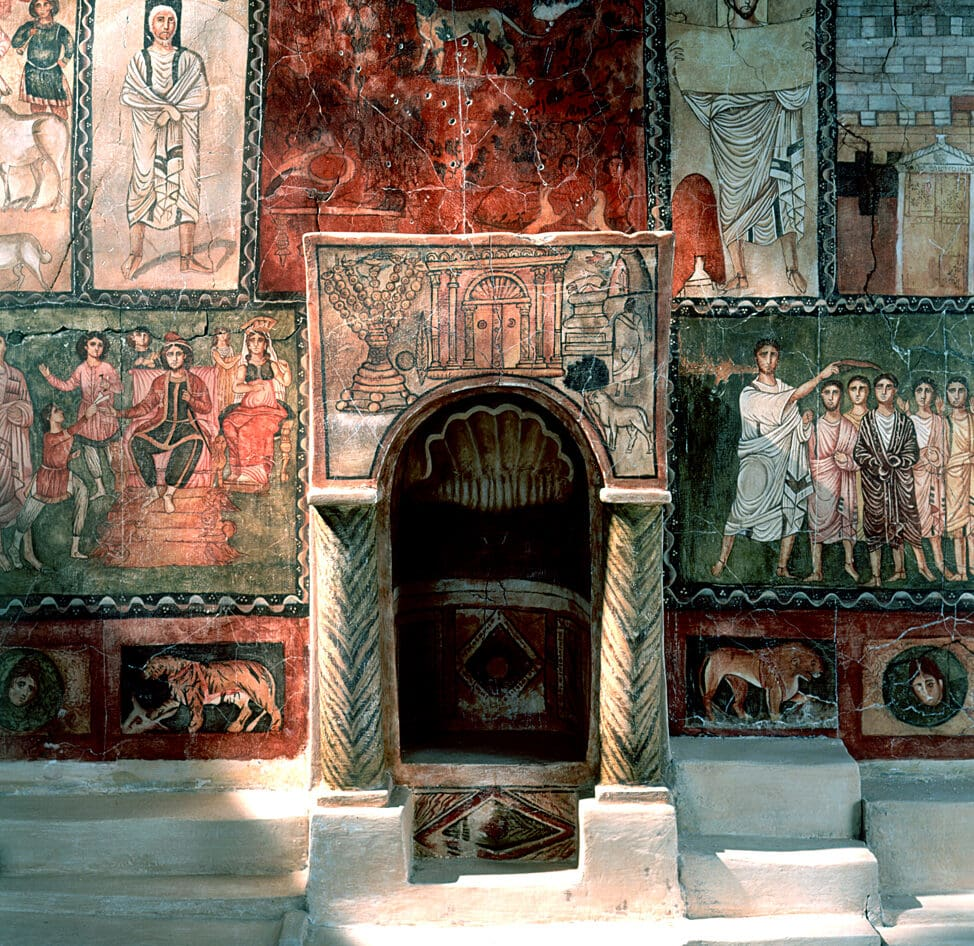
Wall Frescoes in the Synagogue at Dura Europos
Late Antique
c. 244-256 CE

Sarcophagos of Junius Bassus
Late Antique
c. 359 CE

Hagia Sophia
Byzantine
c. 532-537 CE

Mosaics of Justinian and Theodora in San Vitale
Byzantine
c. 547 CE

Dome of the Rock
Islamic
c. 691 CE

Mihrab and Dome of the Great Mosque of Cordoba
Islamic
c. 965 CE

Palace Plaque of a War Chief and Attendants
Benin
c. 1600 CE
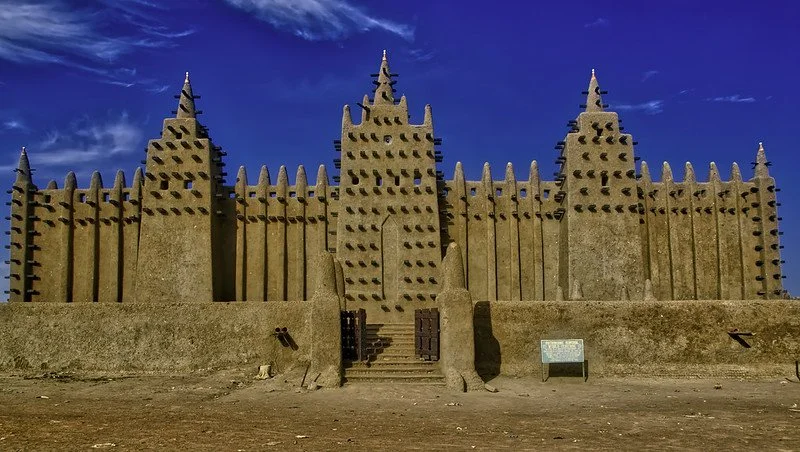
Great Mosque of Djenne
Mali
c. 1250 CE

What is notable about the Dipylon Krater?
It is very abstracted and includes geometricized bodies and patterns.
It is similar to the bronze figure with a centaur.
It includes details of a funerary scene in the upper register, and you can tell that is is meant to show grief because the figures are tearing their hair out.

What is notable about the Krater with the Death of Sarpedon?
It is a red figure painting.
The change from black figure to red figure symbolized a shift to naturalism.

What is notable about the Anavysos Kouros?
It includes an archaic smile, it is a male figure nude, and it also includes a traditional pose similar to Egyptian sculptures.
It is made of marble.

What is notable about Riace Warrior A?
Bronze, important because most bronzes did not survive for long but this one did due to it being lost at sea for a chunk of time.
Contrapposto positioning, weight resting unevenly, hips uneven, leaning into naturalism.
Nude, idealized body.

What is notable about The Parthenon?
Doric exterior columns, Ionic interior columns.
Subtle curves to make it appear perfectly straight from afar.
Metope sculptures showing battle between Lapiths and centaurs.

What is notable about Athena Attacking Giants?
It included “moving” drapery, and the piece is “frozen in action”.
It is incredibly dynamic.
Contrast between shadows and highlights, various textures.

What is notable about Aphrodite of Melos?
She is not completely nude, being almost nude could’ve been seen as more erotic than being entirely nude.
Her arms were possibly used to hold up a shield and admire herself in the reflection of it.

What is notable about the Sarcophagus of the Spouses?
People were represented with their families and spouses rather than being represented solo.
Mimics greek art with the archaic smile and hair patterns.
Made from clay/terracotta.
Most Etruscan art comes from tombs.
More equalities between men and women in Etruscan culture.

What is notable about Ficoroni Cista?
Included an inscription on the box saying a woman commissioned this to be made for her daughter, it was likely put in her daughters tomb.
Bronze, which was an important part of Etruscan culture.
References to Greek culture on the cista.

What is notable about Portrait of an Elder?
Veristic style.
Shows desirable senator characteristics (knowledge, age, etc).

What is notable about the Pont Du Gard?
Incredibly sturdy, beginning to use arches in Roman architecture.
Aquaduct/water channel.

What is notable about Augustus of Primaporta?
No heroic nudity other than the feet.
Wearing military kilt and toga, symbolizing war and peace.
Cupid cherub riding a dolphin, representing his connection to the gods.
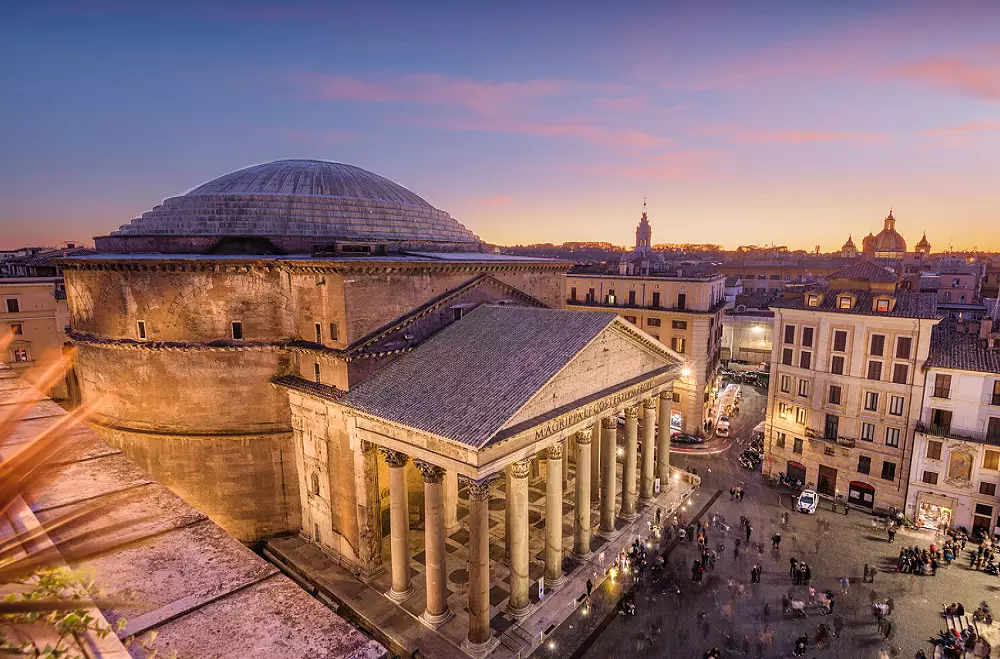
What is notable about The Pantheon?
Rectangular facade, interior circular space/dome, open oculus on top.
Made of concrete.
Biggest uninterrupted space when built.
Served as a temple to multiple gods.

What is notable about the Wall Frescoes in the Synagogue at Dura Europos?
Synagogues generally didn’t include figural imagery because worshipping idols is not allowed.
Jews from this region participated in figural imagery because of how important image making is in Rome/Roman culture.

What is notable about the Sarcophagus of Junius Bassus?
Non-sequential narrative.
Marble covered sarcophagus.
Symbolic of a wide spread shift to Christianity in Rome.
Shift in Roman culture from cremation to burial.

What is notable about Hagia Sophia?
Burned down, rebuilt, burned down, rebuilt.
Decorative stone and marble embedded in teh walls.
Very little figural imagery.
Expressed imperial and Christian power.

What is notable about the Mosaics of Justinian and Theodora in San Vitale?
Representation of 3 powers: church, empire, military.
Representation of Eucharist.
Naturalistic, but less so than classical.
Colored stone, pearl, gold and glass.

What is notable about the Dome of the Rock?
First building built as a muslim monument.
Not a mosque.
Incredibly similar layout to the church of San Vitale because there weren’t Islamic specific artists/architects yet, so they used a Byzantine artist.
No figural imagery, primarily abstract.
Arabic inscriptions on dome.

What is notable about the Mihrab and Dome of the Great Mosque of Cordoba?
A church was later built in the middle of the mosque.
Interior had a forest of columns supporting tiered, red and white arches.
Became a visual symbol of Islam for Christian painters.
Included inscriptions, gold mosaics, and blue details.

What is notable about the Palace Plaque of a War Chief and Attendants?
Included a hierarchy scale and symmetry to show power/authority.
Included a leaf shaped sword, called an Eben, which was not useful in practice but beautiful visually.

Doric Columns/Architecture
Columns sit directly on stylobate.
Top of column (capital) is smooth, rounded, and undecorated.
Large triangle on top.
Frieze is interrupted by triglyphs and metopes.
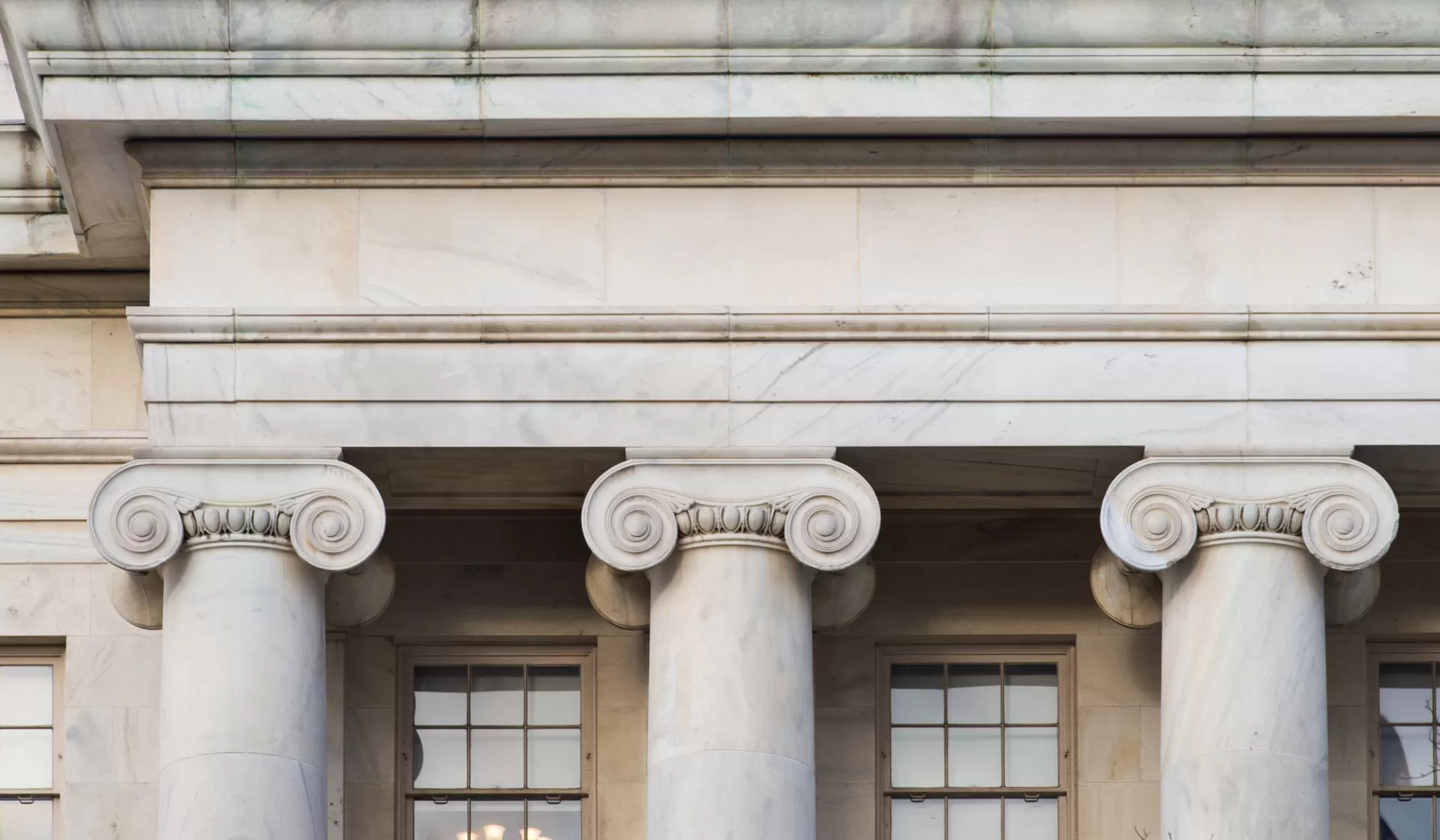
Ionic Columns/Architecture
Columns have a base.
Top of column (capital) is detailed and decorated.
No big triangle.
Frieze is decorated but not interrupted with triglyphs/metopes.
Greek Geometric Art
Title: Greek Geometric
Culture: Greek
Date: c. 900-600 BCE
What Features of this Culture are Exemplified by this Example?
- Horizontal registers, stylized features and animals (not naturalistic), funerary and narrative focuses, small bronze sculptures.
What Other Types of Art are Typical of this Culture?
- Bronze sculptures, kraters/amphoras.
What are Examples from this Period?
- Funerary Krater, Man and Centaur
What Do You Remember About the Context or Function of Art in this Culture?
- Rise of cities, aristocratic revivals, and funerary focuses.
What’s Up with this Today?
- Not much, conversations about it from art historians and in art classes
Greek Archaic Art
Title: Greek Archaic
Culture: Greek
Date: 600-480 BCE
What Features of this Culture are Exemplified by this Example?
- Archaic smiles, Doric/Ionic orders/columns, mythological themes, stylized hair, nude male sculptures, clothed female sculptures, leaning towards a more naturalistic and narrative style.
What Other Types of Art are Typical of this Culture?
- Black figure paintings, red figure paintings, vases (kraters/amphoras), sculptures (kouros’), architecture.
What are Examples from this Period?
- Krater with the Death of Sarpendon, Anavysos Kouros, Temple of Athena Nike.
What Do You Remember About the Context or Function of Art in this Culture?
- Social, economic and political shifts.
What’s Up with this Today?
- Not much, conversations about it from art historians and in art classes. Some debates on where the remaining pieces should reside.
Greek Classical Art
Title: Greek Classical
Culture: Greek
Date: 480-323 BCE
What Features of this Culture are Exemplified by this Example?
- A continuing shift to naturalistic art, contrapposto positioning, people sitting/kneeling/laying as opposed to standing straight up and rigid, nude male sculptures representing idealized proportions, visible emotions opposed to Archaic smiles.
What Other Types of Art are Typical of this Culture?
- Buildings/temples, statues (usually made of bronze or marble).
What are Examples from this Period?
- The Parthenon, Warrior A, Nike Adjusting Her Sandal, Aphrodite of Knidos.
What Do You Remember About the Context or Function of Art in this Culture?
- Continued social, political and economic growth.
What’s Up with this Today?
- Not much, conversations about it from art historians and in art classes. Some debates on where the remaining pieces should reside.
Greek Hellenistic Art
Title: Greek Hellenistic
Culture: Greek
Date: 323-31 BCE
What Features of this Culture are Exemplified by this Example?
- Very dynamic, scenes were often frozen in action, intentional shadows and highlights, moving fabric, female and male nudity, narrative pieces.
What Other Types of Art are Typical of this Culture?
- Sculptures.
What are Examples from this Period?
- Aphrodite of Melos, Sleeping Hermaphroditos, Seated Boxer, Lacoon and His Sons.
What Do You Remember About the Context or Function of Art in this Culture?
- Death of Alexander the Great, rise of Romans, power shifts, continued expansion.
What’s Up with this Today?
- Not much, conversations about it from art historians and in art classes. Some debates on where the remaining pieces should reside.
Etruscan Art
Title: Etruscan
Culture: Etruscan
Date: 550-89 BCE
What Features of this Culture are Exemplified by this Example?
- People were shown as parts of their families/couples rather than being represented solo, mimicking Greek art, narrative scenes.
What Other Types of Art are Typical of this Culture?
- Frescoes, sculptures, cistas, sarcophagus’.
What are Examples from this Period?
- Reclining Couple on a Sarcophagus, Ficorini Cista.
What Do You Remember About the Context or Function of Art in this Culture?
- Art was largely used in funerary ways/put in tombs. Largely mimicking Greek art in terms of sculptures and bronzes, introduction of terrocotta.
What’s Up with this Today?
- Not much, conversations about it from art historians and in art classes. Some debates on where the remaining pieces should reside.
Roman Republic Art
Title: Roman Republic
Culture: Roman
Date: 509-27 BCE
What Features of this Culture are Exemplified by this Example?
- Veristic style naturalism, similar to Greek art with a slight twist, sculptures typically made out of limestone or concrete but made to look like marble, arches.
What Other Types of Art are Typical of this Culture?
- Arches/architecture, frescoes, sculptures/portraits.
What are Examples from this Period?
- Portrait of an Elder, Pont du Gard, House of the Vetii.
What Do You Remember About the Context or Function of Art in this Culture?
- Art was generally used to create sculptures/portraits of Roman leaders or to create architectural monuments.
What’s Up with this Today?
- Not much, conversations about it from art historians and in art classes.
Roman Empire Art
Title: Roman Empire
Culture: Roman
Date: 27 BCE - 395 CE
What Features of this Culture are Exemplified by this Example?
- Continued shift towards veristic natrualism, sculpted portraits, showing off their arches and starting to have stand-alone arches dedicated to victories/generals.
What Other Types of Art are Typical of this Culture?
- Architecture/arches, sculptures, paintings.
What are Examples from this Period?
- Augustus of Primaporta, The Pantheon, Arch of Titus.
What Do You Remember About the Context or Function of Art in this Culture?
- Expansion of the Roman Empire, art used to signify power and victories.
What’s Up with this Today?
- Not much, conversations about it from art historians and in art classes.
Late Antiquity Art
Title: Late Antiquity
Culture: Roman
Date: 80-350 CE
What Features of this Culture are Exemplified by this Example?
- More abstract and expressive liberties taken by artists, less naturalism, focuses on religious figures and texts.
What Other Types of Art are Typical of this Culture?
- Sculptures, mosaics, paintings, interior architecture decoration,
What are Examples from this Period?
- Wall Paintings in the Synagogue at Dura-Europas, Sarcophagus of Junius Bassus.
What Do You Remember About the Context or Function of Art in this Culture?
- Shift to portraying religious narratives/figures/imagery, Jewish people were generally not supposed to participate in figural imagery but because they were Roman they found a great significance in it, large shift to Christianity.
What’s Up with this Today?
- Not much, conversations about it from art historians and in art classes.
Byzantine Art
Title: Byzantine
Culture: Roman
Date: 530-800 CE
What Features of this Culture are Exemplified by this Example?
- Large, intricate churches and mosaics, generally very abstract patterns but more detailed figural imagery and narratives related to religion.
What Other Types of Art are Typical of this Culture?
- Churches/architecture and mosaics.
What are Examples from this Period?
- Hagia Sophia, Mosaics of Justinian and Theodora in San Vitale, Monastery of Saint Catherine.
What Do You Remember About the Context or Function of Art in this Culture?
- Continuing the shift towards Christianity, churches and other religious buildings became staples of large cities (like Constantinople).
What’s Up with this Today?
- Not much, conversations about it from art historians and in art classes.
Islamic Art
Title: Islamic
Culture: Islam
Date: 622-1555 CE
What Features of this Culture are Exemplified by this Example?
- Intricate mosque designs with gold glass mosaics and inscriptions, abstract ceramic tiles, seldom to no figural imagery, niches (covered areas to pray) and domes, also included towers as markers for where mosques were throughout the city.
What Other Types of Art are Typical of this Culture?
- Mosques with domes and niches for praying, generally oriented towards Mecca, decorative plates, calligraphy.
What are Examples from this Period?
- Dome of the Rock, Mihrab and Dome of the Great Mosque of Cordoba.
What Do You Remember About the Context or Function of Art in this Culture?
- Large focus on Mecca and prayer, a lot of the mosques were similar to Byzantine churches because there we not yet Islamic artists/architects, so they had to commission Byzantine artists.
What’s Up with this Today?
- Not much, conversations about it from art historians and in art classes.
Early African Art
Title: Early African
Culture: African
Date: 5000 BCE - 1600 CE
What Features of this Culture are Exemplified by this Example?
- A focus on ceramics and geometric abstraction at first, later focus on more naturalistic sculptures and metal and bronze castings, return of hierarchical scales.
What Other Types of Art are Typical of this Culture?
- Statues, architecture (mosques/churches, pyramids), vessels, pendants.
What are Examples from this Period?
- Palace Plaque of a War Chief and Attendants, Great Mosque of Djenne.
What Do You Remember About the Context or Function of Art in this Culture?
- Hierarchy and power were large focuses, generally related to the Obas
What’s Up with this Today?
- Not much, conversations about it from art historians and in art classes.