Proteins B1.2
 Call Kai
 Learn
Learn Practice Test
 Spaced Repetition
 Match
Match Flashcards
 Knowt Play
1/55

There's no tags or description
Looks like no tags are added yet.
Name | Mastery | Learn | Test | Matching | Spaced | Call with Kai | Chat |
|---|
No analytics yet
Send a link to your students to track their progress
56 Terms
Protein
A macromolecule made from one or more polypeptide chains folded into a specific three dimensional shape
Macromolecule: a very large molecule made up of thousands of atoms, usually formed by joining smaller building blocks called monomers

What is an amino acid? What three components is it composed of?
An amino acid is the monomer that makes up proteins; it contains an amino group a carboxyl group a hydrogen atom and a variable R group attached to a central carbon

What is a polypeptide?
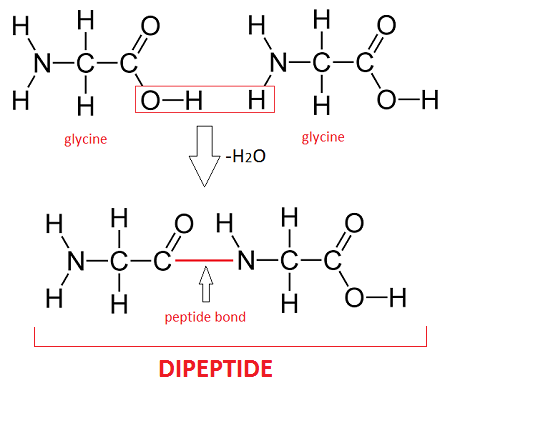
A polypeptide is a chain of amino acids joined together by peptide bonds

Peptide bond
A covalent bond formed between the carboxyl group of one amino acid and the amino group of another amino acid during a condensation reaction

Carboxyl group
A functional group containing carbon oxygen and hydrogen written as COOH

Amino group
A functional group containing nitrogen and hydrogen written as NH2

R group
The variable side chain of an amino acid that determines its chemical properties
Dipeptide
A molecule made from two amino acids joined by one peptide bond
How many amino acids can our body make?
The human body can synthesize 11 of the 20 standard amino acids

How many amino acids do we need from our diet?
Humans need to obtain 9 essential amino acids from their diet because the body cannot synthesize enough of them

Tripeptide
A molecule made from three amino acids joined together by two peptide bonds

Haemoglobin
A globular protein in red blood cells that transports oxygen

Keratin
A fibrous structural protein found in structures such as hair skin and nails

Lipase
An enzyme that catalyses the breakdown of lipids into smaller molecules
biological catalysts—usually proteins—that speed up specific chemical reactions in living cells without being used up or changed in the process

Collagen
A fibrous structural protein that provides strength and support in connective tissues

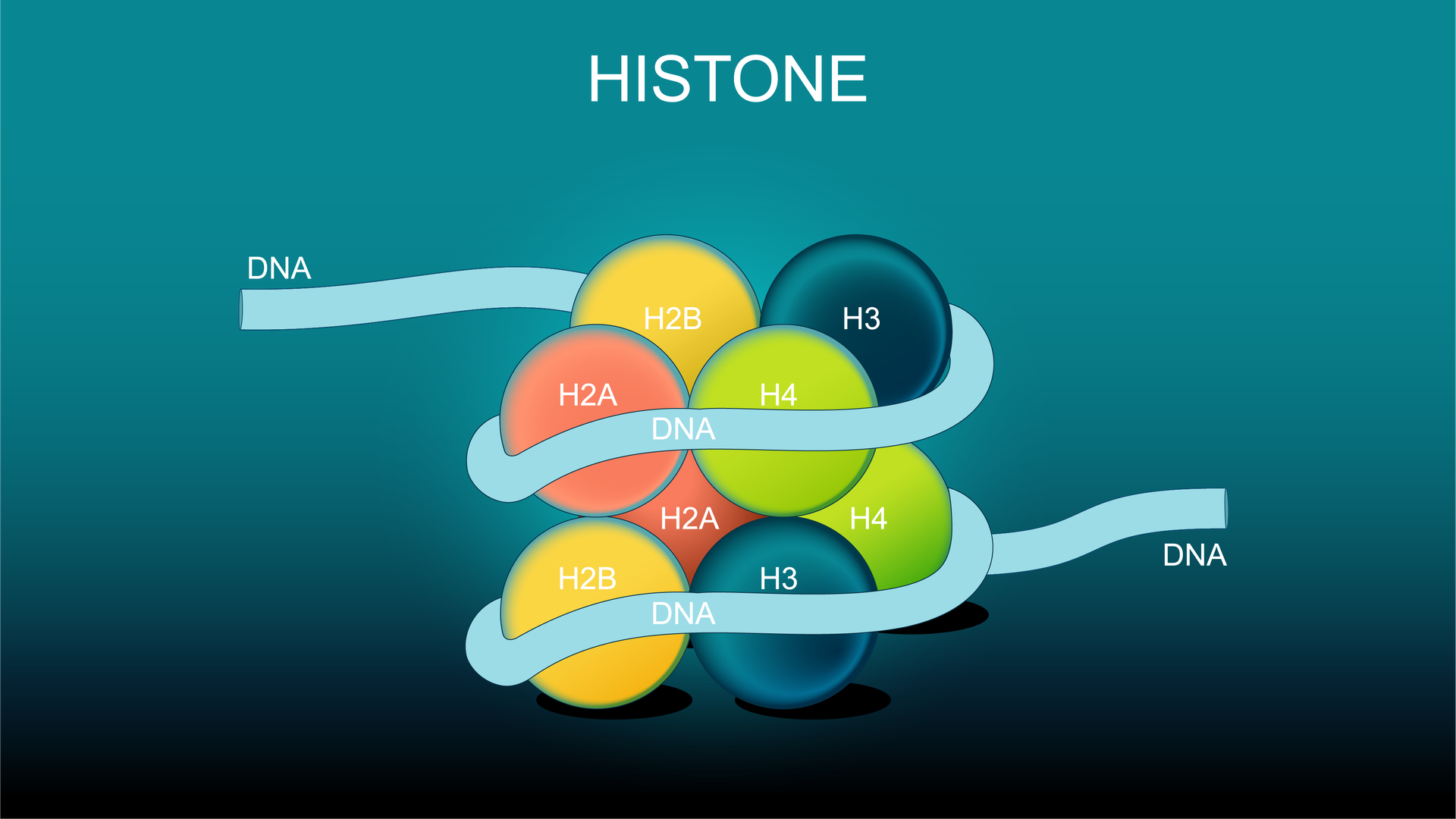
Histones
Proteins around which DNA wraps to form nucleosomes.
Highly alkaline proteins that package and order DNA into structural units called nucleosomes.
Insulin
A protein hormone that helps regulate blood glucose concentration
Protein structure
The organization of a protein at primary secondary tertiary and quaternary levels

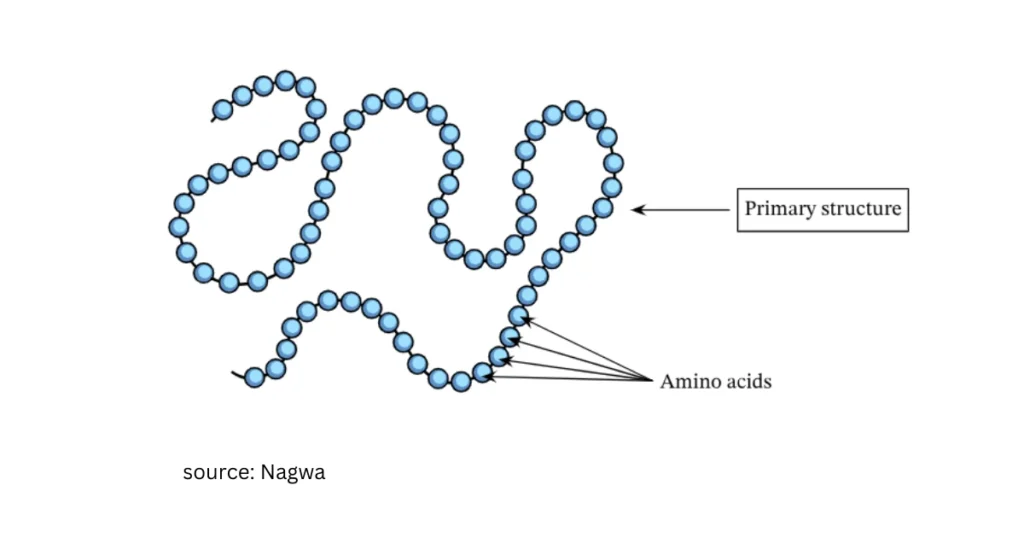
Primary structure °1
The specific sequence of amino acids in a polypeptide chain joined by peptide bonds
Secondary structure °2
The local folding of a polypeptide chain into structures such as alpha helices and beta pleated sheets

Alpha helix
A secondary protein structure in which the polypeptide chain forms a coiled shape stabilized mainly by hydrogen bonds
Beta pleated sheet
A secondary protein structure in which sections of a polypeptide chain form folded sheets stabilized mainly by hydrogen bonds
Tertiary structure °3
The overall three dimensional folding of a single polypeptide chain caused by interactions between R groups

Quaternary structure °4
The structure formed when two or more polypeptide chains associate to form one functional protein

Intermolecular forces
Forces of attraction between separate molecules that can influence the structure and properties of substances

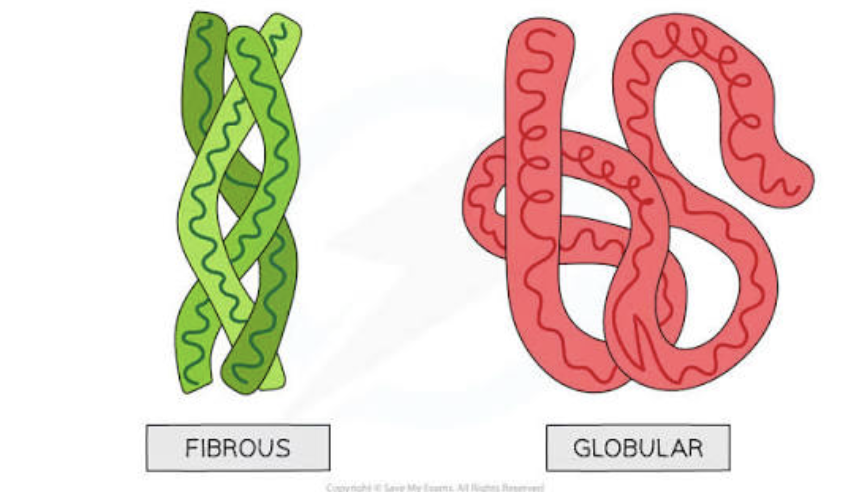
Globular protein
A protein with a compact roughly spherical shape that is often soluble in water and performs roles such as transport regulation or catalysis

Fibrous protein
A protein with a long or extended structure that often provides strength and support
Exothermic
A reaction that releases energy to the surroundings usually as heat


Endothermic
A reaction that absorbs energy from the surroundings

Neutralization
A reaction between an acid and a base that produces a salt and usually water


Essential amino acids
Amino acids that humans cannot synthesize in sufficient amounts and therefore need to obtain from their diet

Nonessential amino acids
Amino acids that the human body can synthesize in sufficient amounts
Polar amino acid
An amino acid whose side chain has an uneven distribution of electrical charge and can interact with water
Nonpolar amino acid
An amino acid whose side chain does not have a significant electrical charge and generally does not interact strongly with water
Positively charged amino acid
An amino acid whose side chain has a positive charge at approximately neutral pH
Negatively charged amino acid
An amino acid whose side chain has a negative charge at approximately neutral pH
Alanine Ala
Nonpolar; the side chain is a small methyl group

Arginine Arg
Positively charged; the side chain contains a basic amino group

Asparagine Asn
Polar uncharged; the side chain contains an amide group

Aspartic acid Asp
Negatively charged; the side chain contains a carboxyl group
Cysteine Cys
Polar uncharged; the side chain contains a sulfur containing thiol group and can form disulfide bonds
Glutamic acid Glu
Negatively charged; the side chain contains a carboxyl group
Glutamine Gln
Polar uncharged; the side chain contains an amide group
Glycine Gly
Nonpolar; the side chain is a hydrogen atom
Histidine His
Polar and can become positively charged; its side chain contains a nitrogen containing ring
Isoleucine Ile
Nonpolar; the side chain is a branched hydrocarbon chain
Leucine Leu
Nonpolar; the side chain is a branched hydrocarbon chain
Lysine Lys
Positively charged; the side chain contains a basic amino group
Methionine Met
Nonpolar; the side chain contains sulfur within a hydrocarbon chain
Phenylalanine Phe
Nonpolar; the side chain contains an aromatic ring
Proline Pro
Nonpolar; the side chain forms a ring with the amino group and creates bends in polypeptide chains
Serine Ser
Polar uncharged; the side chain contains a hydroxyl group
Threonine Thr
Polar uncharged; the side chain contains a hydroxyl group
Tryptophan Trp
Nonpolar; the side chain contains a large aromatic ring system
Tyrosine Tyr
Polar uncharged; the side chain contains an aromatic ring and a hydroxyl group
Valine Val
Nonpolar; the side chain is a branched hydrocarbon chain