Chapter 9 Microbiology UTA Tholen
 Call Kai
 Learn
 Practice Test
 Spaced Repetition
 Match
 Flashcards
 Knowt Play
1/78

There's no tags or description
Looks like no tags are added yet.
79 Terms
Binary Fission
most common cell replication- 2 daughter cells
Binary Fission Steps:
1) Growth of cell size and increase in cell components
2) Replication of DNA (cell elongation)
3) Division of the cytoplasm (cytokinesis)
4) Septum formation and division of daughter cells

Z-ring Assembly
1) Cytokinesis is directed by Ftsz protein
2) Ftsz assembles z-ring to form divisome
3) Divisome activates production of peptidoglycan and septum

Generation Time
aka Doubling Time; the time it takes for the pop. to double thru one round of binary fission
Bacterium Generation Times
E. coli: 20 mins
B. subtilis: 120 mins
S. aureus: 30 mins
M. tuberculosis: 15-20 hrs
Growth Curve: cultures
closed cultures have finite resources
open system cultures have infinite resources: resources replenished, waste removed
Growth Curve Phases
1) Lag phase: cells adjust to culture medium, no change in pop.
2) Log (exponential) phase: binary fission occurs; cell replication > cell death
3) Stationary phase: resources are depleted; cell replication = cell death
4) Death phase: endospores can form; cell replication < cell death

Lag Phase
growth and repair; determined by genetics, composition, initial size
Log Phase
intrinsic growth rate determined, uniform metabolism, susceptible to antimicrobials
stationary phase
waste accumulates, survival mode, susceptible to antimicrobials, virulence, sporulation
death phase
toxic waste, nutrients for endospores, persisters
Measuring Growth purpose
determining infection and contamination
Measuring Growth Methods: Microscopic cell count
cells are manually counted under a microscope (pertroff hausser chamber) cannot distinguish live vs. dead
Measuring Growth Methods: Fluorescence staining
cells are counted under a microscope/ flow cytometer; primary stain (green) and secondary stain (red); red stains binds to damaged membranes
Measuring Growth Methods: Viable cell counts
samples are diluted and grown as solid media; results expressed in colony forming units per volume (CFU/mL)
Coulter Counter
detects electrical resistance in saline solution; resistance change represent cell, cannot distinguish between alive/dead
Viable cell counts are limited to
easily cultured species
serial dilution methods
pour plate or spread plate technique

Dilutions are often on
log scale
Dilution factor is used to determine
original CFU count
Most Probable Number (MPN)
used when counts are very low (<30); used in food and water testing
Growth can be determined as either
positive or negative; Pattern= 5,2,0
Alternate patterns of growth
budding (planctomycetes) or fragmentation (cyanobacteria)
methods water is sampled
membrane filtration technique and MPN
Coulter counter
detects electrical resistance change due to cell density; doesn't differentiate live vs. dead
Optical density
Turbidity; measured with spectrophotometer; light is passed thru culture and measured on other side; Pop. increase= Turbidity increase; Absorbance= cells/ml
optical density allows the formation of
calibration curve- cell density
Biofilm Formation
microecosystems; liquid environments, clusters in matrix
Biofilm Formation Steps
1) Attachment of planktonic (free floating, aquatic) cells to a substrate
2) Attachment becomes irreversible; cells become sessile
3) Growth and division on substrate
4) Production of extracellular polymeric substrate (EPS)
5) Attachment of secondary colonizers and dispersion of microbes to new locations

Biofilm is formed through
quorum sensing, aka cell to cell communication
qourum sensing
cells coordinate activities in response to stimuli
biofilm structures
filamentous- flowing water; mushroom shaped-still water
Autoinducer
small molecules are produced to induce various actions- cascade and alters genes
gram negative autoinducers
n-acylated homoserine lactones
gram positive autoinducers
short peptides
EPS (biofilm) makes up…
50-90% of dry mass
Biofilm and EPS role in antibiotic resistance
slow diffusion and poor metabolic inactivation, extrachromosomal DNA (plasmids)
Main factors that affect growth:
Oxygen level, pH, temp., osmotic pressure, and barometric pressure
Obligate
must have oxygen
Facultative
can live with or without oxygen
Aerotolerant
tolerates oxygen
Aerobe
prefers oxygen
Anaerobe
prefers anything other than oxygen
Fluid Thioglycolate Medium (FTM)
low percentage agar tube that has a gradient of oxygen
Aerotolerance is determined by
location of growth
Obligate aerobe example
M. luteus

Obligate anaerobe example
Bacteroides, chlostridium (lack enzymes)

Facultative anaerobes example
Staphylococcus spp.

Aerotolerant anaerobes example
Lactobacillus, streptococci

Microaerophiles example
Campylobacter spp.

capnophiles
grow better in CO2
pH can affect
the efficacy of macromolecules; proteins are most vulnerable
Fermenter microbes are mostly adapted to what environments?
Acidic
Neutrophiles prefer what pH?
pH~7

Acidophiles prefer what pH?
below 5.5

Alkaphiles prefer what pH?
pH 8-10.5

nuetrophil examples
E.coli, staphylococcus, salmonella
acidophiles examples
lactobacillus
alkaliphiles examples
vibrio- unique structure
Mesophiles prefer what temperature?
room temp. (20-40C); most human microbiota/pathogens

Psychotrophs prefer what temperature?
cooler temp. (4-20C); responsible for food spoilage

Psychophiles LOVE what temperature?
freezing temp. (<0C)

Thermophiles like what temperature?
warm (50-80C); found in hot springs

Hyperthermophiles REALLY like what temperature?
HOT (80-110C); some survive at >121C

thermophiles and hyperthermophiles unique DNA structure
High G+C content
Halophiles
salt/solute lovers; found in oceans

Halotolerant
tolerate high salt; MSA and S. aureus

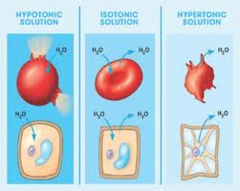
Hypertonic leads to
plasmolysis
Barometric pressure: barophiles
high pressure, largely unculturable, deep oceans
photoautotrophs
cyanobacteria and green sulfurs
photoheterotrophs
purple non-sulfurs
phycobilins require
low light levels
enriched media
provides nutrients for fastidious organisms
chemically defined media
composition known
complex medium
contains extracts of yeast, meat, plants (nutrient broth)
selective media
promote growth of organism of interest; ex: MacConkey
enrichment cultures
promote desired growth
differential media
distinguish colonies- color change
non-selective media
supports all micro-organisms