Inflorescence Types and Flower Shapes
 Call Kai
 Learn
 Practice Test
 Spaced Repetition
 Match
 Flashcards
 Knowt Play
1/28

There's no tags or description
Looks like no tags are added yet.
29 Terms
Indeterminate inflorescence
Terminal Flower: Never formed. The central growing tip (apical bud) stays vegetative and keeps growing indefinitely. Bottom-up or outside-in: The oldest flowers open first at the bottom (or outer edges), while new, younger buds continue to form and open toward the top.
Determinate inflorescence
Terminal Flower: Forms first. The central or terminal bud turns into a flower, which stops the main axis from growing taller.
Top-down or inside-out. The oldest flower is right at the top (or center) and blooms first, while newer flowers develop on lateral (side) branches below it.
Cross-Shaped (cruciform)
Consisting of four individual petals, one for each point of the compass (or like a cross)

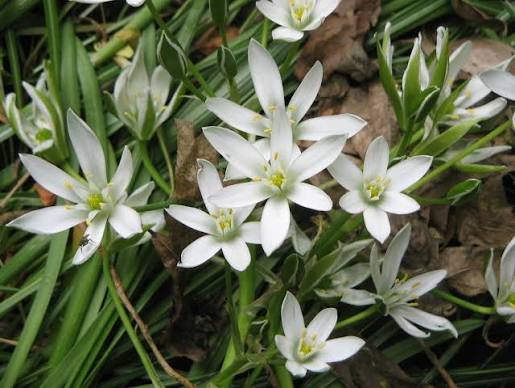
Star-Shaped (stellate)
With distinct individual petals radiating outward from the center
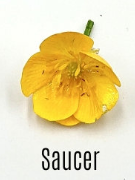
Saucer-Shaped
Larger, broader petals growing close together to form a shallow bowl
Bell-Shaped (campanulate)
An even deeper, narrower bowl, with the petals splaying outward as they reach their tips

Tubular
Like a bell-shaped flower that's closed in on itself to form a long, tight tube

Funnelform or Funnel-Shaped
A less-tightly packed version of the tubular shape, with the petals fanning slightly outward.

Tubular or Trumpet-Shaped
A tight funnel at the bottom, with the petals opening gently out from halfway to resemble the musical instrument

Salverform
A more extreme version of the trumpet, where the petals spread out at right angles from halfway up to give an open, round-faced display

Rosette
Consists of several rows of tightly packed flowers, arranged in whorls or circles

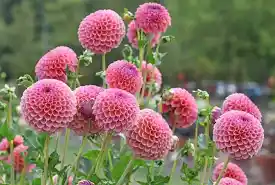
Pompom
A rosette shape taken to extremes, with the rows curling backward to form a dome or ball, usually ball shaped
Slipper-Shaped or pouch-shaped
An irregular shape with long petals forming a pouch (commonly seen in the subfamily: Cypripedioideae)

Spadix
a thick, fleshy central spike that bears numerous tiny, sessile (stemless) flowers

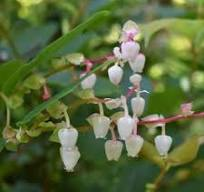
Urceolate
shaped like an urn, pitcher, or small vase. Swollen or rounded in the middle, narrowed (constricted) near the base, and slightly contracted or flared at the mouth/apex.
Solitary
Each flower on the plant is a single flower on a single stalk

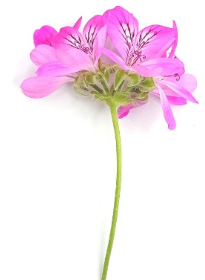
Cluster
Multiple flowers each with an unbranched stalk, all originating from the same point on the stem
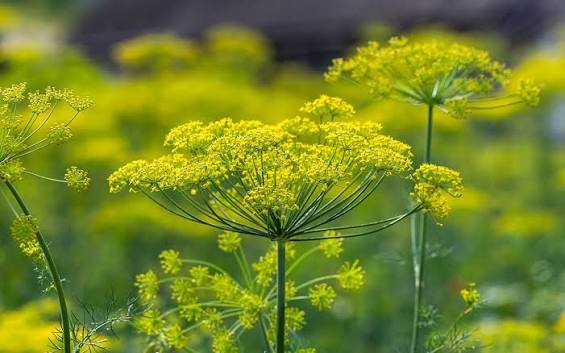
Umbel
Similar to a cluster, but with multiple flowers forming a bowl-like, radiating shape. All the stalks radiate from a single point on the tip of the stem
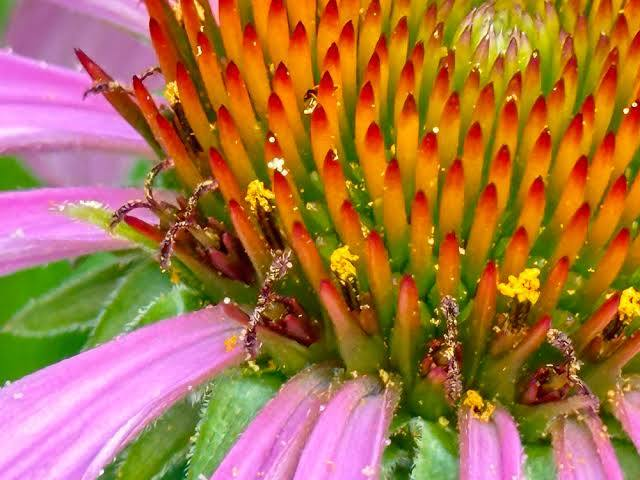
Capitulum
short dense spike in which the flowers are borne directly on a broad, flat peduncle, giving the inflorescence the appearance of a single flower. (ex. Asteraceae).
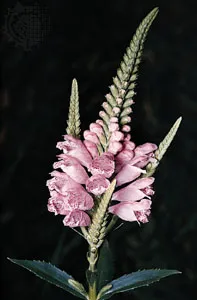
Raceme
A single main stem, sprouting multiple pedicels, each with a single flower (Indeterminate growth)

Cyme (pronounced /sime/)
a flat- or round-topped determinate inflorescence in the form of a flower cluster in which each individual flower stalk ends in a single flower and in which the first flower blooms at the top or in the center (determinate)

Spike
Flowers develop directly from the stem and are not borne on pedicels, usually growing very densely (indeterminate)
Corymb
a raceme in which the pedicels of the lower flowers are longer than those of the upper flowers so that the inflorescence has a flat-topped appearance overall (indeterminate)

Panicle
The most complex arrangement of flowers, with several sets of raceme, cyme or corymb clusters branching off from a central stem (indeterminate)

Glabrous
smooth and completely lacking hairs, bristles, scales, or other surface projections (trichomes)

Bract
a modified or specilzed leaf which may be reduced in size or different in other characteristics from the foliage leaves and that usually subtends (meaning it sits directly beneath or close to the base of) a flower or an inflorescence.

Ray flowers
Disc flowers
Glomerulus or Glomerules
glomerulus (often called a glomerule) is a dense, ball-like or head-like compact cluster of nearly sessile (stalkless) and usually small flowers or spores
