Chapter 6 Positions

0.0(0)
Studied by 1 person
call kaiCall Kai
learnLearn
examPractice Test
spaced repetitionSpaced Repetition
heart puzzleMatch
flashcardsFlashcards
GameKnowt Play
full-widthPodcast
1
Card Sorting

1/16

encourage image

There's no tags or description

Looks like no tags are added yet.

Last updated 10:45 AM on 10/5/26
Name
Mastery
Learn
Test
Matching
Spaced
Call with Kai
Chat

No analytics yet

Send a link to your students to track their progress

17 Terms

1
New cards
<p>Shoulder (AP Projection) (External Rotation)</p>

Shoulder (AP Projection) (External Rotation)

• Upright or Supine

• Center the shoulder joint to the midline of the grid

• Center the IR at 1inch inferior to coracoid process

• Suspend Respiration

• CR is perpendicular to 1inch inferior to coracoid process

External Rotation

• Supinate the hand

What’s in Profile

• Greater Tubercle

<p>	• Upright or Supine</p><p>	• Center the shoulder joint to the midline of the grid</p><p>	• Center the IR at 1inch inferior to coracoid process </p><p>	• Suspend Respiration </p><p>	• CR is perpendicular to 1inch inferior to coracoid process </p><p><strong><mark data-color="red" style="background-color: red; color: inherit;">External Rotation </mark></strong></p><p>	• Supinate the hand </p><p><strong><mark data-color="red" style="background-color: red; color: inherit;">What’s in Profile</mark></strong></p><p>	• Greater Tubercle</p>
2
New cards
<p>Shoulder (AP Projection)(Internal Rotation)</p>

Shoulder (AP Projection)(Internal Rotation)

Upright or Supine

• Center the shoulder joint to the midline of the grid

• Center the IR at 1inch inferior to coracoid process

Respiration

  • Suspend

Central Ray

• CR is perpendicular to 1inch inferior to coracoid process

Internal Rotation

• Flex the elbow and rotate arm internally,rest the back of the hand on the hip.

What’s in Profile?

• Lesser Tubercle

<p><strong><mark data-color="red" style="background-color: red; color: inherit;">Upright or Supine</mark></strong></p><p>• Center the shoulder joint to the midline of the grid</p><p>• Center the IR at 1inch inferior to coracoid process</p><p><strong><mark data-color="red" style="background-color: red; color: inherit;">Respiration</mark></strong></p><ul><li><p>Suspend</p></li></ul><p><strong><mark data-color="red" style="background-color: red; color: inherit;">Central Ray</mark></strong></p><p>• CR is perpendicular to 1inch inferior to coracoid process</p><p><strong><mark data-color="red" style="background-color: red; color: inherit;">Internal Rotation</mark></strong></p><p>• Flex the elbow and rotate arm internally,rest the back of the hand on the hip.</p><p><strong><mark data-color="red" style="background-color: red; color: inherit;">What’s in Profile?</mark></strong></p><p>• Lesser Tubercle</p>
3
New cards
<p>Shoulder (AP projection) (Neutral Rotation)</p><p></p>

Shoulder (AP projection) (Neutral Rotation)


Upright or Supine

• Center the shoulder joint to the midline of the grid

• Center the IR at 1inch inferior to coracoid process

• Suspend Respiration

• CR is perpendicular to 1inch inferior to coracoid process

Neutral Rotation

• Rest the palm of hand against thigh

• epicondyles 45 degrees with the plane of IR

<p><strong><mark data-color="purple" style="background-color: purple; color: inherit;">Upright or Supine</mark></strong></p><p>	• Center the shoulder joint to the midline of the grid</p><p>	• Center the IR at 1inch inferior to coracoid process </p><p>	• Suspend Respiration </p><p>	• CR is perpendicular to 1inch inferior to coracoid process </p><p><strong>Neutral Rotation</strong></p><p>	• Rest the palm of hand against thigh</p><p>	• epicondyles 45 degrees with the plane of IR </p>
4
New cards
<p>Shoulder (Glenoid Cavity/Grashley method) (AP Oblique Projection)</p>

Shoulder (Glenoid Cavity/Grashley method) (AP Oblique Projection)

Position

  • RPO or LPO

  • Supine or Upright

  • Center IR to scapulohumeral joint.

  • Rotate body 35 to 45 degrees to affected side

  • Abduct the arm slightly in internal rotation and place the palm of hand on abdomen.

Central Ray

  • CR is perpendicular to the IR, 2 inches medial and 2 inches inferior to superolateral border of shoulder. (Armpit)

Respiration

  • Suspend

What’s in profile?

• Joint space between humeral head and glenoid cavity

• Glenoid Cavity

<p><mark data-color="red" style="background-color: red; color: inherit;">Position</mark></p><ul><li><p>RPO or LPO</p></li><li><p>Supine or Upright</p></li><li><p>Center IR to scapulohumeral joint.</p></li><li><p>Rotate body 35 to 45 degrees to affected side</p></li><li><p>Abduct the arm slightly in internal rotation and place the palm of hand on abdomen.</p></li></ul><p><strong><mark data-color="red" style="background-color: red; color: inherit;">Central Ray</mark></strong></p><ul><li><p>CR is perpendicular to the IR, 2 inches medial and 2 inches inferior to superolateral border of shoulder. (Armpit)</p></li></ul><p><strong><mark data-color="red" style="background-color: red; color: inherit;">Respiration</mark></strong></p><ul><li><p>Suspend </p></li></ul><p><strong><mark data-color="red" style="background-color: red; color: inherit;">What’s in profile?</mark></strong></p><p>• Joint space between humeral head and glenoid cavity</p><p>• Glenoid Cavity</p>
5
New cards
<p>Shoulder Joint (Tangential Projection) (Supraspinatus Outlet\Neer Method)</p>

Shoulder Joint (Tangential Projection) (Supraspinatus Outlet\Neer Method)

Position

  • Upright

  • RAO or LAO

  • Affected shoulder centered and close to IR

  • Unaffected side away from IR

  • Flat part of Scapular needs to be perpendicular to IR

  • Rotation will be anywhere from 45 to 60 degrees

  • Arms by side

Central Ray

  • Angled 10 to 15 degrees caudad, entering superior aspect of humeral head

Respiration

  • Suspend

What’s in profile?

  • Humeral head lower than Y

  • AC joint

  • Humerus and scapular body usually parallel.


<p><strong><mark data-color="red" style="background-color: red; color: inherit;">Position</mark></strong></p><ul><li><p>Upright</p></li><li><p>RAO or LAO</p></li><li><p>Affected shoulder centered and close to IR</p></li><li><p>Unaffected side away from IR</p></li><li><p>Flat part of Scapular needs to be perpendicular to IR </p></li><li><p>Rotation will be anywhere from 45 to 60 degrees</p></li><li><p>Arms by side </p></li></ul><p><strong><mark data-color="red" style="background-color: red; color: inherit;">Central Ray</mark></strong></p><ul><li><p>Angled 10 to 15 degrees caudad, entering superior aspect of humeral head</p></li></ul><p><strong><mark data-color="red" style="background-color: red; color: inherit;">Respiration</mark></strong></p><ul><li><p>Suspend</p></li></ul><p><strong><mark data-color="red" style="background-color: red; color: inherit;">What’s in profile?</mark></strong></p><ul><li><p>Humeral head lower than Y </p></li><li><p>AC joint</p></li><li><p>Humerus and scapular body usually parallel. </p></li></ul><p></p><p></p>
6
New cards
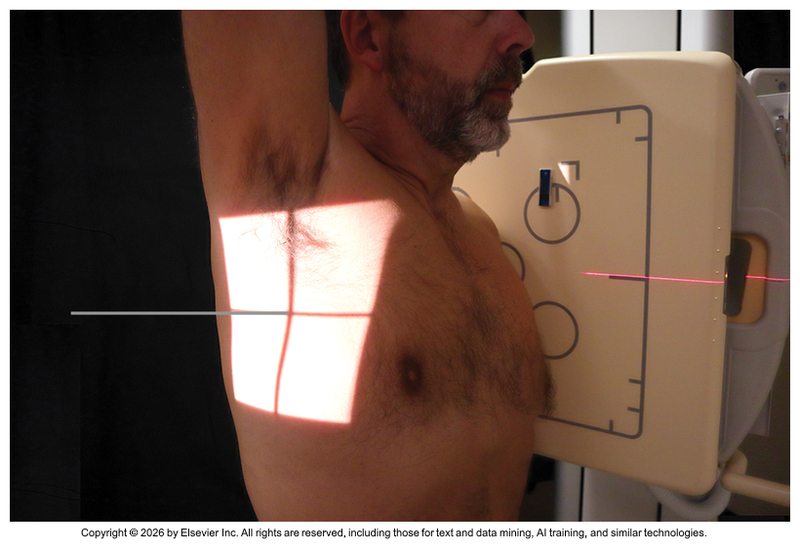
<p>Shoulder (Transthoracic Lateral Projection) (Lawerence Method)</p>

Shoulder (Transthoracic Lateral Projection) (Lawerence Method)

  • Right or Left lateral position

  • Upright or Supine (Upright may be less painful for trauma patients)

  • Raise unaffected arm, rest forearm on head

  • Center the IR to the surgical neck area of humerus

Respiration

  • Full inspiration

  • Breathing technique (slow deep breathing)

Central Ray

  • Perpendicular to the IR

  • Enters at the midcoronal plane at the level of the surgical neck

  • If patient is unable to lift unaffected shoulder angle the central ray 10 to 15 degrees cephalad.

What’s in Profile?

  • Scapula, Clavicle and proximal humerus seen through lung field

  • Unaffected shoulder projected above the shoulder closer to the IR


<ul><li><p>Right or Left lateral position</p></li><li><p>Upright or Supine (Upright may be less painful for trauma patients)</p></li><li><p>Raise unaffected arm, rest forearm on head</p></li><li><p>Center the IR to the surgical neck area of humerus </p></li></ul><p><strong><mark data-color="red" style="background-color: red; color: inherit;">Respiration</mark></strong></p><ul><li><p>Full inspiration </p></li><li><p>Breathing technique (slow deep breathing)</p></li></ul><p><strong><mark data-color="red" style="background-color: red; color: inherit;">Central Ray</mark></strong></p><ul><li><p>Perpendicular to the IR</p></li><li><p>Enters at the midcoronal plane at the level of the surgical neck </p></li><li><p>If patient is unable to lift unaffected shoulder angle the central ray 10 to 15 degrees cephalad.</p></li></ul><p><strong><mark data-color="red" style="background-color: red; color: inherit;">What’s in Profile?</mark></strong></p><ul><li><p>Scapula, Clavicle and proximal humerus seen through lung field</p></li><li><p>Unaffected shoulder projected above the shoulder closer to the IR</p></li></ul><p></p><p></p>
7
New cards
<p>Shoulder (Superoinferior Axial Projection)</p>

Shoulder (Superoinferior Axial Projection)

Position

  • IR at the end of the table parallel with long axis

  • Have patient lean laterally until shoulder joint is over midpoint of IR

  • Elbow flex 90 degrees with hand prone

  • Head tilted toward unaffected shoulder.

  • Epicondyles should be vertical

Respiration

  • Suspend

Central Ray

  • Angled 5 to 15 degrees through shoulder joint toward elbow

  • Greater angle when patient is unable to extend shoulder over midpoint of IR.

What’s in profile?

  • Joint relationship of the proximal end of humerus and glenoid cavity.

  • AC articulation

  • Outer portion of coracoid process

  • Lesser tubercle

  • Scalpulohumeral joint


<p><strong><mark data-color="red" style="background-color: red; color: inherit;">Position</mark></strong></p><ul><li><p>IR at the end of the table parallel with long axis</p></li><li><p>Have patient lean laterally until shoulder joint is over midpoint of IR</p></li><li><p>Elbow flex 90 degrees with hand prone</p></li><li><p>Head tilted toward unaffected shoulder.</p></li><li><p>Epicondyles should be vertical</p></li></ul><p><strong><mark data-color="red" style="background-color: red; color: inherit;">Respiration</mark></strong></p><ul><li><p>Suspend</p></li></ul><p><strong><mark data-color="red" style="background-color: red; color: inherit;">Central Ray</mark></strong></p><ul><li><p>Angled 5 to 15 degrees through shoulder joint toward elbow</p></li><li><p>Greater angle when patient is unable to extend shoulder over midpoint of IR.</p></li></ul><p><strong><mark data-color="red" style="background-color: red; color: inherit;">What’s in profile?</mark></strong></p><ul><li><p>Joint relationship of the proximal end of humerus and glenoid cavity.</p></li><li><p>AC articulation</p></li><li><p>Outer portion of coracoid process</p></li><li><p>Lesser tubercle</p></li><li><p>Scalpulohumeral joint</p></li></ul><p></p>
8
New cards
<p>Shoulder (Inferiosuperior Axial Projection) (Lawrence)</p>

Shoulder (Inferiosuperior Axial Projection) (Lawrence)

Position

  • Supine

  • Shoulder needs to be built up

  • Head turned away from IR

  • Place IR crosswise in the crook of patient’s neck and shoulder. (Shoulder Joint)

Respiration

  • Suspend

Central Ray

  • Horizontal

  • Enters Axilla

What’s in profile?

  • Proximal Humerus

  • Scapulohumeral joint (slight overlap)

  • AC articulation

  • Lateral part of corocoid

  • Lesser tubercle


<p><strong><mark data-color="red" style="background-color: red; color: inherit;">Position</mark></strong></p><ul><li><p>Supine</p></li><li><p>Shoulder needs to be built up</p></li><li><p>Head turned away from IR</p></li><li><p>Place IR crosswise in the crook of patient’s neck and shoulder. (Shoulder Joint)</p></li></ul><p><strong><mark data-color="red" style="background-color: red; color: inherit;">Respiration</mark></strong></p><ul><li><p>Suspend</p></li></ul><p><strong><mark data-color="red" style="background-color: red; color: inherit;">Central Ray</mark></strong></p><ul><li><p>Horizontal</p></li><li><p>Enters Axilla</p></li></ul><p><strong><mark data-color="red" style="background-color: red; color: inherit;">What’s in profile?</mark></strong></p><ul><li><p>Proximal Humerus</p></li><li><p>Scapulohumeral joint (slight overlap)</p></li><li><p>AC articulation</p></li><li><p><mark data-color="blue" style="background-color: blue; color: inherit;">Lateral part of corocoid </mark></p></li><li><p><mark data-color="blue" style="background-color: blue; color: inherit;">Lesser tubercle</mark></p></li></ul><p></p>
9
New cards
<p>Shoulder (PA oblique)(Scapular Y/ Y-View)</p>

Shoulder (PA oblique)(Scapular Y/ Y-View)

Position

  • Upright or recumbent

  • RAO or LAO

  • Affected shoulder closer to IR

  • 45 degree oblique

Central Ray

  • Perpendicular to Scapulohumeral Joint

Respiration

  • Suspend

What’s in profile?

  • Humeral head and scapular body superimposed

  • Acromion projected laterally and free of superimposition

  • Scapula in lateral position


<p><strong><mark data-color="red" style="background-color: red; color: inherit;">Position</mark></strong></p><ul><li><p>Upright or recumbent</p></li><li><p>RAO or LAO</p></li><li><p>Affected shoulder closer to IR</p></li><li><p>45 degree oblique</p></li></ul><p><strong><mark data-color="red" style="background-color: red; color: inherit;">Central Ray</mark></strong></p><ul><li><p>Perpendicular to Scapulohumeral Joint</p></li></ul><p><strong><mark data-color="red" style="background-color: red; color: inherit;">Respiration</mark></strong></p><ul><li><p>Suspend</p></li></ul><p><strong><mark data-color="red" style="background-color: red; color: inherit;">What’s in profile?</mark></strong></p><ul><li><p><mark data-color="blue" style="background-color: blue; color: inherit;">Humeral head and scapular body superimposed</mark></p></li><li><p>Acromion projected laterally and free of superimposition</p></li><li><p>Scapula in lateral position</p></li></ul><p></p><p></p>
10
New cards
<p>AC joints (AP Projection)</p>

AC joints (AP Projection)

Position

  • Upright

  • Arms hanging by side

  • 2 seperate exposures made; one with weights and one without.

  • Shoulder in same horizontal plane

Central Ray

  • If one image (perpendicular to midline of body at AC joints)

  • If two images ( perpendicular to individual AC joint)

  • SID 72

What’s in profile?

  • AC joints


<p><strong><mark data-color="red" style="background-color: red; color: inherit;">Position</mark></strong></p><ul><li><p>Upright</p></li><li><p>Arms hanging by side</p></li><li><p>2 seperate exposures made; one with weights and one without. </p></li><li><p>Shoulder in same horizontal plane</p></li></ul><p><strong><mark data-color="red" style="background-color: red; color: inherit;">Central Ray</mark></strong></p><ul><li><p>If one image (perpendicular to midline of body at AC joints) </p></li><li><p>If two images ( perpendicular to individual AC joint)</p></li><li><p>SID 72</p></li></ul><p><strong><mark data-color="red" style="background-color: red; color: inherit;">What’s in profile?</mark></strong></p><ul><li><p>AC joints</p><p></p></li></ul><p></p>
11
New cards
<p>Clavicle (PA axial projection)</p>

Clavicle (PA axial projection)

Position

  • Upright or Supine

  • Clavicle centered to Wall Bucky

  • Arms at side

  • Patient facing wall bucky

Central Ray

  • CR enters the mid shaft of clavicle

  • CR is angled 15 to 30 degrees caudad (15 for larger body habitus, 30 for smaller)

Respiration

  • Suspend at the end of full inspiration

What’s in profile?

  • Clavicle (SC and AC joints) above ribs

  • Horizontal Clavicle

  • Lateral 2/3rds of clavicle above scapula and medial end superimposing thorax


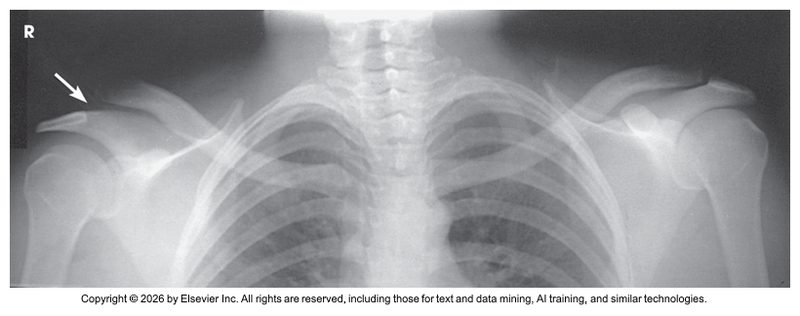
<p><strong><mark data-color="red" style="background-color: red; color: inherit;">Position</mark></strong></p><ul><li><p>Upright or Supine</p></li><li><p>Clavicle centered to Wall Bucky</p></li><li><p>Arms at side</p></li><li><p>Patient facing wall bucky </p></li></ul><p><strong><mark data-color="red" style="background-color: red; color: inherit;">Central Ray</mark></strong></p><ul><li><p>CR enters the mid shaft of clavicle</p></li><li><p>CR is angled 15 to 30 degrees caudad (15 for larger body habitus, 30 for smaller)</p></li></ul><p><strong><mark data-color="red" style="background-color: red; color: inherit;">Respiration</mark></strong></p><ul><li><p>Suspend at the end of full inspiration</p></li></ul><p><strong><mark data-color="red" style="background-color: red; color: inherit;">What’s in profile?</mark></strong></p><ul><li><p>Clavicle (SC and AC joints) above ribs</p></li><li><p>Horizontal Clavicle</p></li><li><p>Lateral 2/3rds of clavicle above scapula and medial end superimposing thorax</p></li></ul><p></p>
12
New cards
<p>Clavicle (AP Axial Projection)</p>

Clavicle (AP Axial Projection)

Position

  • Upright or Supine

  • Clavicle centered to Wall Bucky

  • Arms at side

  • Patient facing wall bucky

Central Ray

  • CR enters the mid shaft of clavicle

  • CR is angled 15 to 30 degrees cephalic (15 for larger body habitus, 30 for smaller)

Respiration

  • Suspend at the end of full inspiration

What’s in profile?

  • Clavicle (SC and AC joints) above ribs

  • Horizontal Clavicle

  • Lateral 2/3rds of clavicle above scapula and medial end superimposing thorax


<p><strong><mark data-color="red" style="background-color: red; color: inherit;">Position</mark></strong></p><ul><li><p>Upright or Supine</p></li><li><p>Clavicle centered to Wall Bucky</p></li><li><p>Arms at side</p></li><li><p>Patient facing wall bucky </p></li></ul><p><strong><mark data-color="red" style="background-color: red; color: inherit;">Central Ray</mark></strong></p><ul><li><p>CR enters the mid shaft of clavicle</p></li><li><p>CR is angled 15 to 30 degrees cephalic (15 for larger body habitus, 30 for smaller)</p></li></ul><p><strong><mark data-color="red" style="background-color: red; color: inherit;">Respiration</mark></strong></p><ul><li><p>Suspend at the end of full inspiration</p></li></ul><p><strong><mark data-color="red" style="background-color: red; color: inherit;">What’s in profile?</mark></strong></p><ul><li><p>Clavicle (SC and AC joints) above ribs</p></li><li><p>Horizontal Clavicle</p></li><li><p>Lateral 2/3rds of clavicle above scapula and medial end superimposing thorax</p></li></ul><p></p>
13
New cards
<p>Clavicle (AP Projection)</p>

Clavicle (AP Projection)

Position

  • Upright or supine

  • Mid line of IR should align with level of clavicle

  • Arms by side

  • Shoulders same plane

Respiration

  • suspend at the end of exhalation.

Central Ray

  • perpendicular to the midshaft of clavicle

What’s in profile?

  • Entire Clavicle

  • Lateral half of clavicle will be above scapula, medial half superimposing thorax


<p><strong><mark data-color="red" style="background-color: red; color: inherit;">Position</mark></strong></p><ul><li><p>Upright or supine</p></li><li><p>Mid line of IR should align with level of clavicle</p></li><li><p>Arms by side</p></li><li><p>Shoulders same plane</p></li></ul><p><strong><mark data-color="red" style="background-color: red; color: inherit;">Respiration</mark></strong></p><ul><li><p>suspend at the end of exhalation.</p></li></ul><p><strong><mark data-color="red" style="background-color: red; color: inherit;">Central Ray</mark></strong></p><ul><li><p>perpendicular to the midshaft of clavicle</p></li></ul><p><strong><mark data-color="red" style="background-color: red; color: inherit;">What’s in profile?</mark></strong></p><ul><li><p>Entire Clavicle</p></li><li><p>Lateral half of clavicle will be above scapula, medial half superimposing thorax</p></li></ul><p></p><p></p>
14
New cards
<p>Clavice (PA Projection)</p>

Clavice (PA Projection)

Position

  • Upright or supine

  • Mid line of IR should align with level of clavicle

  • Arms by side

  • Shoulders same plane

Respiration

  • suspend at the end of exhalation.

Central Ray

  • perpendicular CR exits the midshaft of clavicle

What’s in profile?

  • Entire Clavicle

  • Lateral half of clavicle will be above scapula, medial half superimposing thorax


<p><strong><mark data-color="red" style="background-color: red; color: inherit;">Position</mark></strong></p><ul><li><p>Upright or supine</p></li><li><p>Mid line of IR should align with level of clavicle</p></li><li><p>Arms by side</p></li><li><p>Shoulders same plane</p></li></ul><p><strong><mark data-color="red" style="background-color: red; color: inherit;">Respiration</mark></strong></p><ul><li><p>suspend at the end of exhalation.</p></li></ul><p><strong><mark data-color="red" style="background-color: red; color: inherit;">Central Ray</mark></strong></p><ul><li><p>perpendicular CR exits the midshaft of clavicle</p></li></ul><p><strong><mark data-color="red" style="background-color: red; color: inherit;">What’s in profile?</mark></strong></p><ul><li><p>Entire Clavicle</p></li><li><p>Lateral half of clavicle will be above scapula, medial half superimposing thorax</p></li></ul><p></p><p></p>
15
New cards
<p>Scapula (AP Projection)</p>

Scapula (AP Projection)

Position

  • Upright or supine.

  • Center affected scapula to midline of grid.

  • Arm in stop sign position

  • Top of IR 2 inch above shoulders

Central Ray

  • CR perpendicular to midscapular area 2 inches below coracoid process

Respirations

  • Slow breathing

What’s in profile?

  • Lateral portion of scapula free of superimposition from ribs

  • Scapula Horizontal

  • Acromion and inferior angle


<p><strong><mark data-color="red" style="background-color: red; color: inherit;">Position</mark></strong></p><ul><li><p>Upright or supine.</p></li></ul><ul><li><p>Center affected scapula to midline of grid.</p></li><li><p>Arm in stop sign position</p></li><li><p>Top of IR 2 inch above shoulders</p></li></ul><p><strong><mark data-color="red" style="background-color: red; color: inherit;">Central Ray</mark></strong></p><ul><li><p>CR perpendicular to midscapular area 2 inches below coracoid process</p></li></ul><p><strong><mark data-color="red" style="background-color: red; color: inherit;">Respirations</mark></strong></p><ul><li><p>Slow breathing</p></li></ul><p><strong><mark data-color="red" style="background-color: red; color: inherit;">What’s in profile?</mark></strong></p><ul><li><p>Lateral portion of scapula free of superimposition from ribs</p></li><li><p>Scapula Horizontal</p></li><li><p>Acromion and inferior angle</p></li></ul><p></p>
16
New cards
<p>Scapula (Lateral Projection)</p>

Scapula (Lateral Projection)

Position

  • Upright (Prone can be used but difficult)

  • RAO or LAO

  • Affected scapula centered to grid

  • 45 to 60 degree angle from IR

  • Move arm out of way to get Humerus out of way.

Respiration

  • Suspend

Central Ray

  • CR is perpendicular to mid medial border of the protruding scapula

What’s in profile?

  • Lateral and medial scapular borders superimposed.

  • No superimposition of scapular body on the ribs.

  • No superimposition of humerus

  • Acromion and inferior angle


<p><strong><mark data-color="red" style="background-color: red; color: inherit;">Position</mark></strong></p><ul><li><p>Upright (Prone can be used but difficult)</p></li><li><p>RAO or LAO</p></li><li><p>Affected scapula centered to grid</p></li><li><p>45 to 60 degree angle from IR </p></li><li><p>Move arm out of way to get Humerus out of way. </p></li></ul><p><strong><mark data-color="red" style="background-color: red; color: inherit;">Respiration</mark></strong></p><ul><li><p>Suspend</p></li></ul><p><strong><mark data-color="red" style="background-color: red; color: inherit;">Central Ray</mark></strong></p><ul><li><p>CR is perpendicular to mid medial border of the protruding scapula</p></li></ul><p><strong><mark data-color="red" style="background-color: red; color: inherit;">What’s in profile?</mark></strong></p><ul><li><p>Lateral and medial scapular borders superimposed.</p></li><li><p>No superimposition of scapular body on the ribs.</p></li><li><p>No superimposition of humerus</p></li><li><p>Acromion and inferior angle</p></li></ul><p></p>
17
New cards