ALFS, L7: Innate Immunity
 Call Kai
 Learn
Learn Practice Test
 Spaced Repetition
 Match
Match Flashcards
 Knowt Play
1/12

Earn XP
Description and Tags
Given definition, answer w/ term
Name | Mastery | Learn | Test | Matching | Spaced | Call with Kai | Chat |
|---|
No analytics yet
Send a link to your students to track their progress
13 Terms
Innate immunity
1 of the 2 Main Arms of Immune Response:
Defining Characteristics:
Non-specific
Very rapid
Broad recognition
In all animals
No memory
Components:
Physical barriers – skin, ciliated mucous membranes, saliva, flushing action of urine and tears, and stomach acid
Humoral mechanisms: secretions, for example…
Enzymes
Irone chelaters
Anti-microbial peptides
Complement cascade
Factors which regulate species specificity – receptors for pathogens, nutritional requirements, temperature, and pH
Cellular mechanisms – phagocytosis and granules
Enzymes
1 of the 4 Humoral Mechanisms of Innate Immunity:
Examples include :
Lysosome – present in tears, saliva, milk, and mucus break down bacterial walls
Proteases
Iron chelaters
1 of the 4 Humoral Mechanisms of Innate Immunity:
Examples include :
Lactoferrin – present in milk, sequesters iron from bacteria
Lactoperoxidase
Anti-microbial peptides
1 of the 4 Humoral Mechanisms of Innate Immunity:
Examples include :
β-defensins – found in gut mucosa that insert themselves in microbial membranes and punch holes in it; very species specific
Bctenicin
Complement cascade
1 of the 4 Humoral Mechanisms of Innate Immunity:
Proteins that link together to remove pathogens, particularly bacteria
Haematopoiesis; myeloid or lymphoid cells
Immune cells arise through _______ in the bone marrow, and based on growth factors such as colony stimulating factors and interleukins (cytokines), will become either _______ or _______ cells

Neutrophils
1 of the 6 Cells of the Innate Immune System:
Function: :
Killing intracellular pathogens via phagocytosis (uptake)
Killing extracellular pathogens by releasing extracellular traps (NETs)
Clinical Significance:
Easily seen in blood smears, identifiable segmented nuclei
Numbers increase massively during disease/inflammation processes
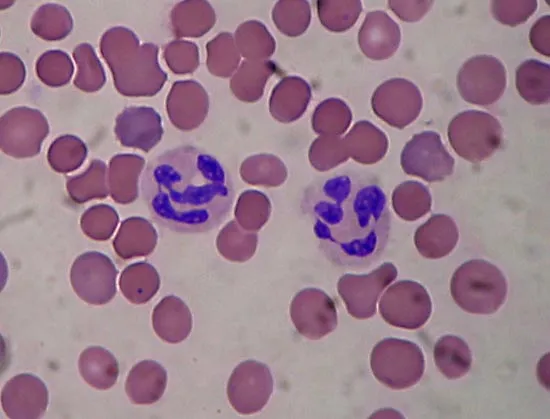
Eosinophils
1 of the 6 Cells of the Innate Immune System:
Function:
Key in immune response to parasites, especially nematode worms
Central to the damaging inflammatory processes that occur during allergic reactions
Release cytotoxic molecules for direct killing
Clinical Significance:
Easily seen in blood smears (stain pink with eosin), identifiable segmented nuclei
Numbers increase massively during allergic reactions or worm infestation

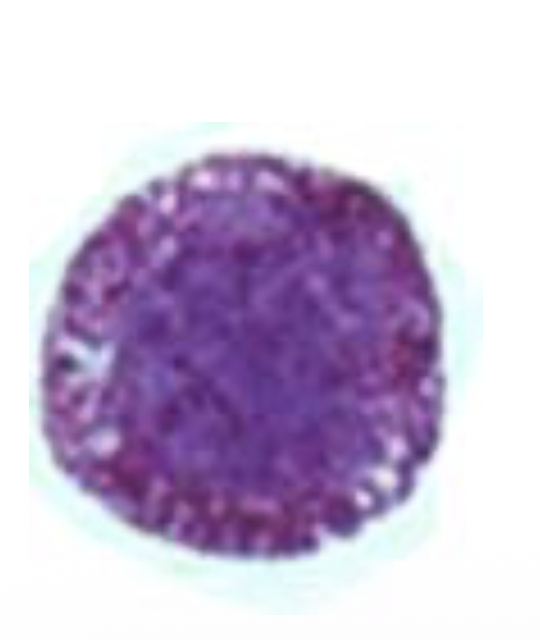
Basophils
1 of the 6 Cells of the Innate Immune System:
Function:
Histamine release lead to:
Increase in vascular permeability
Smooth muscle contraction
IL-4 and IL-13 release lead to:
Th2 lymphocyte differentiation
IgE production
Clinical Significance:
Dark cytoplasm filled with granulesNumbers increase during allergic reactions
Mast cells
1 of the 6 Cells of the Innate Immune System:
Function:
Active during parasitic infections and allergic reactions
Release wide variety of inflammatory mediators by allergens, pathogens, and physiological mediators
Clinical Significance:
Don’t circulate in blood, stay within a tissue
Monocytes
1 of the 6 Cells of the Innate Immune System:
Function: “sentinel cells”
Circulate through tissues where they may be retained and further differentiate into macrophages or dendritic cells during infection/inflammation
Link the adaptive and innate immune response
Clinical Significance:
Characteristic kidney shaped nucle

Natural killer cells
1 of the 6 Cells of the Innate Immune System:
Function:
Release cytotoxic granules that kill infected cells and can affect extracellular parasites
Release cytokines to influence adaptive immune response
Able to recognize self from non-self via complex set of receptors
Link the adaptive and innate immune response
Pattern recognition receptors (PRRs)
Pathogen associated molecular patterns (PAMPS) are recognized by _______. Recognition triggers intracellular signaling cascades, which leads to altered gene expression and downstream functions of the specific cell that has recognized the PAMP