week 6: healthcare epidemiology & infection control
 Call Kai
 Learn
 Practice Test
 Spaced Repetition
 Match
 Flashcards
 Knowt Play
1/68

There's no tags or description
Looks like no tags are added yet.
69 Terms
what is epidemiology?
epidemiology turns infection data into prevention action
what does epidemiology ask?
how often is disease occurring?
who is affected, where, and when?
what factors increase or reduce risk?
how can we prevent or control disease?
what are the basic measurements of epidemiology?
incidence, prevalence, morbidity, mortality
incidence: basic meaning + nursing/public health use
new cases occurring in population during specified period
track new infections and detect outbreaks
prevalence: basic meaning + nursing/public health use
existing cases at point in time or during specified period
describe current disease burden
morbidity: basic meaning + nursing/public health use
illness in population due to disease
track nonfatal disease impact
mortality: basic meaning + nursing/public health use
deaths in population due to disease
track fatal outcomes
incidence vs prevalence:
incidence measures new disease occurrence
prevalence measures existing disease burden
incidence: focus, question, time, and main use
focus: new cases occurring over time
q: how often are new cases occurring?
time: requires specified period
main use: track new disease occurrence
prevalence: focus, question, time, and main use
focus: existing cases
q: how much disease is present?
time: at a point in time or over a period
main use: describe disease burden
what are two ways to measure incidence?
incidence risk and incidence rate
risk describes probability over specified period
rate describes how quickly new cases occur
incidence risk
probability of developing disease during a specified period
incidence rate
speed at which new cases occur
incidence risk: numerator, denominator, expression, and formula
numerator: new cases during the period
denominator: population at risk at start of period
expression: proportion or %
formula in photo

incidence rate: numerator, denominator, expression, and formula
numerator: new cases during period
denominator: person-time at risk during period
expression: cases per person-time
formula in photo

what is person-time?
combines how many people are followed with how long each person is at risk
ex:
patient a - 2 days at risk
patient b - 3 days at risk
patient c - 5 days at risk
total person-time = 10 patient-days
in healthcare surveillance, time may also be measured as:
patient-days or device-time such as catheter-days
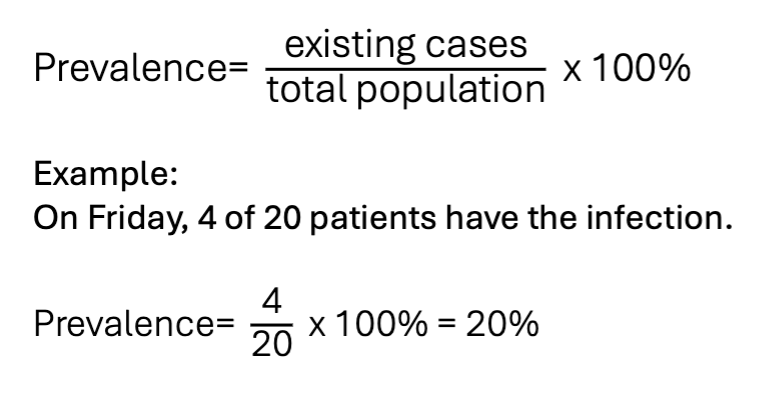
formula for prevalence
prevalence = existing cases/total population x 100%
4 of 20 patients have the infection
4/20 × 100% = 20%
what are the four disease patterns?
sporadic, endemic, epidemic, pandemic
sporadic: meaning + example
occurs occasionally or irregularly
ex: a few scattered cases
endemic: meaning + example
constantly present at an expected lvl
ex: usually background lvl
epidemic/outbreak: meaning + example
more cases than expected in a place/time
ex: cluster above baseline
pandemic: meaning + example
epidemic spread across many countries/regions
ex: global spread
chain of infection
pathogen
reservoir
portal of exit
mode of transmission
portal of entry
susceptible host
every nursing infection-prevention action targets at least one link in chain

what are the five modes of transmission?
contact, droplet, airborne, vehicle, vector
contact: basic idea + common prevention focus
direct touch or indirect contact w/ contaminated objects
hand hygiene, gloves/gown, cleaning
droplet: basic idea + common prevention focus
respiratory particles transmitted mainly at close range
medical mask, eye protection as indicated
airborne: basic idea + common prevention focus
infectious particles that can remain suspended and travel through air
N95 or higher-lvl respirator, airborne-infection isolation room
vehicle: basic idea + common prevention focus
transmission through contaminated nonliving source, such as food, water, or blood
safe food/water handling, safe blood and injections
vector: basic idea + common prevention focus
transmission by arthropod, such as mosquito or tick
bite prevention, vector control
what are the 3 classifications of infection?
community-acquired infection
healthcare-associated infection (HAI)
latrogenic infection
community-acquired infection
acquired outside healthcare settings
healthcare-associated infection (HAI)
associated w/ receiving healthcare
may develop during care or become apparent afterward
may arise from patients own microbiota or from pathogens acquired from other people or environment
important targets for surveillance + infection prevention

latrogenic infection
results from medical or surgical intervention, and may also be healthcare-associated
what are 5 common types of HAIs?
c.difficile infection (CDI)
catheter-associated urinary tract infection (CAUTI)
surgical site infection (SSI)
ventilator-associated pneumonia (VAP)
central line-associated bloodstream infection (CLABSI)
c.difficile infection (CDI): common risk factor + prevention
antibiotic exposure
contact precautions, sporicidal cleaning
catheter-associated UTI (CAUTI): common risk factor + prevention
urinary catheter
aseptic insertion, early removal
surgical site infection SSI: common risk factor + prevention
surgery
surgical asepsis, wound care, glucose control
ventilator-associated pneumonia (VAP): common risk factor + prevention
mechanical ventilation
aspiration prevention, oral care
central line-associated bloodstream infection (CLABSI): common risk factor + prevention
central line
aseptic access, dressing care
what increases risk for HAIs?
HAI risk reflects both patient vulnerability, pathogen traits, and healthcare exposures and practices
patient factors, pathogen factors, system factors
for increased risk for HAIs, what are examples of patient factors?
very young or older age
immunosuppression or serious illness
wounds or burns
antibiotic exposure
for increased risk for HAIs, what are examples of pathogen factors?
antibiotic resistance
spore formation, such as c.diff
for increased risk for HAIs, what are examples of pathogen factors?
surgery and invasive devices
lapses in hand hygiene
aseptic technique or cleaning
antibiotic exposure can:
disrupt normal gut microbiota
reduce colonization resistance
allow c.diff to overgrow
takeaway: antibiotics can disrupt gut microbiota = allowing c.diff to overgrow
clinical connection to antibiotics, microbiota, and c.diff:
monitor stool pattern and hydration
implement contact precautions according to facility policy
ensure appropriate cleaning of shared equipment and the environment
support antimicrobial stewardship
clinical microbiology supports infection control since it:
identifies pathogens from clinical specimens
performs susceptibility testing when appropriate
alerts infection-prevention teams to unusual patterns
supports outbreak investigation through organism tracking and targeted testing
from one patient to a pattern:
one patient’s results → helps guide patient’s care
similar results in several patients → may signal transmission or outbreak
infection preventionists coordinate surveillance and outbreak response with the healthcare team, which consist of:
tracking infections over time
comparing patterns w/ expected baseline
identifying unusual clusters that need investigation
sharing findings to guide prevention
takeaway: uses infection data to detect changes + guide prevention
standardized infection ratio (SIR)
SIR compares number of HAIs observed w/ number predicted using NHSN (national healthcare safety network) data
SIR formula
SIR = 1: observed = predicted
SIR > 1: more infections than predicted
SIR < 1: fewer infections than predicted

what are the standard precautions in all care settings?
peform hand hygiene
use PPE based on anticipated exposure
use safe injection and shaprs practices
use respiratory hygiene/cough etiquette
clean and disinfect equipment
treat blood, body fluids, secretions, excretions, nonintact skin, and mucous membranes as potentially infectious
anticipated exposure for gloves
touching blood/body fluids or contaminated surfaces
anticipated exposure for gown and gloves
splash or spray to clothing or skin
anticipated exposure for mask + eye protection/face shield
splash or spray to eyes, nose, or mouth
anticipated exposure for fit-tested N95 or higher-lvl respirator
airborne pathogen
transmission-based precautions are used:
in addition to standard precautions (when they aren’t enough)
contact, droplet, airborne
for contact, use when transmission risk is primarily… + examples:
direct or indirect contact
MRSA wounds, many multidrug-resistant organisms, varicella
for droplet, use when transmission risk is primarily… + examples:
respiratory droplets transmitted at close range
influenza, meningococcal disease
for airborne, use when transmission risk is primarily… + examples:
small particles that remain suspended in air
TB, measles, varicella
droplet precautions
use a medical/procedure mask when entering the room or as policy requires
use eye protection when splash or spray risk is present.
place patient according to facility policy, limit transport when needed
common examples: influenza, mumps, pertussis, meningococcal disease.

airborne precautions
use an airborne infection isolation room (AIIR).
wear fit-tested N95 or higher-level respirator.
examples: TB, measles, and varicella.

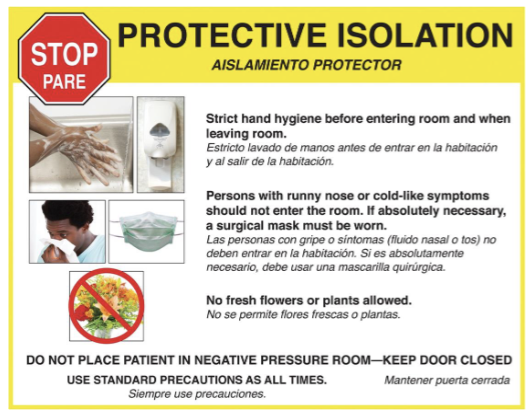
protective environment/isolation
protects selected severely immunocompromised patients (e.g., patients receiving a stem cell transplant from a donor)
positive pressure helps keep outside air from entering.
asepsis: clean vs sterile
both prevent infection, but different goals
clean technique used to reduce pathogens
sterile technique used when entering sterile body sites or maintaining sterile fields
medical asepsis: goal + examples
reduce and prevent spread of pathogens
ex: hand hygiene, cleaning equipment, gloves when needed
surgical asepsis: goal + examples
exclude all microbes from sterile field or sterile body site
ex: sterile gloves, sterile field, sterile instruments, invasive procedures
sequence of PPE:
put PPE on before exposure risk begins
remove PPE carefully to avoid contaminating hands, clothing, or the environment
perform hand hygiene immediately after PPE removal and whenever hands become contaminated during removal
fomites
an inanimate object that can become contaminated and transmit pathogens
three considerations for fomites:
clean and disinfect shared equipment between patients.
use dedicated equipment when required by precautions.
dispose of sharps and infectious waste safely according to policy.