BIOL1026 - Organic
 Call Kai
 Learn
 Practice Test
 Spaced Repetition
 Match
 Flashcards
 Knowt Play
1/36

There's no tags or description
Looks like no tags are added yet.
37 Terms
describe the Aufbau Principle + explain its purpose
Electrons fill an atom starting from the lowest energy subshell for maximum stability
what is Hund's rule
if there are multiple electrons in a subshell, each orbital must be half filled before electrons can enter an orbital to fill it
explain the exceptions for the trend in ionisation energy
group 5-6: electron is being removed from a full p orbital -> increased repulsion makes it easier to remove electrons
group 2-3: electron is being removed from a p orbital which is higher energy
Explain ionic bonding
At least one electron is transferred from one atom to the other, forms ions that are attracted to each other via electrostatic forces, forms an ionic lattice
Explain covalent bonding
At least one pair of electrons is shared between atoms, forms discrete molecules
define electronegativity
the tendency for an atom to attract the shared pair of electrons towards itself
what types of bonds will result from two atoms with:
1. Similar electronegativities
2. Very different electronegative
3. electronegativity difference between 0.5-2
1. covalent
2. ionic
3. polar
When orbitals in reacting atoms overlap, 2 new types of orbitals form. explain these orbitals
Bonding orbitals: lower in energy, facilitates covalent bond formation
Anti-bonding orbitals: high in energy, inhibits covalent bond formation
Describe single bonds
one pair of electrons shared, electrons occupy the sigma orbital
describe double bonds
2 pairs of electrons shared, one pair occupies the sigma orbital, one pair occupies the pi orbital

alcohol

phenol

ether
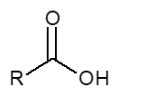
carboxylic acid
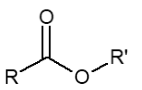
ester

+ naming conventions
(gamma) lactone

ketone

aldehyde

hemi-acetal

acetal

primary secondary tertiary amines
quarternary ammonium salt

imine
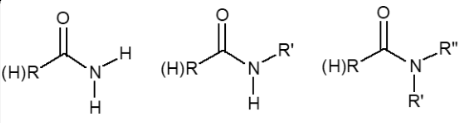
primary secondary tertiary amides

+ naming conventions for
(gamma) lactam
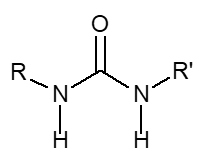
urea

carbamate

thiourea

thiol

thioether

disulfide

thioester

phosphoric acid diphosphoric acid triphosphoric acid

phosphate monoester phosphate diester

phosphate triester
define the octet rule
atoms react to obtain a full outer shell to maximise stability
Define diastereomers
pair of stereoisomers that aren’t mirror images of each other, the configuration of at least one stereogenic centre is different
what are epimers
diastereomers with only one different stereogenic centre