Amphibian Practical Exam (Caecilians & Salamanders)
 Call Kai
 Learn
 Practice Test
 Spaced Repetition
 Match
 Flashcards
 Knowt Play
1/78

There's no tags or description
Looks like no tags are added yet.
79 Terms
What are the color-producing components of an amphibian’s skin?
Chromatophore units


What do costal grooves do?
Facilitate water movement
What are the Gymnophiona?
Caecilians
How many families of caecilians are there?
10
How many genera of caecilians are there?
35
How many species of caecilians are there?
225
What lifestyles do caecilians have?
Burrowing or aquatic
What is the distribution of caecilians?
Pantropical
What is the node-based name for caecilians?
Apoda
What is the stem-based name for caecilians?
Gymnophiona
What are the characters of Gymnophiona?
Dermal scales, phallodeum, body annulate, reduced eyes, paired tentacles, dual jaw closing mechanism
Explain the dual jaw closing mechanism of Gymnophiona.
Masseter adductor mandibulae + two other muscles act in a novel way to close the jaws
What type of skulls do caecilians have?
Stegokrotaphic & zygokrotaphic
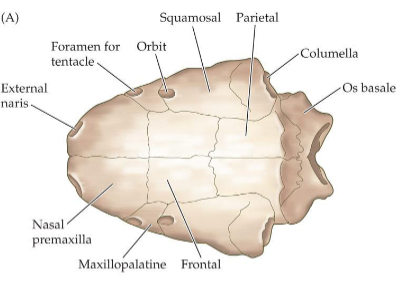
What kind of skull is this?
Stegokrotaphic
What are the characteristics of a stegokrotaphic skull?
Completely roofed by bone, akinetic

What kind of skull is this?
Zygokrotaphic
What are the characteristics of a zygokrotaphic skull?
Partially open temporal region, more kinetic.
What caecilians have a zygokrotaphic skull?
Rhinatremaatids, scolecomorphids, typhlonectids
What is the oldest known caecilian?
Early Jurassic Eocaecilia micropodia, found in Arizona USA, from 190 MYA
What is the oldest stem caecilian?
Funcusvermis gilmorei, a Late Triassic caecilian fossil from 223-218 MYA, found in Arizona USA
What are the characteristics of the oldest stem caecilian (Funcusvermis gilmorei)?
Delayed acquisition of
Muscles associated with fossoriality
Dual jaw closing mechanism
Reduced eyes
Tentacles
When did the gymnophian-batrachian molecular divergence occur?
Paleozoic

What family of caecilians has this distribution?
Rhinatrematidae


Describe Rhinatrematidae. (# of genera & species, length, lifestyle, reproduction, distribution, characteristics)
A caecilian family with 3 genera and 15 species. 200-330 mm, fossorial, oviparous, Northern South America, true short tails (post-cloacal vertebrae present).
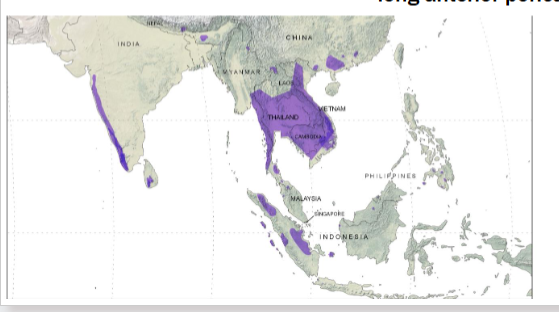
What family of caecilians has this distribution?
Icthyophiidae


Describe Ichthyophiidae. (# of genera & species, new developments, length, lifestyle, reproduction, distribution, characteristics).
A caecilian family with 2 genera, 59 species. Includes now Uraeotyphlidae. 200-500 mm, fossorial or semiaquatic, oviparous, South and Southeast Asia, partial external division of the atrium and a long anterior pericardial space
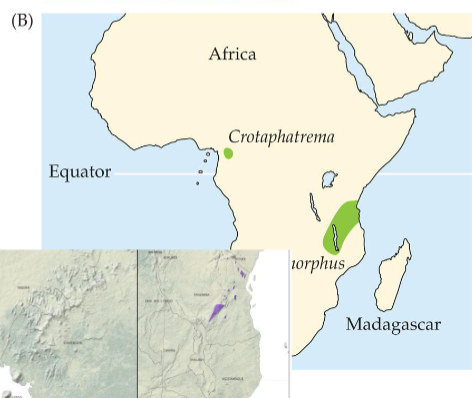
What family of caecilians has this distribution?
Scolecomorphidae


Describe Scolecomorphidae. (# of genera & species, length, lifestyle, reproduction, distribution, characteristics).
A caecilian family with 2 genera & 6 species. 150-360 mm, fossorial, oviparous or viviparous, West and East Africa. Eyes rudimentary and attached at the base of the tentacle. Skull with no orbits. Counter-sunk lower jaws and tentacle-like openings placed very far forward on the snout.

What family of caecilians has this distribution?
Herpelidae
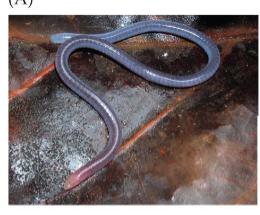

Describe Herpelidae. (# of genera & species, length, lifestyle, distribution, characteristics).
A caecilian family with 2 genera & 11 species. 350 mm or less, fossorial, oviparous, West and East Africa, slender body.

What family of caecilians has this distribution?
Chikilidae


Describe Chikilidae. (# of genera & species, description date, lifestyle, reproduction, distribution, characteristics).
A caecilian family with 1 genus and 4 species. Described in 2012. Fossorial, oviparous, India, lacks prefrontals with two rows of teeth in the lower jaw
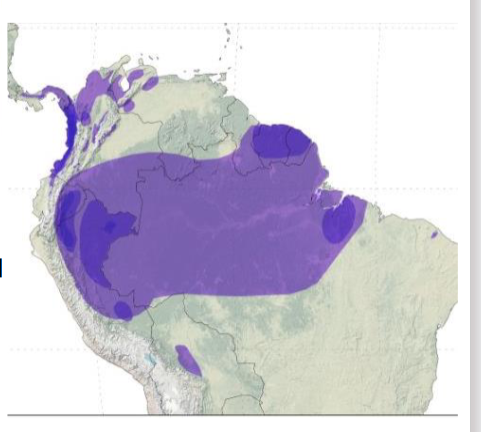
What family of caecilians has this distribution?
Caecilidae, common caecilians


Describe Caecilidae. (# of genera & species, size, distribution, characteristics)
A caecilian family with 2 genera & 54 species, up to 1.5 meters, largest caecilians, from Costa Rica to Central South America. These species are generally slender, some quite large

What family of caecilians has this distribution?
Typhlonectidae


Describe Typhlonectidae. (# of genera & species, size, lifestyle, reproduction, characteristics)
A family of caecilians with 5 genera & 15 species, 300-800 mm, laterally compressed, aquatic or semiaquatic, viviparous, trachea modified into a tracheal lung, Atreochoana lungless

What family of caecilians has this distribution?
Indotyphlidae, now Grandisoniidae
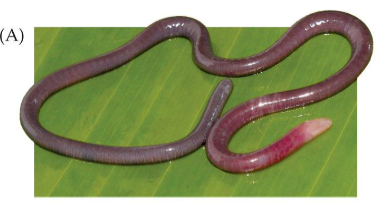
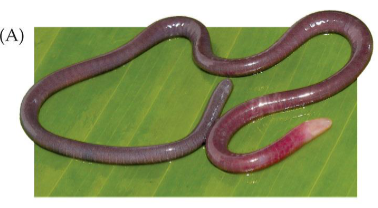
Describe Indotyphlidae, now Grandisoniidae. (# of genera & species, size, length, reproudciton, characteristics).
A family of caecilians with 6 genera & 26 species. Small, 100-200 mm. Oviparous, direct development and aquatic larvae. Parental care?

What family of caecilians has this distribution?
Siphonopidae


Describe Siphonopidae. (# of genera & species, lifestyle, size, reproduction, characteristics)
A family of caecilians with 5 genera & 28 species. Fossorial, small, 110-500 mm. Oviparous, direct development and aquatic larvae. Parental care? Lack of inner mandibular teeth

What family of caecilians has this distribution?
Dermophiidae
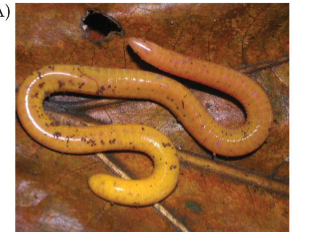

Describe Dermophiidae. (# of genera & species, lifestyle, size, reproduction)
A family of caecilians with 4 genera & 15 species, fosssorial. Small, 200-600 mm. Viviparous. Parental care?
What is Caudata?
Salamanders
What are the characteristics of Caudata (salamanders)?
Long, well developed tail
Trunk segmented with costal grooves
Forelimbs always present
No tympanum or middle ear cavities
Larval gills external
Late appearance of maxillae
Paedomorphosis (many)
Internal fertilization (most)
What is the node-based name for salamanders?
Caudata
What is the stem-based name for salamanders?
Urodela
What is Chunerpeton tiayiensis?
A fossil cryptobranchid salamander

Describe the Urodeles.
Basal to living salamander groups (Caudata), Late Jurassic (~150 MYA), most diverse in Asia, generally small (< 30 cm total length). Fossils: Karuarus (Kazakhstan), Sinerpeton (China).

What is the oldest Salamandroid?
Beiyanerpeton jianpingensis
Describe the oldest salamandroid (Beiyanerpeton jianpingensis).
Upper Jurassic, ~157 MYA. Liaoning, China. Neotenic, gill rakers (evidence from branchial denticles). Nonpedicellated and moncuspid marginal dentition, exceptional among lissamphibians.
What are the three main groups of Caudata (salamanders)?
Meantes, Salamandroidea, Cryptobranchoidea

Explain Meantes (Sirenidae).
Was considered a suborder of Caudata comprising neotenous salamanders that have horny jaw sheaths and persistent gills and lack eyelids, maxillae, and hind limbs.
The new, time-calibrated salamander phylogeny is based on ___ genes. The tree contains ___ salamander species, ___ more than the previous largest tree. Recent studies’ divergence times differed by - million years for major clades.
503, 765, 244, 22, 45

What family of salamanders has this distribution?
Cryptobranchidae
Describe Cryptobranchidae. (# of genera & species, size, characteristics, habitat, distribution, fossils)
A family of salamanders with 2 genera & 7 species, giant size (up to 1.5 m), no eyelids, single pair of gill slits, cutaneous respiration. Aquatic, cold mountain streams (adults & larvae), East Asia and E. North America, Jurassic fossils from China.
Describe Cryptobranchoidea. (Families, characteristics, species).
A suborder of salamanders made up of the families Cryptobranchidae and Hynobiidae. Angular bone separate, external fertilization, one type cloacal gland, and a high number of microchromosomes. Giant Japanese salamander, Hellbender.

What family of salamanders has this distribution?
Hynobiidae


Describe Hynobiidae. (# of genera & species, length, characteristics, lifestyle, reproduction, distribution)
A family of salamanders with 9 genera & 98 species, up to 250 mm (usually <100 mm) TL. Eyelids present, costal grooves evident, lungs absent in Onychodactylus. Most terrestrial, breed in ponds or streams, external fertilization. Asia, including Siberia.

What family of salamanders has this distribution?
Sirenidae (Meantes)

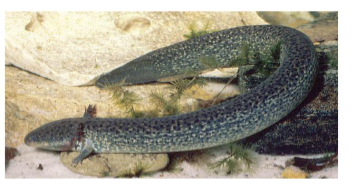
Describe Sirenidae (Meantes). (# of genera & species, reproduction, size, characteristics, lifestyle, distribution)
A family of salamanders with 2 genera & 7 species, external fertilization, 100-900 mm. Eel-like, high number of microchromosomes, absence of hind limbs and pelvic girdles, males lack cloacal glands. Paedomorphic, with 1 or 3 gill slits, external gills, no eyelids. Horny beak instead of premaxillary teeth, ventricle of heart divided. Live in slow-flowing water, completely aquatic. Southeastern U.S. into adjacent Mexico
Describe Salamandroidea. (Families, characteristics, reproduction, species).
A suborder of salamanders made up of the families Ambystomatidae, Amphiumidae, Dicamptodontidae, Plethodontidae, Proteidae, Rhyacotritonidae, and Salamandridae. Angular + mandible fused, complex of cloacal glands. Internal fertilization, females have spermathecae. Ambystoma tigrinum (tiger salamander), Ambystoma mexicanum (axolotl).

What family of salamanders has this distribution?
Ambystomatidae (mole salamanders)

Describe Ambystomatidae. (common name, # of genera & species, length, characteristics, lifestyle, reproduction, distribution).
A family of salamanders called the mole salamanders with 1 genus & 32 species, 80-350 mm (usually <160 mm) TL. Males with 6 sets of cloacal glands, obligate and facultative paedomorphs. Adults burrowing. Usually breed in ponds. North America only.
Explain how the name axolotl relates to Aztec mythology.
Xolotl means “water monster” or “water servant” in Nahuatl. The legend is that Xolotl, the twin of Quetzalcoatl, transformed into an axolotl to escape sacrifice. They are revered as a sacred symbol yet used as a food source, illustrating a dual spiritual-practical role

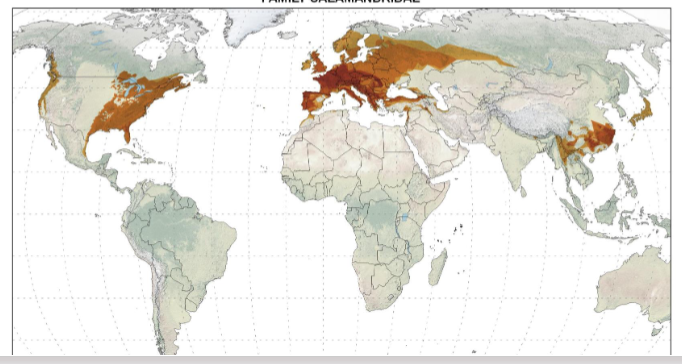
What family of salamanders has this distribution?
Salamandridae
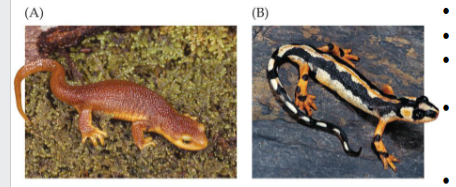

Describe Salamandridae. (Common name, # of genera and species, length, characteristics, reproduction, distribution).
A family of salamanders called newts with 22 genera and 151 species, 100-350 mm (usually <200 mm) TL, males with 5 sets of cloacal glands. Granular skin with many poison glands, often aposematically colored. Most with elaborate aquatic courtship displays, sexually dimorphic, oviparous, free-living larvae. Most widespread salamander family.

What family of salamanders has this distribution?
Dicamptodontidae


Describe Dicamptodontidae. (# of genera & species, species, length, characteristics, lifestyle, reproduction, distribution).
A family of salamanders with 1 genus & 4 species, Pacific giant salamander, males with 6 sets of cloacal glands. Adults mostly terrestrial. Breed in cool forest streams, larvae important predators. Western North America only, coastal range and Rocky mountains

What family of salamanders has this distribution?
Proteidae (mudpuppies)

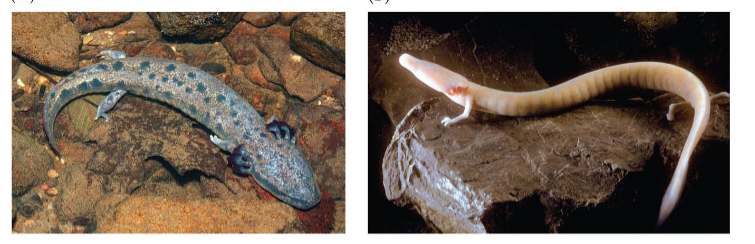
Describe Proteidae. (Common name, # of genera & species, length, characteristics, reproduction, distribution).
A family of salamanders called mudpuppies with 2 genera & 16 species, 200-480 mm TL, males with 6 sets of cloacal glands. All paedomorphic, aquatic, no maxillae, external gills present. Eastern North America, Mediterranean Europe.

What family of salamanders has this distribution?
Rhyacotritonidae


Describe Rhyacotritonidae. (# of genera & species, length, characteristics, reproduction, distribution).
A family of salamanders with 1 genus & 4 species, 90-120 mm TL, males have 6 sets of cloacal glands and unique vent glands. Semiaquatic in cold forest streams, breed in splash zone, few eggs laid, free living larvae take 3-5 years to develop. Northwestern U.S. only
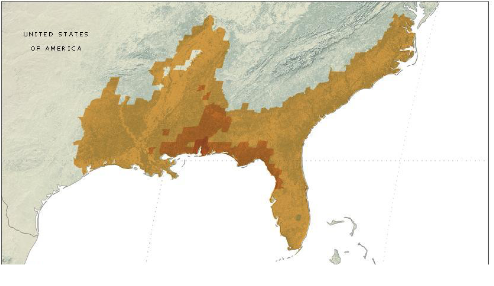
What family of salamanders has this distribution?
Amphiumidae

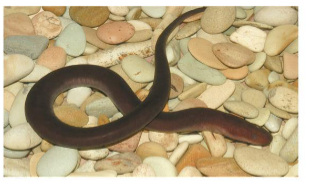
Describe Amphiumidae. (# of genera & species, length, characteristics, reproduction, distribution).
A family of salamanders with 1 genus & 3 species, up to >1 m TL, males with 5 sets of cloacal glands, internal gills and one pair of gill slits, limbs greatly reduced (1-3 toes). Adults aquatic; females stay with eggs. Southeastern U.S. only

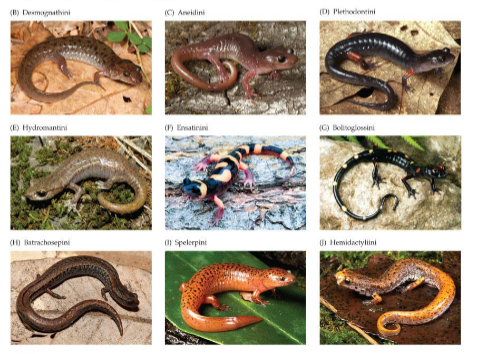
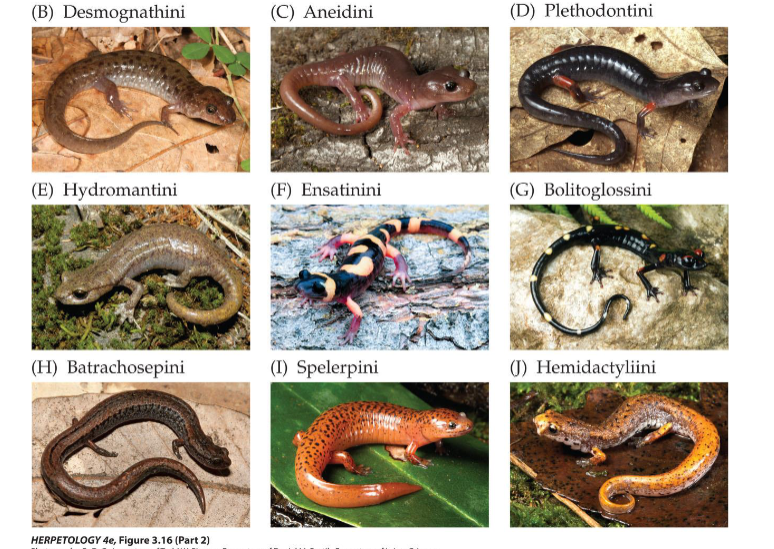
Describe Plethodontidae. (Common name, # of genera & species)
A family of salamanders called lungless salamanders with 28 genera & 523 species
What salamanders have the most extreme ballistic tongue?
Speleomantes and Supramontis

Describe the ballistic tongue of Speleomantes and Supramontis.
The most extreme ballistic tongue, sticky tongue pad, tongue muscles extend into the shoulders, retractor muscles originate on the hip

What family of salamanders has this distribution?
Plethodontidae (lungless salamanders)
What is required for limb development, revealing a shared molecular target implicated in the independent evolution of limblessness in snakes and caecilians?
ZRS
