Art History Midterm Artworks
 Call Kai
 Learn
 Practice Test
 Spaced Repetition
 Match
 Flashcards
 Knowt Play
 Podcast
1/20

There's no tags or description
Looks like no tags are added yet.
21 Terms

Title, Artist, Date, Era, Medium, Context
Sacrifice of Isaac
Artist: Lorenzo Ghiberti
Date: 1401-1403
Era: Italian Renaissance
Medium: Sculpture (gilded bronze relief through lost wax method)
Context: Ghiberti was in a competition panel for the commission to make a new set of bronze doors for the Baptistery of San Giovanni in Florence. Competed against other artists, including Brunelleschi, and won the commission. Commissioned by a the Arte di Calimala ( Florentine guild)

Title, Artist, Date, Era, Medium, Context
Title: David
Artist: Donatello
Date: 1440-1443
Era: Italian Renaissance
Medium: Sculpture (bronze, freestanding)
Context: Created in Florence during the Renaissance, when wealthy patrons supported artists and interest in ancient Greek and Roman art was growing. It is widely recognized as an early Renaissance freestanding nude statue.

Title, Artist, Date, Era, Medium, Context
Title: David
Artist: Michelangelo
Date: 1501-1504
Era: Italian Renaissance
Medium: Sculpture (marble)
Context: Commissioned for Florence Cathedral, the statue was ultimately placed outside the Palazzo Vecchio, Florence's seat of civic government. David became a symbol of the Florentine Republic again, representing courage and the defense of a smaller community against more powerful enemies.

Title, Artist, Date, Era, Medium, Context
Title: Camera Picta (Court Scene, north wall)
Artist: Andrea Mantegna
Date: 1466-1475
Era: Italian Renaissance
Medium: Painting (fresco)
Context: Commissioned by Ludovico III Gonzaga, ruler of Mantua, for a room in his palace. The paintings celebrate the Gonzaga family and present the court as prosperous, powerful, and connected to other influential figures.
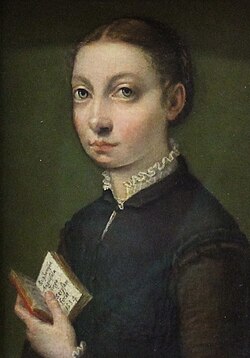
Title, Artist, Date, Era, Medium, Context
Title: Self-Portrait
Artist: Sofonisba Anguissola
Date: 1554
Era: Italian Renaissance
Medium: Painting (oil on panel)
Context: The artist is a woman artist in the 16th century, meaning that she had generally fewer opportunities than men to receive formal artistic training and to establish a professional career. Her self portrait therefore does show more than what she looked like, it helps establish her reputation as an artist

Title, Artist, Date, Era, Medium, Context
Title: The Chess Game
Artist: Sofonisba Anguissola
Date: 1555
Era: Italian Renaissance
Medium: Painting (oil on canvas)
Context: This is a self-portrait of Anguisolla as well as three young girls playing chess. This is a Renaissance portrait-like genre scene showing members of Anguissola’s family in a domestic setting.

Title, Artist, Date, Era, Medium, Context
Title: The Annunciation
Artist: Jan van Eyck
Date: 1434-1436
Era: Northern Renaissance
Medium: Painting (oil on panel → canvas)
Context: depicts the moment the Archangel Gabriel tells the Virgin Mary she will bear the Son of God. white dove symbolizing the Holy Spirit descends toward Mary. It is accompanied by seven rays of light coming from the upper window, representing the Seven Gifts of the Holy Spirit (wisdom, understanding, counsel, fortitude, knowledge, piety, and fear of the Lord). Light passes through the glass without breaking it, a traditional medieval metaphor symbolizing Mary's intact virginity.

Title, Artist, Date, Era, Medium, Context
Title: Portrait of a Man
Artist: Jan van Eyck
Date: 1433
Era: Northern Renaissance
Medium: Painting (oil on oak panel)
Context: Created in a time when artists became increasingly interested in realistic portraiture and individual identity. The man looks directly at the viewer, creating a strong sense of connection. Additionally his head is turned slightly rather than facing completely forward, making the portrait appear more natural and dimensional.

Title, Artist, Date, Era, Medium, Context
Title: The Adoration of Magi
Artist: Hieronymus Bosch
Date: 1485-1500
Era: Northern Renaissance
Medium: Painting (oil on panel)
Context: This is a religious artwork that contains detailed symbolism, moral messages, and the story of when the Three Wise Men visited baby Jesus. Bosch includes unusual-looking people and mysterious figures around the main scene that complicate the message, but the holy family appears calm and central while unusual or disturbing figures surround them. The open triptych contains several areas of activity, making the viewer examine different parts of the painting.

Title, Artist, Date, Era, Medium, Context
Title: The Martyrdom of St. Catherine
Artist: Albrecht Durer
Date: 1497-1499
Era: Northern Renaissance
Medium: Print, woodcut
Context: The Christian martyr Saint Catherine of Alexandria, who was sentenced to death for her Christian faith. Dürer was a major German Renaissance artist who helped elevate printmaking as a respected art form. Woodcuts allowed images to be reproduced and distributed to many people.

Title, Artist, Date, Era, Medium, Context
Title: David
Artist: Gianlorenzo Bernini
Date: 1623-1624
Era: Baroque
Medium: Sculpture (marble)
Context: Created in Rome during the Baroque period, aimed to create dramatic, emotional artworks that engaged viewers. made in a dramatic moment of the the David vs Goliath fight, commissioned for a private setting and about 5'7 in height. Served as a counter reformation artwork that ensured religious values

Title, Artist, Date, Era, Medium, Context
Title: The Ecstasy of St. Teresa
Artist: Gianlorenzo Bernini
Date: 1645-1652
Era: Baroque
Medium: Sculpture (marble)
Context: Created during the Counter-Reformation, when the Catholic Church used art to inspire faith and communicate religious experiences in emotionally powerful ways. Dramatic : St. Teresa's closed eyes, open mouth, and relaxed body convey an intense spiritual experience.

Title, Artist, Date, Era, Medium, Context
Title: Conversion of St. Paul
Artist: Caravaggio
Date: 1601
Era: Baroque
Medium: Painting (oil on canvas)
Context: Created in Rome during the Counter-Reformation, when the Catholic Church encouraged emotionally powerful religious art to strengthen faith and communicate biblical stories clearly. Strong contrasts between light and darkness emphasize Paul's body and the central action (chiaroscuro and tenebrism)

Title, Artist, Date, Era, Medium, Context
Title: Judith Slaying Holofernes
Artist: Caravaggio
Date: 1598-1599
Era: Baroque
Medium: Painting (oil on canvas)
Context: Created in Rome during the period of the Counter-Reformation. Baroque artists often depicted dramatic religious stories to capture viewers' attention and provoke strong emotional reactions.
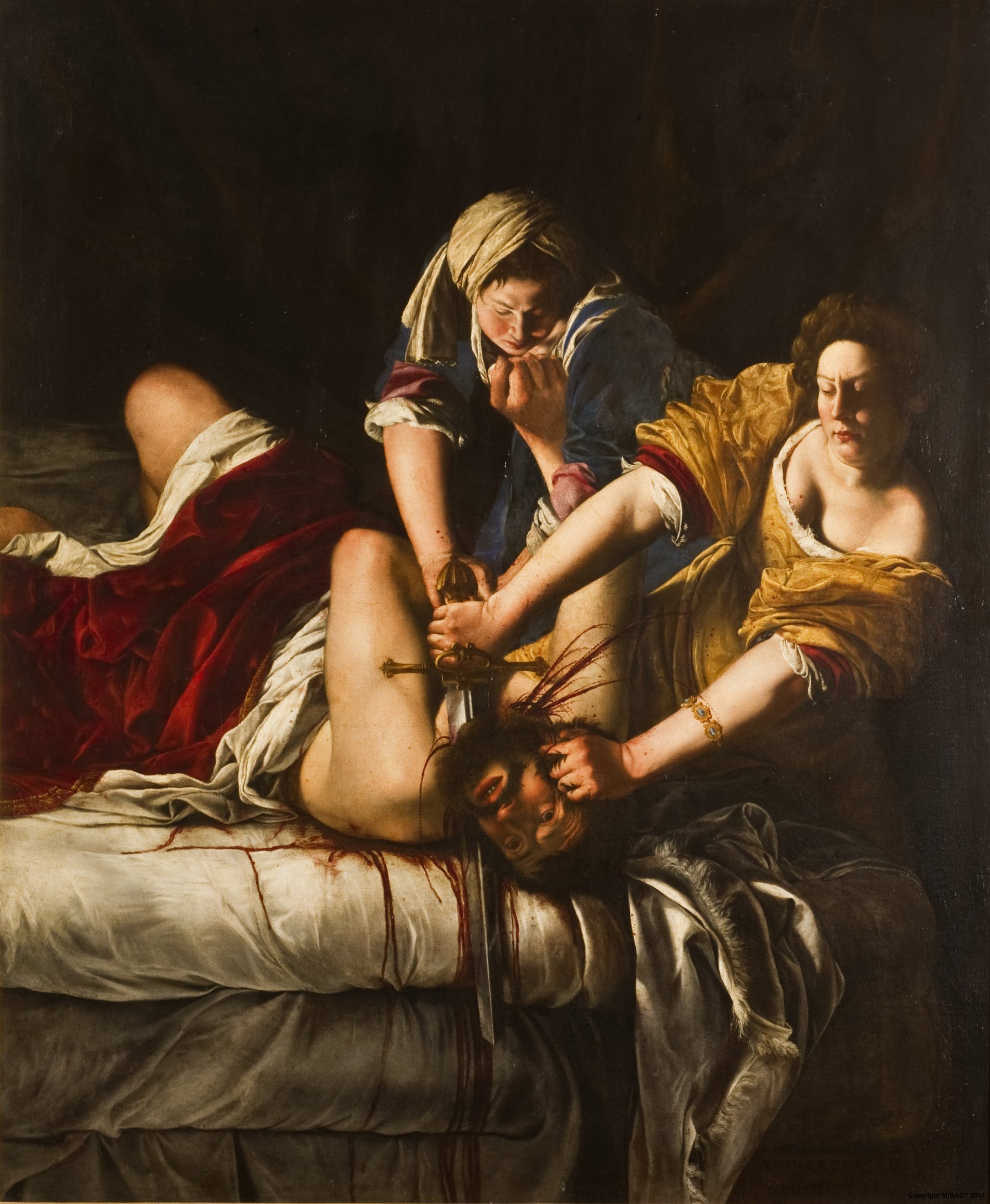
Title, Artist, Date, Era, Medium, Context
Title: Judith Slaying Holofernes
Artist: Artemisia Gentileschi
Date: 1620-1621
Era: Baroque
Medium: Painting
Context: Artemisia Gentileschi was a prominent woman painter in a male-dominated art world. She often depicted strong women from biblical and historical stories. It emphasizes female power through the lighting focusing on Judith's face and hands slaying Holofernes. The maid is a young, active participant in the killing. Gentileschi was brutally assaulted recently before this painting, possibly leading to her inspiration from Judith.
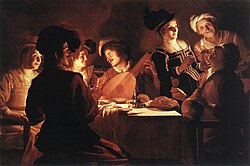
Title, Artist, Date, Era, Medium, Context
Title: Supper Party (Merry Company with a Lute Player)
Artist: Gerrit van Honthorst
Date: 1619-1620
Era: Dutch Baroque
Medium: Painting (oil on canvas)
Context: Dutch art often depicted everyday life, social gatherings, portraits, and scenes of leisure. Gerrit van Honthorst was influenced by Caravaggio and became known for his dramatic use of light, especially in night scenes. The painting depicts a lively supper gathering with people eating, drinking, socializing, and enjoying music. The scene captures a moment of leisure and celebration, focusing on ordinary social life rather than a biblical event.

Title, Artist, Date, Era, Medium, Context
Title: Woman Holding a Balance
Artist: Johannes Vermeer
Date: 1664
Medium: Painting
Era: Dutch Baroque
Context: Unlike much Italian Baroque art, which frequently emphasized religious drama, Dutch Baroque art often focused on quiet moments of daily life.

Title, Artist, Date, Era, Medium, Context
Title: Self-Portrait
Artist: Judith Leyster
Date: 1630
Era: Dutch Baroque
Medium: Painting (oil on canvas)
Context: Created during the Dutch Baroque period in the 17th century by Judith Leyster, a successful painter (female) in a male-dominated art world. Uses slight chiaroscuro.

Title, Artist, Date, Era, Medium, Context
Title: Still Life with Nautilus Goblet
Artist: Willem Kalf
Date: 1660
Era: Dutch Baroque
Medium: Painting (oil on canvas)
Context: The Dutch Republic was a major center of international trade, bringing wealth and luxury goods from around the world.

Title, Artist, Date, Era, Medium, Context
Title: The Sugarmill
Artist: Frans Jansz. Post
Date: 1653
Era: Dutch Baroque
Medium: Painting (oil on canvas and panel)
Context: Created during the 17th century, when the Dutch were involved in colonial expansion and international trade. Sugar production was a major part of the colonial economy, relying heavily on the forced labor of enslaved Africans. The painting depicts a sugar mill in colonial Brazil, where sugarcane was processed into sugar. The scene presents the sugar industry as part of the region's landscape and economy.

Title, Artist, Date, Era, Medium, Context
Title: Feast in the House of Levi
Artist: Paolo Veronese
Date: 1573
Era: Italian Renaissance
Medium: Painting (oil on canvas)
Context: Commissioned for the refectory (dining hall) of a Dominican monastery in Venice. The painting was originally intended to depict the Last Supper, but Veronese's inclusion of numerous extravagant and seemingly inappropriate figures led to an inquiry by the Roman Catholic Inquisition. He changed the title to Feast in the House of Levi instead.