biochem - block 04
 Call Kai
 Learn
 Practice Test
 Spaced Repetition
 Match
 Flashcards
 Knowt Play
1/164

There's no tags or description
Looks like no tags are added yet.
165 Terms
A 1-month-old boy is brought to the emergency department 25 minutes after having a seizure. His mother reports that he has become lethargic and does not cry as vigorously anymore. Examination shows muscular hypotonia and hepatomegaly. Arterial blood gas on room air shows metabolic acidosis. Serum studies show elevated levels of methylmalonic acid.
A deficiency of which of the following types of enzymes is the most likely cause of this patient's condition?
mutase
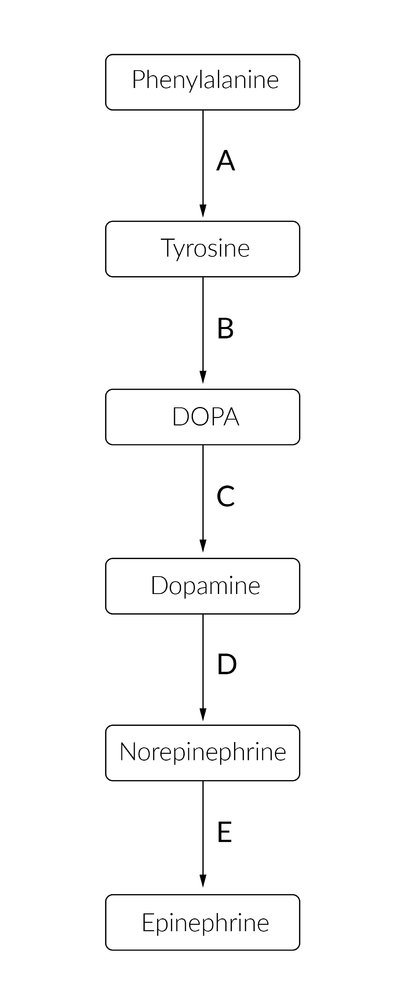
A previously healthy 26-year-old woman comes to the physician for numbness and tingling in her legs for the past 2 months. Her only medication is an oral contraceptive. Examination shows conjunctival pallor and dry scaly lips with cracks at the corner of the mouth. Sensation to pinprick and light touch is decreased in both lower limbs.
Her hemoglobin concentration is 10.0 g/dL and mean corpuscular volume is 76 μm3. Bone marrow biopsy shows erythroblasts with a ring of basophilic granules around the nucleus.
This patient's condition is caused by the deficiency of a substrate that acts as a cofactor in which of following steps of catecholamine synthesis?
C
A 34-year-old man comes to the physician because of palpitations, shortness of breath, diarrhea, and abdominal cramps for 2 months. Physical examination shows cutaneous flushing of the face. Auscultation of the chest shows bilateral wheezing. A 24-hour urine collection shows increased 5-hydroxyindoleacetic acid (5-HIAA) concentration. A contrast-enhanced CT scan of the abdomen shows an intestinal tumor with extensive metastasis to the liver. A diagnosis of an inoperable disease is made and the patient is started on treatment with octreotide.
Six weeks later, the patient's symptoms have improved except for his abdominal pain and frequent loose stools. The physician suggests enrolling the patient in a trial to test additional treatment with a new drug that has been shown to improve symptoms in other patients with the same condition.
The expected beneficial effect of this new drug is most likely caused by inhibition of which of the following?
tryptophan hydroxylase
A 2-week-old male newborn is brought to the physician because of recurrent vomiting and poor feeding. He was born at 37 weeks' gestation and weighed 2877 g (6 lb 6 oz); he currently weighs 2989 g (6 lb 9 oz). He appears lethargic. Physical examination shows weak muscle tone and hepatomegaly.
Laboratory studies show increased serum concentrations of ketones and branched-chain organic acids. Arterial blood gas analysis on room air shows a pH of 7.21 and an HCO3- concentration of 11 mEq/L.
Further evaluation of the patient is most likely to show which of the following?
hyperammonemia
An investigator performs a twin study to evaluate the effects of a novel drug that inhibits a transporter on the apical membrane of proximal convoluted tubule cells. The results of the study are shown.
test | control | |
serum glucose (mg/dL) | 92.4 | 99 |
dipstick urine glucose | negative | negative |
urine pH | 4.9 | 6.2 |
The drug most likely inhibits transport of which of the following substrates?
glutamine
A 36-year-old woman comes to the physician because of prolonged stiffness in the morning and progressive pain and swelling of her wrists and hands over the past 4 months. Examination shows bilateral swelling and mild tenderness of the wrists and the second, third, and fourth metacarpophalangeal joints. Her range of motion is limited by pain.
Serum studies show elevated anti-cyclic citrullinated peptide antibodies. Treatment with methotrexate is begun. At a follow-up examination, her serum aspartate aminotransferase (AST) concentration is 75 U/L and her serum alanine aminotransferase (ALT) concentration is 81 U/L.
Which of the following substances is essential for the function of these enzymes?
pyridoxine
A 2-day-old male newborn is brought to the physician because he became somnolent and felt cold after breastfeeding. Pregnancy and delivery were uncomplicated. He was born at 40 weeks' gestation and weighed 3538 g (7 lb 13 oz); he currently weighs 3311 g (7 lb 5 oz).
Examination shows generalized hypotonia. Serum studies show an ammonia concentration of 150 μmol/L (N < 50). Fasting serum glucose concentration is normal.
Accumulation of which of the following substances is most likely involved in the pathogenesis of this patient's neurological symptoms?
glutamine
A 4-day-old boy is brought to the physician because of somnolence, poor feeding, and vomiting after his first few breast feedings. He appears lethargic. His respiratory rate is 73/min. Serum ammonia is markedly increased. Genetic analysis shows deficiency in N-acetylglutamate synthase.
The activity of which of the following enzymes is most likely directly affected by this genetic defect?
carbamoyl phosphate synthetase I
A 4-day-old male newborn delivered at 39 weeks' gestation is evaluated because of poor feeding, recurrent vomiting, and lethargy. Physical examination shows tachypnea with subcostal retractions.
An enzyme assay performed on a liver biopsy specimen shows decreased activity of carbamoyl phosphate synthetase I. This enzyme plays an important role in the breakdown and excretion of amino groups that result from protein digestion.
Which of the following is an immediate substrate for the synthesis of the molecule needed for the excretion of amino groups?
aspartate
A medical student is studying digestive enzymes at the brush border of the duodenum. He isolates and inactivates an enzyme in the brush border that has a high affinity for the pancreatic proenzyme trypsinogen. When the enzyme is inactivated, trypsinogen is no longer converted to its active form.
Which of the following is the most likely underlying mechanism of this enzyme?
cleavage of a propeptide from an N-terminus
A 45-year-old woman comes to the physician because of a 2-week history of painful ulcers in her mouth. Over the past 2 months, she has had increasing fatigue and difficulties concentrating. She has a history of rheumatoid arthritis and was started on a new medication 4 months ago.
Examination shows pallor of the mucosal membranes and three tender ulcerative lesions in her mouth. Her hemoglobin concentration is 8.7 g/dL and mean corpuscular volume is 109 μm3. A blood smear shows hypersegmented neutrophils.
Which of the following is the most likely cause of this patient's findings?
deficient nitrogenous base production
A 48-year-old woman is brought to the emergency department by police because of confusion and agitation. Her medical record indicates that she has peptic ulcer disease that is treated with omeprazole. The patient's brother arrives shortly after. He reports that she drinks around 17 oz. of vodka daily. Neurological examination shows horizontal nystagmus. Her gait is wide-based with small steps.
Her hemoglobin concentration is 9.1 g/dL. A peripheral blood smear mean shows hypersegmented neutrophils. Homocysteine levels are elevated. Methylmalonic acid levels are within normal limits.
Which of the following is the most likely direct cause of this patient's anemia?
folate deficiency
An 8-day-old Caucasian infant who was mildly jaundiced 1 day after birth presents at her pediatrician’s office. The child’s mother reports that although she’s been following instructions for BiliBlanket phototherapy at home, the baby’s skin seems to be developing a deeper yellow color.
Which of the following combination of laboratory results and physical observations would indicate that this infant suffers from biliary atresia, rather than the physiologic jaundice of newborns that was initially diagnosed?
Direct Bilirubin | Indirect Bilirubin | Stool Colour | |
A | Normal | Normal | Pale/grey |
B | Increased | Normal | Normal |
C | Normal | Increased | Pale/grey |
D | Increased | Normal | Pale/grey |
E | Normal | Increased | Normal |
D

A 27-year-old man comes to the physician for a follow-up evaluation. Two days ago, he was involved in a physical altercation and sustained a bruise on his left arm and an injury to his left shoulder. Initially, there was a reddish-purple discoloration on his left upper arm. A photograph of the left upper arm today is shown.
Which of the following enzymes is most likely responsible for the observed changes in color?
heme oxygenase
X-linked sideroblastic anemia is a rare disorder resulting from mutations in the ALAS2 gene, which codes for δ-aminolevulinic acid (ALA) synthase in erythroid cells. In many patients with this disorder, hemoglobin levels can be improved significantly by administration of a vitamin.
Which of the following vitamins would most likely correct anemia associated with ALAS2 deficiency?
pyridoxine (vitamin B6)
An investigator is studying the recycling of heme proteins in various cell types. Heat denaturation and high-performance liquid chromatography are used to carry out and observe the selective destruction of hemoglobin molecules in red blood cells. It is found that these cells are unable to regenerate new heme molecules.
A lack of which of the following structures is the most likely explanation for this observation?
mitochondria
A 50-year-old homeless man with a history of chronic hepatitis B and alcohol abuse presents at the free clinic with complaints of blisters on his hands and forearms. Physical examination reveals extensive scaring, hyperpigmentation on his face, and excessive hair growth on his temples a nd cheeks. Upon questioning, he indicates that recently his urine has appeared wine-colored.
What is the most likely cause of this patient’s blistering?
sunlight-triggered formation of reactive oxygen species
A 1-year-old boy is brought to the physician by his mother because he has become increasingly pale over the past several months. He has otherwise been healthy. Apart from his maternal grandfather, who had a blood disorder and required frequent blood transfusions since birth, the rest of his family, including his parents and older sister, are healthy. Examination shows conjunctival pallor. Laboratory studies show:
Hemoglobin – 7.7 g/dL
Mean corpuscular volume (MCV) – 64.8 μm3
Serum Iron – 187 μg/dL
Ferritin – 306 ng/mL
A bone marrow aspirate shows numerous ringed sideroblasts.
The patient is most likely deficient in an enzyme responsible for which of the following reactions?
glycine + succinyl-CoA → aminolevulinic acid
A 7-year-old boy is brought to the physician for evaluation of developmental delay and intellectual disability. He has been admitted to the hospital twice in the past 6 months because of a cerebral venous thrombosis and a pulmonary embolism, respectively. He is at 10th percentile for weight and 95th percentile for height.
Physical examination shows bilateral downward and inward subluxation of the lenses. He has a high-arched palate and kyphosis. Laboratory studies show increased serum concentration of 5-methyltetrahydrofolate.
Which of the following additional findings is most likely in this patient's serum?
decreased methionine concentration

A 55-year-old man comes to the physician because of balance problems. He follows a vegan diet and does not eat meat, eggs, or dairy. Physical examination shows pale oral mucosa and conjunctivae. Neurologic examination shows normal strength in all extremities and decreased sense to vibration in his lower extremities bilaterally. A peripheral blood smear is shown.
Which of the following enzymes is most likely impaired?
methylmalonyl-CoA mutase
A prisoner goes on a hunger strike to protest the conditions of his detainment. After ten days without food his glycogen stores are depleted, and glycogenolysis has slowed to a halt. Gluconeogenesis has peaked to fuel his energy requirements. His blood glucose level is now 50 mg/dL.
In addition to the glucose, which of the following molecules is his liver producing and releasing into the bloodstream to meet the energy demands of his brain?
ß-hydroxybutyrate
A 38-year-old imprisoned man is brought to the physician after going on a hunger strike for 36 hours. During this time, he has only had two cups of water. Physical examination shows dry mucous membranes. His serum glucose concentration is 70 mg/dL.
Which of the following enzymes contributes most to maintaining a normal serum glucose level in this patient?
phosphoenolpyruvate carboxykinase
A 67-year-old woman who was recently diagnosed with Crohn disease comes to the physician for evaluation of her immunosuppressive therapy. She has had recurrent flares since her diagnosis. Physical examination shows two shallow ulcers on her oral mucosa. The physician considers adding azathioprine to her medication regimen.
A deficiency of which of the following enzymes would diminish the therapeutic effect of this drug?
hypoxanthine-guanine phosphoribosyl transferase
A 5-year-old boy is brought to the emergency department by this mother because of recurring episodes of sweating, pallor, and loss of consciousness. His medical history is relevant for a nonspecific convulsion at birth. Upon further interrogation with the mother, she mentions that the symptoms are worse on awakening and decrease after meals.
On physical exam, the boy looks well-appearing with chapped and rounded cheeks, protruding abdomen, and hepatomegaly. His temperature is 36.7°C (98°F), pulse is 120/min, respirations are 30/min, blood pressure is 110/70 mmHg, and pulse oximetry on room air shows an oxygen saturation of 96%.
A liver biopsy shows high glycogen content with normal structure. Laboratory studies are obtained and shown below.
Laboratory Value | Result |
Glucose | 40 mg/dL (2.2 mmol/L) |
Triglycerides | 200 mg/dL (5.1 mmol/L) |
Lactic acid | 3.1 mg/dL (0.34 mmol/L) |
Uric acid | 9.1 mg/dL (0.6 mmol/L) |
pH | 7.29 |
A deficiency of which of the following enzyme activities is the most likely cause of the findings in this patient?
glucose-6-phosphatase
In an attempt to improve his athletic performance, a competitive bicyclist begins a new fad diet. The new diet consists of daily consumption of 75% of calories from fat, 20% protein, and 5% carbohydrates, with enough calories to sustain his daily energy expenditure.
Which of the following most likely describes the primary sources of fuel for energy production in this patient’s myocytes, neurons, and erythrocytes after 2 months on this diet?
Myocytes | Neurons | Erythrocytes | |
A | Ketone bodies | Ketone bodies | Ketone bodies |
B | Fatty acids | Ketone bodies | Glucose |
C | Fatty acids | Glucose | Fatty acids |
D | Glucose | Ketone bodies | Glucose |
E | Fatty acids | Glucose | Glucose |
B
A 20-month-old boy is brought to the physician for the evaluation of intellectual and behavioral abnormalities and abnormal movements of his extremities. His mother reports that he often hits his head and limbs against furniture. He is unable to walk without support and speaks in unclear 2-word phrases.
Examination shows multiple bruises on the forehead and several healing wounds over the fingers. There is increased muscle tone in all extremities. Laboratory studies show an increased serum uric acid concentration.
The serum concentration of which of the following substances is most likely to also be increased in this patient?
phosphoribosyl pyrophosphate
A 4-year-old boy comes to the office because of intellectual disability and failure to reach normal motor milestones. His parents state that he is still unable to walk properly. They also mention that he tends to bite his lips often and fidgets constantly. He has remained below the fifth percentile for stature-for-age since birth. Physical examination shows scarring around the lips and dystonia.
Which of the following enzymatic processes is most likely deficient in this patient?
recycling of guanine and hypoxanthine
A 2-year-old boy comes to the office because of developmental delay. His mother states that he has yet to learn to walk and has a 10-word vocabulary. He appears aggressive and agitated. He is constantly biting his lips. A basic metabolic panel shows no abnormalities, and a 24 hour urinalysis shows elevated levels of uric acid.
Which of the following is the most likely etiology of this patient's condition?
hypoxanthine-guanine phosphoribosyltransferase deficiency
An investigator is studying the activity level of several different enzymes in human subjects from various demographic groups. An elevated level of activity of phosphoribosyl pyrophosphate synthetase is found in one of the study subjects.
This patient is most likely to have which of the following conditions?
gout
A 2-year-old infant boy is referred to the pediatrician's office for an evaluation of refractory megaloblastic anemia. His medical history is relevant to low-weight and growth below the third percentile since birth. The patient currently takes nutritional supplements with folate and cobalamin. Upon further interrogation, the mother reports that whenever she changes the baby's diaper she finds white and yellowish crystals.
Physical exam shows generalized pallor and delayed developmental milestones for a boy his age. His temperature is 36.4°C (97.5°F), pulse is 100/min, respirations are 16/min, blood pressure is 120/60 mmHg.
Which of the following is the most likely diagnosis?
uridine monophosphate synthase deficiency
Proteases of the digestive tract are secreted as inactive proenzyme precursors to avoid proteolytic damage of the secreting cells and organs. Later, they are activated by partial proteolysis.
In particular, pepsinogen is activated to pepsin by which of the following?
pepsin
When the body becomes acidotic the liver and the kidneys play central roles in reactions designed to reduce the pH of the blood.
Which of the following constitutes the primary critical hepatic reaction occurring during periods of acidosis?
ammonia incorporation into glutamate forming glutamine
The waste nitrogen from skeletal amino acid catabolism is diverted to the liver for incorporation into urea in which of the following compounds?
alanine
A 3-year-old girl who is small for her age has had multiple hypoglycemic episodes associated with moderate fasting during periods of illness. In her most recent episode associated with influenza, her parents slept late, and at 10 AM were unable to rouse the child from sleep.
Blood and urine samples collected at the emergency department reveal marked hypoglycemia, ketonuria, and ketonemia along with an appropriately low insulin level. The blood alanine level is abnormally low; however, infusion of alanine produces a rapid rise in blood glucose.
The defect most likely responsible for these symptoms is found in which of the following pathways?
protein catabolism in muscle
Which of the following ketoacids provides the carbon skeleton for an amino acid capable of carrying 2 atoms of nitrogen per molecule from other tissues to the liver and kidney via the blood?
α-ketoglutarate
A young child is in an automobile accident that requires surgical intervention and substantial recovery time in the hospital. A consultation with a nutritionist results in a specific dietary plan. The plan included the supplementation of an amino acid that is typically considered a nonessential amino acid.
Which of the following amino acids is an essential amino acid under conditions of enhanced growth or surgical recovery?
arginine
The citric acid cycle intermediate oxaloacetate is formed by which amino acid?
asparagine
Which of the following vitamins is critically important in the overall process of nitrogen transfer from α-amino acids to α-keto acids?
vitamin B6 (pyridoxine)
On entering the small intestine, large polypeptides produced in the stomach are further cleaved to oligopeptides and amino acids by a group of pancreatic proteases. The peptide bonds are susceptible to hydrolysis by five major pancreatic proteases. However, these five proteases must first be activated in order to perform their hydrolytic functions.
Which one of the enzymes shown below is the ultimate activator of all pancreatic zymogens?
trypsin
The hydrolytic enzyme, chymotrypsin, exhibits its highest activity toward peptide bonds formed by the carboxyl groups of which one of the amino acids shown as choices below?
phenylalanine
Ammonia is toxic for our body and hence it has to be removed.
Muscle tissue gets rid of toxic ammonia in which of the following ways?
through the glucose / alanine cycle
Under which of the following conditions would you most likely expect the glutamate dehydrogenase reaction to proceed in the direction of glutamate synthesis?
high NADPH levels
Glutamate dehydrogenase is an extremely important enzyme involved in nitrogen homeostasis. This enzyme catalyzes a reversible reaction that either incorporates or liberates ammonium ion.
When catalyzing the reaction in the direction of ammonium ion liberation, the enzyme is allosterically activated by which of the following?
adenosine diphosphate (ADP)
A 55 year old lady with hepatic encephalopathy has high blood ammonia levels due to hepatocellular failure.
The biochemical reaction that would be predominant is:
increased activity of glutamine synthetase in brain
Which of the following enzymes plays a key role in the formation of ammonium ions in the proximal renal tubule?
glutaminase
Under acidotic conditions the liver will divert which of the following compounds to the kidneys as a means to increase the pH?
glutamine
Infusion of which of the following amino acids would NOT result in the elevation of blood glucose levels, in a starving patient?
leucine
Which of the following represents the major compound of the circulation responsible for transport of nitrogen?
glutamine
A 48-year-old male, on a backpacking trip to the sub Sahara region of Africa is lost and ran-out of his limited stock of food. After 14 days of wandering in the desert without food, there will be increased catabolism of muscle proteins and increased urea formation.
Which of the following enzymes are required for removal of nitrogen/ammonia from tissues?
glutamate dehydrogenase, glutamine synthase, aminotransferase
Which of the following would most likely be associated with a negative nitrogen balance?
consuming a high-protein diet
A 25 year old woman has been admitted to the hospital due to infection in the lungs. She has been treated with antibiotics for the lung infection. Her fever subsides and her appetite improves.
Which of the following statements is TRUE during the stage of recovery?
the dietary protein content should be increased
Healthy volunteers are given a solution containing alanine with a radiolabeled carbon atom. The liver initially takes up alanine and after a delay; the labeled carbon from alanine is detected in blood glucose.
Before conversion to glucose, the alanine transfers its amino group to which of the following?
α-ketoglutarate
The liver aminotransferases, which are also called transaminases, catalyze the transfer of α-amino groups from many different amino acids to α-ketoglutarate. The intermediate produced is deaminated back to α-ketoglutarate with the formation of ammonium ion.
Which one of the following is the intermediate product formed?
glutamate
Urea synthesis requires five enzymes. Which of the following enzymes requires two direct molecules ATP?
carbamoyl phosphate synthetase I
A 2-year-old girl was seen in the emergency room for vomiting and tremors. Laboratory tests revealed a plasma ammonium ion concentration of 195 mM (normal, 11- to 50 mM) and serum elevation of arginine. Two days later, after stabilization, ammonia and arginine levels were normal.
You conclude that this patient may have a defect in which of the following enzymes?
arginase
Children with urea cycle disorders present with elevated serum ammonia and consequent neurologic symptoms including altered respiration, lethargy, and coma. Several amino acids are intermediates of the urea cycle, having side ammonia groups that join with free carbon dioxide and ammonia to produce net excretion of ammonia as urea.
Which of the following amino acids has an ammonia group in its side chain and is thus likely to be an intermediate of the urea cycle?
arginine
A female neonate did well until approximately 24 hours of age when she became lethargic. A sepsis workup proved negative. At 56 hours, she started showing focal seizure activity. The plasma ammonia level was found to be 1,100 µM (normal 30-60 µM). Quantitative plasma amino acid levels revealed a marked elevation of argininosuccinate.
Which one of the following enzymatic activities is most likely to be deficient in this patient?
argininosuccinate lyase
A deficiency of argininosuccinate synthetase (ASD) can be suspected in a neonate with elevated serum ammonia. To discriminate the fact that the hyperammonemia is indeed due to ASD and not due to a deficiency in other urea cycle enzymes, one can assay for the serum concentration of citrulline and orotic acid.
Which of the following would best describe the expected findings?
citrulline levels will be 300 times normal, orotate will be near normal
A 2-day-old male infant who appeared normal at birth, but now presents with apnea, hyperammonemia, lethargy, feeding difficulties, vomiting, hypothermia, and respiratory alkalosis. Your examination and laboratory findings lead you to diagnose a deficiency of argininosuccinate synthetase.
Therefore, the infant would most likely have abnormal level of which of the following?
high blood levels of citrulline
A newborn that developed seizures 2 days after birth was diagnosed with elevated serum NH4+, glutamate, and alanine. A neonatal urea cycle defect was suspected so a urinalysis was performed to assay for orotic acid and serum assayed for citrulline. The levels of both were found not to be elevated.
A defect in which enzyme of the urea cycle would most likely account for the symptoms observed in this infant?
carbamoyl phosphate synthetase I (CPS-I)
Which enzymes are responsible for producing the direct donor of nitrogen into the pathway producing urea?
aspartate transaminase and carbamoyl phosphate synthase
Plasma urea concentration is frequently up to 5-fold greater after a 5-day fast than after following a normal diet.
This increase in urea concentration most likely reflects an increase in which of the following?
use of amino acids for hepatic gluconeogenesis
A newborn becomes progressively lethargic after feeding and increases his respiratory rate. He becomes virtually comatose, responding only to painful stimuli, and exhibits mild respiratory alkalosis. Suspicion of a urea cycle disorder is aroused and evaluation of serum amino acid levels is initiated.
In the presence of hyperammonemia, production of which of the following amino acids is always increased?
glutamine
Three days following a viral illness, a 3-year-old child develops severe vomiting and irritability, followed by lethargy. The concerned parents take the child to the emergency room. Physical examination is remarkable for hepatomegaly. The child is admitted to the hospital, but over the next 24 hours, coma develops, and there is a marked elevation in serum ammonia levels.
Electron microscopy of liver would most likely reveal profound alterations in which of the following cellular organelles?
mitochondria
Neonatal urea cycle defects are usually misdiagnosed because of a failure to assess which of the following?
level of ammonia in the blood
An infant admitted to the emergency room has been found to be suffering from ammonia intoxication, which was verified by measurement of an elevation of NH4+ an the serum. Treatment of this infant with arginine results in a reduction of serum NH4+ and a lessening of the effects of the ammonia toxicity.
The ability of arginine to render this effect stems from its role in the synthesis of an allosteric activator of the urea cycle enzyme, carbamoyl phosphate synthetase-I (CPS-I).
Which of the following represents this potent allosteric effector of CPS-I?
N-acetylglutamate
A 45-year-old woman presents with severe dehydration and decreased urine output. Her blood urea nitrogen level is abnormally elevated because her kidneys are not able to properly excrete urea in the urine.
Which of the following is an important molecule in urea synthesis?
ornithine
An individual harboring a mutation in OTC would be expected to exhibit which of the following measurable abnormalities?
elevation in blood orotic acid
A 9-month-old boy is brought to the emergency department after his mother is unable to rouse him. His past medical history is significant for the onset of seizures at the age of 4 months and for a delay in reaching developmental milestones. On examination, the patient is found to have poor muscle tone and an enlarged liver.
Laboratory studies show a blood urea nitrogen level of 3.2 mg/dL, a creatinine level of 0.4 mg/dL, and a serum ammonia level of 300 mg/dL. A plasma amino acid analysis fails to detect citrulline, while his urinary orotic acid level is increased.
This patient suffers from a deficiency of which of the following enzymes?
ornithine transcarbamylase (OTC)
A full term male infant begins to show irritability and lethargy 36 hours after birth. Laboratory studies show a plasma ammonia level that is 60 times normal and a urinary orotate level that is 100 times normal.
Which enzyme is most likely defective in this infant?
ornithine transcarbamylase (OTC)
A 3-month-old child is being evaluated due to vomiting and an episode of convulsions. Physical exam was remarkable for hepatomegaly. Serum lab results demonstrated hyperammonemia.
A deficiency in which of the following enzymes would most likely case an elevation of blood ammonia levels?
ornithine transcarbamylase (OTC).
A child was born at home and developed seizures 2 days after birth. Upon examination in the ER it was found that the infant had elevated serum NH4+, glutamate, and alanine.
The ER physician suspected that the child was suffering from a defect in the urea cycle and ordered a urinalysis to assess the level of orotic acid and the serum was assayed for the level of citrulline. Orotic acid levels were above normal and citrulline was barely detectable.
A defect in which enzyme of the urea cycle would most likely account for the symptoms observed in this infant?
ornithine transcarbamylase (OTC)
The urea cycle is the main pathway for the removal of nitrogen from the human body.
Considering the urea cycle, which of the following is the source of the carbon atom found in urea?
carbon dioxide (CO2)
A 3-day-old newborn female with a deficiency of mitochondrial carbamoyl phosphate synthetase I develops seizures and lapses into a coma.
Which of the following changes in blood concentration is the most likely cause?
increased ammonia
A 10-year-old boy with mild mental retardation was brought to the hospital by his parents. Lab examination suggested that he is suffering from hereditary hyperammonemia. To improve his condition you prescribed him with phenylbutyrate.
Which of the following compounds will most likely be excreted in the urine of this patient?
phenylacetylglutamine
A child was born at home and developed seizures 2 days after birth. Upon examination in the ER it was found that the infant had elevated serum NH4 +, glutamate, and alanine. The ER physician suspected that the child was suffering from a defect in the urea cycle.
Which of the following is the most appropriate course of action to take with this patient?
change the infants formula to one with no protein, immediate hemodialysis
An infant born to a 23-year-old female is diagnosed with an inherited condition that results in impaired transport of ornithine from the cytosol to the mitochondria.
Restriction of which of the following substances in the diet will improve this infant’s condition?
proteins
A 25-year-old man who presents for an initial visit complaining of pain and swelling in his knee joints. He has recently moved into the area. He states that he has avoided physicians most of his life. However, his knee pain is a chronic issue, along with chronic back pain.
Your examination reveals that he has a limited range of motion of both his spine and knees. He also has dark spots in his conjunctiva and nasal bridge. You also learn that his toilet bowl urine turns black if he forgets to flush it after urination. With X-rays of his back and knees, you anticipate finding premature arthritic changes.
Which one of the following conditions best fits the above findings?
alkaptonuria
On routine medical check-up a 3-months-old male child is found to have some neurological abnormalities. Comprehensive laboratory evaluation reveals impaired tetrahydrobiopterin synthesis.
Which of the following neurotransmitters is most likely to be deficient in this patient?
serotonin
Pinealocytes in the pineal gland secrete melatonin which induces sleepiness and inhibits gonadotropin and growth hormone secretion.
The synthesis of melatonin is derived from which one of the following?
serotonin
A 2-month-old female who presents with many symptoms suggesting that she suffers from phenylketonuria. However, after exhaustive examination and review of laboratory findings, you conclude that the child has non-classical phenylketonuria. This disease is caused by an enzyme deficiency.
When this enzyme is present in normal humans and performing its normal catalytic function adequately, what is the immediate product formed from the reaction catalyzed by the enzyme?
tetrahydrobiopterin
A blond haired, blue eyed 1 year old baby presents with a history of mental retardation and microcephaly. His urine has a musty or mousy odor to it.
The boy likely has high levels of this amino acid in his body:
phenylalanine
A new test is developed that can non-radioactively label compounds in the human body. As a physician with a background in the new field of metabolomics, you assess a 21-year-old with classic PKU. The patient is fed phenylalanine with a label in the phenyl ring, and a 24-hour urine sample is collected.
Which of the following compounds would you expect to contain the greatest amount of labelled compound in this urine sample?
phenylpyruvate
A 40-year-old woman complains of decreased energy, significant weight gain, and cold intolerance.
Deficiency of which of the following amino acids may be responsible for this condition?
tyrosine
A 5-year-old mentally retarded boy is rushed to the ER with excessive tearing, abnormal sensitivity to light (photophobia), eye pain and redness, and painful skin lesions on the palms and soles. His lab reports suggest that he has Type II Tyrosinemia.
Which of the following enzyme is deficient in this patient?
tyrosine aminotransferase
Albinism is a range of disorders varying in severity. They are all caused by a reduction or absence of the pigment melanin, often causing white skin, light hair, and vision problems.
Which one of the following amino acid responsible for this problem?
tyrosine
A 1-month-old male newborn is brought to the physician for a routine examination. His parents both have olive-colored skin, dark hair, and dark eyes. Physical examination shows hypopigmentation of the skin, light blonde hair, and translucent irises.
The inherited disorder that causes this phenotypic expression is most likely due to a defect in the metabolism of which of the following?
tyrosine
A young child is in an automobile accident that requires surgical intervention and substantial recovery time in the hospital. A consultation with a nutritionist results in a specific dietary plan. The plan included the supplementation of an amino acid that is typically considered a nonessential amino acid.
Which of the following amino acids is an essential amino acid under conditions of enhanced growth or surgical recovery?
arginine
A 43-year-old man with a long history of poorly controlled hypertension presents to the emergency room with a severe headache. His blood pressure is found to be dramatically elevated at 250/148 mmHg.
Which of the following products, derived from amino acids, can be employed to treat his hypertension?
nitric oxide
It is a know fact that for the transport of long chain fatty acid into the mitochondria for beta oxidation, cells use carnitine.
Which of the following amino acids are used for the synthesis of carnitine?
lysine and methionine
Under normal conditions in blood, which one of the following amino acid residues of albumin is neutral?
glutamine
Measurement of the rate of creatinine clearance is used as a key determinant of renal function.
In which of the following tissues is creatinine generated?
skeletal muscle
A 56-year-old man with long-standing, poorly controlled diabetes visits his primary care physician for a follow-up after a recent hospitalization. The patient experienced an episode of acute renal failure while in the hospital, and his creatinine level rose to 3.4 mM (normal 0.7 to 1.5mM).
Creatinine, a marker of kidney function, is produced from which of the following precursors?
arginine and glycine
A 1-year-old female presents with growth failure and mild elevation of blood urea nitrogen and creatinine. No hormonal or dietary causes of her growth failure are found, and her mother informs her pediatrician that the child seems to avoid light.
Referral to an ophthalmologist reveals unusual crystals in her cornea. Measurement of her blood amino acids reveals an unusual peak, which on analysis breaks down into an amino acid with a sulfhydryl group.
Which of the following is the most likely amino acid?
cysteine
Which of the following is the amino acid in proteins that is most sensitive to air oxidation?
cysteine
In all the reactions involving acyl group transfer, Coenzyme A is an integral part of this reactions.
The molecule of CoA is synthesised using pantothenic acid and which one of the following molecule?
cysteine
A 22-year-old man comes to the physician 1 week after an episode of severe right flank pain that resolved with the passing of a renal calculus. His 25-year-old brother had similar symptoms 1 year ago.
This patient most likely has an increased urine concentration of which of the following amino acids?
lysine and cysteine
Genetic engineering has been used to create a strain of mice that are unable to synthesize dopamine. These mice can survive embryonic development only if they are rescued by the provision of an external source of dopamine.
Which of the following genes would be the most likely target for inactivation to produce such dopamine-deficient mice?
tyrosine hydroxylase
A US marine who was involved in fighting in Afghanistan, where the normal range of food was in limited supply. He has muscle pains and easily broken fingernails. He is diagnosed as being in need of an essential amino acid.
Which one of the following choices is an essential amino acid?
threonine
During periods of drought, the leaves of desert palms often become a dietary source for certain populations.
Which of the following amino acids, present in sufficient quantity in the leaves, satisfies an essential nutrient requirement?
tryptophan