4 - Fungi (Yeasts, Molds & Mushrooms)

0.0(0)
Studied by 0 people
call kaiCall Kai
learnLearn
examPractice Test
spaced repetitionSpaced Repetition
heart puzzleMatch
flashcardsFlashcards
GameKnowt Play
Card Sorting

1/31

encourage image

There's no tags or description

Looks like no tags are added yet.

Last updated 6:14 PM on 9/15/26
Name
Mastery
Learn
Test
Matching
Spaced
Call with Kai
Chat

No analytics yet

Send a link to your students to track their progress

32 Terms

1
New cards

Mycology

The study of fungi

<p>The study of fungi</p>
2
New cards

Fungi

Categorized as Eukaryotic microbes that consist of microscopic molds, yeasts & macroscopic mushrooms

<p>Categorized as Eukaryotic microbes that consist of microscopic molds, yeasts & macroscopic mushrooms</p>
3
New cards

Yeast

unicellular fungi

Each cell is several times larger than bacterial cells

often appear singly, in chains, in clusters, and as buds

(Remember picture too!)

<p>unicellular fungi</p><p>Each cell is several times larger than bacterial cells</p><p>often appear singly, in chains, in clusters, and as buds</p><p>(Remember picture too!)</p>
4
New cards

Molds and mushrooms are composed of...

1. Hyphae (hypha singular) - threadlike filaments whose walls are made of CHITIN

2. Mycelium - as hypha lengthen, it branches and forms an interwoven mass of hyphae (subterranean)

3. Heterotrophic enzymes - fungi digest organic matter by excreting enzymes into the environment and then absorbing the small organic products of digestion across the cell walls. (Example: cellulase; breaks down wood)

<p>1. Hyphae (hypha singular) - threadlike filaments whose walls are made of CHITIN</p><p>2. Mycelium - as hypha lengthen, it branches and forms an interwoven mass of hyphae (subterranean) </p><p>3. Heterotrophic enzymes - fungi digest organic matter by excreting enzymes into the environment and then absorbing the small organic products of digestion across the cell walls. (Example: cellulase; breaks down wood)</p>
5
New cards

Hyphae

Hyphae are Threadlike filaments of molds and mushrooms have walls are made of chitin (Remember picture, too!)

<p>Hyphae are Threadlike filaments of molds and mushrooms have walls are made of chitin (Remember picture, too!)</p>
6
New cards

mycelium

As hyphae lengthen they become densely branched, web-like network of interwoven hyphae of a fungus in the subterranean (underground) environment to maximize contact with moisture and organic matter for decomposition.

(Remember picture too!)

<p>As hyphae lengthen they become densely branched, web-like network of interwoven hyphae of a fungus in the subterranean (underground) environment to maximize contact with moisture and organic matter for decomposition.</p><p>(Remember picture too!)</p>
7
New cards

decomposition

how fungus digest organic matter from once living things and put the nutrients back into the soil.

They release enzymes onto the organic matter to externally digest it then use diffusion to take in the digested organic material.

(Some nutrients are used by the fungus for its life functions)

So, This is a form of heterotrophic nutrition (way of getting/taking in food)

(Remember picture too!)

<p>how fungus digest organic matter from once living things and put the nutrients back into the soil.</p><p>They release enzymes onto the organic matter to externally digest it then use diffusion to take in the digested organic material. </p><p>(Some nutrients are used by the fungus for its life functions)</p><p>So, This is a form of heterotrophic nutrition (way of getting/taking in food) </p><p>(Remember picture too!)</p>
8
New cards

Sporulation

the process of spore formation, usually occurs in structures called fruiting bodies. (Remember picture too!)

They may be asexual or sexual structures and visible or invisible to the human eye.

<p>the process of spore formation, usually occurs in structures called fruiting bodies. (Remember picture too!)</p><p>They may be asexual or sexual structures and visible or invisible to the human eye.</p>
9
New cards

asexual reproduction in fungi

Spores are produced and all are genetically identical:

1. Conidia - may be single unprotected spores or spores developed in sacs or vessels, then released. They are very light and are blown or carried about in huge numbers.

2. Arthrospore - spores formed by fragmentation of the hyphae

3. Budding - yeasts produce buds (blastospore) through asexual reproduction

<p>Spores are produced and all are genetically identical:</p><p>1. Conidia - may be single unprotected spores or spores developed in sacs or vessels, then released. They are very light and are blown or carried about in huge numbers.</p><p>2. Arthrospore - spores formed by fragmentation of the hyphae</p><p>3. Budding - yeasts produce buds (blastospore) through asexual reproduction</p>
10
New cards

sexual reproduction in fungi

fusion of two haploid hyphae of compatible mating types

From this "mating" a mushroom (the most known fruiting body) will arise and basidiospores will be produced on the gills, forming the underside of the mushroom cap.

Spores will be dispersed by wind and water and when they come to rest they germinate and divide to form new hyphae and mycelia.

<p>fusion of two haploid hyphae of compatible mating types</p><p>From this "mating" a mushroom (the most known fruiting body) will arise and basidiospores will be produced on the gills, forming the underside of the mushroom cap.</p><p>Spores will be dispersed by wind and water and when they come to rest they germinate and divide to form new hyphae and mycelia.</p>
11
New cards

Sexual Reproduction Cycles in Fungi

1. sporangia burst releasing spores --> spores grow hyphae --> sporangia appear --> sporangia burst -->

2. Spore formation --> Spores release --> spore germination --> hyphal growth

<p>1. sporangia burst releasing spores --> spores grow hyphae --> sporangia appear --> sporangia burst --></p><p>2. Spore formation --> Spores release --> spore germination --> hyphal growth</p>
12
New cards

The Zygomycota (zygomecetes)

live in terrestrial environments

During sexual reproduction, they form a thick-walled, environmentally resistant zygospore. (Remember picture too!)

Many are decomposers of organic matter, many are useful in the food industry, some produce disease in humans

<p>live in terrestrial environments</p><p>During sexual reproduction, they form a thick-walled, environmentally resistant zygospore. (Remember picture too!)</p><p>Many are decomposers of organic matter, many are useful in the food industry, some produce disease in humans</p>
13
New cards

The Chytridiomycota (chytrids)

only fungi with motile cells, as they produce spores and gametes with flagella (zoospores)

mostly aquatic (Remember picture too!)

<p>only fungi with motile cells, as they produce spores and gametes with flagella (zoospores)</p><p>mostly aquatic (Remember picture too!)</p>
14
New cards

The Ascomycota (ascomycetes)

the largest fungi phylum with 65,000+ species

They produce an ascus (a tiny sac-like spore formed during the sexual life cycle of the fungus, each ascus produces 8 ascospores)

Most are decomposers, but many are important plant parasites. (Remember picture too!)

<p>the largest fungi phylum with 65,000+ species</p><p>They produce an ascus (a tiny sac-like spore formed during the sexual life cycle of the fungus, each ascus produces 8 ascospores)</p><p>Most are decomposers, but many are important plant parasites. (Remember picture too!)</p>
15
New cards

The Basidiomycota (basidiomycetes)

This includes some 32,000+ species.

Includes: puffballs, shelf fungi, earthstars, stinkhorns, and jelly fungi. The best known are the gill fungi or mushrooms (or spore producing fruiting body made of densely packed hyphae with mycelium underground) (Remember picture too!)

Some mushrooms are highly poisonous.

This phylum also contains certain plant parasites that cause rust and smut diseases.

<p>This includes some 32,000+ species. </p><p>Includes: puffballs, shelf fungi, earthstars, stinkhorns, and jelly fungi. The best known are the gill fungi or mushrooms (or spore producing fruiting body made of densely packed hyphae with mycelium underground) (Remember picture too!)</p><p>Some mushrooms are highly poisonous.</p><p>This phylum also contains certain plant parasites that cause rust and smut diseases.</p>
16
New cards

The Imperfect Fungi

so named because they lack a KNOWN sexual cycle

They are similar to ascomycetes & basidiomycetes and may be reclassified as cycles become known.

Many in this group are pathogenic to humans.

They usually reproduce forming conidia or fragments of hyphae.

(Remember picture too!)

<p>so named because they lack a KNOWN sexual cycle </p><p>They are similar to ascomycetes & basidiomycetes and may be reclassified as cycles become known.</p><p>Many in this group are pathogenic to humans.</p><p>They usually reproduce forming conidia or fragments of hyphae.</p><p>(Remember picture too!)</p>
17
New cards

Symbiosis

A close relationship between two species that benefits at least one of the species.

<p>A close relationship between two species that benefits at least one of the species.</p>
18
New cards

Mutualism

A relationship between two species in which both species benefit. Ex. clownfish and the sea anemone, crocodile and plover, oxpecker birds on backs of herd animals (like zebra, rhinos, and antelope) in Africa.

(Remember picture too!)

<p>A relationship between two species in which both species benefit. Ex. clownfish and the sea anemone, crocodile and plover, oxpecker birds on backs of herd animals (like zebra, rhinos, and antelope) in Africa.</p><p>(Remember picture too!)</p>
19
New cards

Commensalism

A relationship between two organisms in which one organism benefits and the other is unaffected ,

Examples: barnacles on a whale, remora with the great white shark

(Remember picture too!)

<p>A relationship between two organisms in which one organism benefits and the other is unaffected ,</p><p>Examples: barnacles on a whale, remora with the great white shark</p><p>(Remember picture too!)</p>
20
New cards

Parasitism

A relationship between two organisms of different species where one benefits and the other is harmed.

Examples: tick on an animal, parasitic worms, some fungi on plants or animals

(Remember picture too!)

<p>A relationship between two organisms of different species where one benefits and the other is harmed. </p><p>Examples: tick on an animal, parasitic worms, some fungi on plants or animals</p><p>(Remember picture too!)</p>
21
New cards

Examples of Fungus & Mutualism

1. Lichens - these are hybrid organisms the result of mutualism between a photosynthetic organism (Cyanobacteria or green algae) and a fungus (usually an ascomycete)

(Remember picture too!)

2. Mycorrhizae - are the mutualistic relationship between fungi and vascular plants (trees, flowers, vegetables, etc.) The fungus lives among the roots of the plants and provides nutrients (especially phosphorous). Plants provide carbohydrates to the fungi.

(Picture: tree showing roots in soil with fungi surrounding)

3. Endophytes - fungi live and grow among plants leaf tissue. They don't harm the plant, but help new growth survive in times of drought, high temps & resist pathogen attacks. Plant gives fungi carbs for food.

(Picture plant leaves where photosynthesis takes place)

<p>1. Lichens - these are hybrid organisms the result of mutualism between a photosynthetic organism (Cyanobacteria or green algae) and a fungus (usually an ascomycete) </p><p>(Remember picture too!)</p><p>2. Mycorrhizae - are the mutualistic relationship between fungi and vascular plants (trees, flowers, vegetables, etc.) The fungus lives among the roots of the plants and provides nutrients (especially phosphorous). Plants provide carbohydrates to the fungi.</p><p>(Picture: tree showing roots in soil with fungi surrounding)</p><p>3. Endophytes - fungi live and grow among plants leaf tissue. They don't harm the plant, but help new growth survive in times of drought, high temps & resist pathogen attacks. Plant gives fungi carbs for food.</p><p>(Picture plant leaves where photosynthesis takes place)</p>
22
New cards

Saccharomyces species (yeasts)

Many of this yeast species are used to make medicines, vaccines & food for humans.

(Remember picture too!)

Examples:

1. Saccharomyces cerevisiae - baker's yeast & medical research for drugs & vaccines

2. Saccharomyces ellipsoideus - alcohol production

<p>Many of this yeast species are used to make medicines, vaccines & food for humans.</p><p>(Remember picture too!)</p><p>Examples:</p><p>1. Saccharomyces cerevisiae - baker's yeast & medical research for drugs & vaccines</p><p>2. Saccharomyces ellipsoideus - alcohol production</p>
23
New cards

Mycoses (Singular: Mycosis)

diseases caused by fungal pathogens

<p>diseases caused by fungal pathogens</p>
24
New cards

Tinea Infections

Common fungal infections of the skin, include:

1. Ringworm (as seen in the image as a ring-like raised itchy rash) (Remember picture too!)

2. Athlete's foot (dry itchy, burning, often flaky growth on feet)

3. Jock itch (dry itchy, burning, often flaky growth in genital region)

Caused by several different species from one of three ascomycete genera:

Epidermophyton sp.

Trichophyton sp.

Microsporum sp.

Spread: Hyphae can live on surfaces, spreads person-to-person, via pets, shower floors, towels, combs, floor mats, etc.

Treatment: OTC antifungals, hard to treat due to reinfection from same surfaces.

<p>Common fungal infections of the skin, include:</p><p>1. Ringworm (as seen in the image as a ring-like raised itchy rash) (Remember picture too!)</p><p>2. Athlete's foot (dry itchy, burning, often flaky growth on feet)</p><p>3. Jock itch (dry itchy, burning, often flaky growth in genital region)</p><p>Caused by several different species from one of three ascomycete genera:</p><p>Epidermophyton sp.</p><p>Trichophyton sp.</p><p>Microsporum sp.</p><p>Spread: Hyphae can live on surfaces, spreads person-to-person, via pets, shower floors, towels, combs, floor mats, etc.</p><p>Treatment: OTC antifungals, hard to treat due to reinfection from same surfaces.</p>
25
New cards

Candida species infections

a species of yeast (like Candida albicans or Candida species) that is commonly found in small amounts on skin & mucosa (of mouth, vagina & intestine)

Overgrowth of this yeast leads to infections in those areas called candidiasis.

Symptoms: itching, burning & white "cheesy" discharge or in oral candida infections (called Thrush) the tongue has white "cakey" patches and feels like the tongue is "hairy"

Threatment: oral antifungal medications and creams

(Remember picture too!)

Inhaled corticosteroid medications are a common cause of Thrush in people

<p>a species of yeast (like Candida albicans or Candida species) that is commonly found in small amounts on skin & mucosa (of mouth, vagina & intestine)</p><p>Overgrowth of this yeast leads to infections in those areas called candidiasis.</p><p>Symptoms: itching, burning & white "cheesy" discharge or in oral candida infections (called Thrush) the tongue has white "cakey" patches and feels like the tongue is "hairy"</p><p>Threatment: oral antifungal medications and creams</p><p>(Remember picture too!)</p><p>Inhaled corticosteroid medications are a common cause of Thrush in people</p>
26
New cards

Cryptococcosis

Caused by Cryptococcus neoformans (a basidiomycete found in soil & pigeon droppings)

(Remember picture too!)

Gusts of wind bring the spores to the human respiratory tract.

In lungs: the fungus passes into the bloodstream and enter the meninges, leading to meningitis.

Symptoms: piercing headaches, neck stiffness, followed by paralysis

Resistance: depends on a healthy immune system. Compromised people often contract this disease.

<p>Caused by Cryptococcus neoformans (a basidiomycete found in soil & pigeon droppings)</p><p>(Remember picture too!)</p><p>Gusts of wind bring the spores to the human respiratory tract.</p><p>In lungs: the fungus passes into the bloodstream and enter the meninges, leading to meningitis.</p><p>Symptoms: piercing headaches, neck stiffness, followed by paralysis</p><p>Resistance: depends on a healthy immune system. Compromised people often contract this disease.</p>
27
New cards

Valley Fever

Caused by the genus Coccidioides

Where: dry regions of the southwestern US, Central & South America

Exists in the soil, spores carried to the lungs in the air.

Symptoms: Flu-like illness that in rare instances may spread through the body & progress to meningitis

(Remember picture too! But in black and white)

<p>Caused by the genus Coccidioides</p><p>Where: dry regions of the southwestern US, Central & South America</p><p>Exists in the soil, spores carried to the lungs in the air.</p><p>Symptoms: Flu-like illness that in rare instances may spread through the body & progress to meningitis</p><p>(Remember picture too! But in black and white)</p>
28
New cards

Pneumocystis pneumonia

Caused by Pneumocystis jirovecii

Most common cause of non-bacterial pneumonia in US.

Transmission: person-to-person respiratory droplets or environmental.

Symptoms: fungal cells fill the alveoli in lungs and occupy the air spaces, develop a non-productive cough, fever & difficulty breathing.

Progressed disease leads to consolidation of lungs (formation of a firm dense mass in the alveoli) & respiratory failure.

Treatment: severe PCP treated with antifungal medications. Usually only those with compromised immune systems develop severe form.

(Remember picture too!)
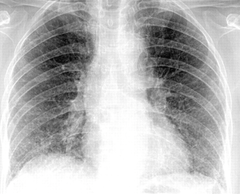
<p>Caused by Pneumocystis jirovecii</p><p>Most common cause of non-bacterial pneumonia in US.</p><p>Transmission: person-to-person respiratory droplets or environmental.</p><p>Symptoms: fungal cells fill the alveoli in lungs and occupy the air spaces, develop a non-productive cough, fever & difficulty breathing. </p><p>Progressed disease leads to consolidation of lungs (formation of a firm dense mass in the alveoli) & respiratory failure.</p><p>Treatment: severe PCP treated with antifungal medications. Usually only those with compromised immune systems develop severe form.</p><p>(Remember picture too!)</p>
29
New cards

Poison by Mushroom

In general:

1. Avoid mushrooms with white gills, a skirt, or ring on the stem & a bulbous or sack-like base called a volva

2. Avoid mushrooms with red on the cap or stem

3. Brown/tan gills, no volva or skirt would be your best bet. But, Don't consume any mushrooms unless you are 100% sure of what they are.

<p>In general:</p><p>1. Avoid mushrooms with white gills, a skirt, or ring on the stem & a bulbous or sack-like base called a volva</p><p>2. Avoid mushrooms with red on the cap or stem</p><p>3. Brown/tan gills, no volva or skirt would be your best bet. But, Don't consume any mushrooms unless you are 100% sure of what they are.</p>
30
New cards

mycoses

diseases caused by fungal pathogens

(Remember picture too!)

<p>diseases caused by fungal pathogens</p><p>(Remember picture too!)</p>
31
New cards

Mutualism

A relationship between two species in which both species benefit

Like oxpecker birds on the backs of animals eating ticks.

(Remember picture too!)
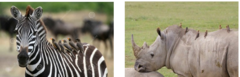
<p>A relationship between two species in which both species benefit</p><p>Like oxpecker birds on the backs of animals eating ticks.</p><p>(Remember picture too!)</p>
32
New cards

Commensalism

A relationship between two organisms in which one organism benefits and the other is unaffected

Like the shark and the remora fish

(Remember picture too!)

<p>A relationship between two organisms in which one organism benefits and the other is unaffected</p><p>Like the shark and the remora fish</p><p>(Remember picture too!)</p>



