6th lecture - The Multistep Nature of Cancer
 Call Kai
 Learn
 Practice Test
 Spaced Repetition
 Match
 Flashcards
 Knowt Play
1/16

There's no tags or description
Looks like no tags are added yet.
17 Terms
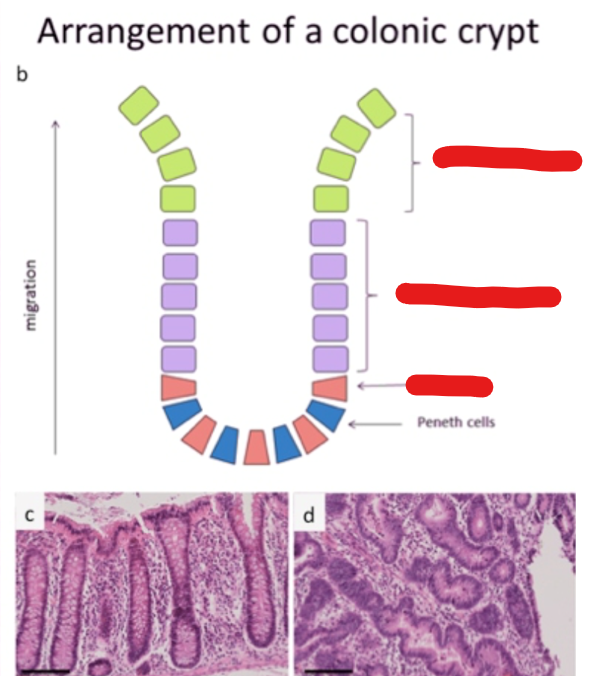

Why APC loss is considered an initiating event in the adenoma–carcinoma sequence?
In the normal intestinal crypt, Wnt/β-catenin signalling is active mainly at the bottom, where stem and progenitor cells proliferate.
As cells move upward, β-catenin signalling decreases, so cells stop dividing and differentiate.
When APC is lost, β-catenin is not properly degraded.
β-catenin/TCF signalling therefore stays ON
→ cells continue proliferation…adenoma/polyp forms

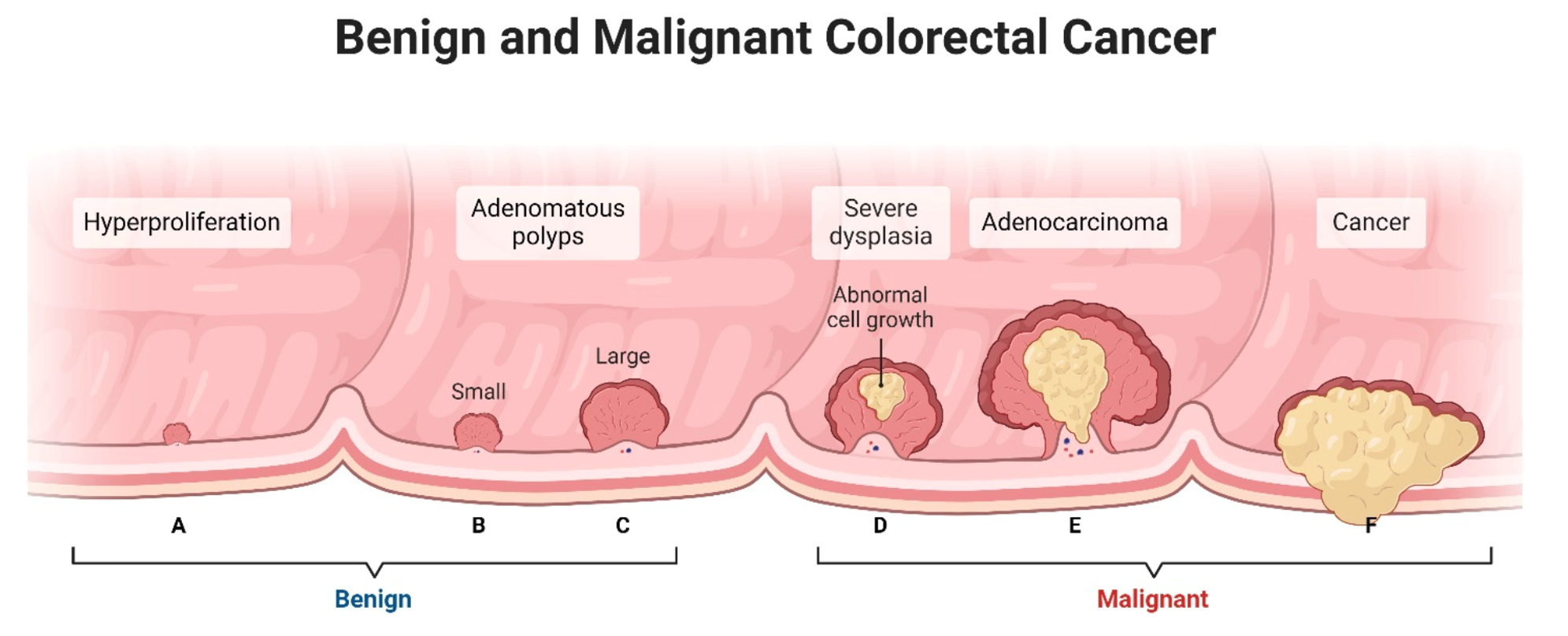


What is intratumour heterogeneity.
•tumours of the same histological type can contain different genetic alterations.
•In addition, different cell populations within a single tumour may carry different mutations.
•Therefore, tumours are genetically and phenotypically heterogeneous.
How does cancer progresses?
•Normal cells are highly resistant to malignant transformation by a single genetic event.
•Cancer therefore develops through the combined effects of multiple alterations that progressively overcome normal cellular safeguards.
Factors that promote transformation:
•activation of oncogenes
•loss of tumour suppressor genes
•evasion of apoptosis and senescence
•acquisition of replicative immortality
•changes in the tumour microenvironment
What is the first step of multistep carcinogenesis?
1) initation
Chemical carcinogen reacts with DNA to produce a mutation. Alters DNA repair.
!! initiation is reversible; not a cancer cell yet
What is the second step of multistep carcinogenesis?
2) promotion
Influence proliferation of initiated cells to form benign lesions to become a malignant neoplasms.
What is the thrid step of multistep carcinogenesis?
3) tumor progression
Tumors acquire ability to invade and establish distant metastases.
What are examples of tumor promoters?
Phorbol esters (e.g. TPA)
Oestrogens
•Chronic inflammation – cytokines and growth factors such as IL-6, TNF and prostaglandins can support expansion of initiated cells.
Bile acids
Repeated tissue injury / regenerative proliferation
Which finding best supports the idea that cancer develops through several stages rather than from a single event?
A)All tumours contain the same genetic mutations
B)Cancer often progresses from normal tissue to premalignant lesions and then to invasive disease
C)One mutation is usually enough to produce a malignant tumour.
D)Every tumour follows exactly the same sequence of changes
B)Cancer often progresses from normal tissue to premalignant lesions and then to invasive disease
Why is loss of APC considered an early event in colorectal tumour development?
A)APC loss directly causes metastasis
B)APC loss causes degradation of β-catenin
C)APC loss allows β-catenin signalling to remain active, maintaining abnormal proliferation.
D)All of the above.
C)APC loss allows β-catenin signalling to remain active, maintaining abnormal proliferation.
Which statement best describes intratumour heterogeneity?
A)Different cell populations within the same tumour can contain different genetic alterations
B)All cells within one tumour contain identical mutations
C)Different cancer types arise from different tissues
A)Primary tumours and metastases are always genetically identical
A)Different cell populations within the same tumour can contain different genetic alterations
Which statement best describes tumour initiation?
A)It stimulates proliferation without causing permanent DNA damage
B)It produces an irreversible genetic alteration but is not usually sufficient to produce cancer alone
C)It causes immediate invasion and metastasis
D)It is completely reversible when exposure is stopped
B)It produces an irreversible genetic alteration but is not usually sufficient to produce cancer alone
What is the main role of tumour promotion?
A)Directly introduce irreversible DNA mutations
B)Cause distant metastasis
C)Expand the population of previously initiated cells
D)Repair carcinogen-induced DNA damage
C)Expand the population of previously initiated cells
In the classic mouse-skin carcinogenesis experiment, what happens when a promoter is repeatedly applied without prior initiation?
A)A malignant carcinoma rapidly forms
B)A benign papilloma always develops
C)No tumour develops because there is no initiated cell population to expand
D)Initiation occurs spontaneously
C)No tumour develops because there is no initiated cell population to expand
Which of the following is a classic experimental tumour promoter?
A)TPA
B)APC
C)β-catenin
D)RB1
TPA