art history: post midterm
 Call Kai
 Learn
 Practice Test
 Spaced Repetition
 Match
 Flashcards
 Knowt Play
1/77

Earn XP
Description and Tags
Rococó, Neoclassicism and Bourbon’s Madrid: 1700-1814; Goya; Social Realism and Sorolla; Picasso; Surrealism
78 Terms

Family Portrait Philip V, Van Loo, 1747


Royal Palace, Madrid, Sabatini, 1745
French word "rocaille" meaning
the forms of rocks in nature (led to the art style "Rococó")
Rococó Historical Context
After the death of Louis XIV in 1715 Versailles to Paris Court French taste: exuberance, extravagant, less dramatic or "serious" and new tendencies: love, eroticism, luxury
Rococó Cultural Context
A new mind-set, a new style away from the dramatism and theatricality of the Baroque
Rococó painting features
Naturalism and ornamentation: forms and decoration
Soft contrast between figure and background
Sense of playfulness of colors and forms
Rococó new painting technique
pastel: chalk based colors that are galvanized in the canvas creating a light, atmospheric effect

Giaquinto, Allegory of Justice and Peace, 1753
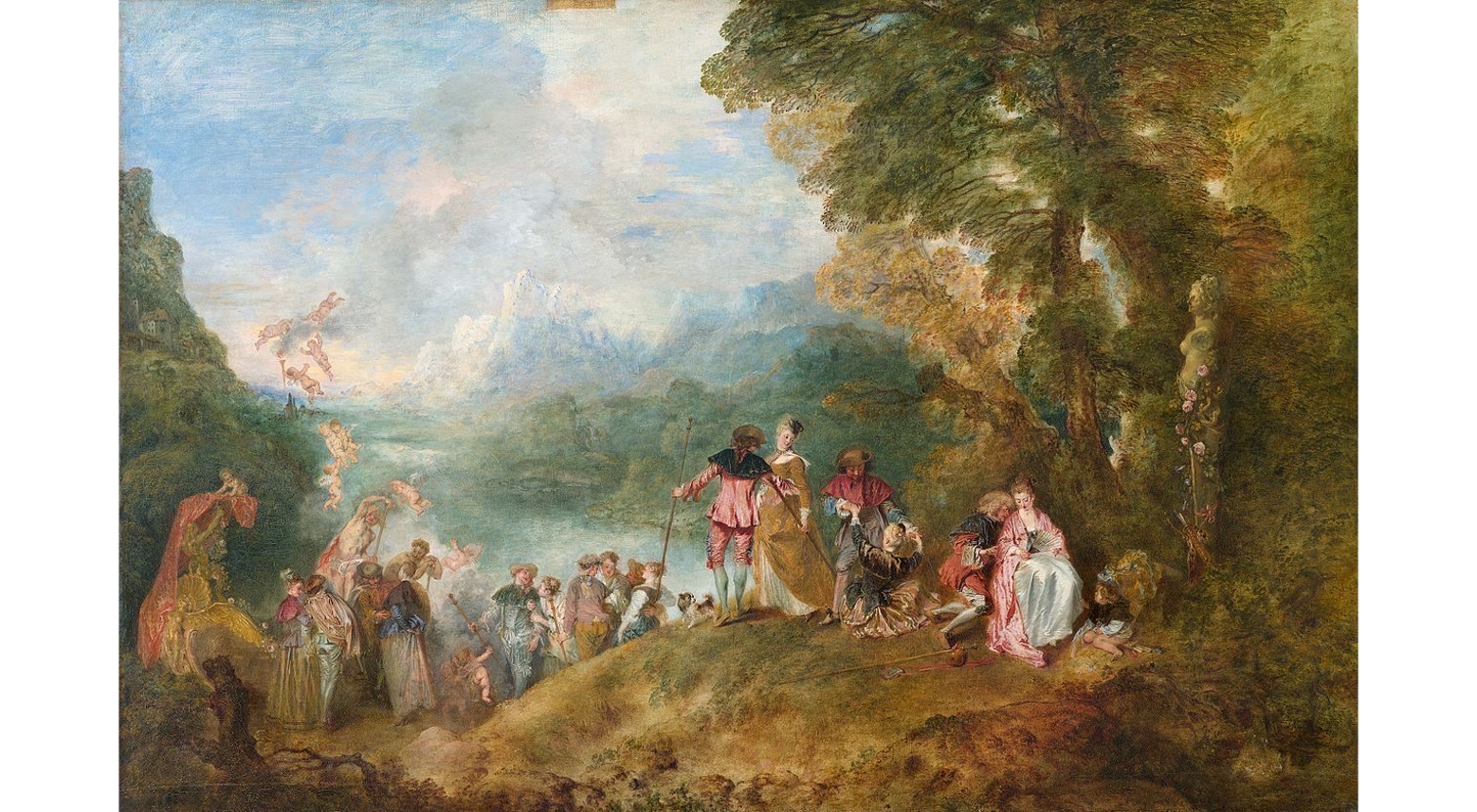
Watteau, The Embarcation of Cytherea, 1717
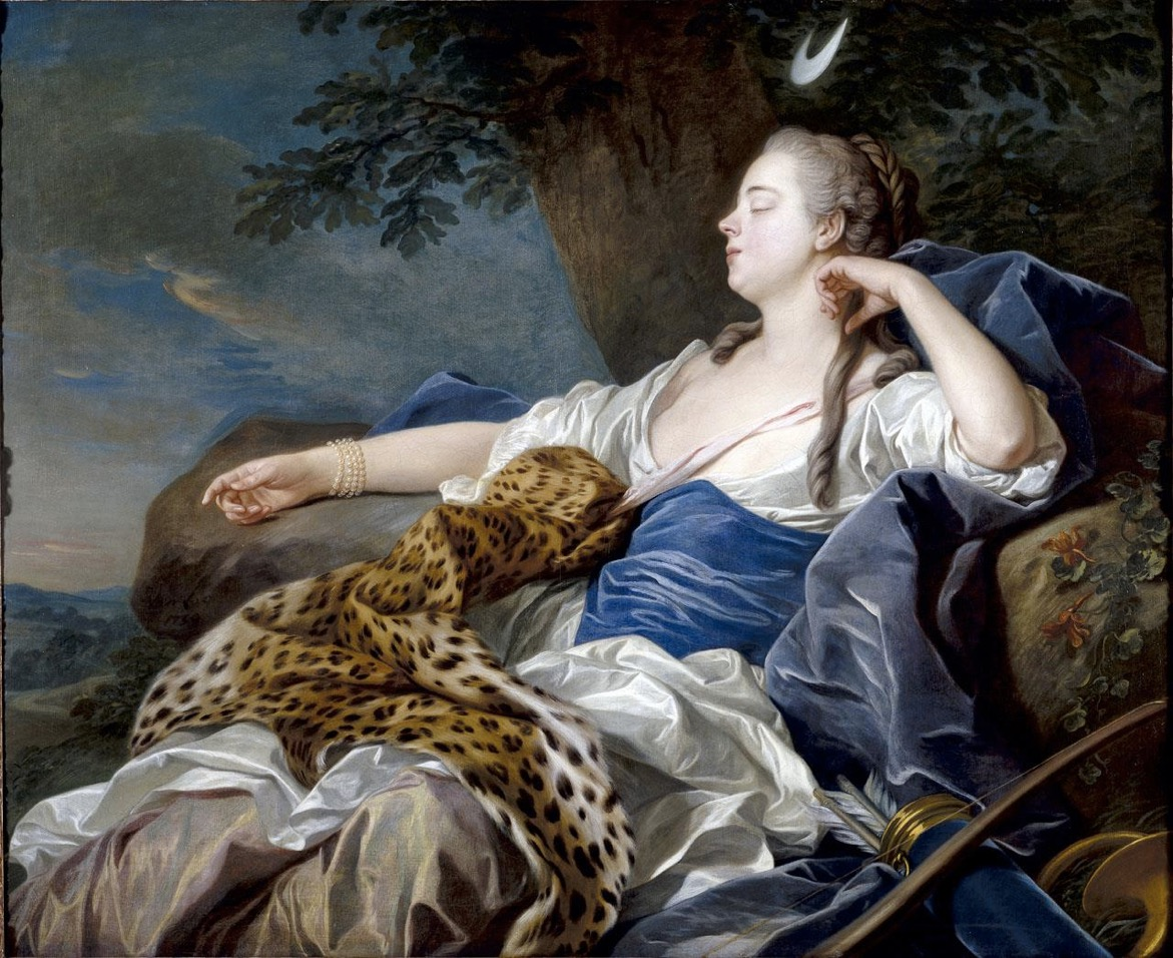
Van Loo, Diana in a landscape, 1739

Watteau, Marriage Contract and Country Dance, 1711
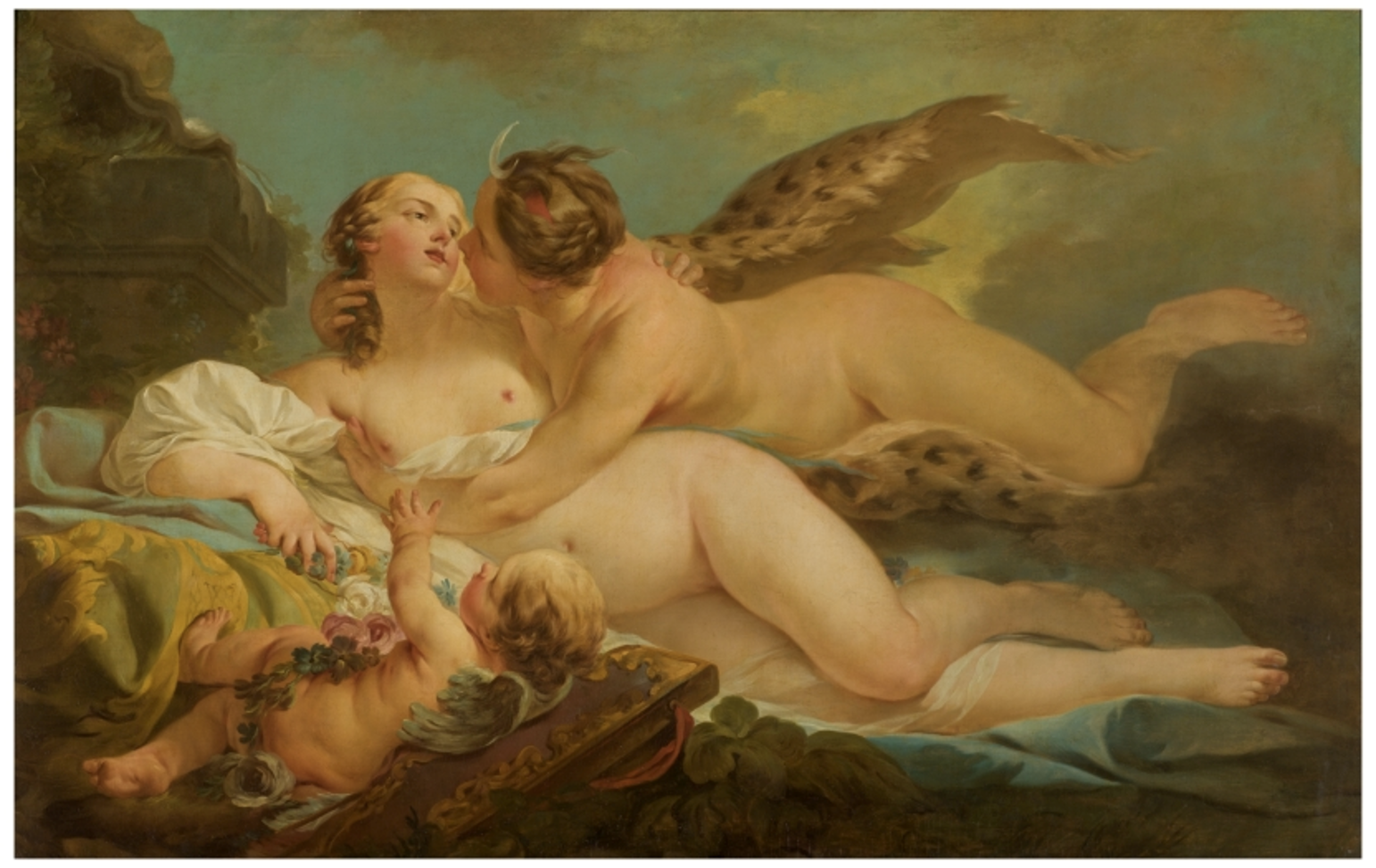
Jean Baptiste Maire Pierre, Diana and Callisto, 1749

Canaletto, View of San Vio, 1724

Antonio Rafael Mengs (1728-1779)

Mengs, Paranassus, 1761
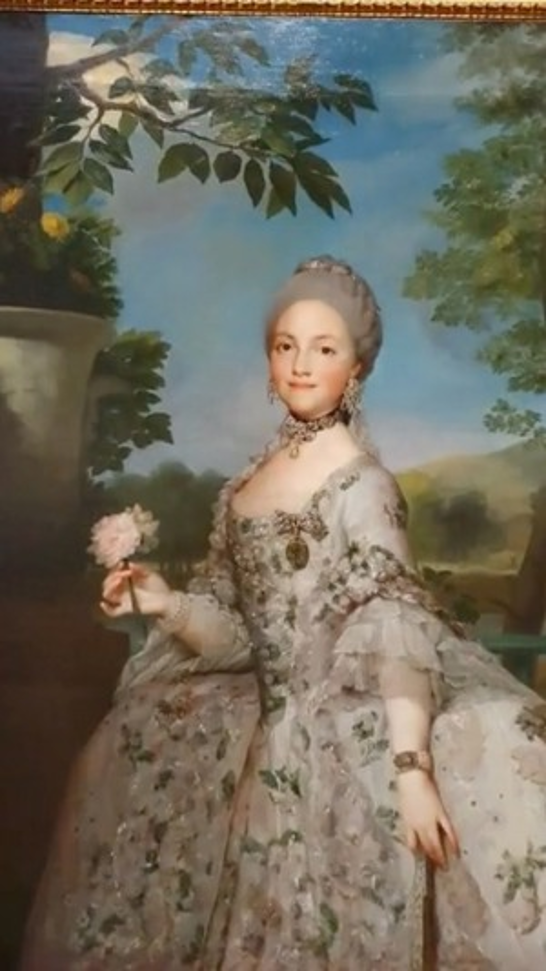
Mengs, Maria Luisa de Parma, 1766
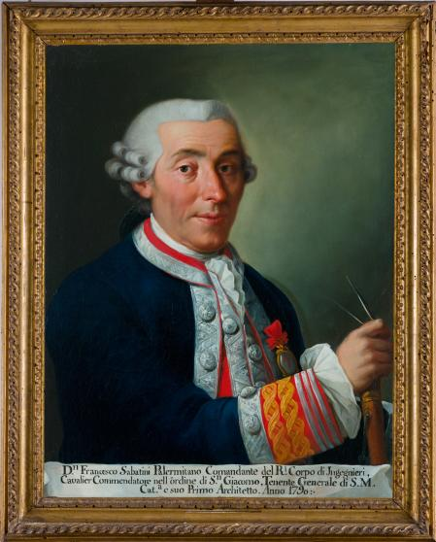
Francesco Sabatini 1760-1797
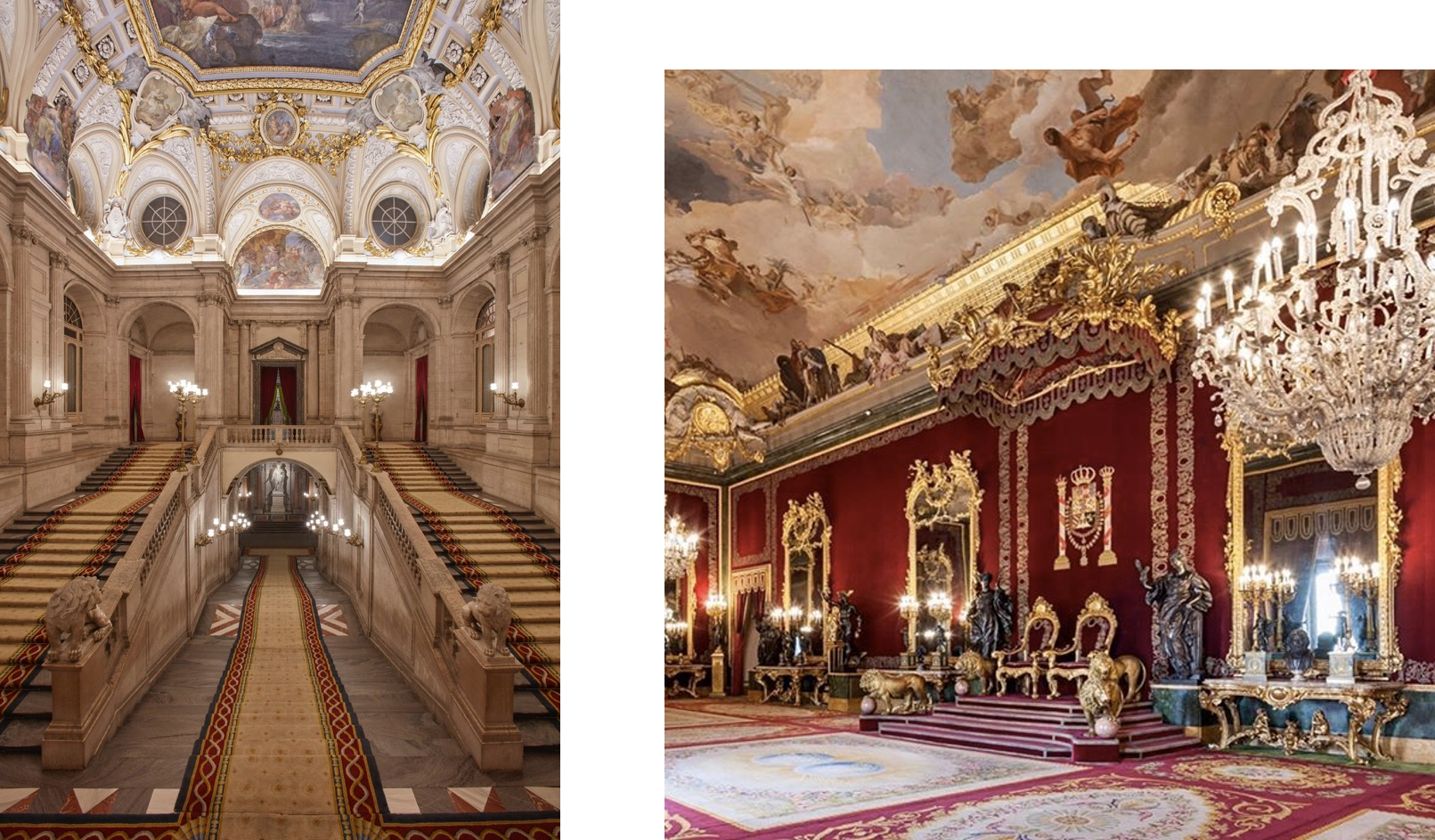
Royal Palace Madrid, Sabatini, 1755 (interior)
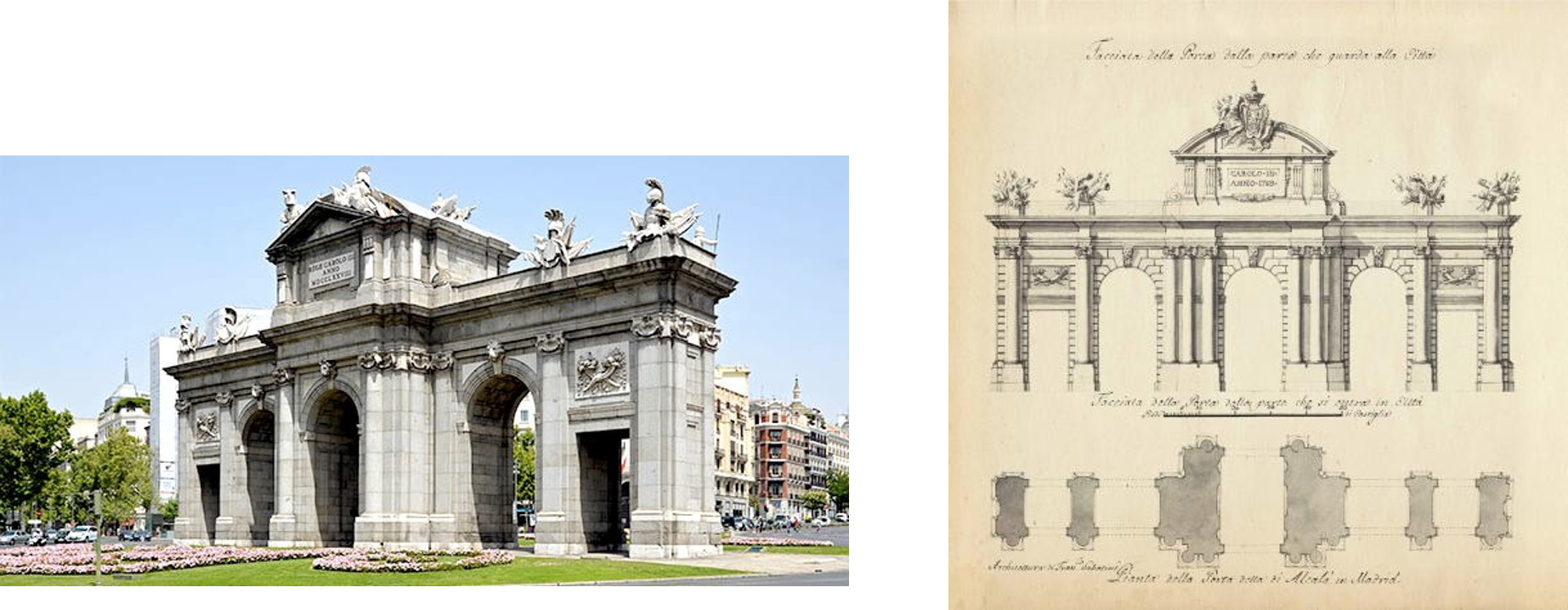
Puerta de Alcalá, Sabatini, 1775

General Hospital, Sabatini, 1755

La Cibeles, Francisco Gutiérrez/Ventura Rodríguez, 1782

Neptune, Ventura Rodríguez, 1780


Juan de Villanueva, Royal Natural Sciences Academy, today Museo del Prado

Isabel Braganza, Ferdinand VII's wife
Prado Museum opens
1819

Francisco Goya (1746-1828)
About Goya
Known for his versatility, he was a painter, printmaker, and court artist. Early works include cartoons for the Royal Tapestry Factory depicting everyday life. Painted both flattering royal portraits and critical, sometimes dark, works like the Black Paintings and The Third of May 1808. Shared Enlightenment ideals leading to progressive views; died in exile.
Goya's works
Cartoons for tapestries, Portraits of the aristocracy, Royal Portraiture, Historical Painting, Black Painting series, Engravings series
Engravings series
Tauromaquia, Caprichos, Disparates, Disasters of the War

Goya, Cartoons for tapestries, 1775-1792

Goya, The Umbrella, 1775-1792
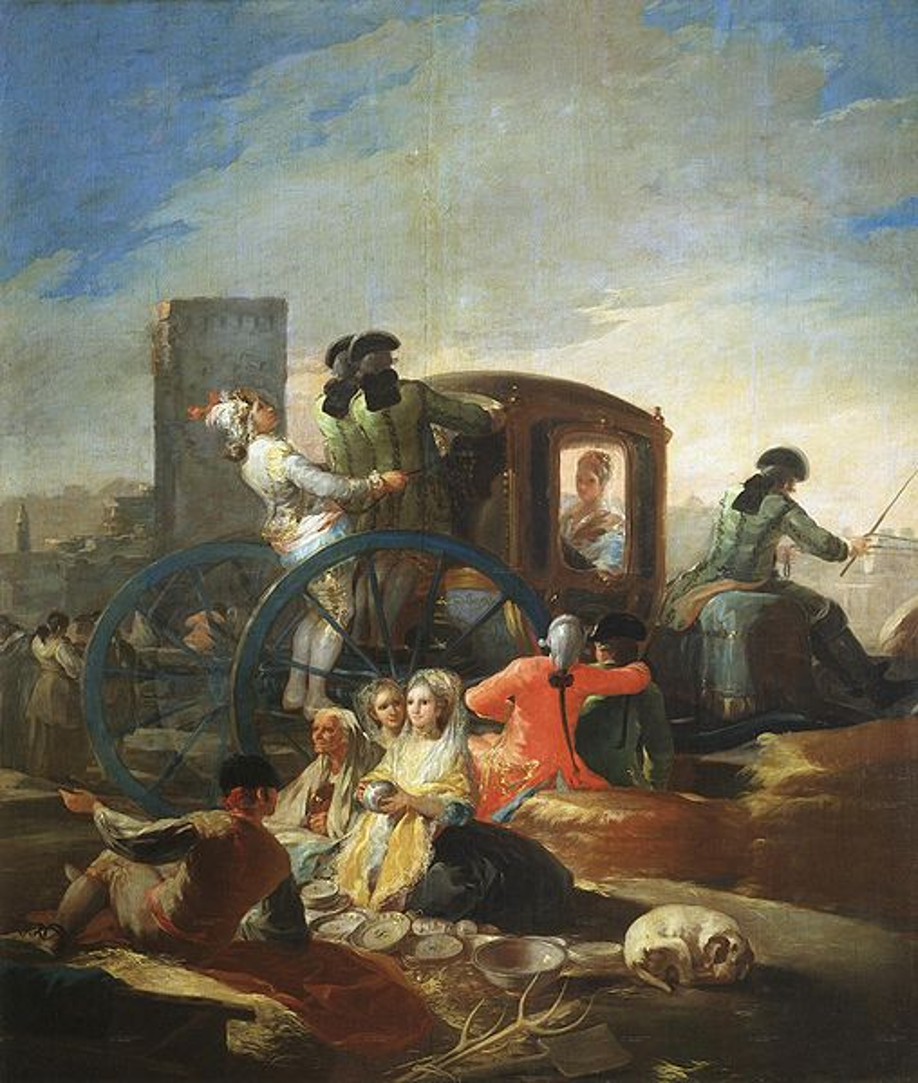
Goya, The Pottery Vendor, 1777

Goya, Meadows of San Isidro, 1788

Goya, Carlos III, 1786

Goya, Cristo Crucificado, 1780

Goya , King Charles IV of Spain and his Family, 1800

Goya, The Naked Maja, 1797

Goya, The Clothed Maja, 1805

Goya, The Yard of a Madhouse, 1794
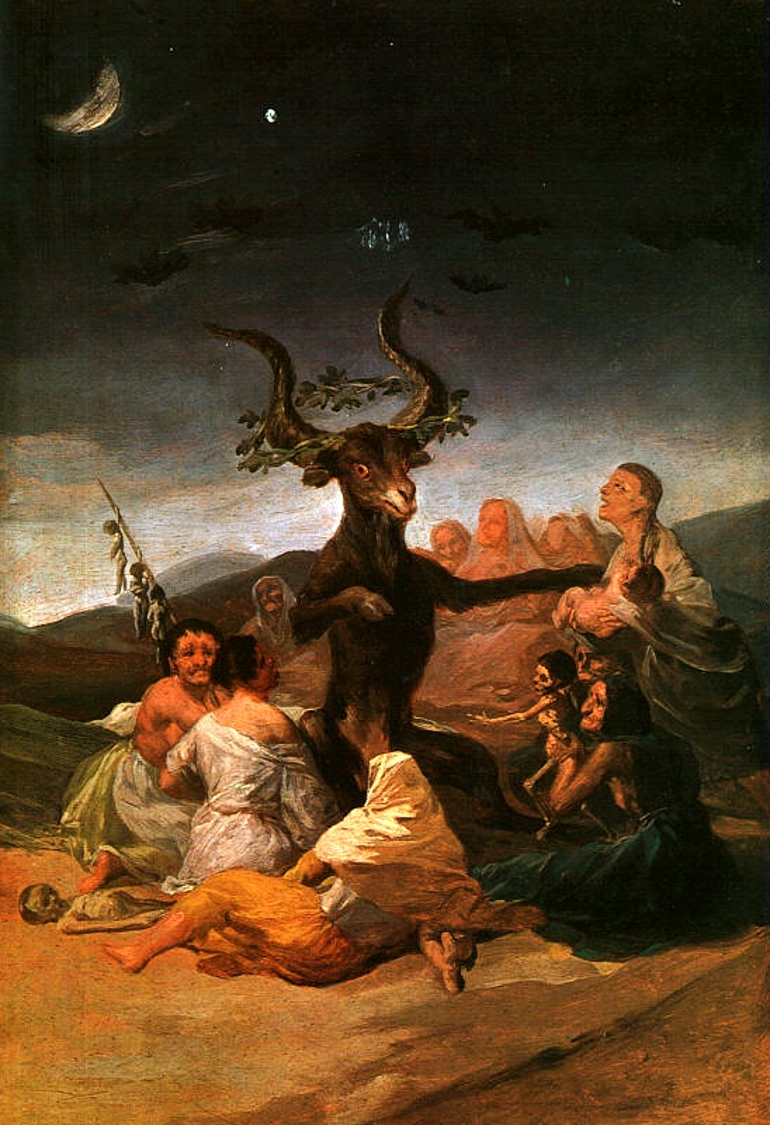
GOYA AND THE UNDERWORLD "AQUELARRE" 1798
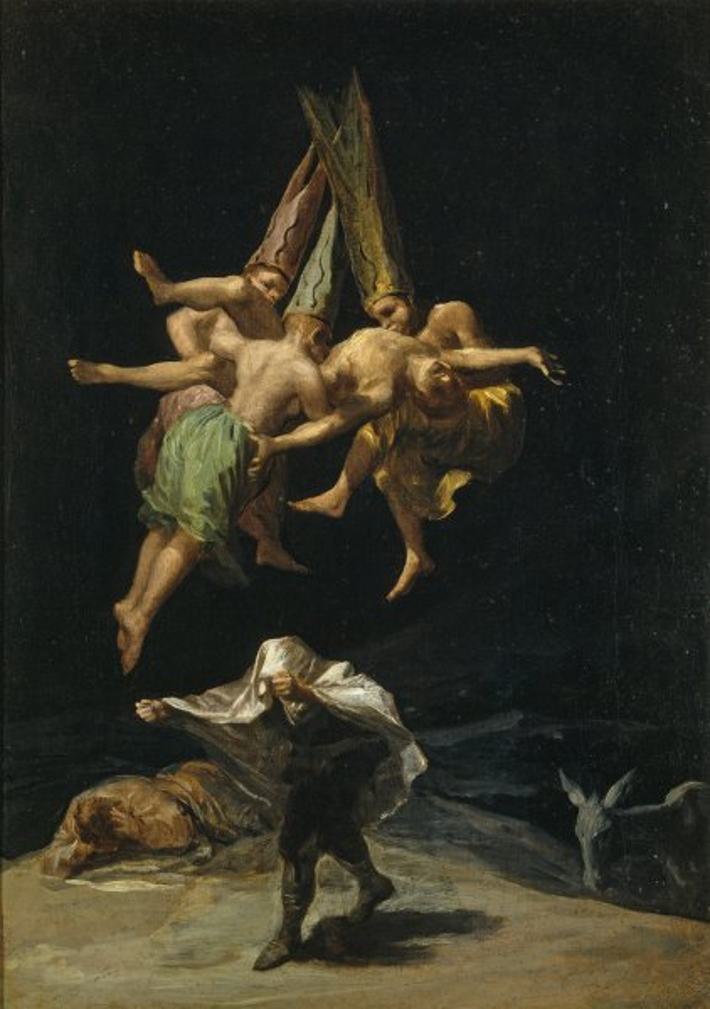
Goya, Vuelo de brujos, 1798.
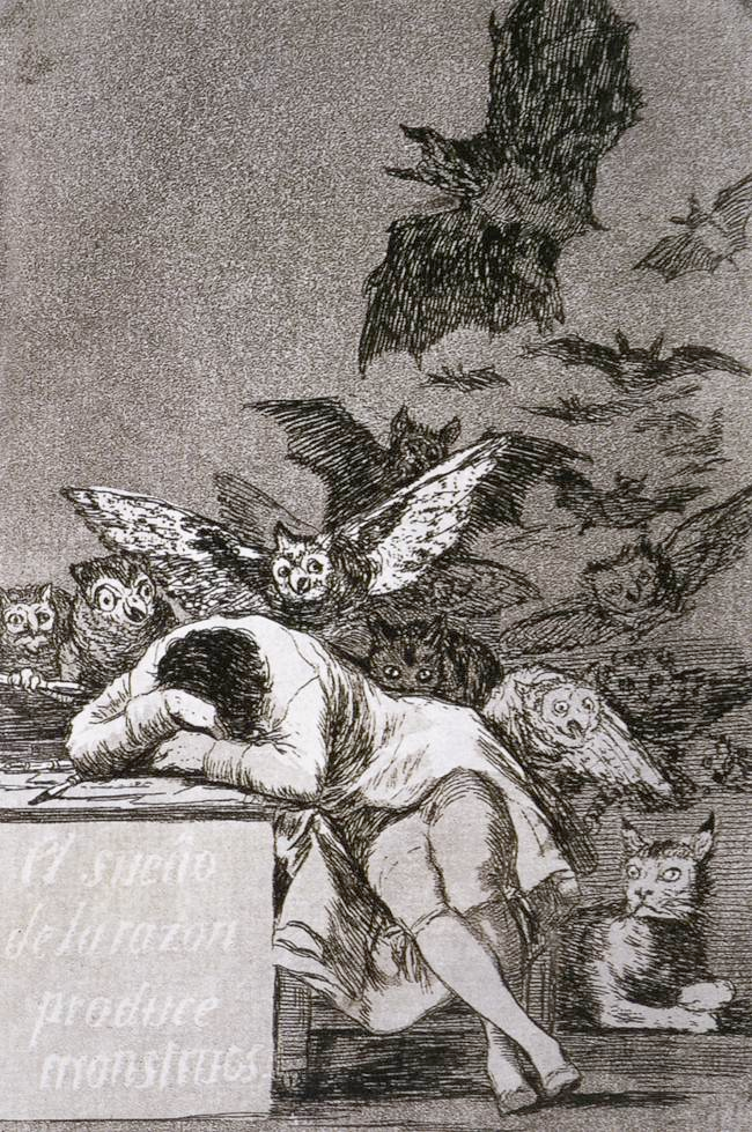
Goya, Caprichos 43 'El sueño de la razón produce monstruos', 1799
Los Caprichos, or The Caprices
eighty etchings and aquatints
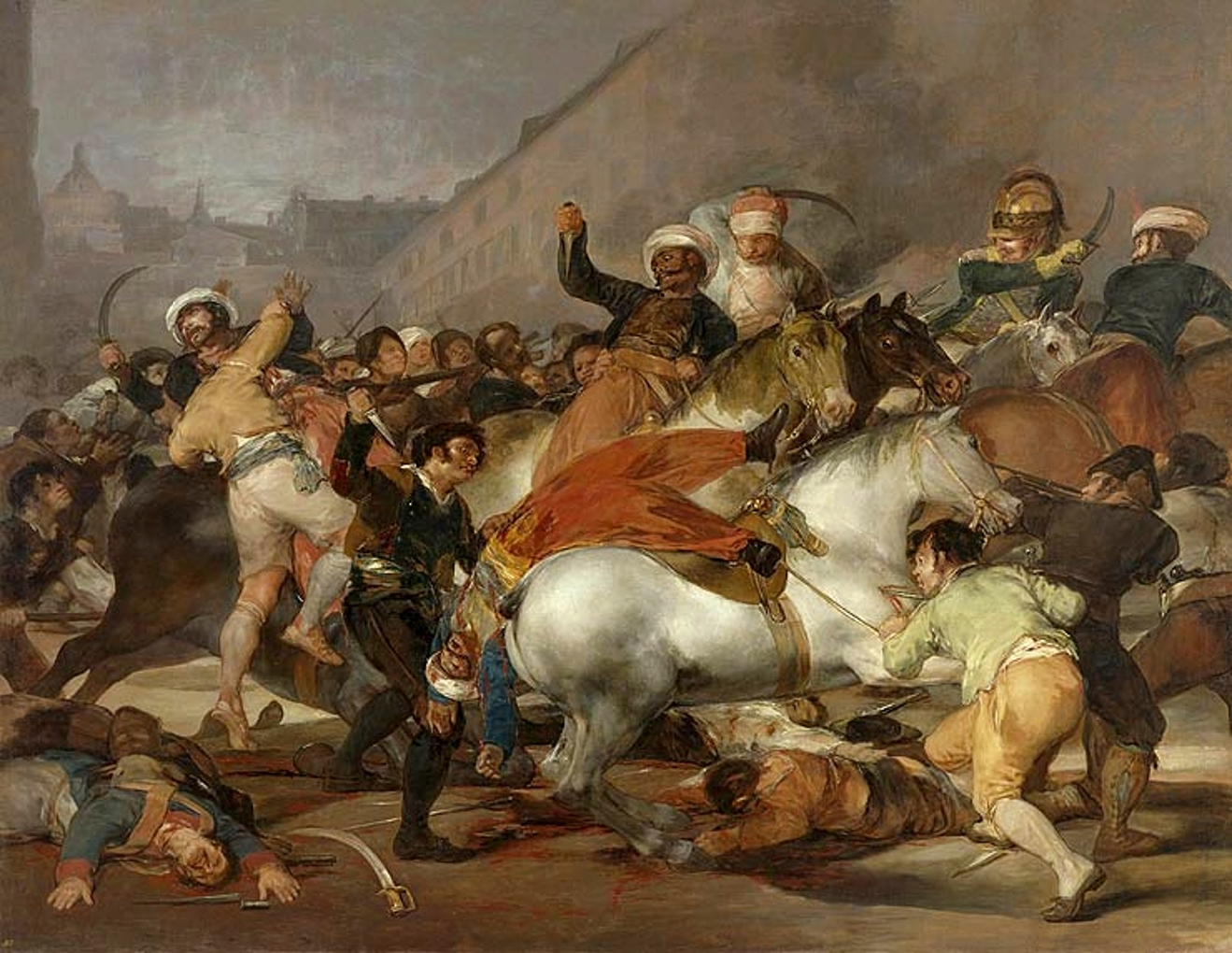
Goya, The Second of May 1808 or The Charge of the Mamelukes, 1814

Disasters of the War Series, Francisco de Goya, 1808

Goya, Portrait of Ferdinand VII of Spain in his robes of state (1815)
Goya, The Executions of the Third of May 1808, 1814
Goya, Colossus, 1807
Pinturas Negras, Goya, 1820-1823
Goya, Pilgimage, 1820
Goya, Saturn Devoring his own son, 1820
Goya, Dog, 1820
Social Realism paintings
include industrial and women's work, education, illness and medicine, workplace accidents, prostitution, emigration, poverty and ethnic and social marginalisation, colonialism, strikes, anarchism and demonstrations
Vicente Cutanda y Toraya, Strike in Vizcaya (1892)
A Hospital Ward during Chief Physician's Round, Luis Jiménez Aranda, 1889
Joaquín Sorolla, self portrait 1904
Sorolla, Mother, 1895-1900
Joaquín Sorolla, The Orange Seller, 1891
Joaquin Sorolla, Selling Melons, 1890
Joaquin Sorolla, Another Margarite, 1892
Joaquín Sorolla, White Slave Trade, 1895
Joaquín Sorolla, The Return from Fishing, 1894
Joaquín Sorolla, And they still say fish is expensive! 1894
Joaquín Sorolla, Fishing Nets, 1893
Joaquín Sorolla: Triste herencia (Sad Inheritance) (1896)
Joaquín Sorolla: El pescador (1904)
Joaquín Sorolla, After Bathing, 1915
Joaquín Sorolla, Bath Time, 1898
Joaquín Sorolla: Swimmers (Nadadores) (1905)
Joaquín Sorolla: Paseo por la playa (Walk on the Beach) (1909)
Joaquín Sorolla: El baño del caballo (The Horse's Bath) (1909)
Sorolla, Boys in the beach, 1909, Prado Museum
Sorolla
Neo-Impressionism painter
Joaquín Sorolla, Visions of Spain, 1911-1922
Sorolla, Visions of Spain
14 paintings: 12 feet tall and 200 feet long
Sorolla, Sevilla, The Dance, Hispanic Society New York, 1915
Sorolla, Catalonia, The Fish, Hispanic Society New York, 1915
Joaquín Sorolla, Valencia, Visions of Spain, Valencia, 1911