4.2 - REASONS FOR LAWS
 Call Kai
 Learn
 Practice Test
 Spaced Repetition
 Match
 Flashcards
 Knowt Play
1/8

There's no tags or description
Looks like no tags are added yet.
9 Terms
Why do rules exist?
To create and maintain a sense of order
What are laws? Give an example.
Set of rules which everyone in the community is expected to obey e.g. traffic laws
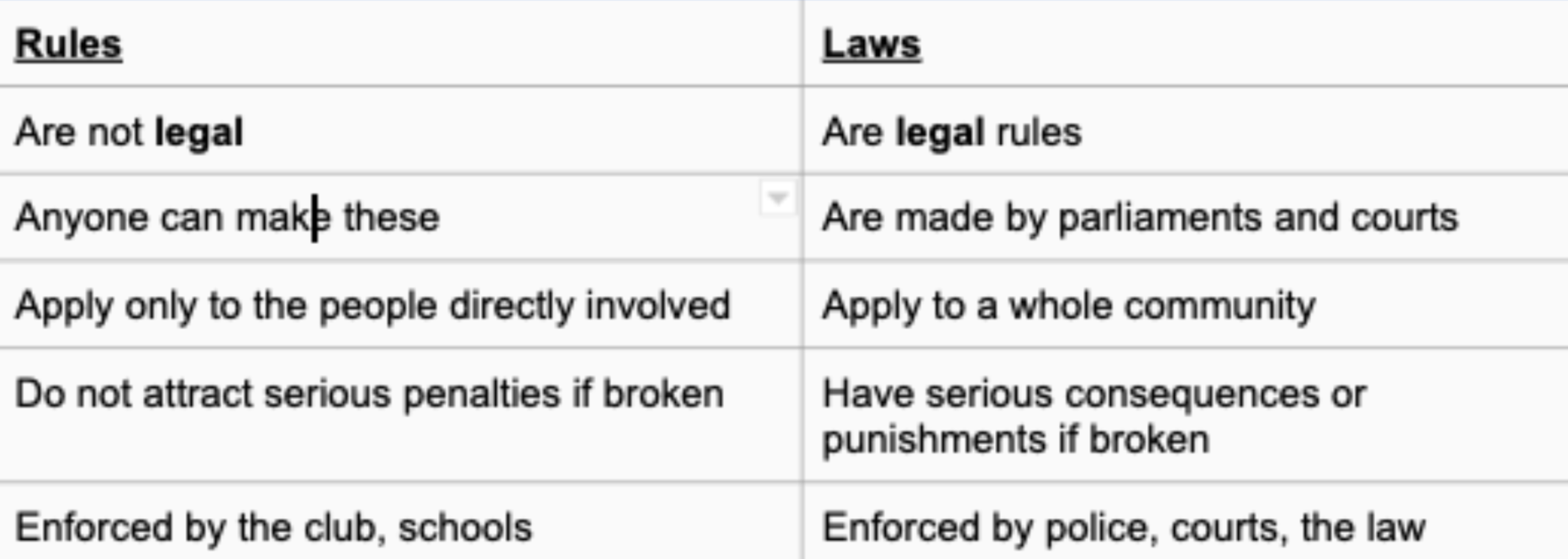
What is the difference between rules and laws?
The difference between a rule and a law is that the police and the courts can enforce laws. Laws are legal rules that carry more serious penalties and you may end up having to go to court if you break a law.
What are the four main roles of the law?
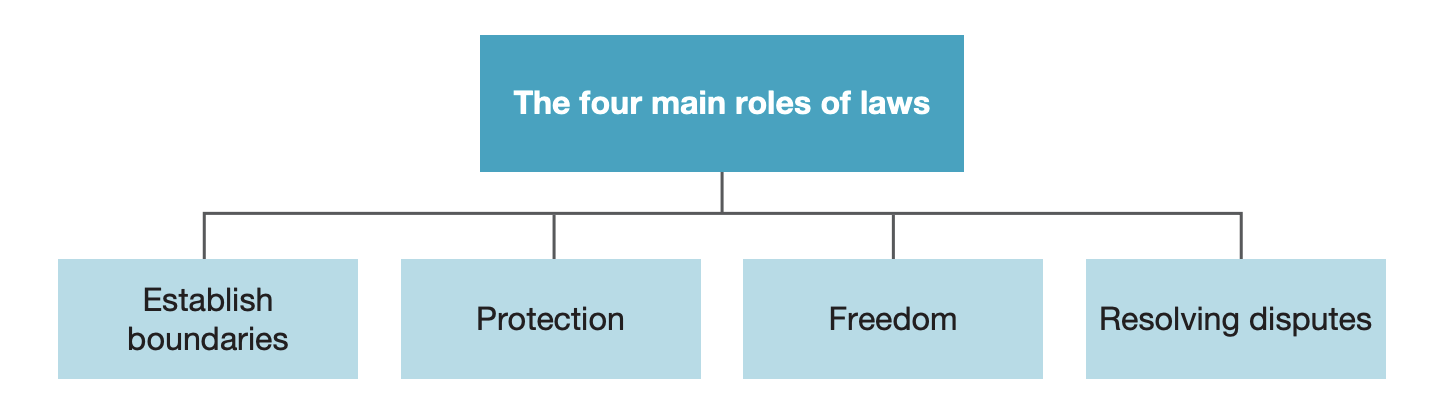
How does the law (1. Establish boundaries). Give an example.
Establishes boundaries of acceptable behaviour and determines which actions will not be tolerated. e.g. drink-driving laws reflect society’s attitude that placing other road users at risk through intoxication is unacceptable.
How does the law give (2. Protection). Given an example.
Protection from the actions of others as well as our own behaviour. Tells society what people cannot do. e.g. cannot commit assault, murder or robbery. In this role, the law restricts our individual freedom but provides safety for all individuals in society.
How does the law give (3. Freedom). Given an example.
Freedom to do many things by telling society what people can do. e.g. get married or divorced
How does the law (4. Resolve disputes). Given an example.
Resolving disputes to stop people taking the law into their own hands. The legal system provides a police force (or service), court system and correctional centres (jails and juvenile detention centres) to enforce and administer the law.

What is meant by the term anarchy?
disorder or confusion due to the absence of government or laws