0. Opharm Exam 3 - Know These
 Call Kai
 Learn
 Practice Test
 Spaced Repetition
 Match
 Flashcards
 Knowt Play
1/150

There's no tags or description
Looks like no tags are added yet.
151 Terms
Which of the demulcents’ main role is lubrication and residence time?
cellulose-based
(carboxymethulcellulose/CMC & Hypromellose/HPMC)

Which of the demulcents’ main role is surface coating and wetting?
synthetic polymers
(Polyethylene glycol/PEG, polyvinyl alcohol/PVA, polyvinylpyrrolidone/povidone)

Which of the demulcents’ main role is lubrication and water retention?
glycerin, propylene glycol

What is the most common demulcent in the USA?
carboxymethylcellulose (CMC)

Which 2 demulcents are also humectants?
propylene glycol,
glycerin

________ are water-soluble polymers applied to the eye to protect and lubricate mucous membranes
Demulcents

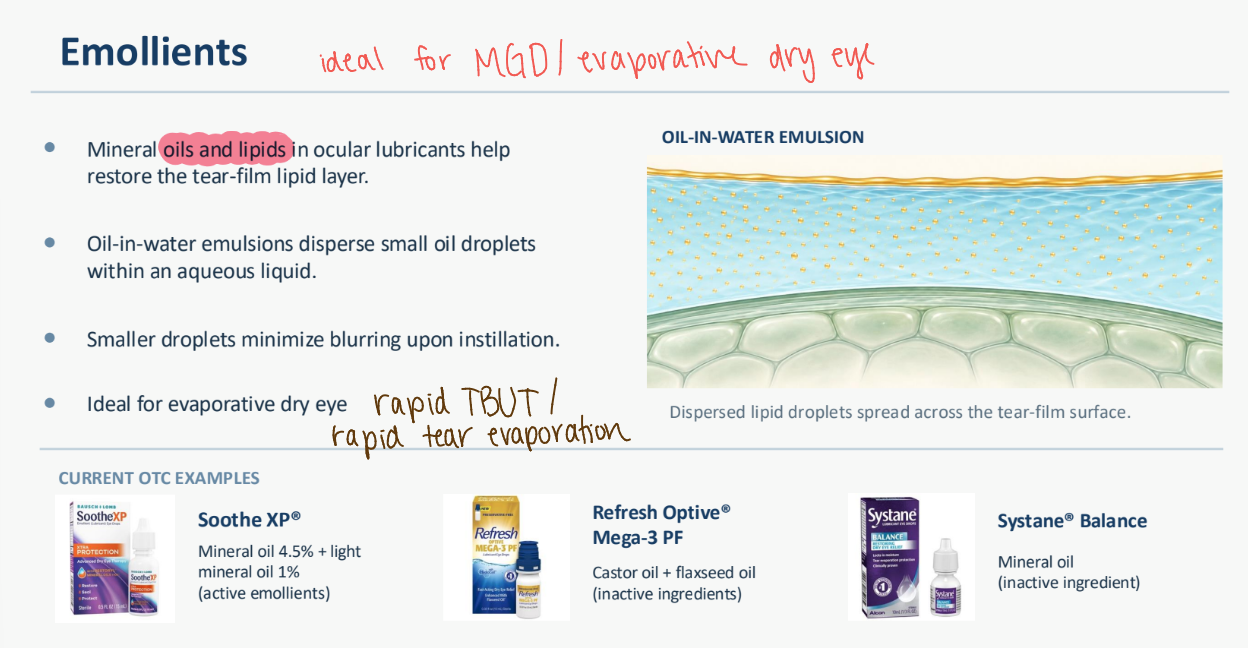
________ are mineral oils and lipids that work to restore the tear-film lipid layer and reduce tear evaporation
Emollients
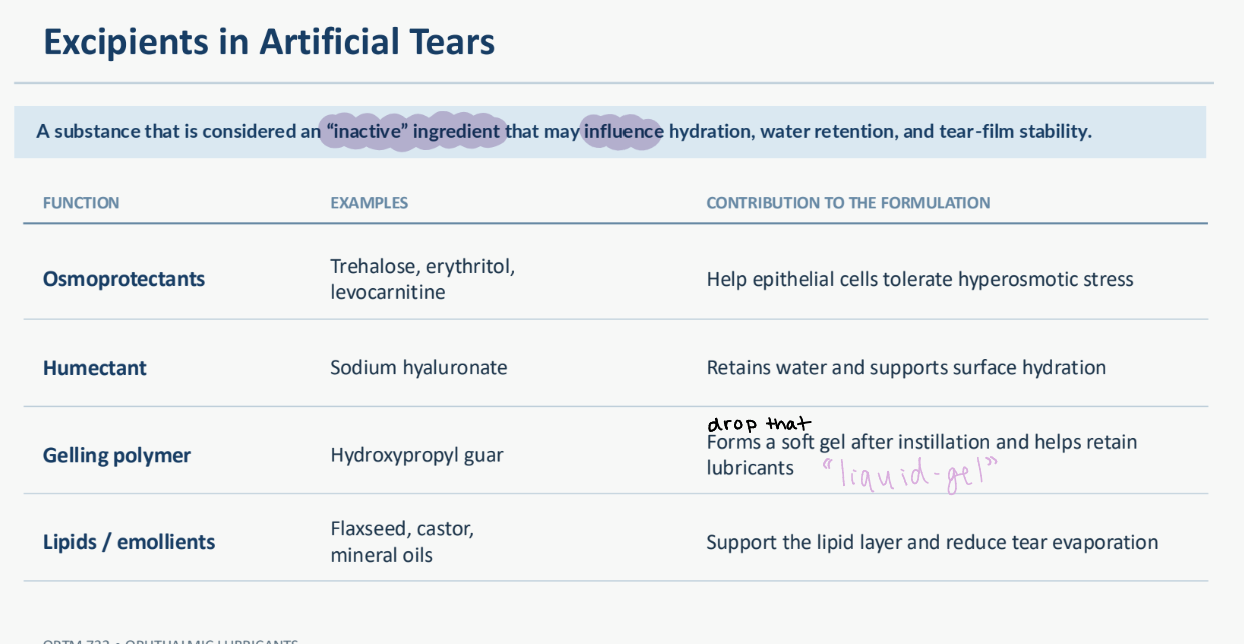
_____ are substances that are considered “inactive” ingredients that may influence hydration, water retention, and tear-film stability
Excipients

functions of excipients:
trehalose
osmoprotectant

functions of excipients:
erythritol
osmoprotectant
functions of excipients:
levocarnitine
osmoprotectant

functions of excipients:
solium hyaluronate
humectant

functions of excipients:
hydroxypropyl guar
gelling polymer

functions of excipients:
flaxseed
lipids/emollients

functions of excipients:
castor
lipids/emollients

functions of excipients:
mineral oils
lipids/emollients

_______ is an excipient intended to help epithelial cells tolerate hyperosmotic stress
osmoprotectant

_______ is an excipient intended to retain water and support surface hydration
humectant
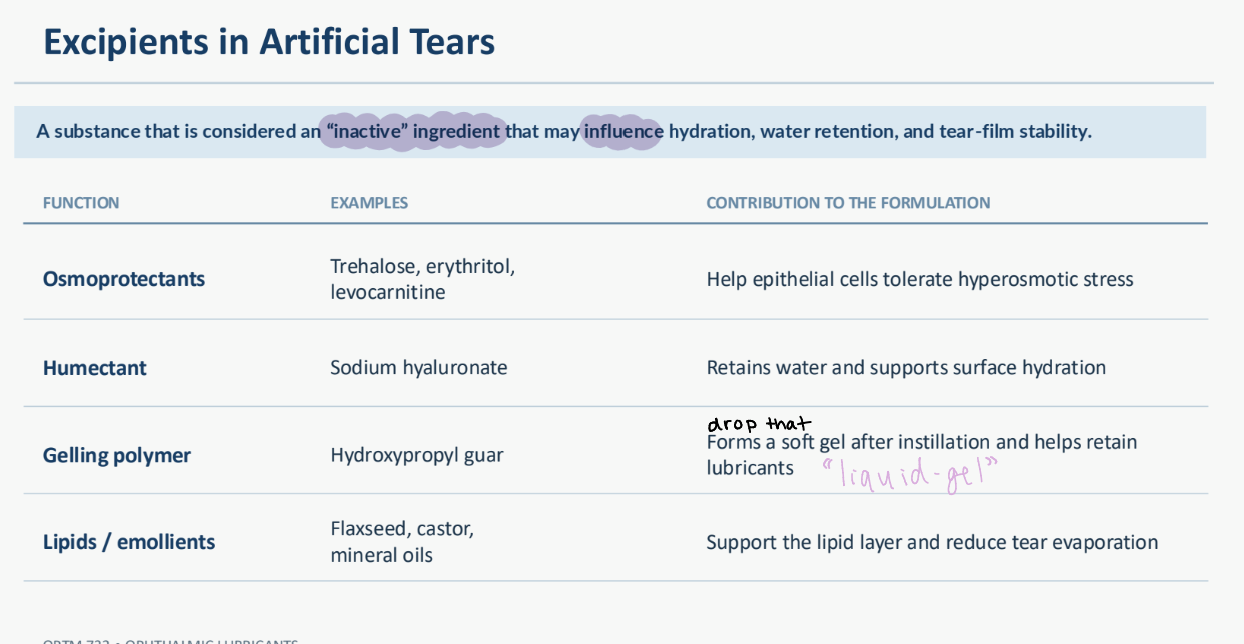
_______ is an excipient intended to form a soft gel after installation and helps retain lubricants
gelling polymer

_______ is an excipient intended to support the lipid layer and reduce tear evaporation
lipids/ emollients

functions of excipients:
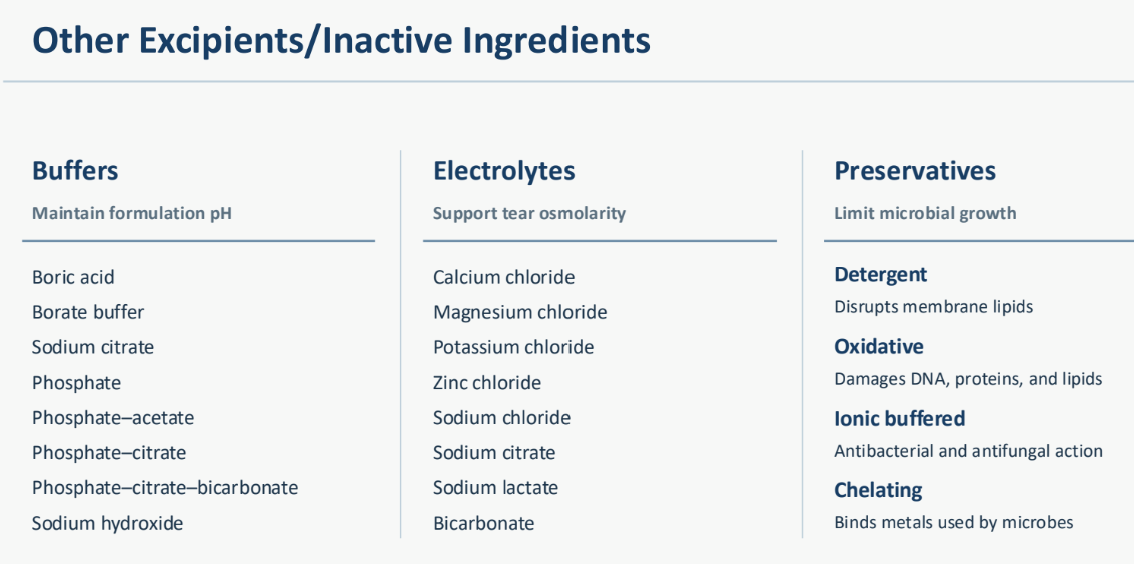
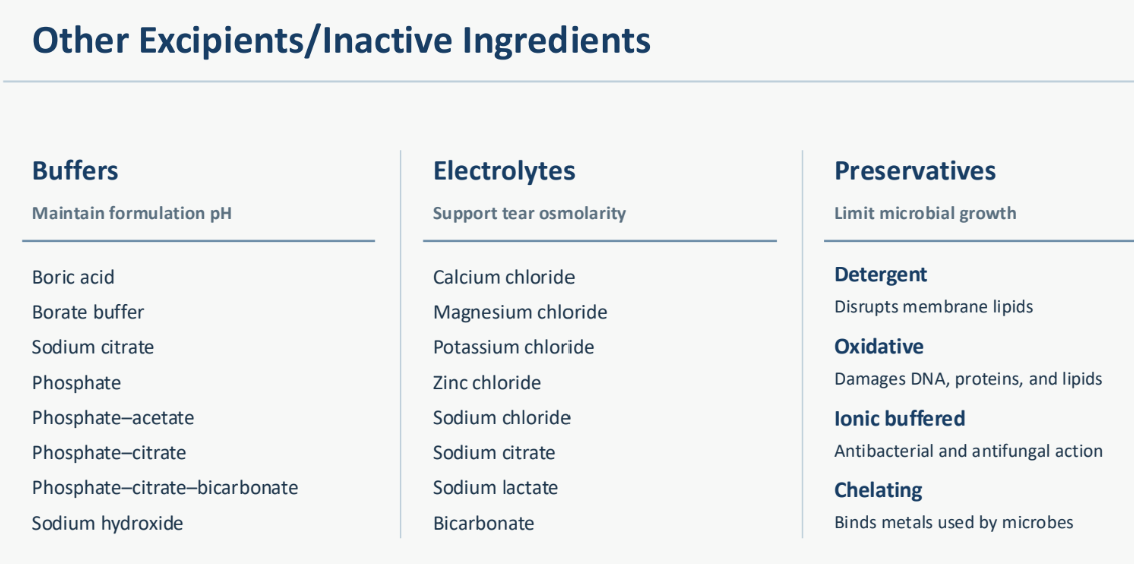
boric acid
buffer

functions of excipients:
borate
buffer

functions of excipients:
sodium citrate
buffer

functions of excipients:
phosphate (-acetate, -citrate, -bicarbonate)
buffer
functions of excipients:
sodium hydroxide
buffer
functions of excipients:
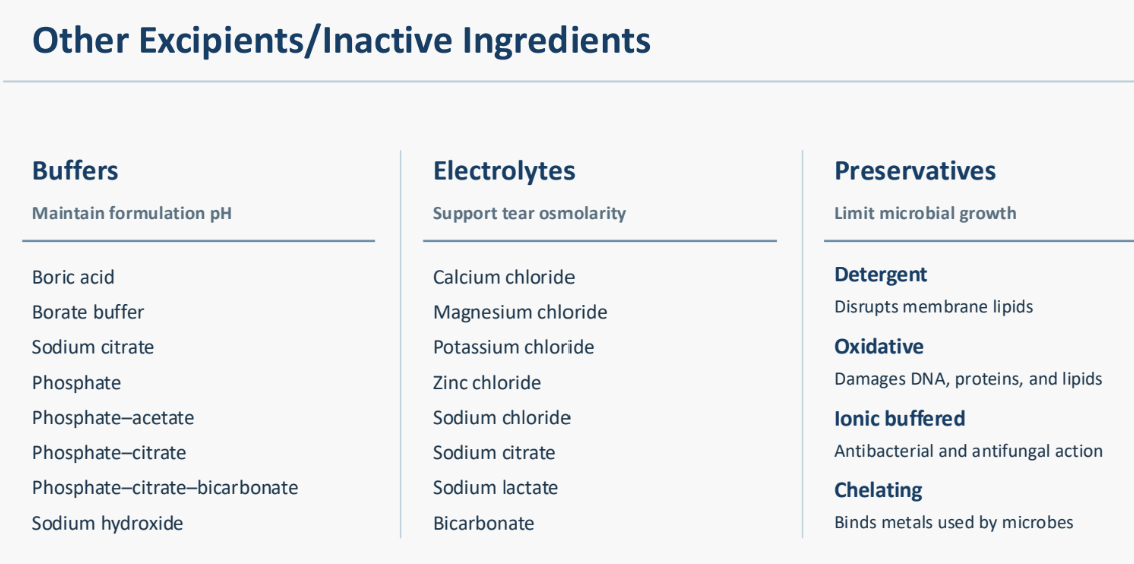
calcium chloride
electrolyte
functions of excipients:
magnesium chloride
electrolyte

functions of excipients:
potassium chloride
electrolyte

functions of excipients:
zinc chloride
electrolyte

functions of excipients:
sodium chloride
electrolyte

functions of excipients:
sodium citrate
electrolyte
functions of excipients:
sodium lactate
electrolytes

functions of excipients:
bicarbonate
electrolytes

_______ is an excipient intended to maintain formulation pH
buffer
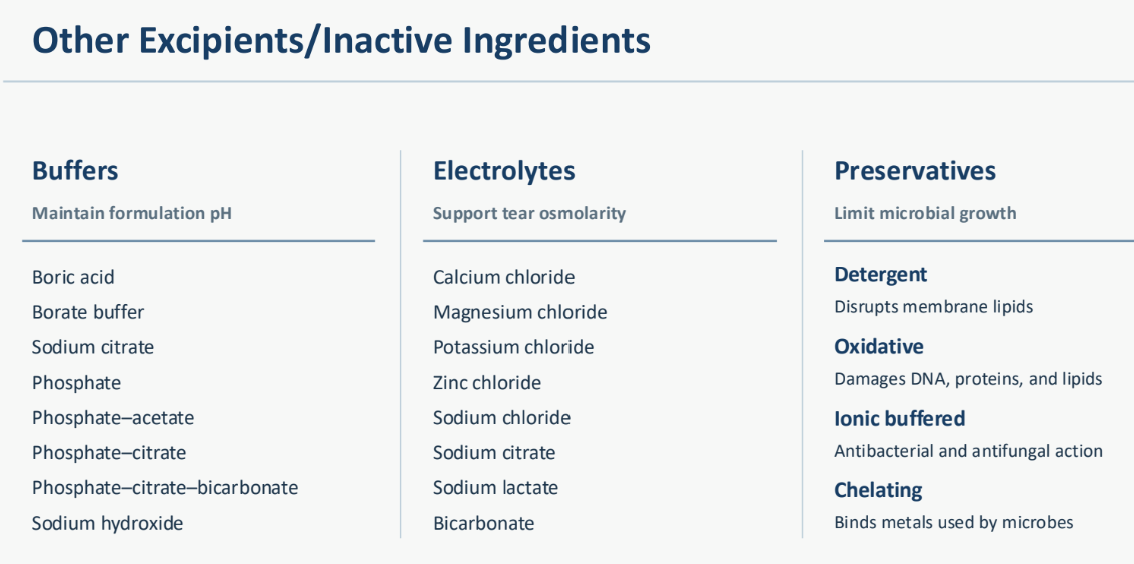
_______ is an excipient intended to support tear osmolarity
electrolyte

_______ is an excipient intended to limit bacterial growth
preservative

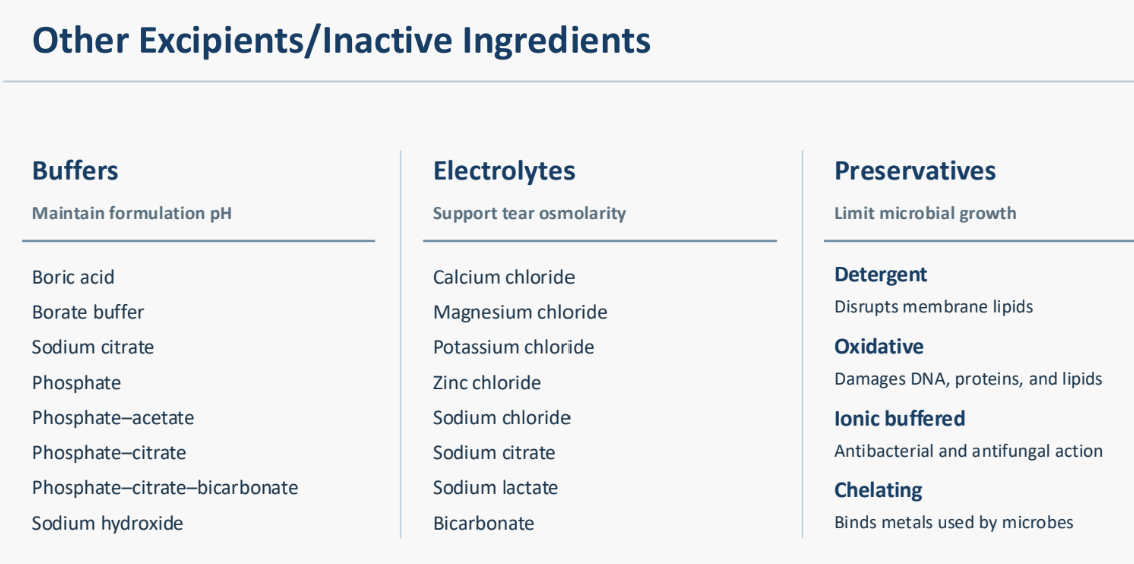
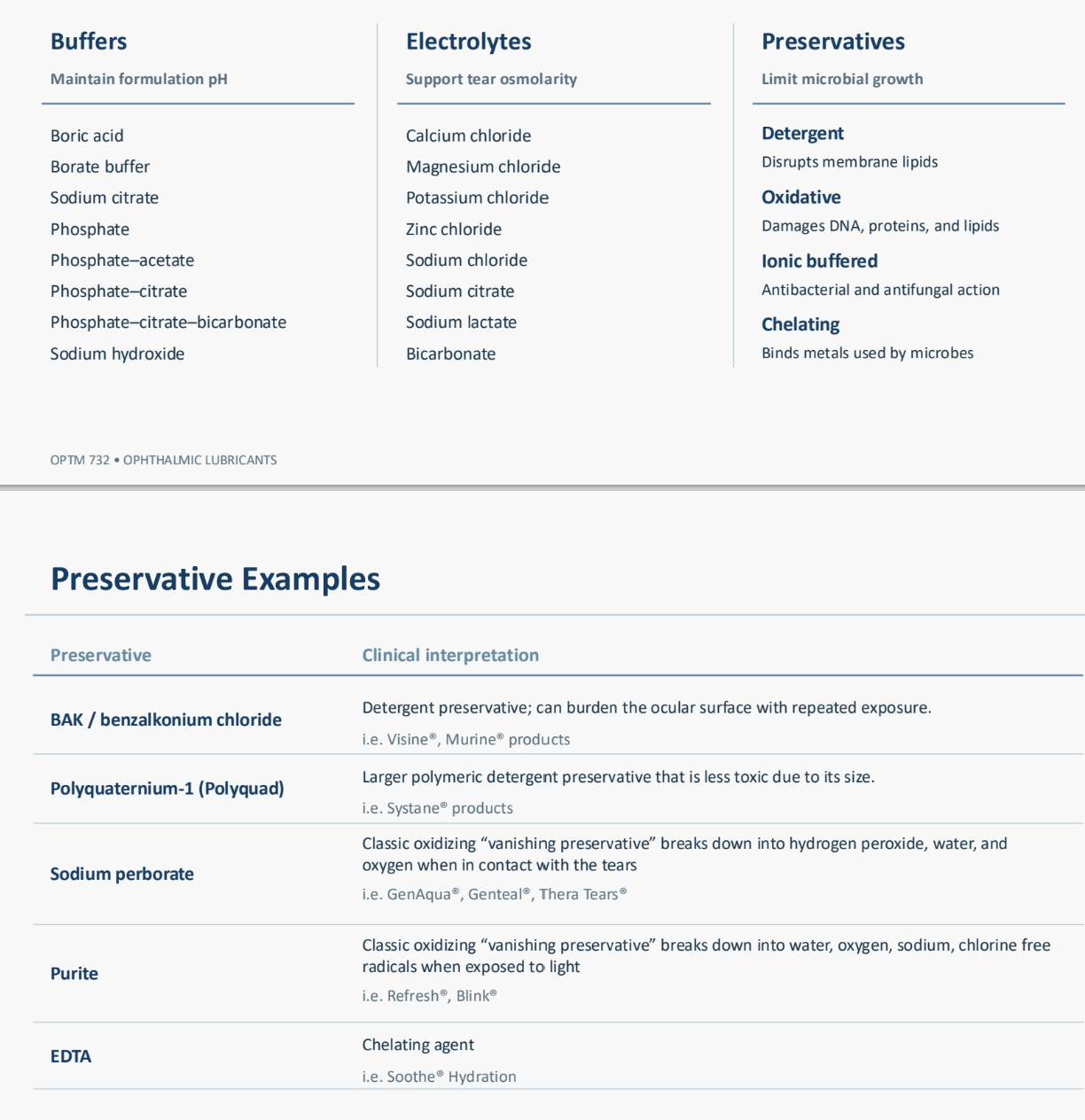
____ is a class of preservative that works by disrupting membrane lipids
detergent

____ is a class of preservative that works by damaging DNA, proteins, and lipids
oxidative

____ is a class of preservative that works by antibacterial and antifungal action
ionic buffered

____ is a class of preservative that works by binds metals used by microbes
chelating

BAK/ Benzalkonium chloride is what class of preservative?
detergent

polyquadternium-1 (polyquad) is what class of preservative?
detergent
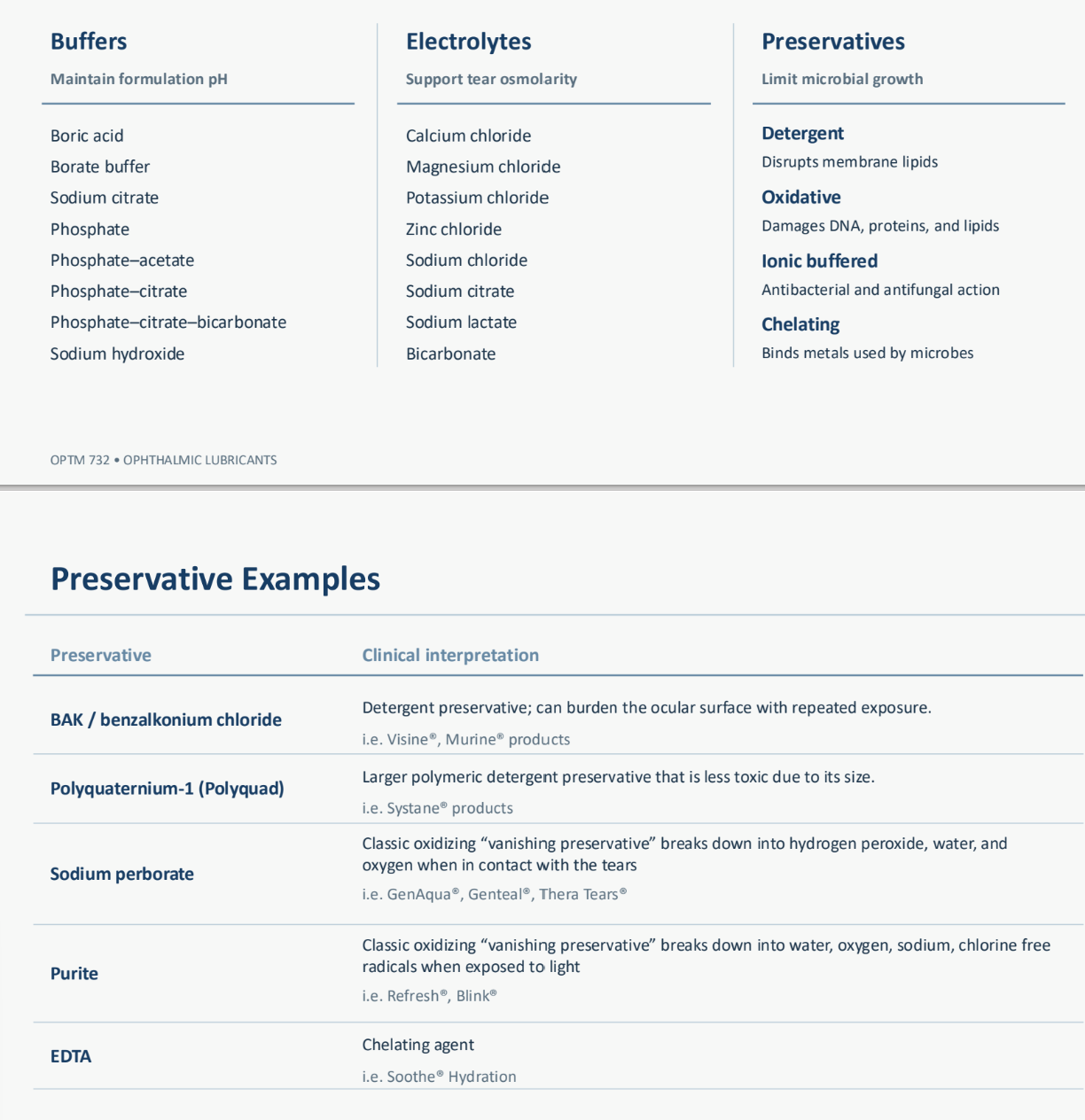
sodium perborate is what class of preservative?
classic oxidizing vanishing

purite is what class of preservative?
classic oxidizing vanishing
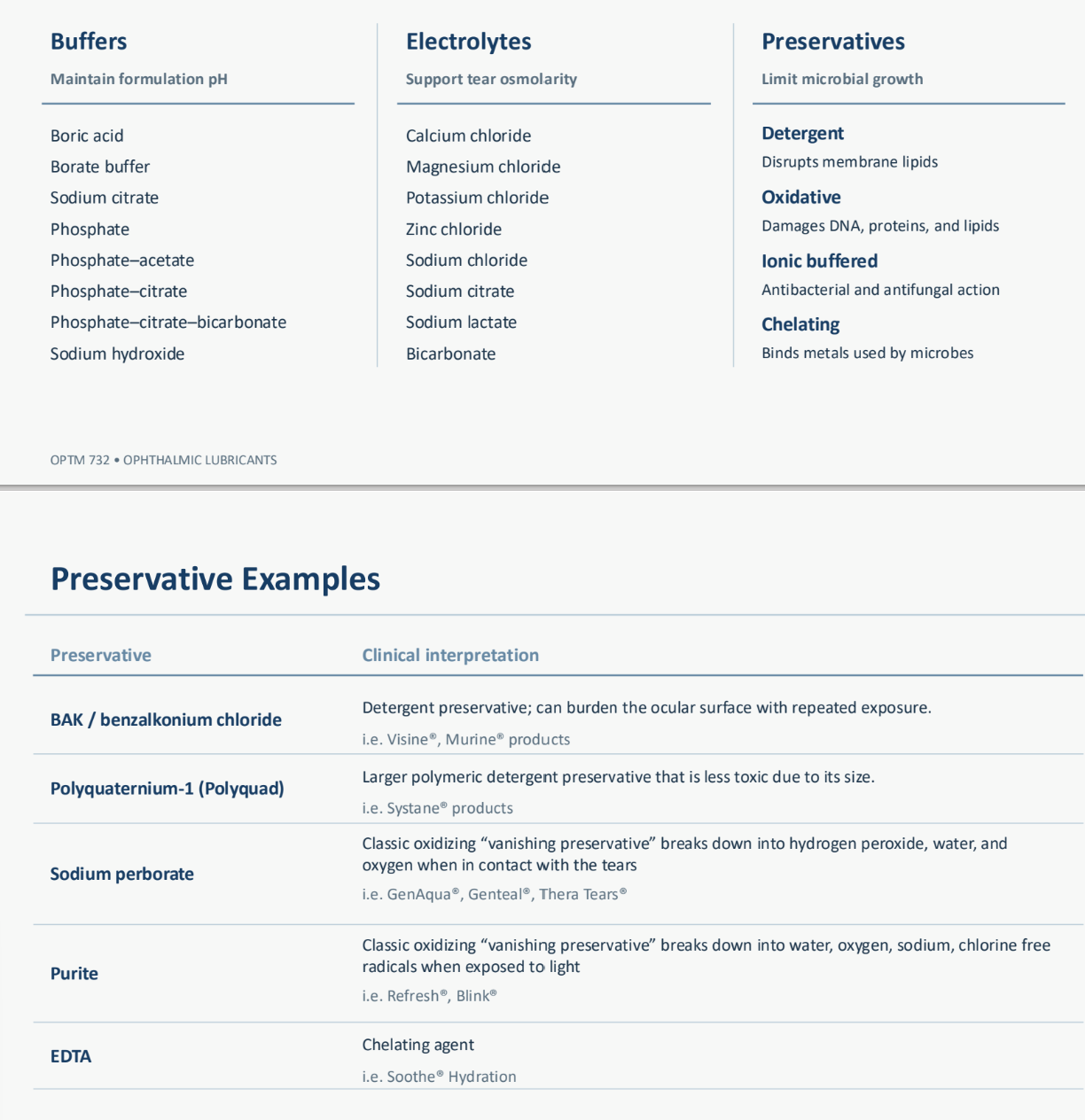
EDTA is what class of preservative?
chelating agent
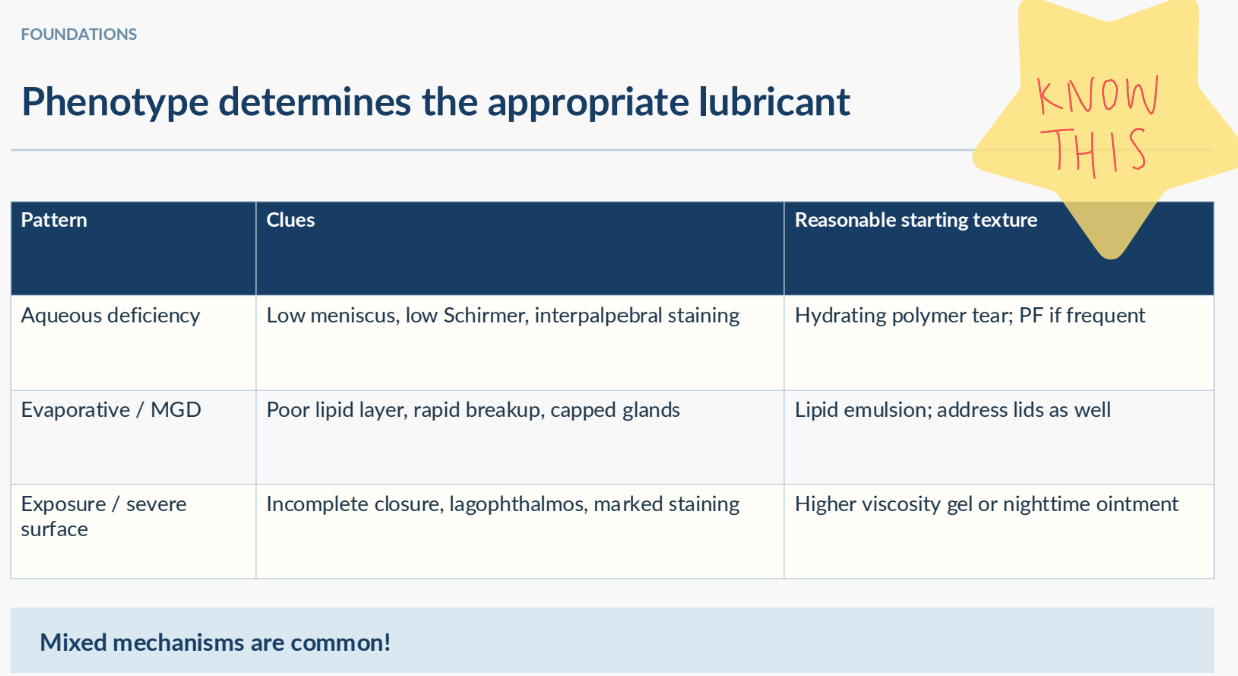
A patient comes in with a CC of irritated eyes. You find they have a Schirmer score of 2mm OD and 3mm OS. They have a tear prism of 0.1 mm. They show interpalpebral staining.
Likely Dx?
What type of treatment might you recommend?
Aqueous deficiency;
demulcent (PF)

A patient comes in with a CC of irritated eyes. You find they have turbid expression of the meibomian glands, as well as a few capped glands. You measure a TBUT of 3 seconds.
Likely Dx?
What type of treatment might you recommend?
Evaporative Dry Eye/ MGD;
Lipid-emulsion (Emollient)

A patient comes in with a CC of irritated eyes. You find they have 4+ inferior SPK with fluorescein dye.
Likely Dx?
What type of treatment might you recommend?
Exposure Keratitis/ Severe Surface Disease;
High Viscosity Gel or Nighttime Ointment
If using a drop ___ doses or more daily, consider PF
4

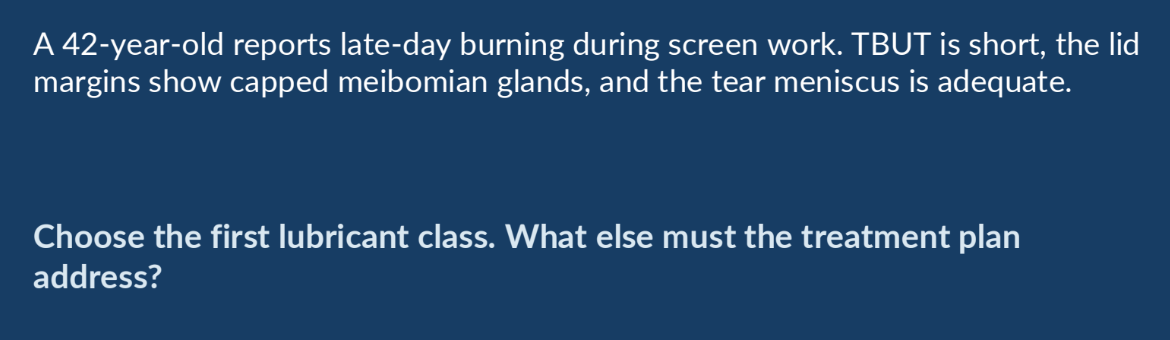
Lipid Emulsion prn (4-6x a day)
Lid Hygiene (Lid Disease),
May experience some blur following instillation


Switch to PF hydrating formula (increase viscosity),
Assess broader DED care


ointment qhs,
epithelial defect

A patient presents with irritated, tearing eyes. You have previously recommended they use a viscous gel and nighttime ointment QID which they have been doing. It has been going on for 3 weeks and is showing no improvement. At today’s visit, you find 4+ diffuse SPK with fluorescein dye.
Management?
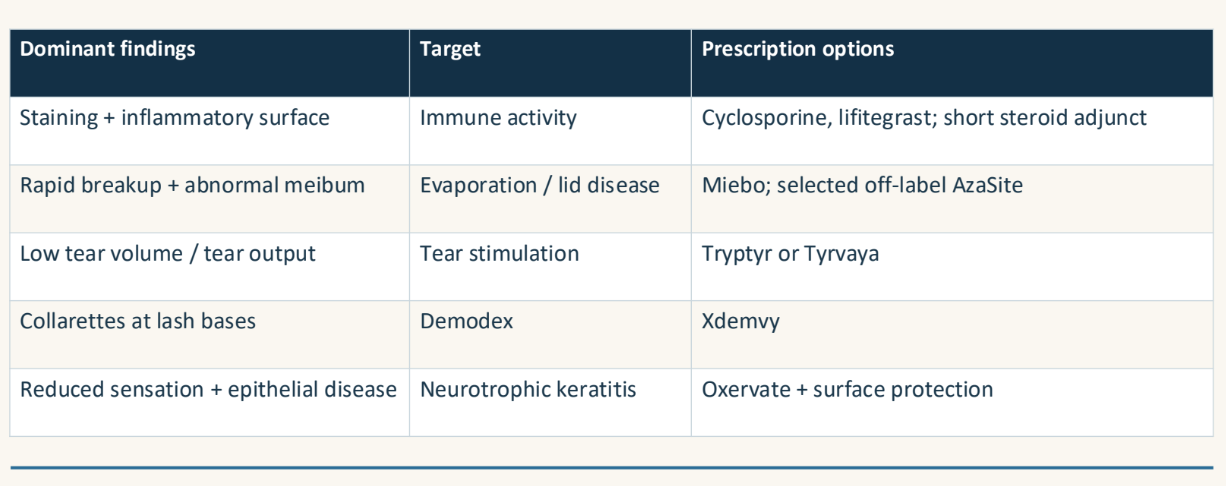
Prescribe immunomodulator (cyclosporine or lifitegrast) & short steroid adjunct

A patient presents with irritated, tearing eyes. You have previously recommended they use a lipid-emulsion OTC drop QID which they have been doing. It has been going on for 3 weeks and is showing no improvement. At today’s visit, you find a TBUT of 2 seconds for OD and 3.5 seconds for OS. You also see many capped glands.
Management?
Prescribe Miebo

A patient presents with irritated, dry eyes. You have previously recommended they use a viscous, aqueous artificial tear QID which they have been doing. It has been going on for 3 weeks and is showing no improvement. At today’s visit, you find a tear prism of 1.5 mm OU and a Schirmer of 3mm OU.
Management?
Prescribe Tryptyr or Tyrvaya

A patient presents with itchy eyes. Upon examination, you find 4+ collarettes at the base of the upper lashes.
Management?
Prescribe Xdemvy

A patient presents for their annual exam with a CC of blurred vision. VAs are 20/30+2 OU. The patient has a (+) cotton wisp test. They show central SPK inferior to the visual axis.
Management?
Prescribe Oxervate
Counseling for Cyclosporin:
burning with instillation

Counseling for Lifitegrast:
Dysgeusia (Metallic taste)

dosing for ocular surface immunomodulators (Cyclosporine & Lifitegrast)
BID

what steroid should be used with cyclosporine or lifitegrast to bridge the gap between starting the drop and when the therapy results begin?
loteprednol 0.25% or 0.5%

Meibo dosing?
1 drop QID

Xdemvy dosing?
1 drop BID OU x 6 wks

Tyrvaya dosing?
one spray per nostril BID (12 hrs apart)

Tryptyr dosing?
BID OU

Tryptyr MOA?
TRPM8
Dosing for AzaSite/ Azithromycin 1% solution for MGD
1 drop BID x 2 days, then QD x 12 days

Which antibiotic has an off-label use for MGD?
azithromycin 1%

Oxervate dosing?
q2h (6x/day) x 8 weeks


cyclosporine,
first 4 weeks,
MGD
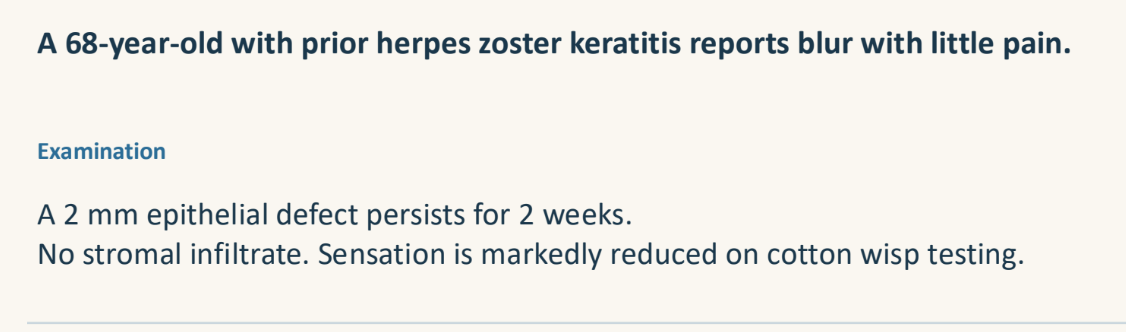
Dx
Prescribe?
Addition protection/monitoring?
Neurotrophic Keratitis,
Oxervate q2h x 8 weeks,
Lubricating ATs
analgesia provided by acetaminophen is primarily (central/peripheral)
central

Opioids work on pain signaling in the (CNS / PNS)
CNS

MOA of topical cycloplegic for ocular pain management
muscarinic antagonist, temporarily relaxes CB

Patient comes in with painful eye, worsens in the light. On examination you find 4+ cells in the AC.
Treatment for the pain?
cyclopentolate 1%

topical NSAIDs MOA for ocular pain modulation
COX inhibition

aspirin target:
COX (inhibition)

NSAIDs target:
COX (inhibition)

Oral NSAID MOA:
reversible COX inhibition

Topical anesthetics target:
voltage-gated sodium channel (blockade)

daily limit of regular strength tylenol?
3,250 mg
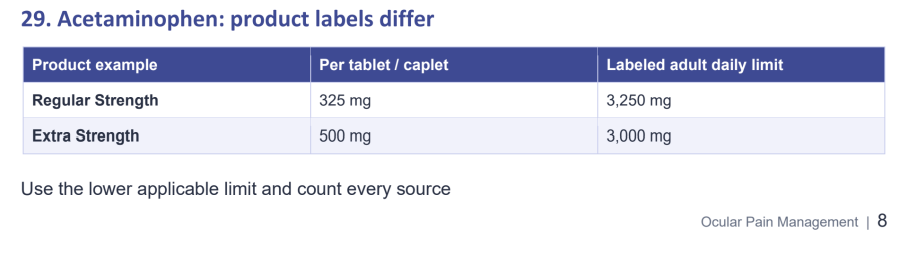
daily limit of extra strength tylenol?
3,000 mg

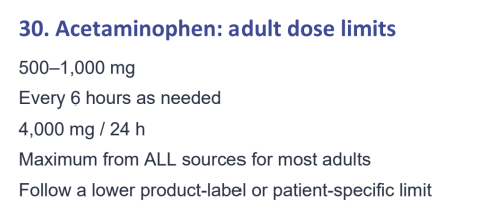
MAX acetaminophen per 24 hrs:
4,000 mg
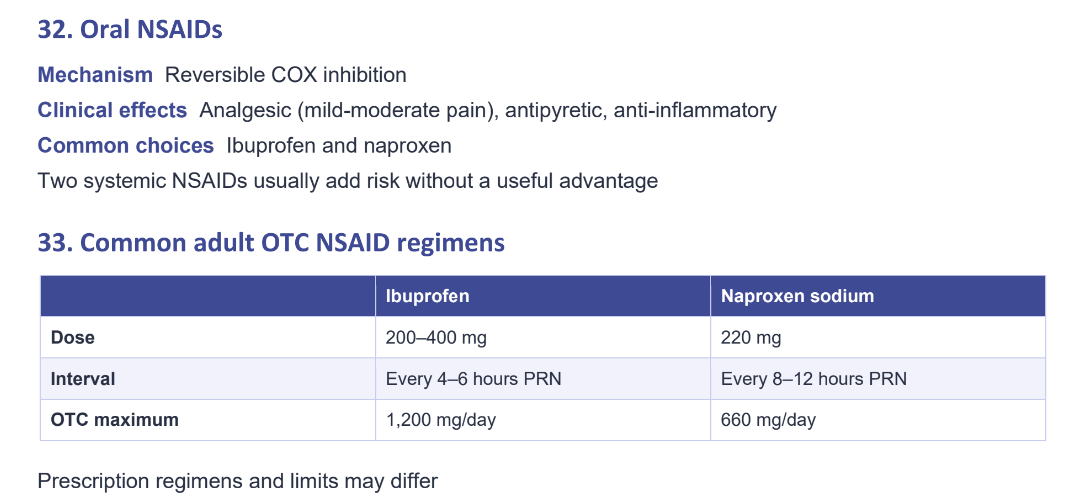
Oral NSAID common choices (3)
Ibuprofen, Naproxen Sodium, Acetylsalicylic acid (Aspirin)
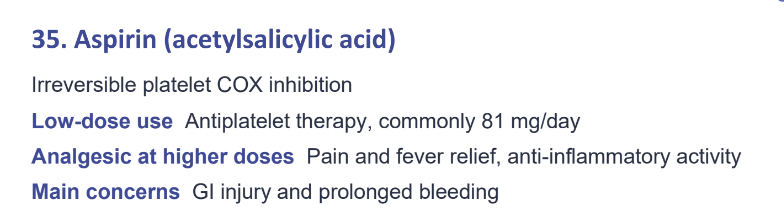
Which NSAID is an irreversible platelet COX inhibitor
Acetylsalicylic Acid (Aspirin)
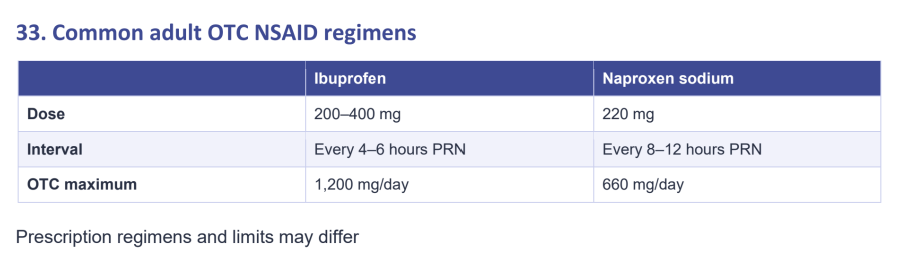
Ibuprofen OTC max per day:
1,200 mg

Naproxen OTC max per day:
660 mg
T/F: NSAIDs can be combined
false

T/F: Systemic NSAIDs are encouraged to use in pregnant patients
false

T/F: You should use aspirin and Ibuprofen in conjunction to help relieve pain faster
False

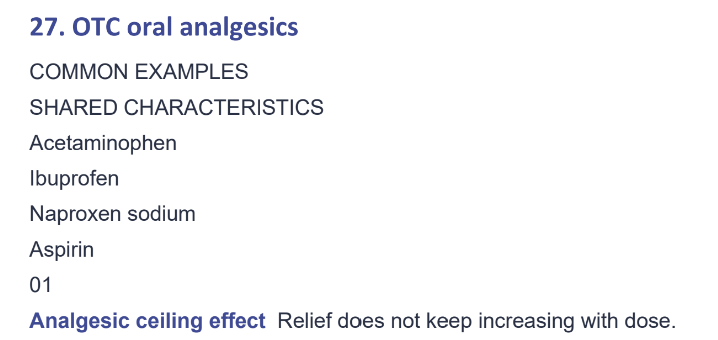
T/F: OTC oral analgesics have a ceiling effect
true
T/F: OTC opioid analgesics have a fixed ceiling effect
false

opioid analgesic MOA:
u opioid receptor agonist

A patient presents with a painful red eye. You dx moderate, noninfectious, non-necrotizing anterior scleritis after careful examination.
What might you rx to help with their symptoms?
Indomethacin 25 mg TID (or Ibuprofen 600 mg TID)

major danger of prescribing opioid?
respiratory depression

A patient is in severe pain so you need to rx an opioid. Write the Rx:
Hydrocodone/APAP 5mg/300 mg
1 tab PO q4-6h for 3 days
Disp 12, 0 refills

Codeine limit per day:
360 mg/day

You are seeing a patient and you find signs of swelling on 90D evaluation. You run a macular cube OCT and confirm macular edema.
Management?
Refer for Anti-VEGF injections

T/F: A given anti-VEGF drug will bind every VEGF family member
false
(Intravitreal agents bind VEGF-A)

which anti-vegf is a full-length monoclonal antibody?
bevacizumab (avastin, lytenava)
