BCH4024 Douma Exam 4 - Lecture 1
 Call Kai
 Learn
Learn Practice Test
 Spaced Repetition
 Match
Match Flashcards
 Knowt Play
1/35

There's no tags or description
Looks like no tags are added yet.
Name | Mastery | Learn | Test | Matching | Spaced | Call with Kai | Chat |
|---|
No analytics yet
Send a link to your students to track their progress
36 Terms
Adenine
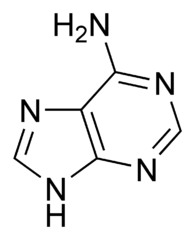
Guanine

Cytosine
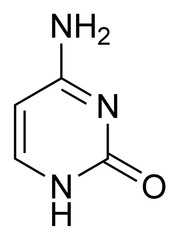
Uracil
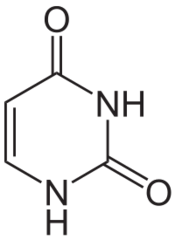
Thymine
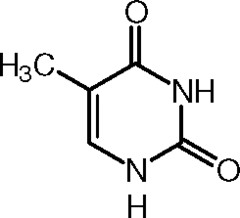
Nitrogenous Bases in DNA and RNA
Adenine, Guanine, Cytosine, and Thymine (DNA); Uracil replaces Thymine in RNA. Purines (A, G) have double rings; Pyrimidines (C, T, U) have single rings.
Repeating Units of DNA
2'-deoxyribonucleoside 5'-monophosphates (dNMPs) are the monomers of DNA.
Structure of a Nucleotide
Each nucleotide has a sugar, phosphate group, and nitrogenous base.
Directionality of DNA and RNA
Sequences are written 5' to 3', from the free 5' phosphate to the 3' hydroxyl.
DNA Backbone
Alternating sugar and phosphate groups forming the outer structure of the DNA helix.
Hydrogen Bonding and Base Pairing
A pairs with T via 2 H-bonds; G pairs with C via 3 H-bonds, allowing strand separation.
Base Stacking
Hydrophobic interactions between bases that stabilize the DNA helix.
Melting Temperature (Tm)
The temperature at which DNA is 50% denatured; higher in GC-rich sequences.
Denaturing and Annealing DNA
Denaturing separates strands by breaking H-bonds; annealing reforms them if complementary.
Main Characteristics of B-DNA
Right-handed helix; 10.5 base pairs per turn; major and minor grooves; bases stacked inside.
Major Groove vs Minor Groove
Major groove exposes bases for protein binding; minor groove is narrower.
Definition of DNA
Deoxyribonucleic acid; a double-stranded polymer carrying the genetic blueprint.
Central Dogma of Molecular Biology
Describes flow of information: DNA replication, transcription into RNA, and translation into protein.
Purpose of DNA Replication
To duplicate DNA for inheritance by daughter cells.
Purpose of Transcription
To produce RNA as a temporary working copy of genetic information.
Purpose of Translation
To synthesize proteins using information carried by mRNA.
Reverse Transcription
Synthesis of DNA from an RNA template by specific enzymes.
Key Features of Prokaryotic Cells
DNA located in cytoplasm; no nucleus.
Key Features of Eukaryotic Cells
DNA housed inside the nucleus.
Bacterial Transformation
Uptake of external DNA by a bacterial cell, changing its characteristics.
Streptococcus pneumoniae
Bacteria used in Avery's experiment to identify DNA as genetic material.
Smooth Cells (S cells) vs Rough Cells (R cells)
S cells have a protective capsule (virulent); R cells lack it (non-virulent).
Cell-free Extract
Lysed cell contents used in transformation experiments.
Purpose and Findings of Avery's Experiment
DNA was identified as the genetic material because DNase destroyed transformation ability.
Polynucleotide
A polymer of many nucleotides linked by phosphodiester bonds.
Phosphodiester Bond
Covalent bond between the 3' OH of one nucleotide and the 5' phosphate of another.
Chargaff's Rules
A=T and G=C; base composition varies across species but is constant within an organism.
Significance of Rosalind Franklin's Photo 51
Provided key evidence of DNA's double helical structure and periodicity.
Antiparallel Orientation of DNA Strands
Two DNA strands run in opposite directions (5'->3' and 3'->5').
Definition of Gene
DNA sequence encoding a functional RNA or protein with regulatory elements.
Definition of Genome
Complete set of genetic material in an organism (e.g., 46 chromosomes in humans).