LO3 LS4 - Discuss the Types of Articulations in the Human Body
 Call Kai
 Learn
Learn Practice Test
 Spaced Repetition
 Match
Match Flashcards
 Knowt Play
1/74

Earn XP
Description and Tags
All information taken from bright space
Name | Mastery | Learn | Test | Matching | Spaced | Call with Kai | Chat |
|---|
No analytics yet
Send a link to your students to track their progress
75 Terms
what are joints
they are functional junctions between bones
joints are also called
articulations
what are the 3 kinds of joints
fibrous, cartilaginous, and synovial
what is a fibrous joint also called
synarthrosis (immovable)
how much movement do fibrous joints allow
no movement (immovable)
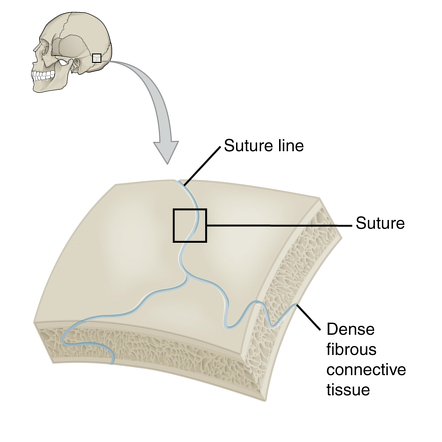
how are bones in a fibrous joint connected
by dense connective tissue

what are two examples of fibrous joints
the sutures of the skull and teeth in their sockets
what is a cartilaginous joint also called
amphiarthrosis (slightly movable)
how much movement do cartilaginous joints allow
limited or slight movement

what material connects cartilaginous joints
discs of fibrocartilage
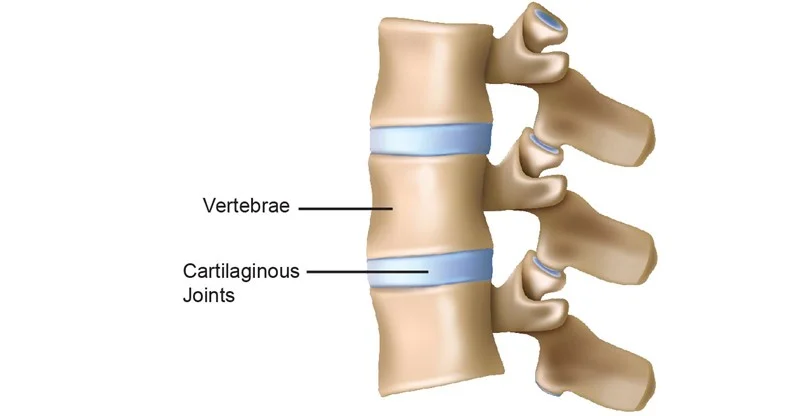
what are two examples of cartilaginous joints
intervertebral discs and the symphysis pubis
what is a synovial joint also called
diarthrosis (freely movable)
how much movement do synovial joints allow
they are freely movable
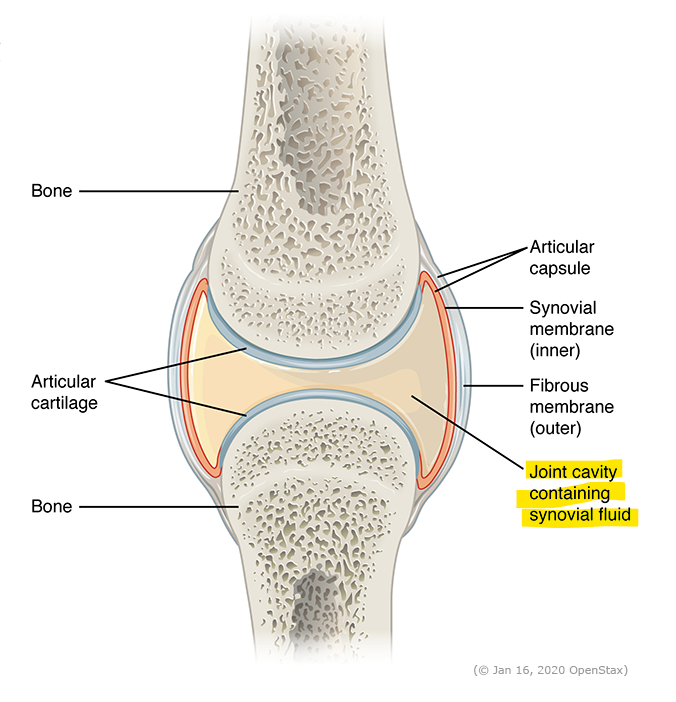
what is found between the end of a bone in a synovial joint
a joint cavity filled with synovial fluid
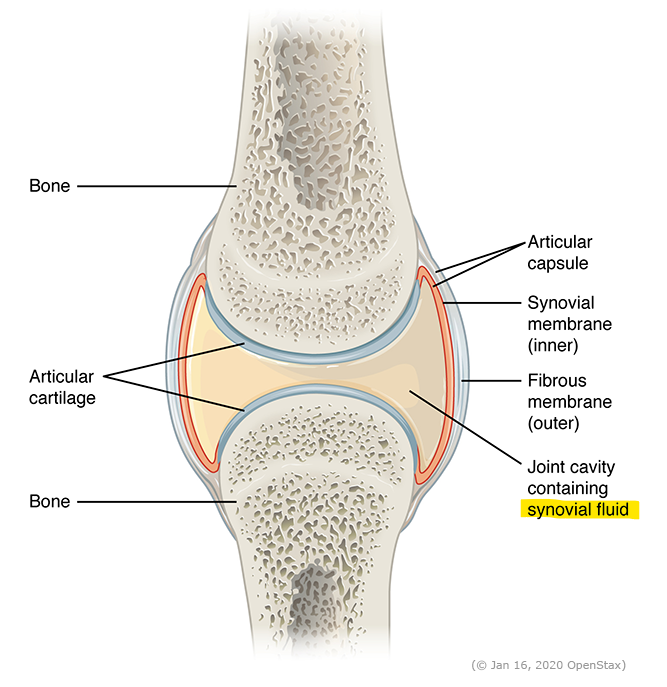
what does synovial fluid do
it reduces friction as the bones move
what does the synovial membrane secretes
synovial fluid
what the synovial fluid acts as in the synovial joints
a joint lubricant

what covers the ends of the bones in a synovial joint
articular (hyaline) cartilage

what does the joint capsule consist of
an outer layer of ligaments and an inner lining of the synovial membrane
what are some examples of synovial joints
shoulders, elbows, wrists, fingers, hips, knees, ankles, and toes
what are the different shapes that synovial joints have
ball and socket, hinge, gliding, and pivot
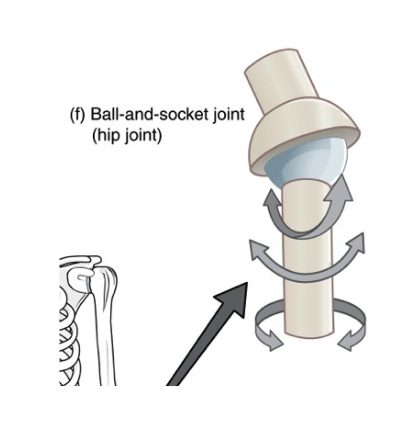
what is a ball and socket joint
round ball in a round socket

what synovial joint shape allows movement in all directions
ball and socket joint

what is an example of ball and socket joints
shoulder and hip
what synovial joint shape allows for flexion and extension
hinge joints
what are examples of a hinge joint
elbow, knee, between phalanges, and TMJ

which three bones form the elbow hinge joint
the humerus, radius, and ulna
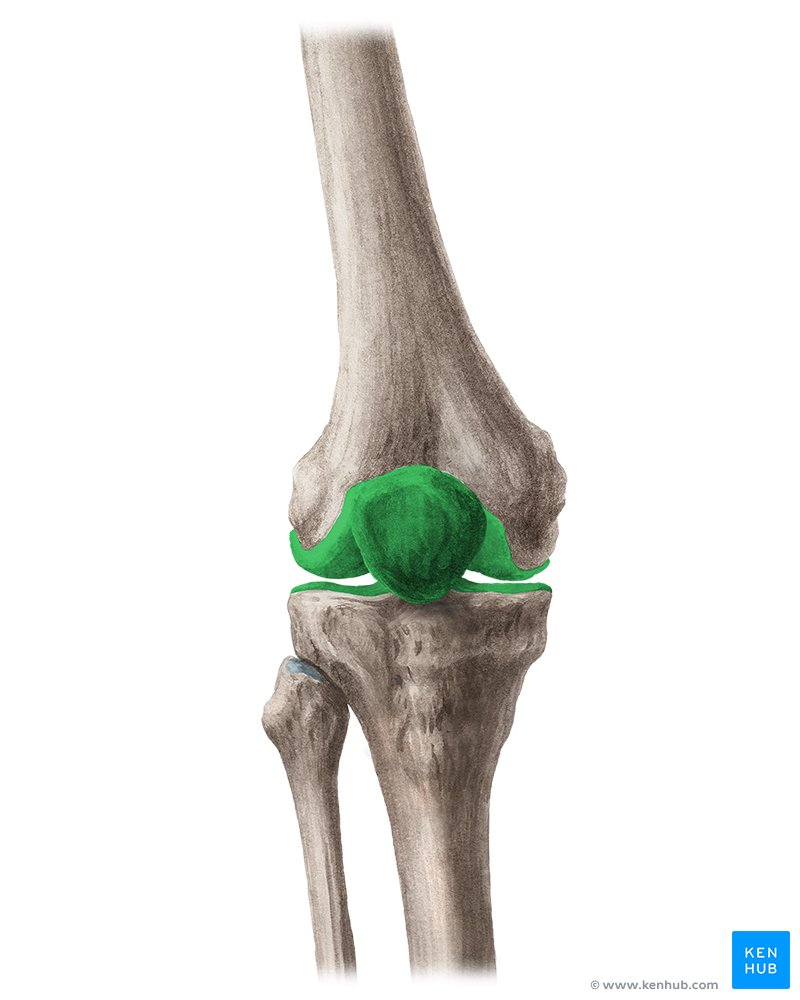
which two bones form the knee hinge joint
the femur and tibia
is the fibula part of the knee hinge joint
no, only tibia and femur

where in the hand can you find hinge joints
between the phalanges
what does the acronym TMJ stand for
temporomandibular joint
what kind of joint is the TMJ that allows flexion and extension
hinge joint

what shape are the surfaces of gliding joints
flatter surfaces
what type of motion do gliding joints allow
sliding or gliding motion

where is the gliding joints in the wrist
between the carpals

where is the gliding joints in the ankle
between the tarsals
where can you find gliding joints in the body
carpals of wrist, tarsals of ankle, and TMJ

what synovial joint shape allows for rotation only
pivot joints
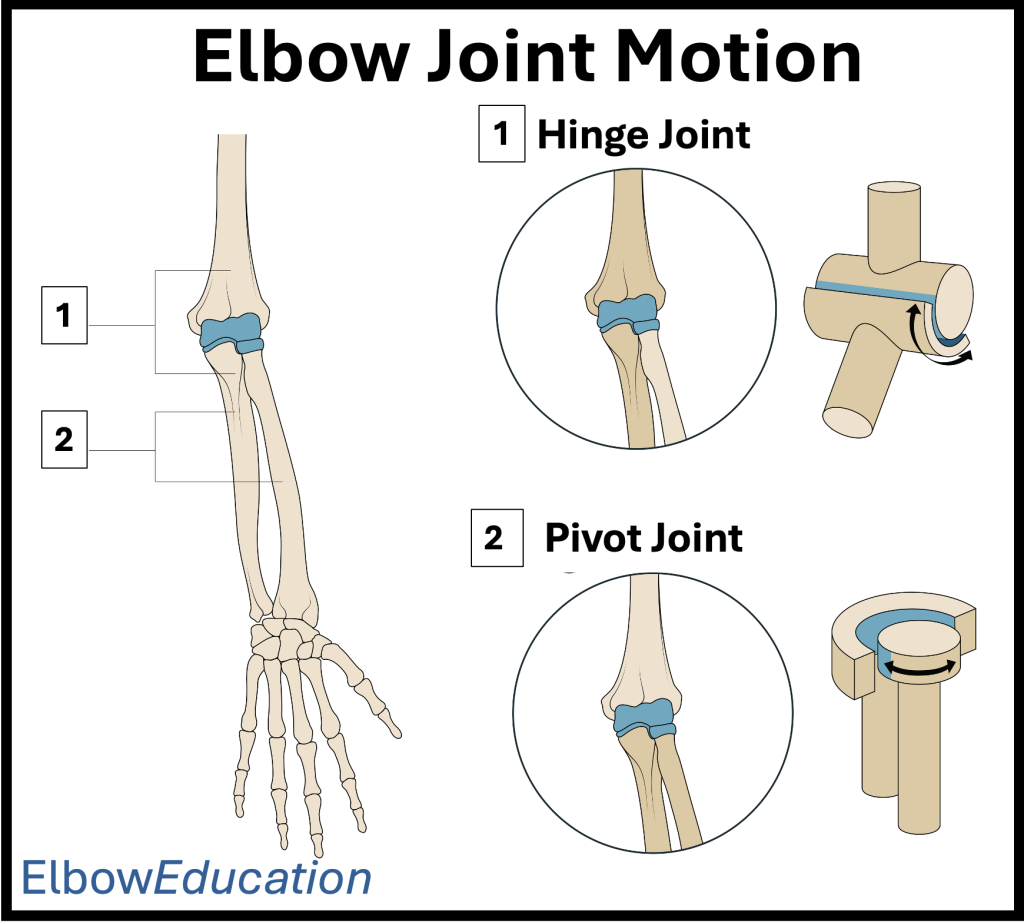
where is a pivot joint located in the forearm
at the proximal ends of the radius and ulna

what movement does the pivot joint in the forearm allow
rotating the hand palm up or palm down

which two bones form a pivot joint in the neck
the atlas and the axis

what movement does the atlas and axis pivot joint allow
rotates the head
what type of joint is the temporomandibular joint (TMJ)
a synovial joint
what two bones form the TMJ
the temporal bone and the mandible
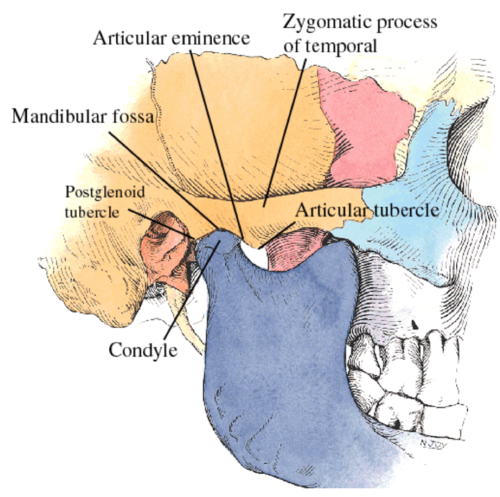
what is located anterior to the mandibular fossa of the temporal bone
the articular eminence
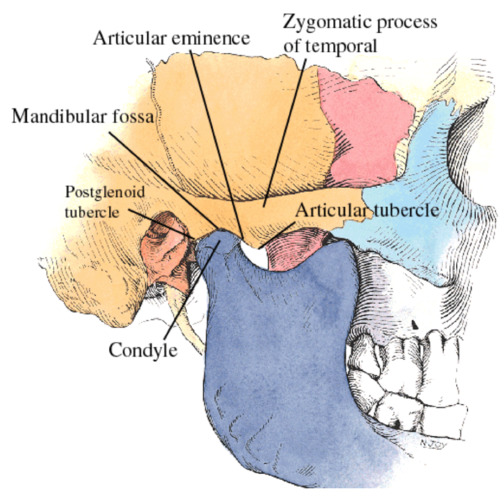
what is located posterior to the mandibular fossa of the temporal bone
the post-glenoid process

what part of the mandible articulates with the mandibular fossa
the mandibular condyle

what structure divides the joint into an upper and a lower synovial cavity
the articular disc

what fluid fills both cavities of the TMJ
synovial fluid

the lateral pterygoid muscle
what muscle attaches anteriorly to the articular disc
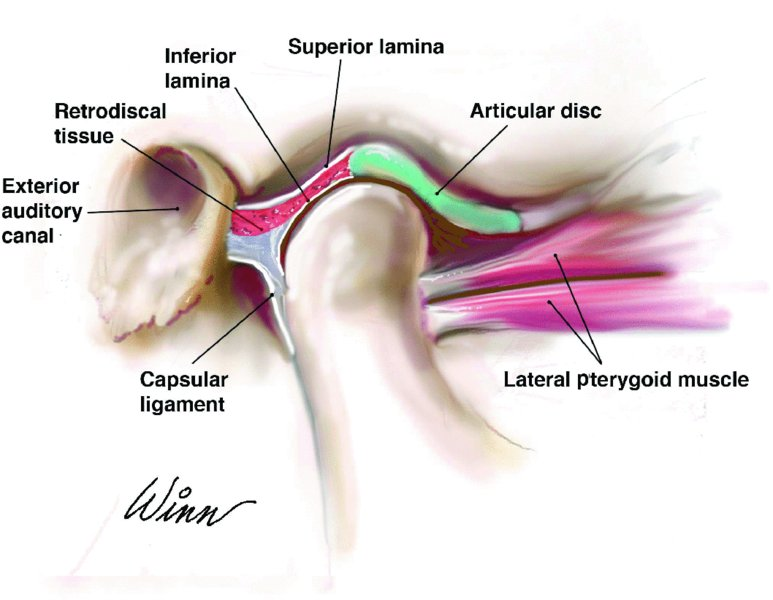
where is the blood supply for the TMJ located
in the retro-discal tissue
what type of cartilage covers the articular surfaces of the bones in the TMJ
fibrocartilage (not hyaline cartilage like other joints)
what is the articular disc composed of
dense fibrous connective tissue with many collagenous fibers

what is number 1 pointing to
mandibular condyle

what is number 2 pointing to
inferior joint cavity
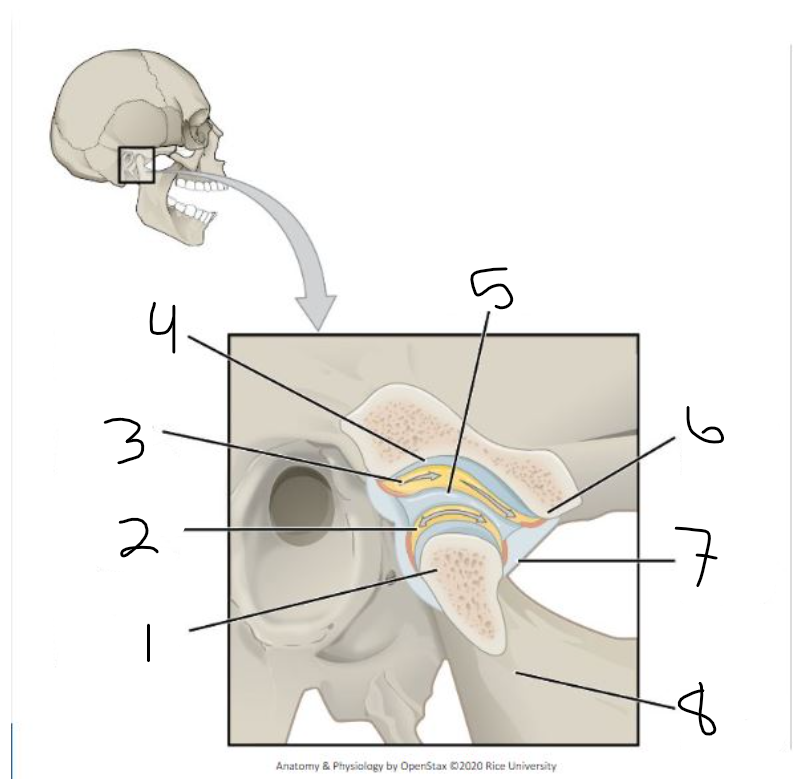
what is number 3 pointing to
superior joint cavity
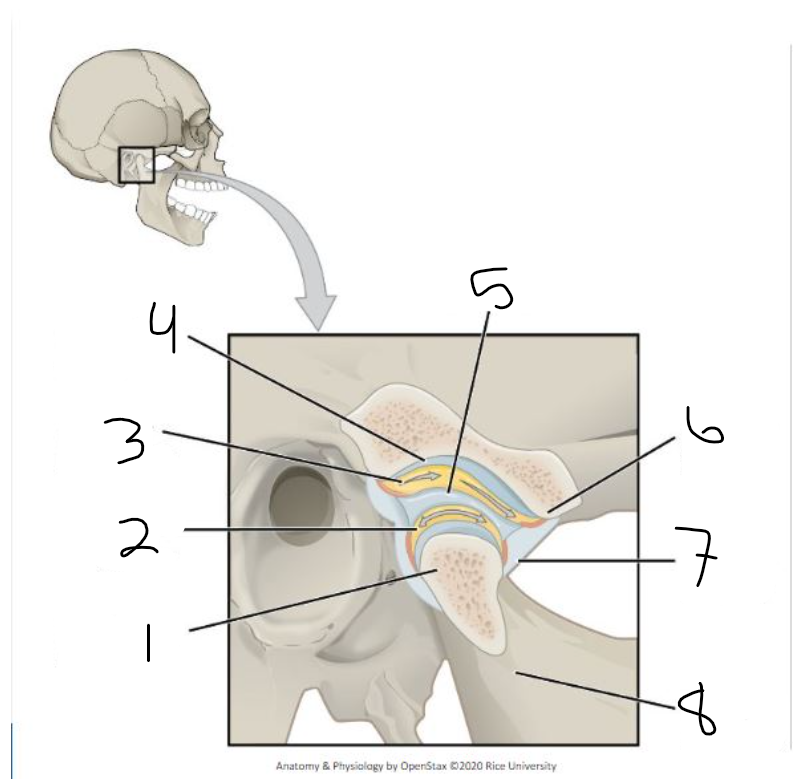
what is number 4 pointing to
mandibular fossa

what is number 5 pointing to
articular disc

what is number 6 pointing to
articular tubercle

what is number 7 pointing to
articular capsule
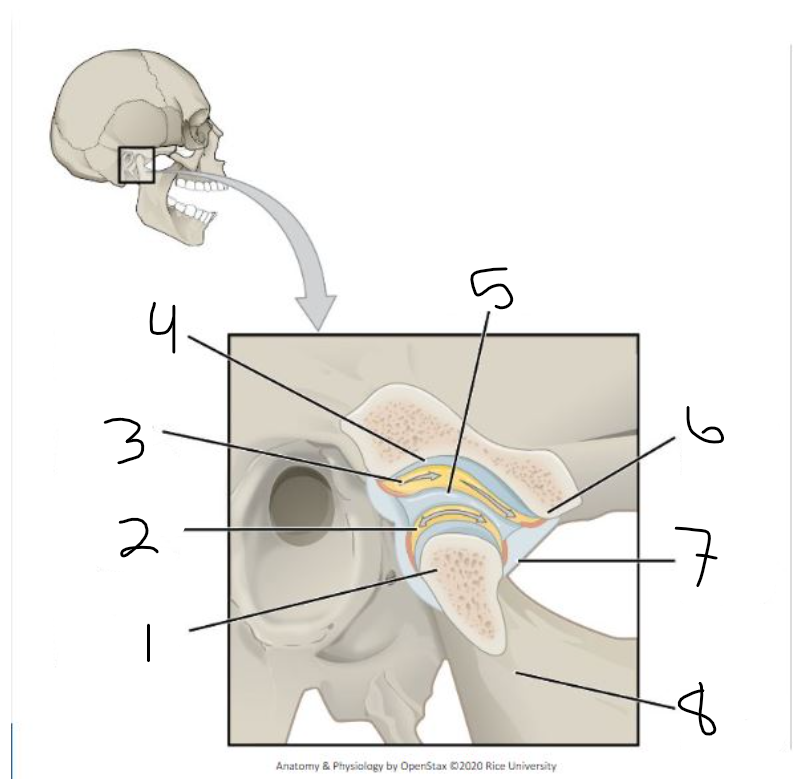
what is number 8 pointing to
ramus of mandible
how many pairs of ligaments are outside the temporomandibular joint
3 pairs
what is the main function of the 3 pairs of ligaments outside the temporomandibular joint (TMJ)
provide stability and prevent excessive movement of the joint
what are the three pairs of ligaments outside the temporomandibular joint
temporomandibular, stylomandibular, & sphenomandibular ligaments

which number is the external acoustic meatus
1
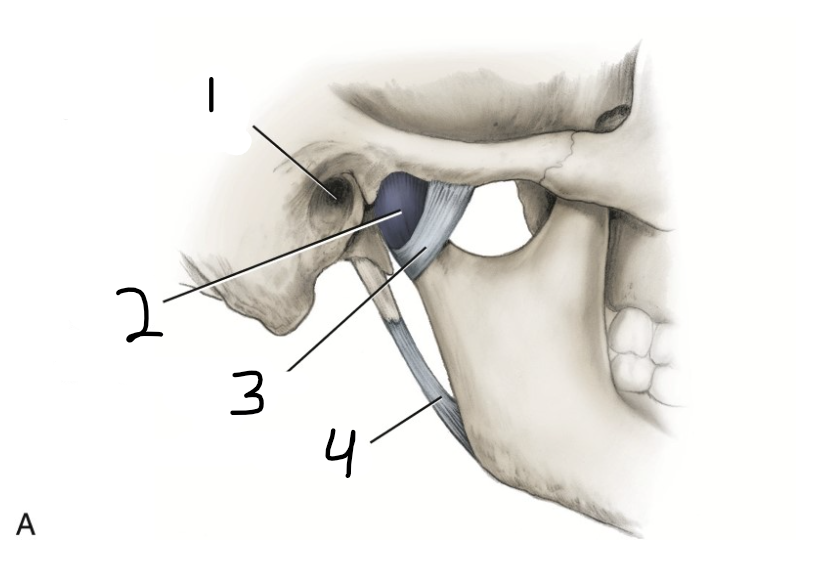
which number is the joint capsule
2
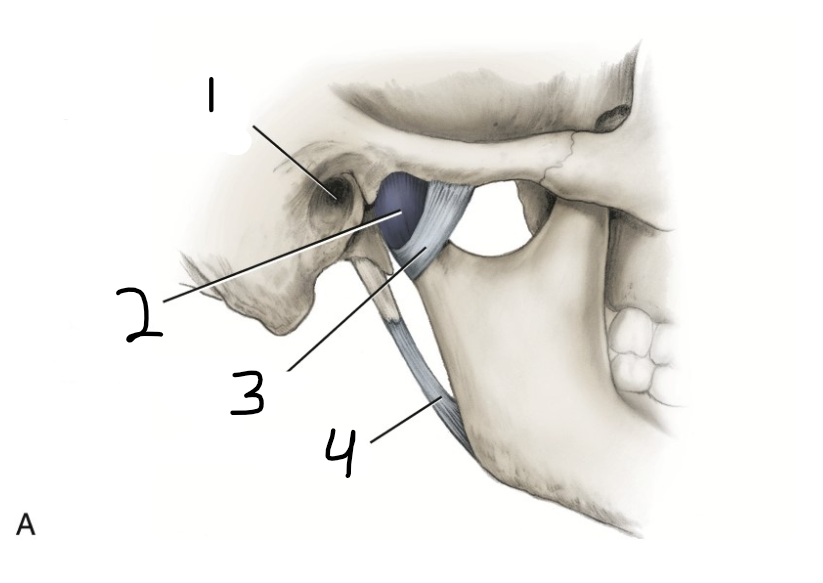
which number is the temporomandibular ligament
3
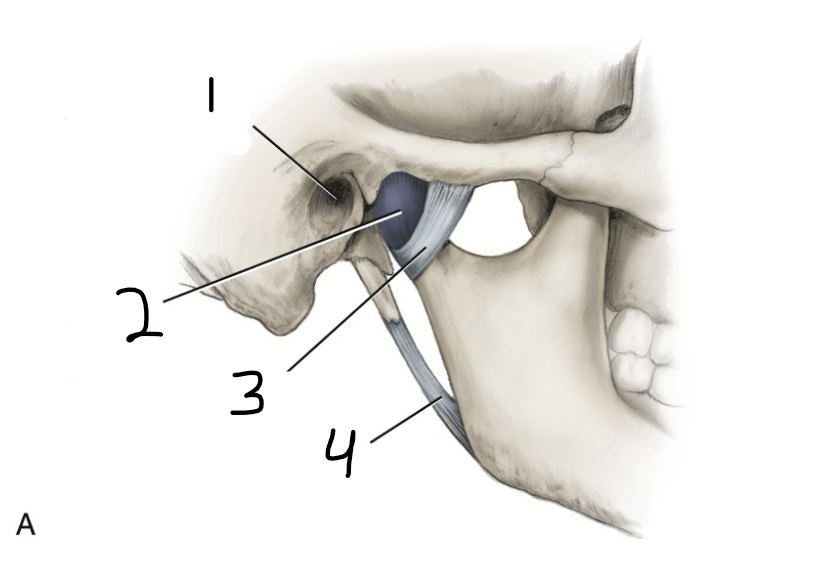
which number is the stylomandibular ligament
4
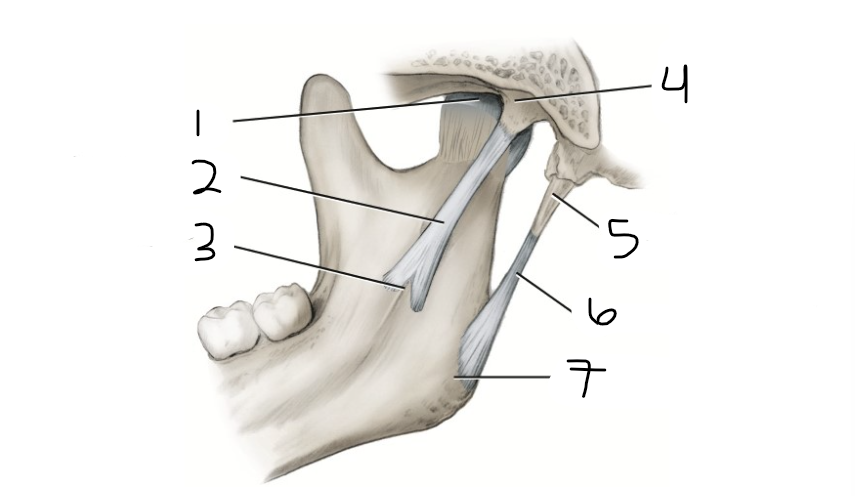
which number is the joint capsule
1

which number is the sphenomandibular ligament
2

which number is the lingula over mandibular foramen
3

which number is the spine of the sphenoid bone
4

which number is the styloid process of the temporal bone
5

which number is the stylomandibular ligament
6

which number is the angle of the mandible
7