Ecology Exam pt 4 (Pls Lord) (Handwritten lecture notes)
 Call Kai
 Learn
Learn Practice Test
 Spaced Repetition
 Match
Match Flashcards
 Knowt Play
1/72

There's no tags or description
Looks like no tags are added yet.
Name | Mastery | Learn | Test | Matching | Spaced | Call with Kai | Chat |
|---|
No analytics yet
Send a link to your students to track their progress
73 Terms
Visocity
Physical Properties of Moisture
Fluid resistance to flow:
Specific Heat
Physical Properties of Moisture
Amount of heat required to raise the temperature of a substance:
Latent Heat
Physical Properties of Moisture
Heat absorbed or released during a phase change:
Freezing Point Depression
Physical Properties of Moisture
Lowering of the freezing point when solutes are added:
Density
Physical Properties of Moisture
Mass per unit volume of water:
Humidity
Water Vapor & Humidity
Presence of water vapor in the atmosphere:
Relative Humidity
Water Vapor & Humidity
Percentage of maximum moisture saturation in the air can hold at a given temperature:
Osmotic Pressure
Pressure required to prevent solvent movement across a semipermeable membrane:
Hypotonic
Osmotic Pressure
Lower solute concentration outside the cell (water moves in):
Hypertonic
Osmotic Pressure
Higher solute concentration outside the cell (water moves out):
Isotonic
Osmotic Pressure
Equal solute concentration inside and outside the cell:
Hydrophytes (water-dwelling), Mesophytes (moderate water), Xerophytes (dry conditions)
Adaptation of Plants
What are the three classifications of plants?:
Through roots and high S.A/V ratio
Adaptation of Plants
How do plants gain water?:
Through succulence (specialized fleshy tissues)
Adaptation of Plants
How do plants store water?:
Stomata
Controlling Water Loss
Regulates gas exchange and transpiration:
Leaf curling
Controlling Water Loss
What reduces exposed surface area of a plant?:
Waxy cuticle
Controlling Water Loss
Waterproof outer layer preventing evaporation:
Deciduousness
Controlling Water Loss
Dropping leaves during dry seasons:
Environment is hypertonic to organism’s inside, causing excess water to move in.
Adaptation of Animals; Freshwater
What is the problem with this environment?:
Excrete dilute urine, Active absorption of salt, No water drinking
Adaptation of Animals; Freshwater
What are the three adaptations for this environment?:
Environment is hypotonic to organism’s inside, causing dehydration risks
Adaptation of Animals; Marine
What is the problem in this environment?:
Excrete concentrated urine, Active secretion of salt, Drinking available water
Adaptation of Animals; Marine
What are the three adaptations for this environment?:
Dehydration
Adaptation of Animals; Terrestrial
What is the problem with this environment?:
Excretes concentrated urine, Drink freshwater directly, Specialized excretory organs
Adaptation of Animals; Terrestrial
What are the three adaptations of this environment?:
Uric acid
What do birds and reptiles excrete?:
Concentrated urine and metabolic water
What do mammals excrete?:
78%
The Atmosphere
What percent of atmospheric components is Nitrogen?:
21%
The Atmosphere
What percent of atmospheric components is Oxygen?:
1%
The Atmosphere
What percent of atmospheric components is Argon?:
0.0426%
The Atmosphere
What percent of atmospheric components is Carbon Dioxide?:
Troposphere
Strata (Atmospheric Layers)
0-7 miles up
Most weather occurs here:
Stratosphere
Strata (Atmospheric Layers)
7-30 miles up
Ozone layer is located in the lowest part:
Tropopause
Strata (Atmospheric Layers)
Boundary layer separating the troposphere and stratosphere:
Dry Rate
Adiabatic Lapse Rate
1oC cooling per 100m elevation rise:
Wet Rate
Adiabatic Lapse Rate
0.6oC cooling per 200m elevation rise:
Thermals
Processes Producing & Directing Air Flow
Bubbles of rising warm air:
Sea breezes and valley breezes
Processes Producing & Directing Air Flow
Local thermal air flow variations:
Inversion
Processes Producing & Directing Air Flow
Dense cool air sits at “the bottom” trapping moisture and pollutants, preventing surface heating, and creating stable conditions that sit for days/weeks:
Deflective currents
Processes Producing & Directing Air Flow
Deflection of air currents caused by landmasses and rotation:
Generalized patterns
Global Wind Patterns
Broad global air movement belts:
Coriolis Effect
Global Wind Patterns
Winds in the Northern Hemisphere are deflected to the right due to Earth’s rotation:
Exponential Growth
Population Growth Curves
J-Curve showing unlimited population increase

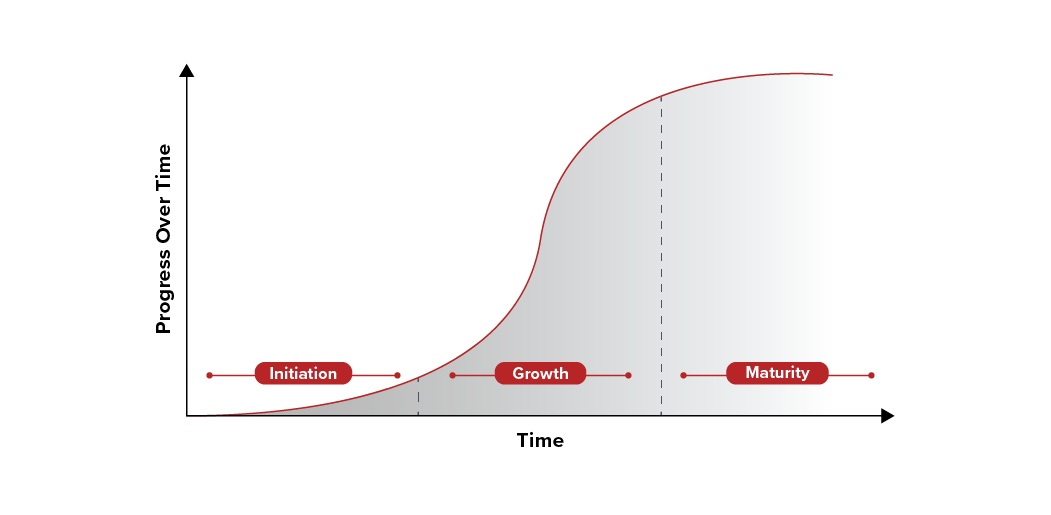
Logistic/Disponential Growth
Population Growth Curves
S-curve showing growth slowed by limiting factors up to carrying capacity (K):
Resource Limited
Mechanisms of Regulations
Competition drives limites as recourses deplete:

Intraspecific
Competition
Competition inside the same species:

Interspecific
Competition
Competition outside with other species:

Scramble (Exploitative)
Types of Competition
Equal access to resources, leading to potential depletion for all:

Interference
Types of Competition
Direct interactions preventing access to resources:
Social hierarchy, territoriality, Habitat quality curve
Types of Competition
What are the three types of interferences?:
Habitat quality curve
Types of Competition
Peak efficiency occurs at intermediate resource densities, while low/poor or overly rich density leads to lower relative success:

Parental care
Parental investment
Measured by clutch or litter size and food deliveries to offspring:
R: Quantity of offspring, K: Quality of offspring
R vs. K Selection Table
Focus/Strategy (R vs K):
R: Young, Semelparous, Large litter, K: Delayed maturation, Iteroparous, Small litter
R vs. K Selection Table
Reproduction (R vs K):
R: Little to none, K: Extensive
R vs. K Selection Table
Parental Care (R vs K):
R: Low, K: High
R vs. K Selection Table
Offspring Survival (R vs K):
R: Density-independent, J-Curve, K: Density-dependent, S-curve
R vs. K Selection Table
Population Growth (R vs K):
R: Short, K: Long
R vs. K Selection Table
Lifespan (R vs K):
R: Type III, K: Type I and II
R vs. K Selection Table
Survivorship Curve (R vs K):
R: Small, K: Large
R vs. K Selection Table
Body size (R vs K):
R: Harsh, ephemeral, unpredictable, K: Mild, stable, predictable
R vs. K Selection Table
Environment (R vs K):
Lifetime and Serial
Mating Systems
What are the different examples of Monogamy?:
Lifetime
Mating Systems
Mates stay together for life (e.g, eagles, swans):
Serial
Mating Systems
Mates stay together for a season/cycle, but pair bonds break over time. (e.g, bluebirds, humans):
Polygamy
Mating Systems
More than one individual in a mating relationship:
Polygyny
Mating Systems
A polygamous relationship with 1 male and multiple females:
Resource defense
Mating Systems; Polygyny
Females/Males defend territory rich in resources (e.g, songbirds, mammals, spotted sandpipers):
Female defense
Mating Systems; Polygyny
Males defend harems directly (e.g, deer):
Lek
Mating Systems; Polygyny
communal display arena where males display for females (e.g, bullfrogs, turkeys):
Polyandry
Mating Systems
A polygamous relationship with 1 female and multiple males:
Male defense
Mating Systems; Polyandry
Females defend groups of males (e.g, phalaropes):
Promiscuity
Mating Systems
Brief or no pair bonding between individuals (e.g, flamingos, dolphins, rabbits):
Monogamy
Mating Systems
What type of taxonomic trend do birds follow?:
Polygyny
Mating Systems
What type of taxonomic trend do many mammals follow?: