Equine Parasites
 Call Kai
 Learn
 Practice Test
 Spaced Repetition
 Match
 Flashcards
 Knowt Play
1/82

There's no tags or description
Looks like no tags are added yet.
83 Terms
parasites of horse
-habronema
-parascaris equorum
-anoplocephala perfoliate/magna
-stronglus vulgaris
-strongylus equinus
-strongylus edentatus
-small strongyles (cyathostominosis)
-oxyuris equi
check the table all done
-
small strongules shape, predeliction site
-small and red or white
-large intestine
clinical signs of small strongyles
-ill thrift
-colic
-D+++
-hypoalbuminaemia
-weight loss
-severe SIRS
-death
shape and predeliction site of large strongyles
-bit bigger than small strongyles but still small
-red or white
-large intestine
clinical signs of large strongyles
-ill thrift
strongyles vulgaris symptom that other strongyle don't have
blood vessel wall damage, haemorrhage and infarction
shape and predeliction site of parascaris equorum (round worm)
-large fat and white
-small intestine
clinical signs of parascaris equorum
-ill thrift
-colic when in large numbers as cause obstruction
-cough
shape and predeliction site of oxyuris equi (pinworm)
-white pointy tail like beansprout
-rectum
clinical signs of oxyuris equi
itchy bottom
shape and predeliction site of anoplocephala magnum and perfoliata (tapeworm)
-small flat white, look like someone stood on them
-iliocaecal area (perfoliate) or small intestine (magna)
clinical signs of anoplocephala perfolitata and magna
-ill thrift
-colic
habronema signs
-skin sores
-occ conjunctivitis

where do adult worms of habronema live
stomach

if habronema in conjunctiva or wounds means what
cannot migrate
seasonality of habronema
between june to september
how is habronema spread
flies
if habronema in stomach, signs
-mostly no disease
-can cause nodules of granulation tissue which contain eosinophils

diagnosis of habronema
-hard to diagnose on faecal analysis as eggs very fragile and rupture
-gastric lesions with gastroscopy
prevention of habronema
-fly control and much heap management
-replcing bedding a lot
-collecting and removing droppings
-cover wounds and treat ocular disease causing ocular discharge
-killed in horse with worming for other parasites
wormer not effective on habronema
avermectins and benzimidazoles
parascris equorum
ascarid

what age does parascaris equorum affect
-horses less than 2 years old
-immune response more developed in older animals
why is parascaris equorum up and coming
emerging resistance
life cycle of parascaris equorum
-migration through liver, vena cava, alveoli, bronchi, trachea so eggs coughed up and swallowed
reservoirs for parascaris equorum
adult horses
-small numbers but shed enough eggs to infect foals or young stock
how is parascaris equorum transmitted to foals
-NOT infected in utero or via milk
-from pasture
clinical signs of parascaris equorum
-coughing and nasal discharge when parasites in lungs
-poor coat
-weight gain
-dull
-anorexic
-colicking inc bowel obstruction→ bc worms os big
-disorder of bone and tendons as parasites consume a lot of Ca, P, Zn, Cu
diagnosis of parascaris equorum
difficult but very distinct eggs when present
brown, thick shell,
treatment of parascaris equorum
-resistance to avermectins
-drug rotation does not prevent resistance
-can see colic if treats lots of adult worms with paralytic drugs
PYRANTEL
anoplocephala perfoliata/magna
equine tapeworm
what horses does a. magna and perfoliata affect
usually young but can be any age
how does a perfoliata and magna look
no hooks but very large suckers that attach to intestinal mucosa

a.perfoliata clinical signs
colic
-ileal impaction
-intussusception
-caecal impactions and mobility disorder
-spasmodic colic
-diarrhoea
-functional and physical blockages
type of lifecycle of a. perfoliata
indirect- has mite
a perfoliata shedding
-shedding irregular
-sometimes release from segments in LI and sometimes after excreted from horse
transmission of a perfoliata
orbatid mites
orbatid mites
-live on ground eating plant debris and lichens
-overwinter in soil
life cycle of a. perfoliata
The eggs released are infective to ORIBATID MITES, (IH).
Mites live on the ground eating plant debris and lichens - overwinter in the soil
Horses infected in Spring (grass) -ingest mites
eggs shed in horse faeces
seasonality of a perfoliata
-spring on grass as ingest mites
-disease actually affects october/november
PPP if a perfoliata
6-10 weeks
-shed large numbers of eggs
diagnosis of a perfoliata
-serological test
-ELISA for populations not individuals
-blood test (abody)
-saliva test (abody)
what is the immune response to a. perfoliata in older horses like
Immune response - worms within the intestine – more pronounced in older horses -more likely to clear the infection
treatment of a perfoliata
-high dose pyrantel (double dose needed for tapeworm)
-praziquantel in autumn/winter (tapeworm)
prevention of a perfoliata
stable horses for 48 hours after worming to prevent increased pasture contam
-cannot kill mites
most important large strongyle
strongylus vulgaris
what parts of the git do large strongyles affect
large intestine: colon and caecum
what does strongylus vulgaris cause
verminous arteritis → immune response in walls of bv
-dissemination through mesenteric arteries
-surgical colic

how has prevalence of strongylus vulgaris decreased
ivermectin
epidemiology of strongylus vulgaris
-some immunity but never complete to stop re infection
-disease often most severe in young/unexposed animals
-all ages but worse in weanlings and yearlings
-reservoirs- asymtomatic horses
why is diagnosis of strongylus vulgaris difficult
-difficult as pre patent disease
-disease caused by larval stage
diagnosis of strongylus vulgaris
-thrombi when rectal
-FEC not always useful as look like other strongyles
-more eggs does not mean lots of worms
seasonality of s vulgaris
high numbers on pasture in spring/summer so often in arteries in autumn/winter
signs of s vulgaris in adults
-protein losing enteropathy
-anaemia
-colic
-diarrhoea
-anorexia
-ischaemic necrotic gut
what can thrombi at aorto iliac junction in s vulgaris present as
lameness and poor performance
other organ effects of s vulgaris
migrate to brain, kidneys, lung, liver and form granulomas
treatment of s vulgaris larvae and adults
-benzimidazole and avermectin
treatment of just s vulagris adults
pyrantel
prevention of s vulgaris
-avoid overgrazing (eggs often on ground)
-pick up faeces regularly
s edentatus PPP and predeliction site
-hepatoperitoneal strongyle
-11 months
-can enter bv?
s equinus predeliction site and PPP
-hepatopancreatic strongyle
-do not enter blood vessels like other two strongyles
-9 months
s edentatus clinical signs
-colic as liver disease or peritonitis
s equinus clinical signs
-mild colic
-some assoc with pancreatic disease and primary diabetes mellitus
both very rare
diagnosis for s. edentatus and s. equinus
same as s. vulgaris
look for strongyle eggs in faeces
what is the most important equine parasitic disease in terms of prevalence and severity of clinical signs seen, resistance
Cyathostominosis

cyathostominosis (red worm)
clinical signs of cyathostominosis
-chronic diarrhoea
-colic
what kind of conditions does cyathostominosis like
high stoking densities
mild wet winters
why are cyathostominosis so hard to treat
-encysted hypobiotic larvae (L3) in LI unaffected by anthelmintic
-need to prevent getting to hypobiotic stage
-most of the infection are larval
PPP of cyathostominoasis
6-14 weeks
seasonality of cyathostominosis
-most larvae on pasture in autumn
-larvae mass emerge in spring→ damage
immunity of cyathostominosis
Do see immunity to cyathostominosis, but takes a long time and never complete
Younger horses more likely to have higher burdens
diagnosis of cyathostominosis
-difficult as PPP
-history and clinical signs of younger animal with poor worming history or change
-larvae in faeces or on glove after rectal
-elisa?
elisa for cyathostominosis
ELISA for cyathostomin larvae
current ELISA for IgG antibodies against specific cyathastomin antigens
looks at probabilities of total worm burdens but not at likelihood of clinical disease Horse Trust Small redworm ELISA guidlines
acute larval cyathostominosis
-spring time
-L3 larvae emerge→ due to mucosal damage then get colic, weight loss, D++, wasting and death
-SIRS and albumin loss leading to oedema
-sometimes hamorrhagic D++
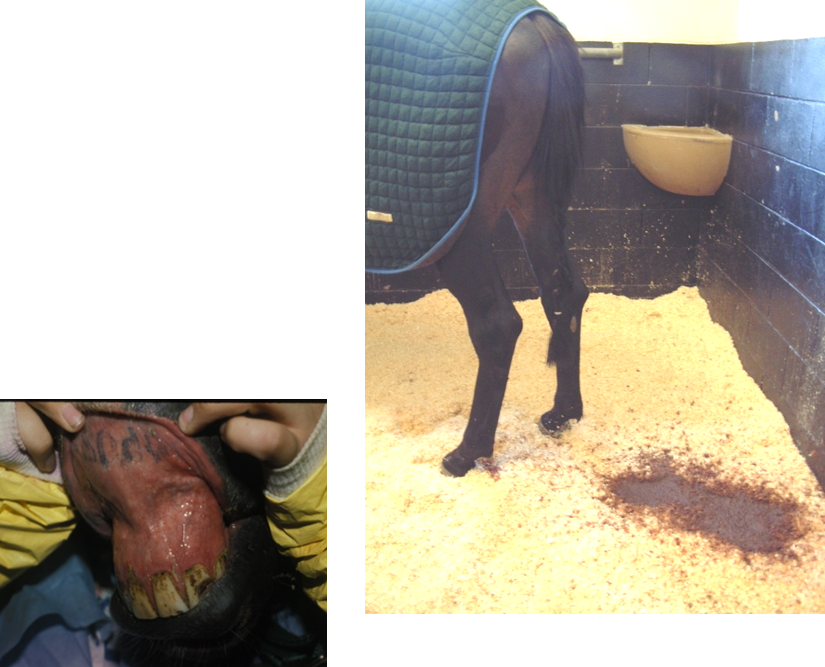
autumn syndrome of cyathostominosis
-when larvae entering intestinal wall
-colic
-d+ due to inflam
oxyuris equi affects what age
any
oxyuris equi lives where
-parasite of stabled horse
-eggs don't survive outside
-reservoirs: other infected horses and environment
o.equi clin signs
-anal pruritis
-skin excoriation
-myiasis
diagnosis of o.equi
-eggs in perianal region on exam
-sellotape test by putting on slide and examining under microscope


o.equi treatment
-all anthelmintics should be effective but some resistance
-anal application as paste
-topical or systemic anti inflams to decrease pruritis and keep area clean with disposable material
prevention of o equi
good stable hygiene
-water troughs, mangers etc