CLST 24 Part 3
 Call Kai
 Learn
 Practice Test
 Spaced Repetition
 Match
 Flashcards
 Knowt Play
1/130

There's no tags or description
Looks like no tags are added yet.
131 Terms
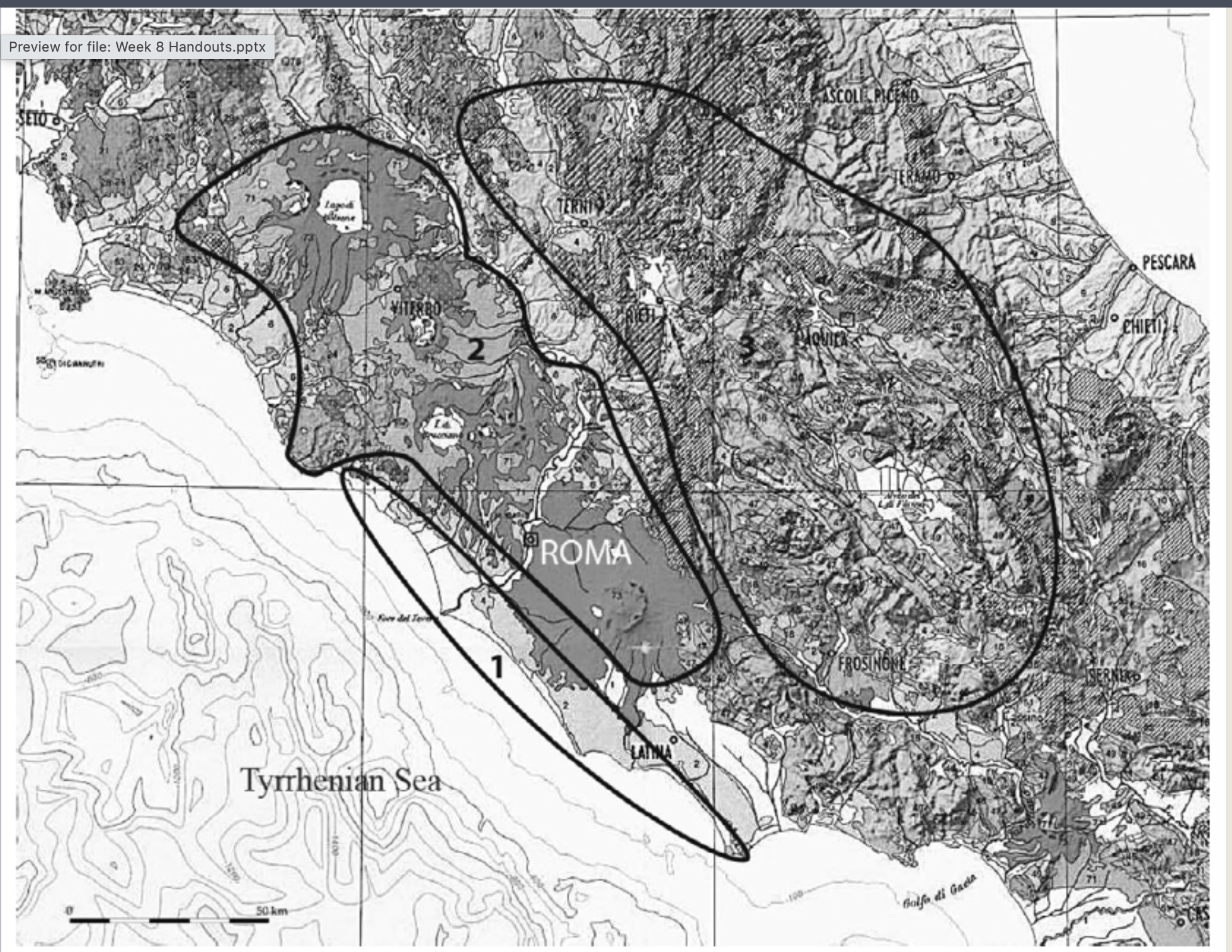
Ecological zones of central Tyrrhenian Italy
tons of metal wealth in Etruria that Rome wants - “portable wealth”
lots of diversity, Rome well situated - typical of entire Med

Via Salaria
definitely around in the ancient period, probably already around in prehistory
salt important for human and animal diets
Rome at a crossroads, important meeting place

Natural harbor at Forum Boarium
early 6th century
made Rome an convenient meeting place/regional crossroads
hills overlooking gave clans control over the valley
not a floodplain

Rome as a natural harbor and ford
until 6th century
made Rome an convenient meeting place
regional crossroads

British School of Rome Tiber Valley Project
Archaic Period
synthesized surface surveys
found lots of settlement evidence in the 6th century
standardized criteria for settlement (how many sherds, etc).

British School of Rome Tiber Valley Project
Archaic Period
synthesized surface surveys
found lots of settlement evidence in the 6th century
standardized criteria for settlement (how many sherds, etc).

results of BSR Tiber Valley project
Early Orientalizing → Classical Period
huge explosion of material in the Archaic Period
small, permanent farmsteads
new crops, techniques, types of irrigation
new infrastructure in countryside w/ increasing numbers
farming increasingly stable, productive → land more valuable

Servian Wall (so-called)
late 6th century
capellacio (most of 6th century built of this)
Recreating highland defense
How much of this was actually built in the 6th century?
foundation trenches not as extensively studied as other parts
unclear how much land it encompasses

Servian Wall (so-called)
late 6th century
capellacio (most of 6th century built of this)
Recreating highland defense
How much of this was actually built in the 6th century?
foundation trenches not as extensively studied as other parts
unclear how much land it encompasses
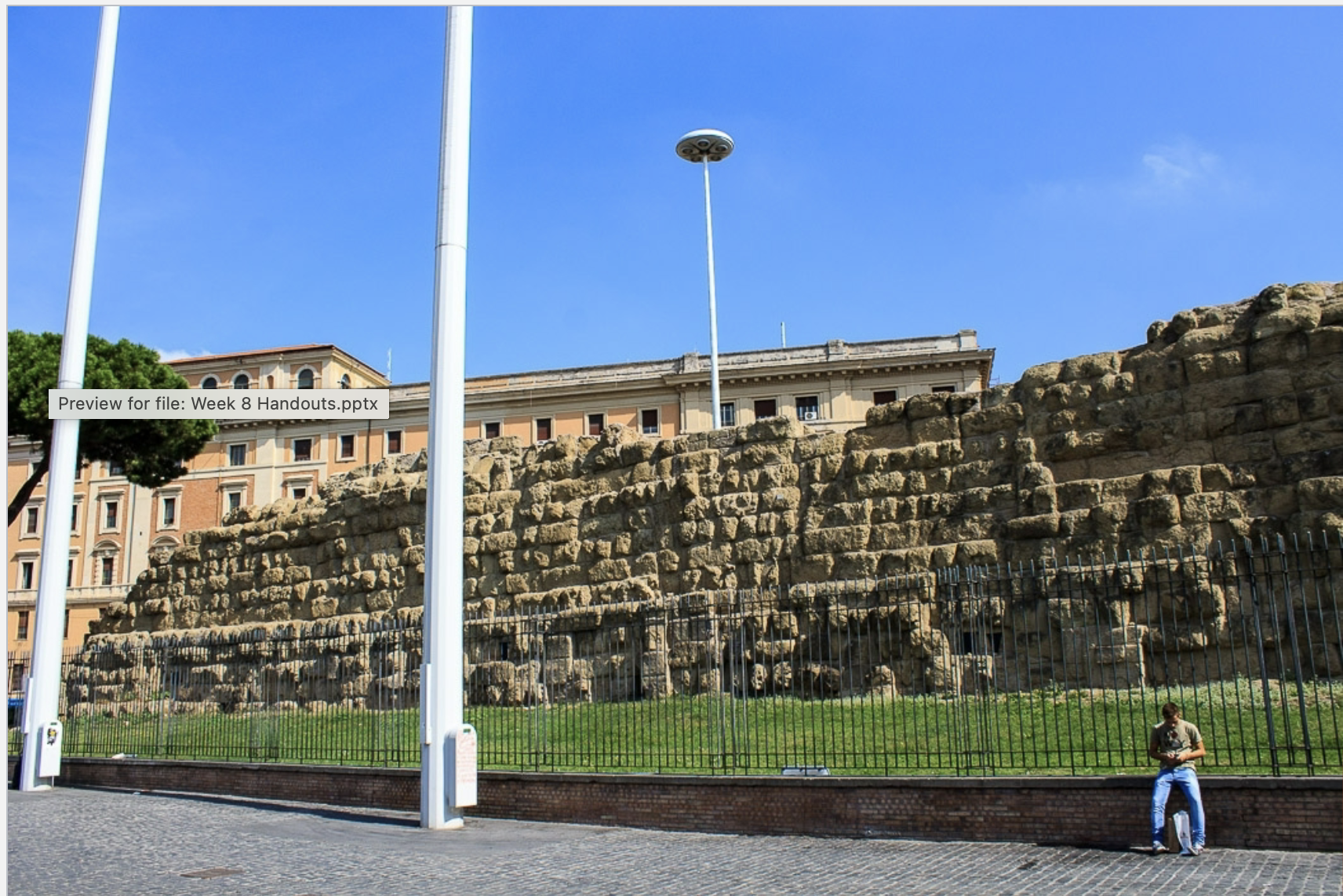
Surviving section of Rome’s “Servian Walls”
4th century BCE
Outside of Rome’s Termini train station
made of capellacio - capellacio doesn’t automatically indicate 6th century
unclear if it encompassed the whole city

Reconstruction of Servian Walls (blue), Aurelian walls (Red)
4th century?
very imaginary, no evidence for them going all the way around
taken as evidence of Rome being massive, but probably not all settled or urbanized
represents concern about defense and outsiders, maybe after the Gallic sack

Capitoline Hill, Rome
6th century?
construction of the Capitoline Temple and creation of Poliadic cult
religion starting to play a role in community building, both physically and culturally

Foundation of the Capitoline Temple (J.O.M.)
Late 6th century (fill used to date it)
major feat of construction, requiring labor, maintenance, and organization
substructure with foundation trenches
“old school” families, i.e. patricians, building these homes and monumental buildings
other groups come to Rome to do business, participate in conquest but don’t live physically in Rome

Capitoline Temple (JOM)
Capitoline Hill, Rome
late 6th century
major feat of construction, requiring labor, maintenance, and organization
poliadic cult building Roman identity and community
built by patrician families

Capitoline Temple (JOM)
Capitoline Hill, Rome
late 6th century
major feat of construction, requiring labor, maintenance, and organization
poliadic cult building Roman identity and community
built by patrician families

monumental architecture around central Italy
common features - tripartite cella, similar materials, stone foundation, terracotta roof, mud brick walls
peers developing architecture at the same time
elaborate temples (incl. JOM) could be evidence for raiding and early conquest.

Portonaccio Temple
Veii
late 6th century
Romans took the gods out - ritual death of the citu
surface survey layer reveals destruction, but no burnt rubble destruction layer
not as much focus on the pediment, terracotta acroteria, frontality (for divination)
standard Italic-Etruscan style, similar footprint to JOM
timber columns, maybe plastered over

statue found at Portonaccio Temple
Veii
6th century
taken out of the temple as a “ritual death” of the city

Temple to Mater Matuta
Satricum (Latium, SE of Rome)
poliadic cult

Excavations at Satricum
City changing, temple changing with it
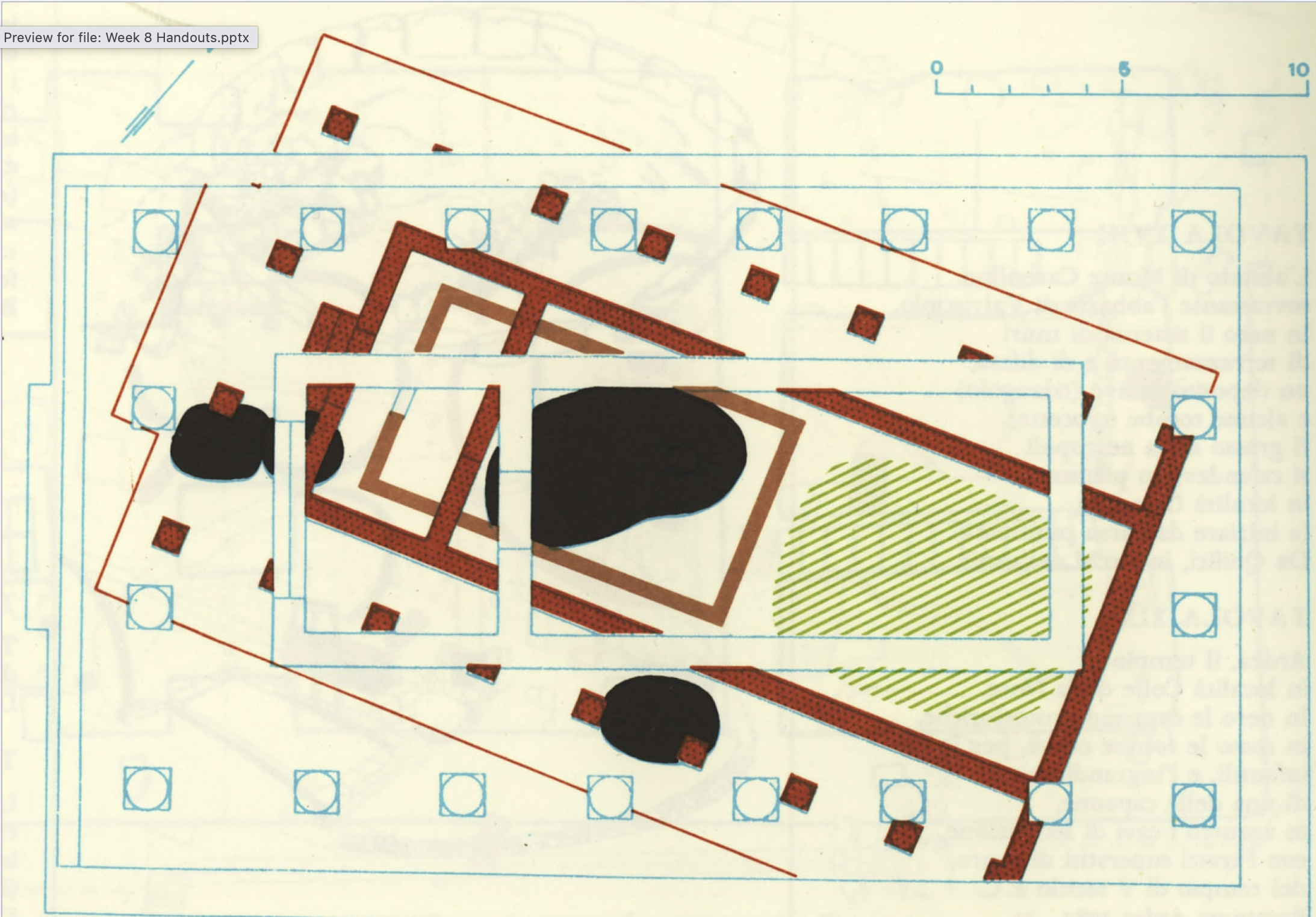
Satricum
changes from a possible settlement site to a definite temple

location of Satricum along the central Tyrrhenian coast
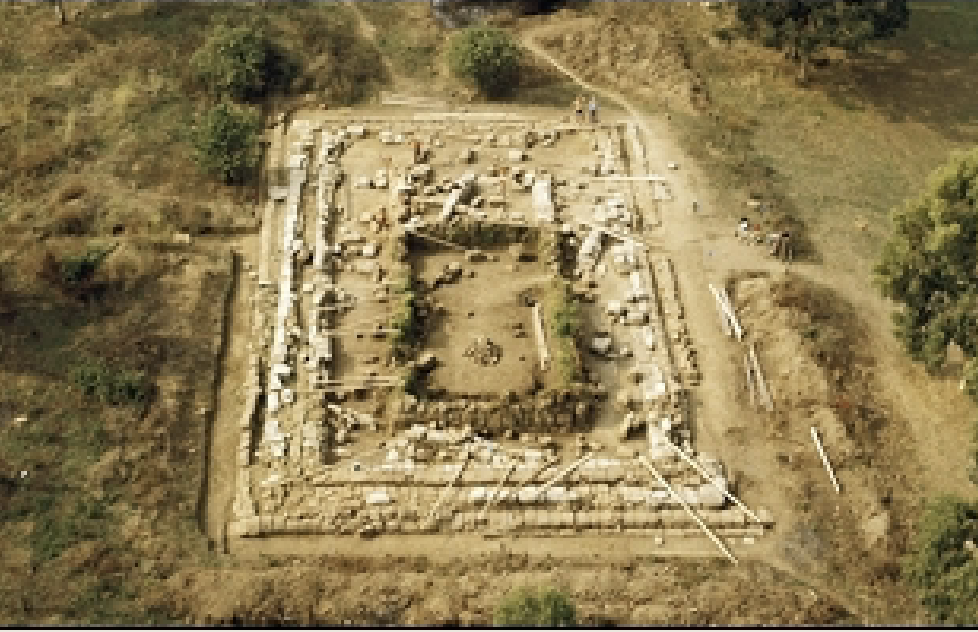
Satricum temple
evidence for Greek style peripteral temple
Religious architecture
Lapis Satricanus found here

Lapis Satricanus
c. 500 BCE
Satricum
dedicated to clan leaders
military is still very clan-based
or could have been other people coming to fight for him - “borrowing men”, imperium

Roman man vs. mafia leader
clan structure - using the state for their own benefit
similar to the mafia
power dynamics between clans constantly changing - hetararchy

drawing of Forum Boarium, 6th century
Sant Omobono Temple (and eventually temples to Mater Matuta and Fortuna) mark this as an important place for the Romans
also a meeting place for traders to stop
monumental architecture representing beginning of res public
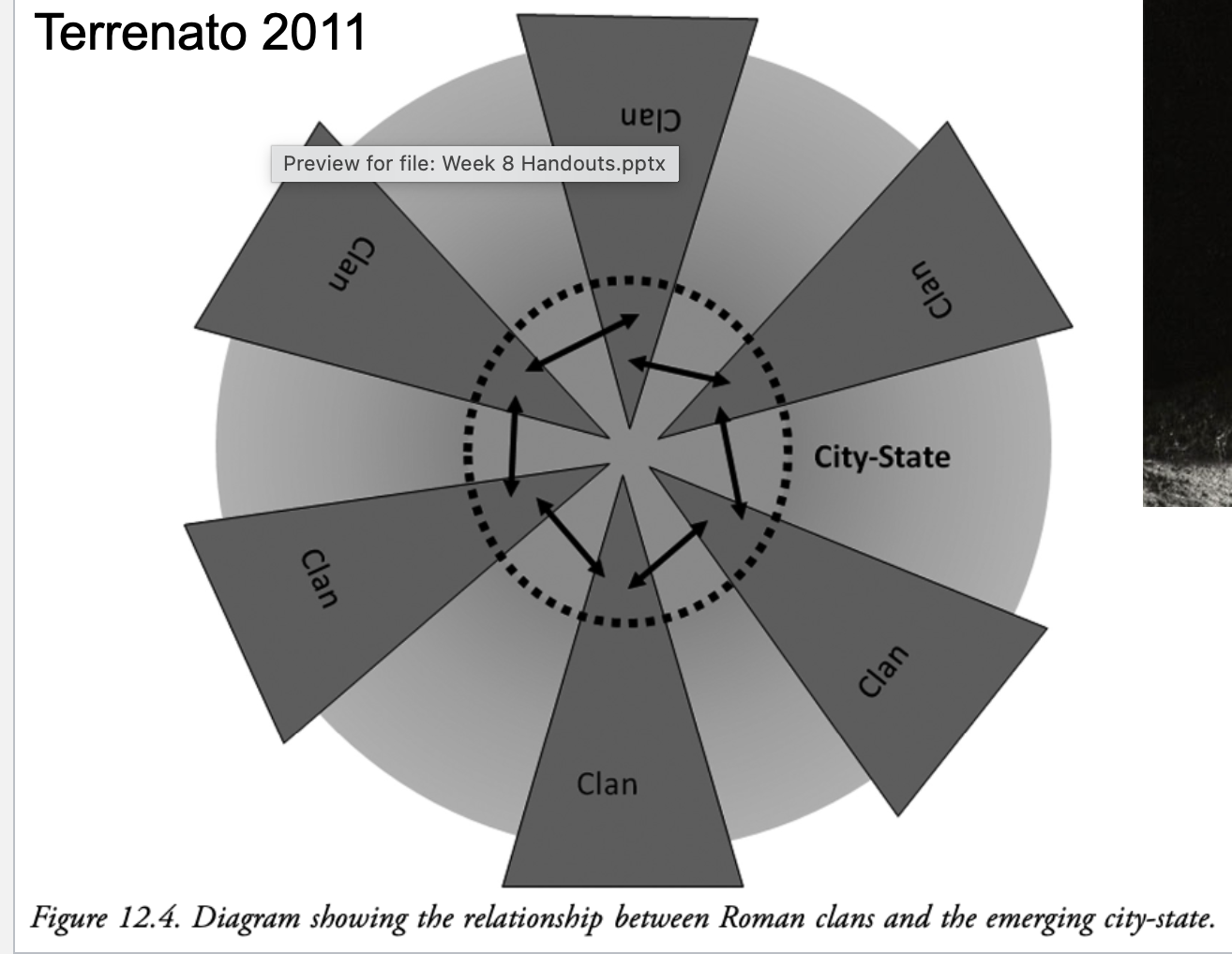
Nick Terranotto’s clan structure
Archaic period
Hetararchy!!
clans connected together in a loose political structure
clans using the Roman state for their own benefits
imperium - some clans are more powerful in certain years (e.g. have control over the military)

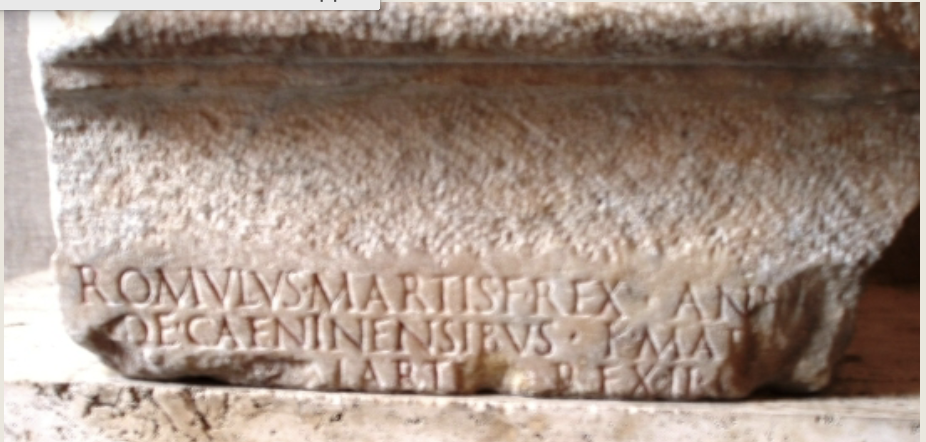
Lapis Niger
6th century
Forum Romanum
presumably “rex” is one of the clan leaders - maybe the one that is holding power.
maybe a shift from monarchy to power sharing to oligarchy (start of the res public)
wouldn’t have been that big of a shift

Painting of Tarquin and Lucretia
c. 1700
myth of the 7 kings, proliferated in historical and Renaissance periods
clan structure more accurate
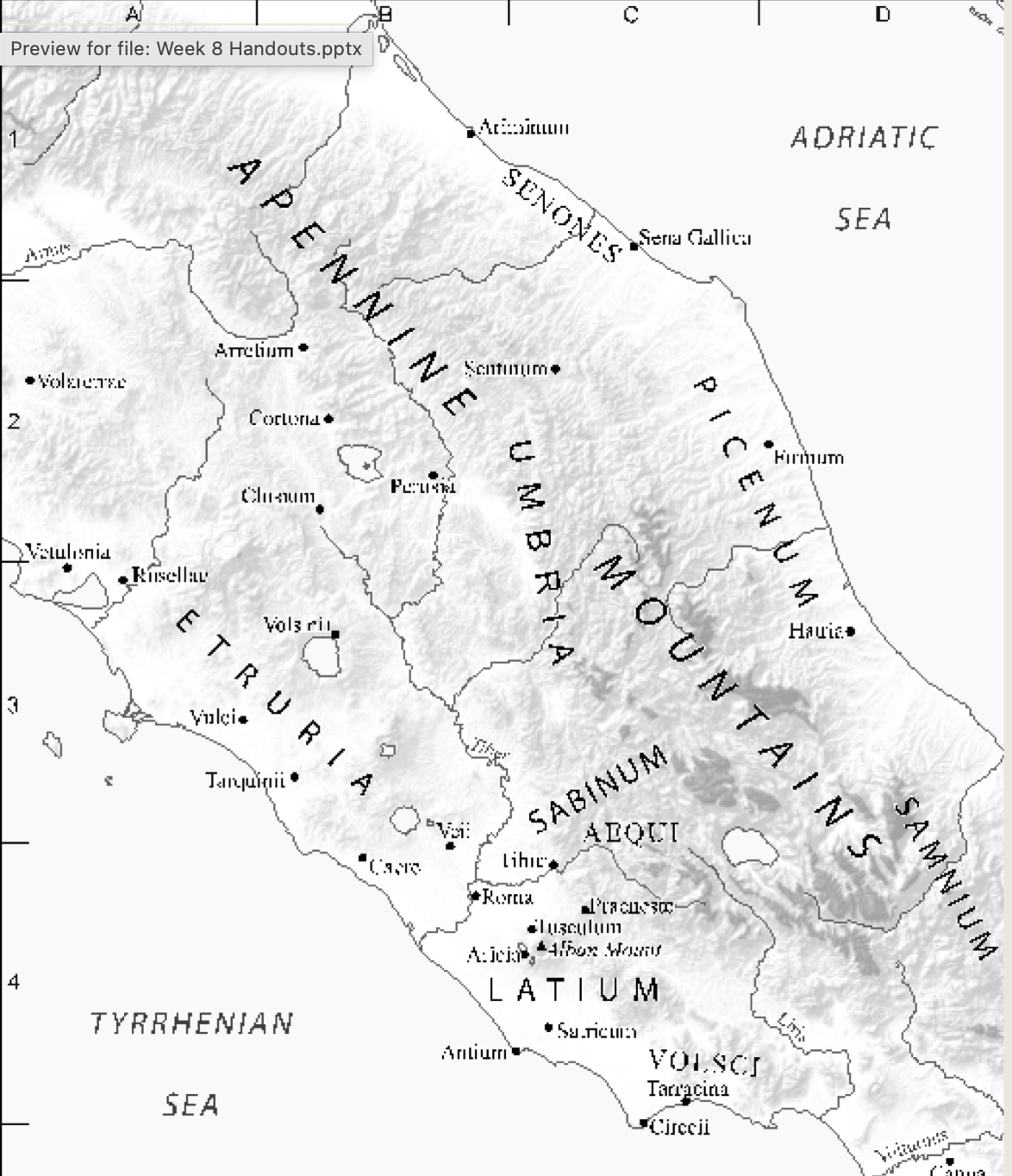
regions, groups, and some topography of central Italy
lots of groups fighting for power and trying to expand
raiding warfare between groups - highland groups from central Appenines, coastal groups, etc.
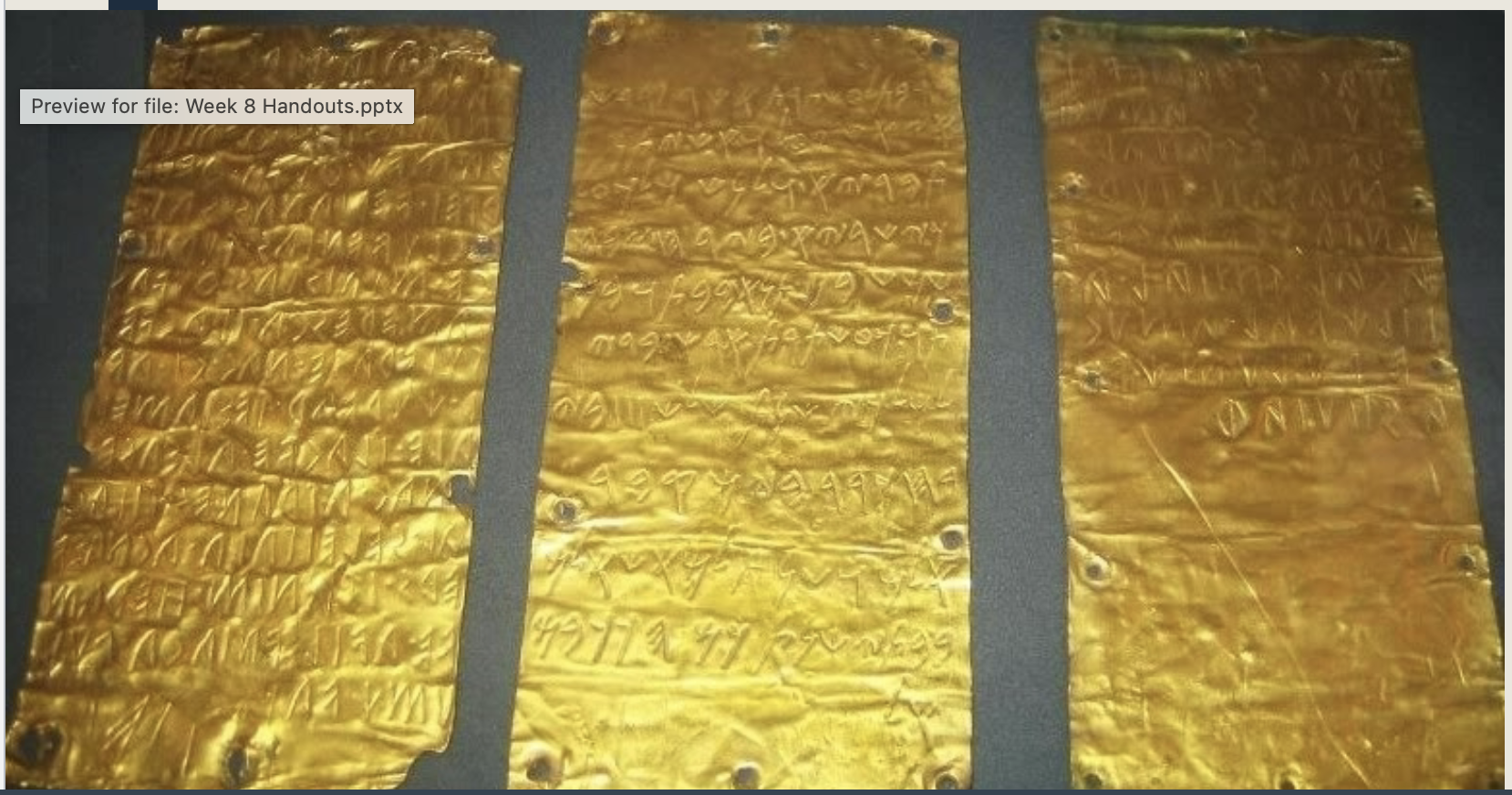
Pyrgi Tablets
Pyrgi = port of Caere
late 6th century BCE
religion as a mediator at boundary spaces
cultural translation between groups - Etruscan and Phoenician
wanting the god’s help for sea travel
welcoming newcomers

Pyrgi Harbor Temples
Pyrgi = port of Caere
late 6th century BCE
religion as a mediator at boundary spaces
cultural translation between groups - Etruscan and Phoenician
Temple A is Italic Style, Temple B is Greek Style
but Temple A had the “Seven Against Thebes” pediment - blending cultural elements

Plan of Marzabotto
Po Plain
Early 5th century
Maybe an Etruscan colony
rectilinear patterns for established colonies
evidence for domestic architecture reflective of development in Etruria/Rome,, etc.

Plan of Marzabotto
Po Plain
Early 5th century
Maybe an Etruscan colony
rectilinear patterns for established colonies
evidence for domestic architecture reflective of development in Etruria/Rome,, etc.

Plan of Marzabotto
Po Plain
Early 5th century
Maybe an Etruscan colony
rectilinear patterns for established colonies
evidence for domestic architecture reflective of development in Etruria/Rome,, etc.

stones from Marzabotto
Po Plain
Early 5th century
Maybe an Etruscan colony
rectilinear patterns for established colonies
evidence for domestic architecture reflective of development in Etruria/Rome,, etc.
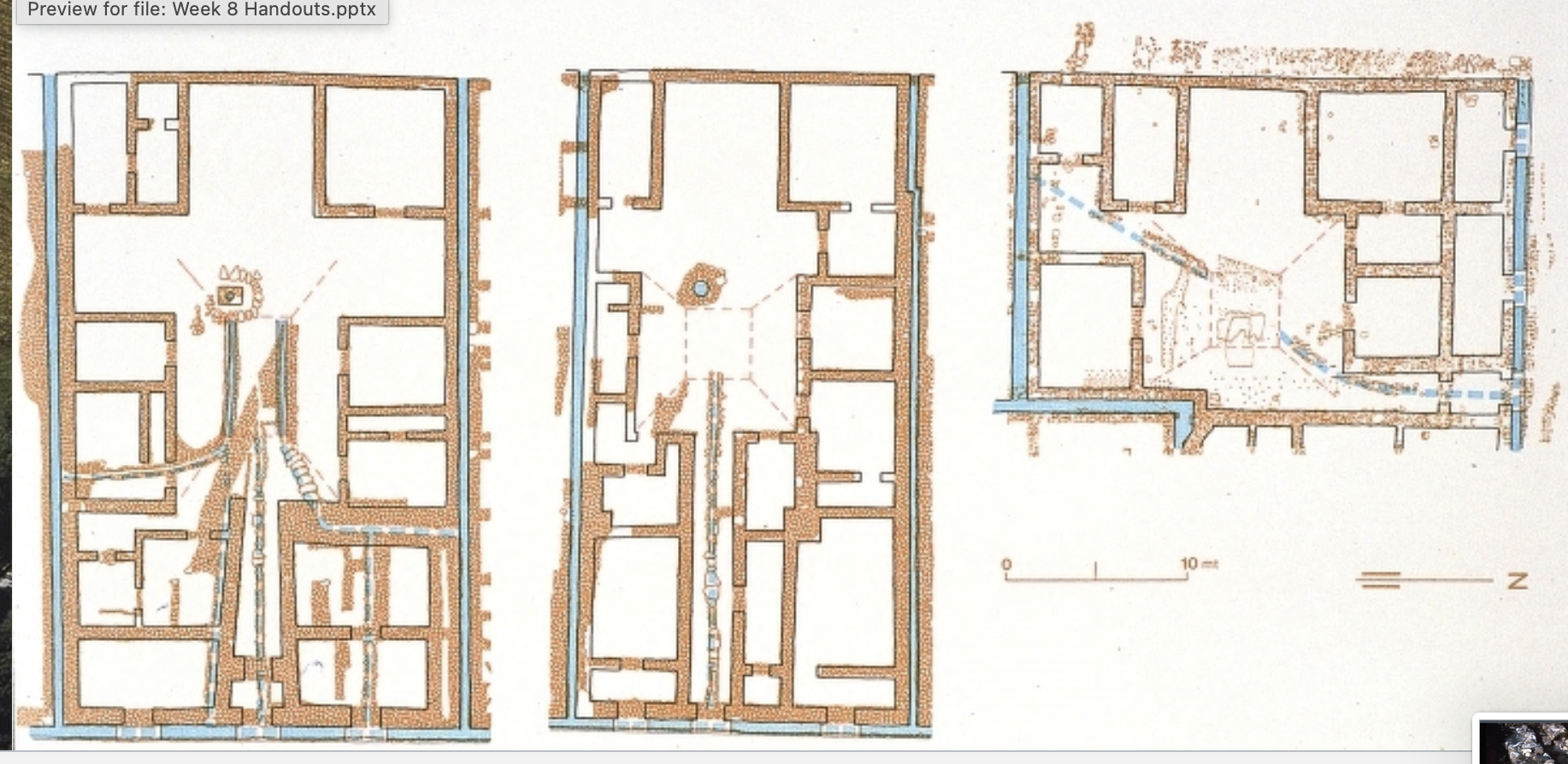
Plan of Marzabotto
Po Plain
Early 5th century
Maybe an Etruscan colony
rectilinear patterns for established colonies
evidence for domestic architecture reflective of development in Etruria/Rome,, etc.
Gallic sack
not a lot of evidence for fire/complete destruction, probably just raided the Roman’s wealth
It WAS hard on the Romans psychologically and may have influenced the construction of the boundary walls
maybe Gauls were mercenaries coming to help in Sicily. and encountered the Romans
Sack of Veii
4th century
Livy uses a lot of family archives about this - good source materila
taken by 10 year siege - organization and cooperation between multiple clans and generals to besiege the same city
military is still heavily clan-based
Veii was Rome’s closest neighbor, so maybe a massive rival - but maybe. also practical (want to steal wealth/eliminate competition)
Raiding warfare (including changes in pastoralism)
Raiding warfare, rather than conquest, was the bulk of Rome’s military endeavors in the early Republican period
pastoral routes coming into more contact with Roman farms, making it harder for transhumance - may have led to increased conflict
locked into more local movements
collecting agricultural resources (animals, etc) and bringing home, maybe also metals, ceramics, etc.
places to raid just outside of the city - focused on the countryside
Not wiping out cities or controlling them - not necessarily always violent
First Treaty between Rome and Carthage
6th century
recorded in Polybius
people subject to Rome is evidence of Roman expansion and imperialism
negotiation in western Mediterranean - evidence of state formation
conquest with an expanding power circle
Imperium
one clan leader in charge
might borrow men from the other clan leaders
money from campaigns go to him - accumulates wealth and power
end of “monarchy” - they start to rotate power (consuls coming from clans)
private wars at the same time as unified state conquest
Shift from Monarchy to Res Publica
probably gradual
instead of one guy in charge, they now share power and have a more oligarchical structure
here they have a more defined state with intentional power sharing
Rome as a city in the Early Republican Period
not a bustling center, mostly just a Forum where people can do their business
Poliadic Cult
Shared cult for a City
e.g. Rome’s poliadic cult = Jupiter Optimus Maximus
represents a shared cultural and religious identity
represents state formation in Rome (people seeing themselves as one collective unit and not just a group of clans).

Collapsed wall in the artificial mound at Crustumerium
ca. 500 BCE
Roman takeover of Crustumerium and possible use of it as a garrison
abandonment of the site - use of building materials in the mound
definitely used for agricultural purposes - ager Romanus
mentioned in Livy and Dionysius

Roman Climate Optimum'
thought to be 2000 BCE - 200 CE but more unclear when it started
climate data collected fro ice cores
warmer, wetter climates = better agricultural production
data is becoming less cohesive - global climate change, but differed regionally
definitely climate change in 1st millennium BCE - changing differently within the Mediterranean
climate affects when you get precipitation, drought

BSR Tiber Valley Project
shows a spike in settlement activity in the 6th century - spike in rural settlements and farms
lots of crops to take for raiding warfare
Romans are not incentivized to decimate surrounding areas
major investment in infrastructure and agricultural activity - rural landscape booming, not as many large settlements built

Falerii Novi
new city founded (by Rome) in 241 BCE after old Falerii in the hills was abandoned
gate from late 3d century BCE
transition from natural defense to being closer to where people are moving through
Rome is getting stronger and don’t needed to be on hill
large wall obviously shows some interest in defense
wall is more likely to be a welcome to the city for people coming here (also a display of power)
major aesthetic investment without real pragmatic uses
also the arch here is a major architectural innovation

wall painting from the Francois tomb at Vulci
fourth century BCE
portray a series of combats.murders involving characters identifiable with 6th c historical figures from various Etruscan cities and from Rome
evoke a world of coups, political assassinations, and private wars

Plan of the Francois Tombs
fourth century BCE
In the Ponte Potto necropolis in Vulci
more complex chamber tombs, with some rooms resembling a house ?

Fresco wall painting
4th century BCE
Ponte Potto necropolis in Vulci
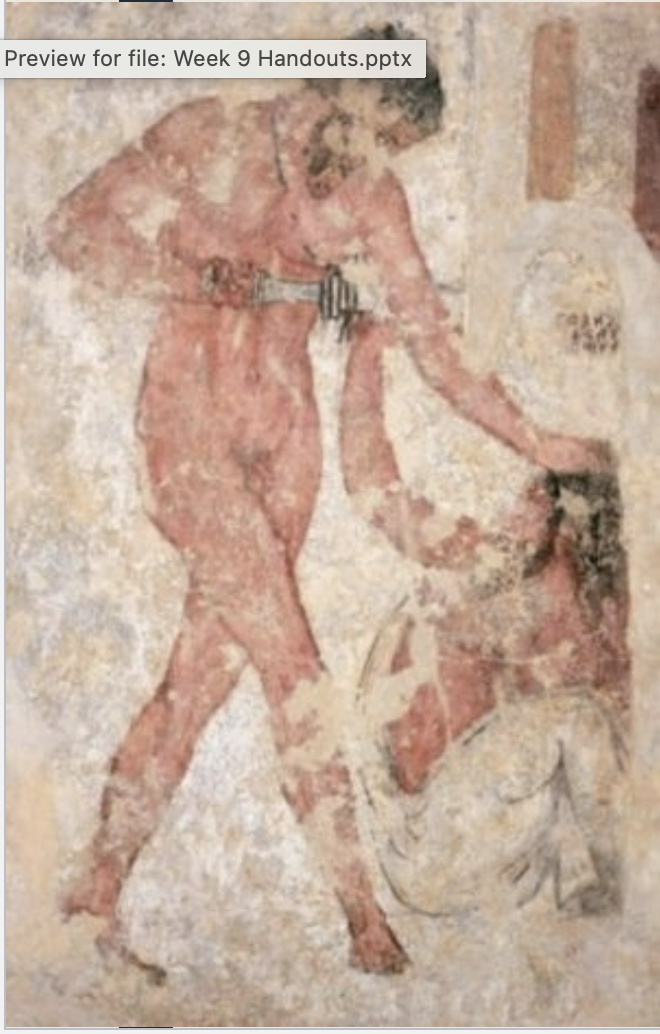
“Camillus” killing “Gaius Tarquinius of Rome”
Francois Tomb
Vulci
4th century BCE

Fresco from the Francois Tomb
Vulci
4th Century BCE
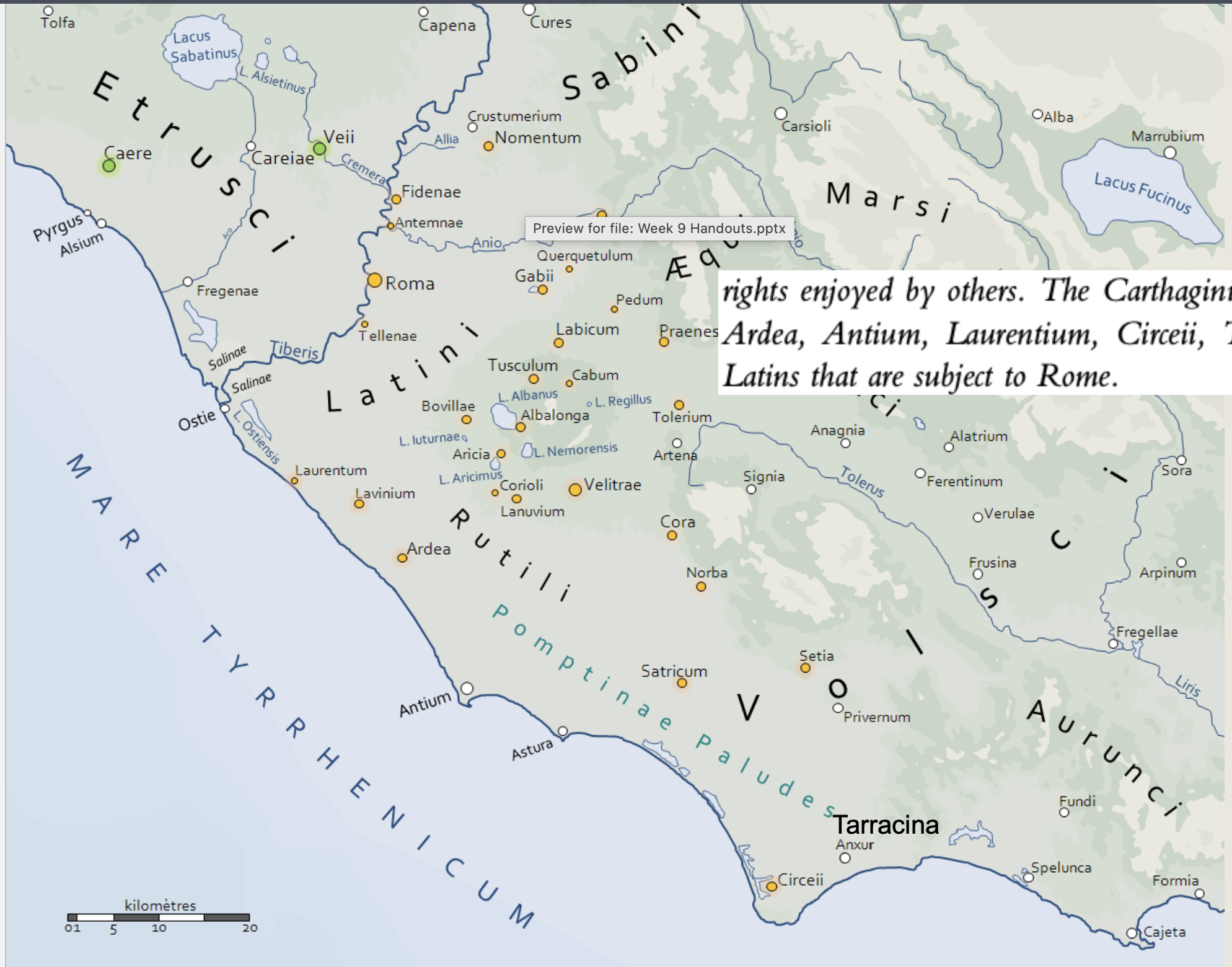
Latin people subject to Rome - indicates that Rome was conquering and gaining control over Latium
state formation, military activity in the Early Republican period
Carthage was not to mess with them - Rome exerted control over them and they were part of their territory
Fasti Capitolini/triumphatores
list of triumphal generals - people who did well to get a party
when JOM burned down, it was significant because they lost this whole repository for the cirt
historical sources used by Livy

Fasti Capitolini/triumphatores
list of triumphal generals - people who did well to get a party
when JOM burned down, it was significant because they lost this whole repository for the cirt
historical sources used by Livy

Fasti Capitolini/triumphatores
list of triumphal generals - people who did well to get a party
when JOM burned down, it was significant because they lost this whole repository for the cirt
historical sources used by Livy
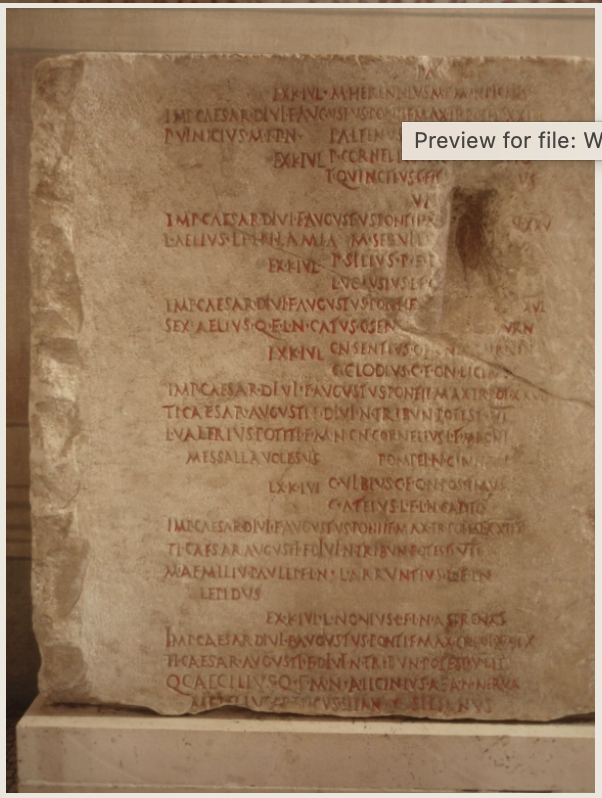
Fasti Capitolini/triumphatores
list of triumphal generals - people who did well to get a party
when JOM burned down, it was significant because they lost this whole repository for the cirt
historical sources used by Livy
phrasing of the “res publica”
literally “public thing”
first mentioned in historical period (~3rd c. BCE) but had existed for a while
the Res Publica is a teenager when the term first appears
Laudatio
speeches in praise of the dead of past ages - keep an record for families
history of Rome falsified by these - invented triumphs, additional consulships, false claims to patrician status
Polybius’ sources for the Rome Carthage treaty
archive accessible to him at the Capitoline
but the epigraphs were hard to read - archaizing language
early archives
family records and archives that went back, especially fro the 3rd century BCE
some evidence from before, e.g. the 12 Tables
Early Republic timeline
Lex Canuleia (445) - allows intermarriage, and opens military tribunate to plebeians
opening opportunity to everyone - before they wanted to keep access to a family’s wealth limited
Used as support for a 5th century crisis
From the literary, NOT archaeological record
start to see a stronger state
Political structure of Mid-Republican Rome
source material from the late 3rd century gives us this picture (no archaeology)
assemblies, senate, magistrates
cursus honorum: pursue offices in this order
End result - don’t know why they chose this, what came first
military tribune - predecessor to consul
Series of negotiations between clans and people coming to Rome
once very concentrated by patrician clans (e.g. 12 Tables restrict intermarriage between plebs and patricians)
portable wealth examples
grain, sheep, tuff
Livy’s description of Rome after the Gallic Sack
says Rome was rebuilt in a random fashion
no evidence of rebuilding
disorganization of the city more from the organic development of the city
no singular foundation or decision made about the organization of teh city
some indications of burning, but might just be houses that burned down
teleological with rectilinear organizations of colonies

Topography of Rome
makes a rectilinear urban plan hard (contrast to flatter Po Plains)

How many Roman colonies looked - rectilinear (right angles, straight lines)
Roman Empire operates through cities - plop down a forum, crossroads, a military encampment
conquer new territory and making colonies
Livy uses this to contrast Rome’s lack of right angles and attributes other the rapid rebuilding after the Gallic sack

Book about Mid-Republican Rome and the “5th Century Crisis”
notes a reduction in building activities, and says this must be due to economic woes
conquest not going well, so they don’t have the wealth to build temples
maybe social conflict as well?
more helpful for arguments about campaigning and the city on the ground
Archaic buildings not destroyed so don’t need to build new ones
still building in timber and mudbrick (not “traditional” Roman architecture) which is harder to see

Gap in building activity in the mid 5th century
evidence of a “5th century crisis” with reduced building activity
may be due to a decrease in wealth, less successful conquest
hardship, reduction of activity, social conflict
no evidence for rebuilding or destruction after the Gallic sack
may be more helpful evidence about conquest, and less helpful about what is going on at Rome itself
Archaic Rome still around - living in those buildings, don’t necessarily need to buildd new ones
lacking stone, traditional architecture - still building in mudbrick/timber, which is less visible
maybe more private wealth with sumptuary laws and social tensions

(last one)
building activity of the Archaic period persists

(last one)
building activity of the Archaic period persists

(last one)
steep bank with higher platform
receives a lot of embellishment, including the Regia

The Republican Riverbank
more real estate

Platform of the Sant Omobono sanctuary
early 5th century BCE
Twin temples to Fortuna and Mater Matuta
Rome’s earliest riverbank sanctuary - marking it as a sacred space that was important to the Romans (meeting place/trading center)
continues on for centuries into the Imperial Period

Sant Omobono sanctuary
early 5th century BCE
Twin temples to Fortuna and Mater Matuta
Rome’s earliest riverbank sanctuary - marking it as a sacred space that was important to the Romans (meeting place/trading center)
continues on for centuries into the Imperial Period

Sant Omobono sanctuary
early 5th century BCE
Twin temples to Fortuna and Mater Matuta
Rome’s earliest riverbank sanctuary - marking it as a sacred space that was important to the Romans (meeting place/trading center)
continues on for centuries into the Imperial Period
Archaic city defines mid-Republic city

last one
Capitoline Temple
Rome
late 6th century BCE
burned down in 53 BCE
descriptions of its Archaic appearance unhistorical sources
distinctive style that eventually looks Archaic/old
Archaic architecture still important for mid-Republican Rome
repository of physical archives - fasti, lists, etc. nailed to the side of this “house of the gods/;
make an attempt to rebuild in Archaic form

Foundation of Capitoline Temple
Rome
late 6th century BCE
burned down in 53 BCE
descriptions of its Archaic appearance unhistorical sources
distinctive style that eventually looks Archaic/old
Archaic architecture still important for mid-Republican Rome
repository of physical archives - fasti, lists, etc. nailed to the side of this “house of the gods/;
make an attempt to rebuild in Archaic form

Republican Riverbank - location of Temple of Portunus and the Temple of Hercules Olivarius

Temple of Portunus
4th century BCE
Portunus = god of port/gates - appropriate for a riverbank district
Blending of styles - platform, but columns in marble (Italic and Greek)
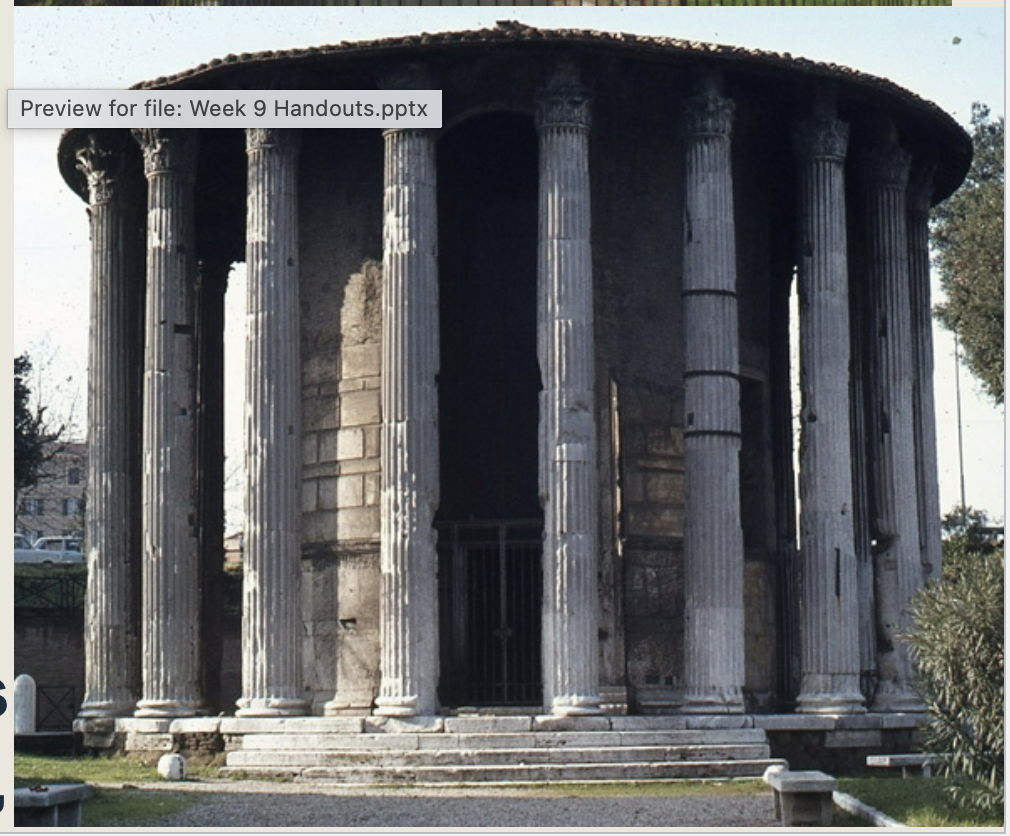
Temple of Hercules Olivarius
built in the 2nd century BCE
one of the most Greek style (peripteral)
huge powers around the Med - Alexander the Great, Carthage

Republican Riverbank - Location of Temples of Janus, Spes, and Juno Sospita
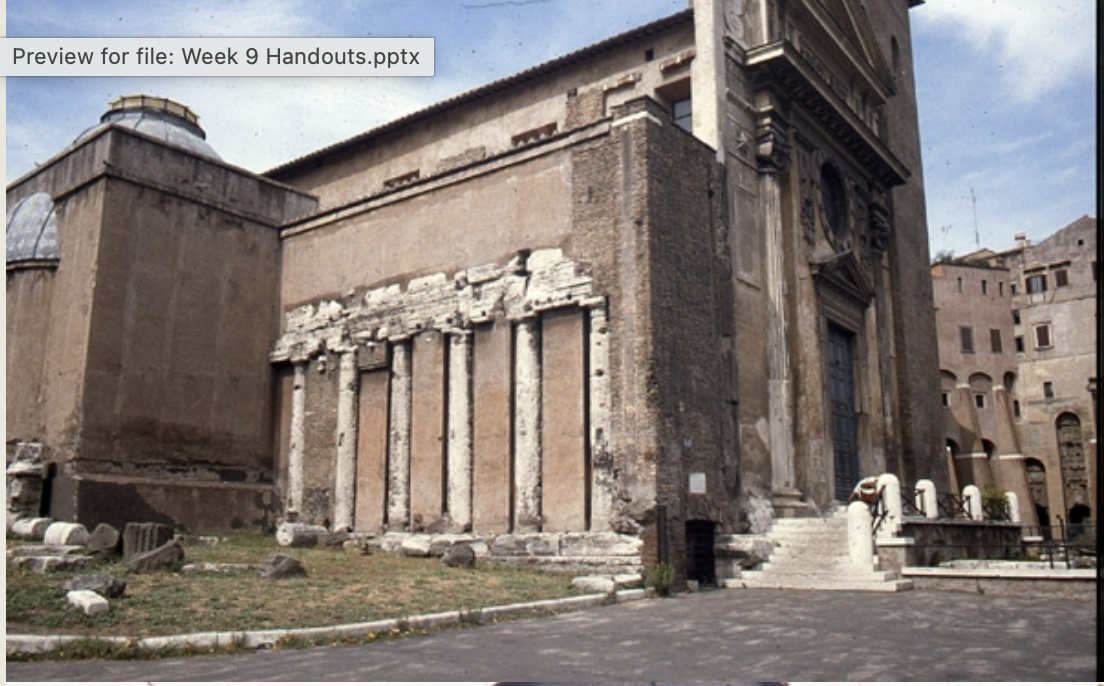
Temples of Janus, Spes, and Juno Sospita
built between the mid 3rd and early 2nd century BCE
Victory Temples - investment in temples as part of the practice of imperial conquest
Catholic Church preserves architecture - columns and roof
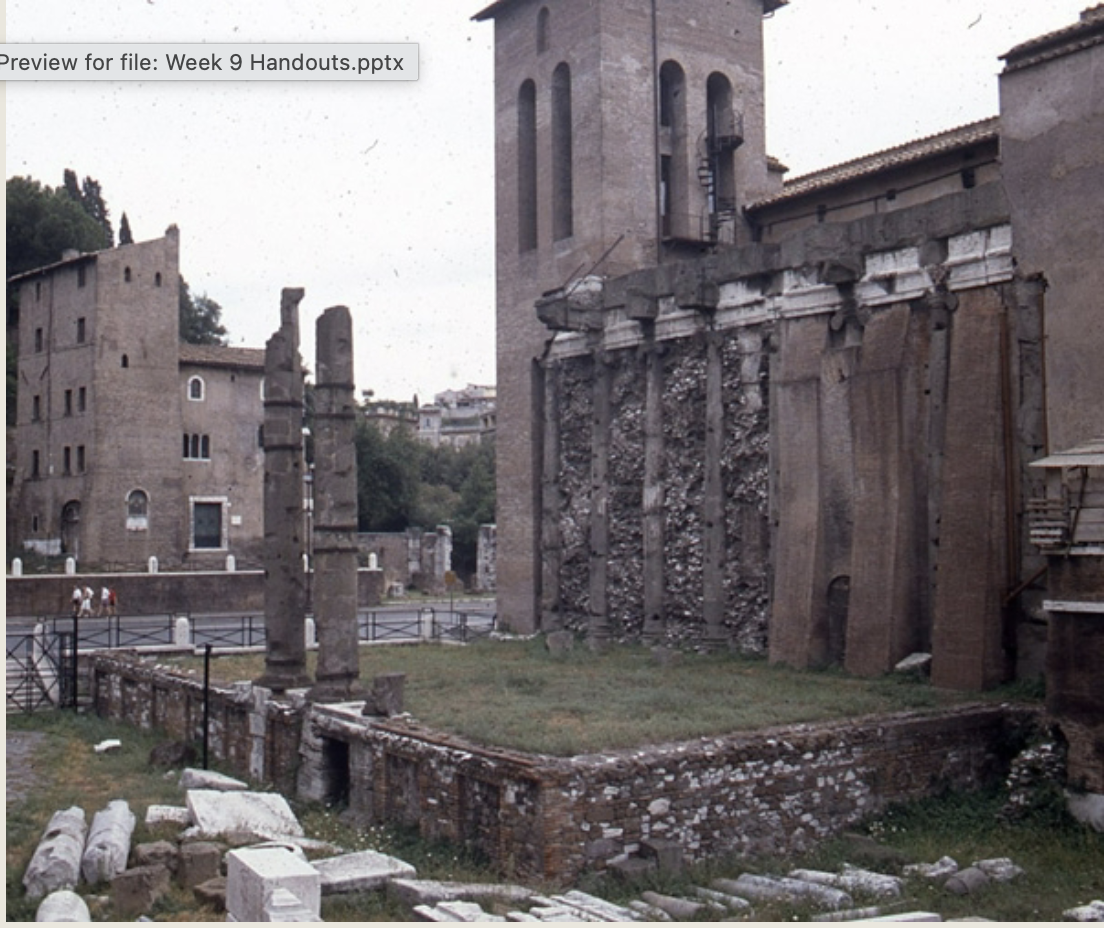
Temples of Janus, Spes, and Juno Sospita
built between the mid 3rd and early 2nd century BCE
Victory Temples - investment in temples as part of the practice of imperial conquest
Catholic Church preserves architecture - columns and roof

Campus Martius
Republican Period
“Field of Mars” - soldiers would meet, train, and organize before a campaign
one large floodplain of the Tiber
maybe a swamp?? lots of assumptions in this picture
on the other side of the Capitoline, more empty
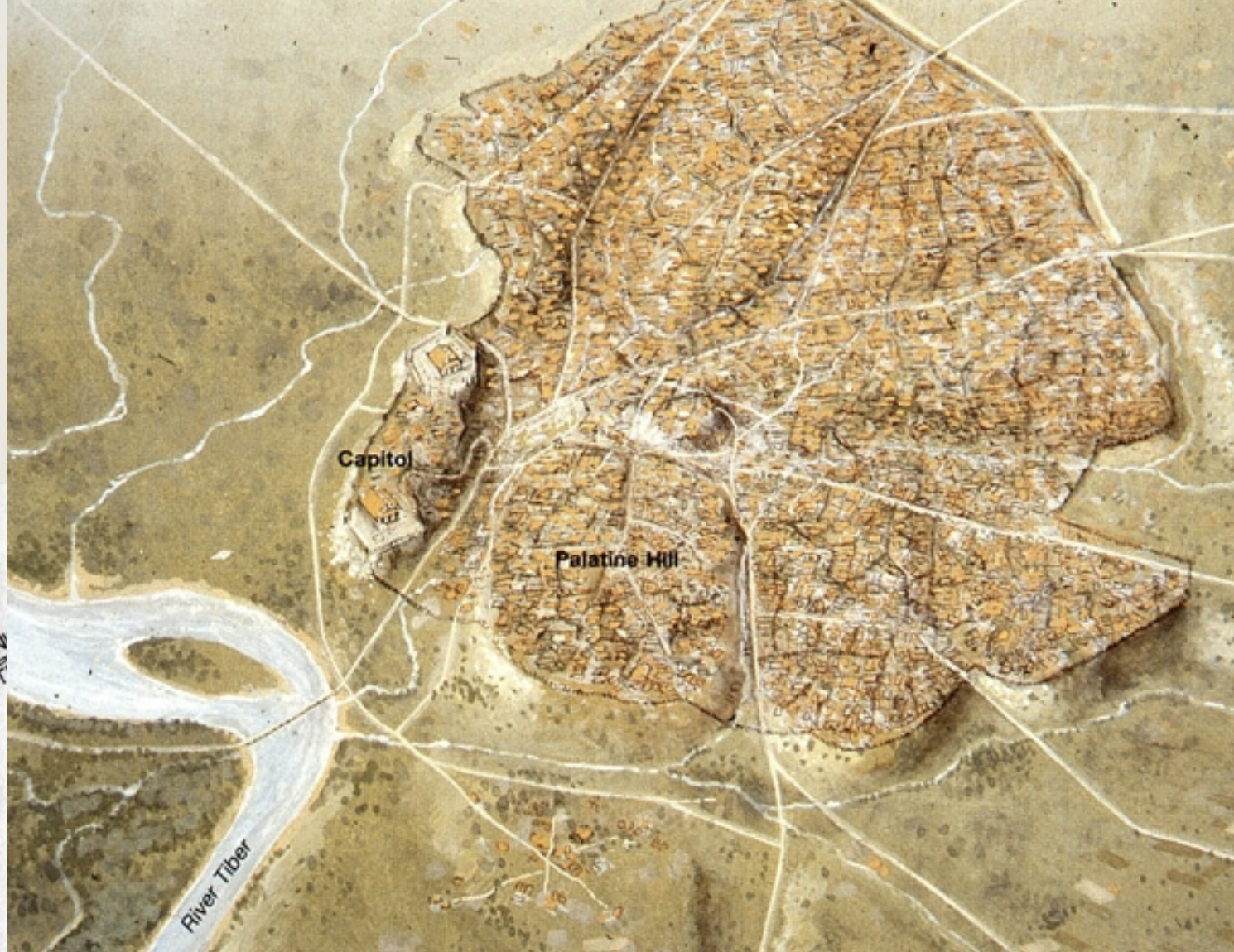
Campus Martius
Republican Period - 390 BCE
“Field of Mars” - soldiers would meet, train, and organize before a campaign
one large floodplain of the Tiber
maybe a swamp?? lots of assumptions in this picture
on the other side of the Capitoline, more empty

Four Republican Temples at the Area Sacro of Largo Argentina in the Campus Martius
built between the late 4th and late 2nd centuries BCE
each looked different, but built side-by-side
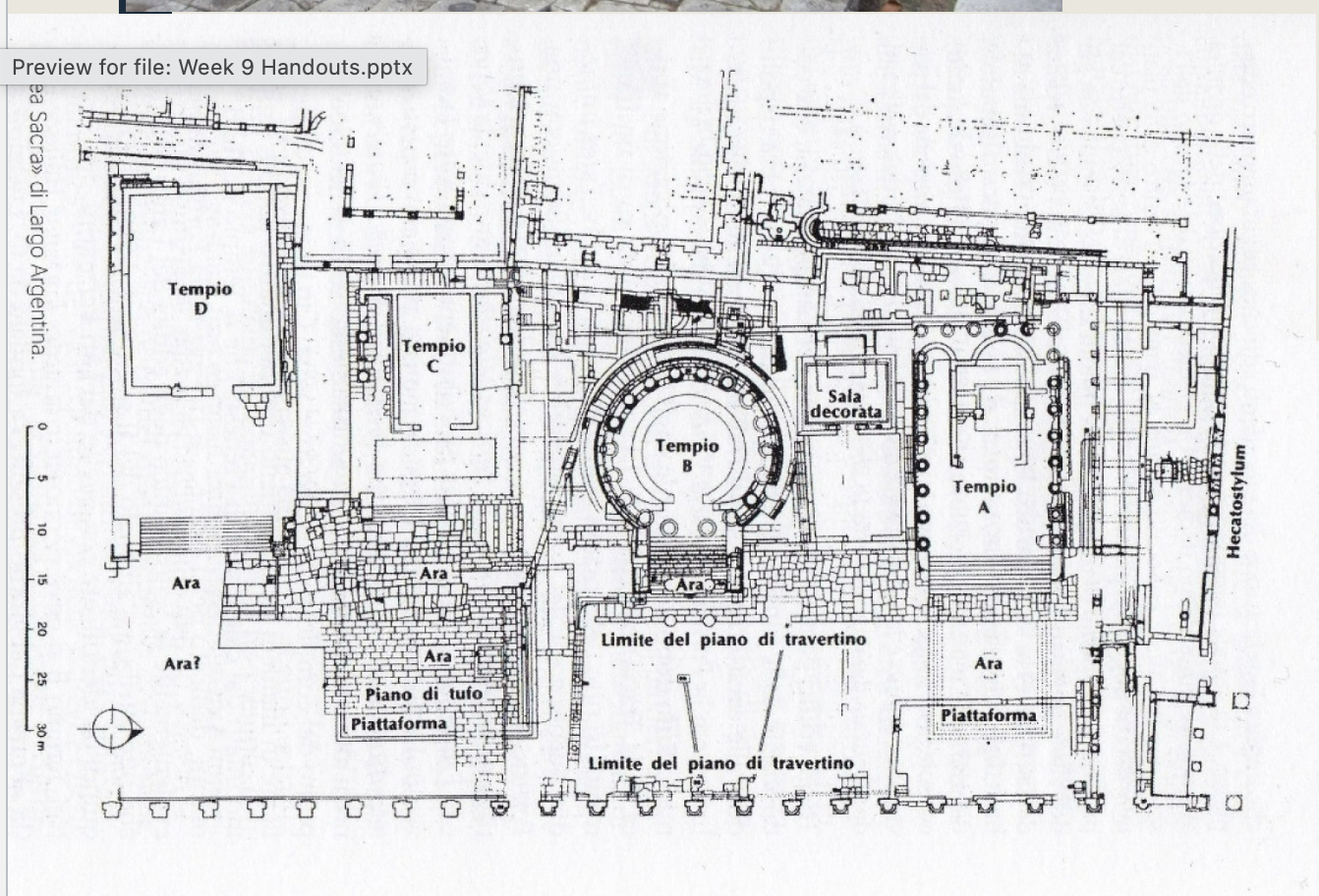
Four Republican Temples at the Area Sacro of Largo Argentina in the Campus Martius
built between the late 4th and late 2nd centuries BCE
each looked different, but built side-by-side

Four Republican Temples at the Area Sacro of Largo Argentina in the Campus Martius
built between the late 4th and late 2nd centuries BCE
each looked different, but built side-by-side
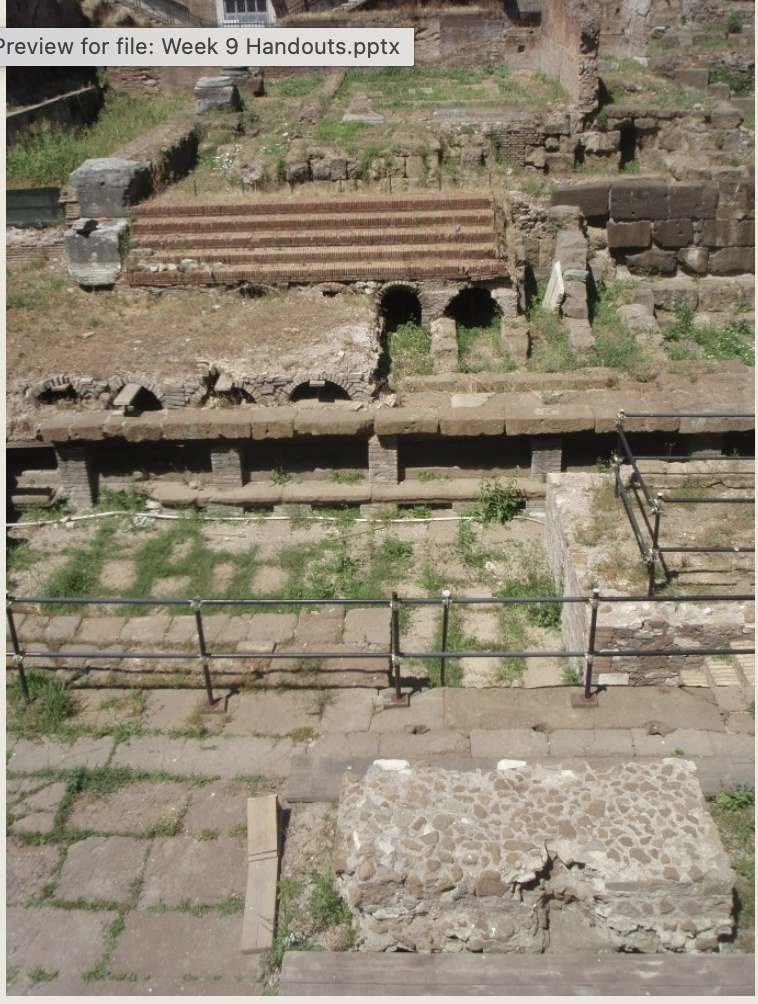
Four Republican Temples at the Area Sacro of Largo Argentina in the Campus Martius
built between the late 4th and late 2nd centuries BCE
each looked different, but built side-by-side
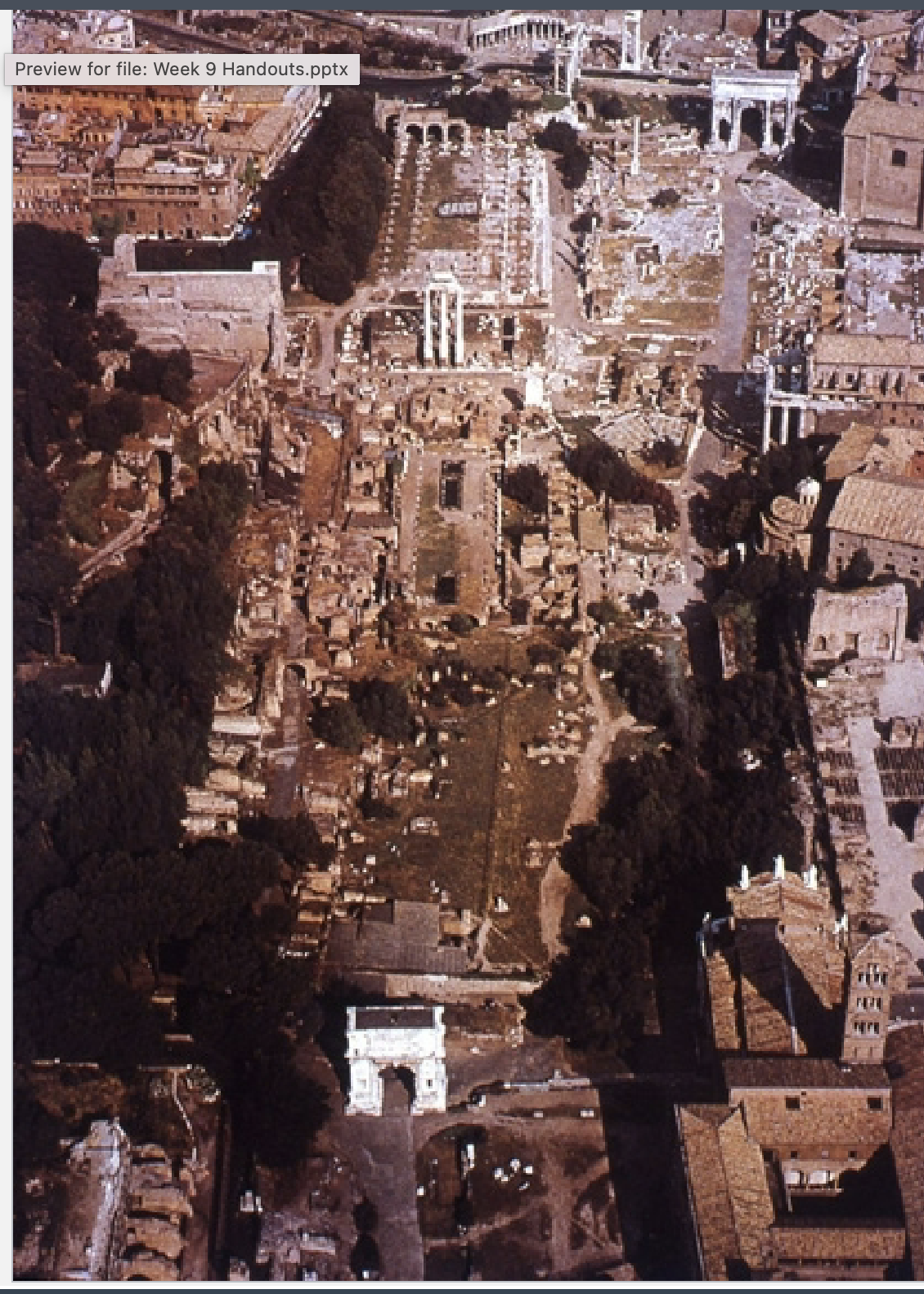
Forum Romanum, in later times

drawing of Forum Romanum, at a later time

picture of the remains of the Forum Romanum today
mostly buildings built later
when Rome started to have marble, the structure of buildings changed drastically
materials, squatness, and decor would look Archaizing

image of the Capitoline Hill and the Forum Rormanum, with the potential quarry area of capellacio in the yellow shaded area
Via Sacra probably joined with/comes from quarry roads
series of sites on Capitoline with old histories to Archaic period
triumphal processions would group the Via Sacra to the Temple of Jupiter Optimus Maximus

image of the Capitoline Hill
Via Sacra probably joined with/comes from quarry roads
series of sites on Capitoline with old histories to Archaic period
triumphal processions would group the Via Sacra to the Temple of Jupiter Optimus Maximus
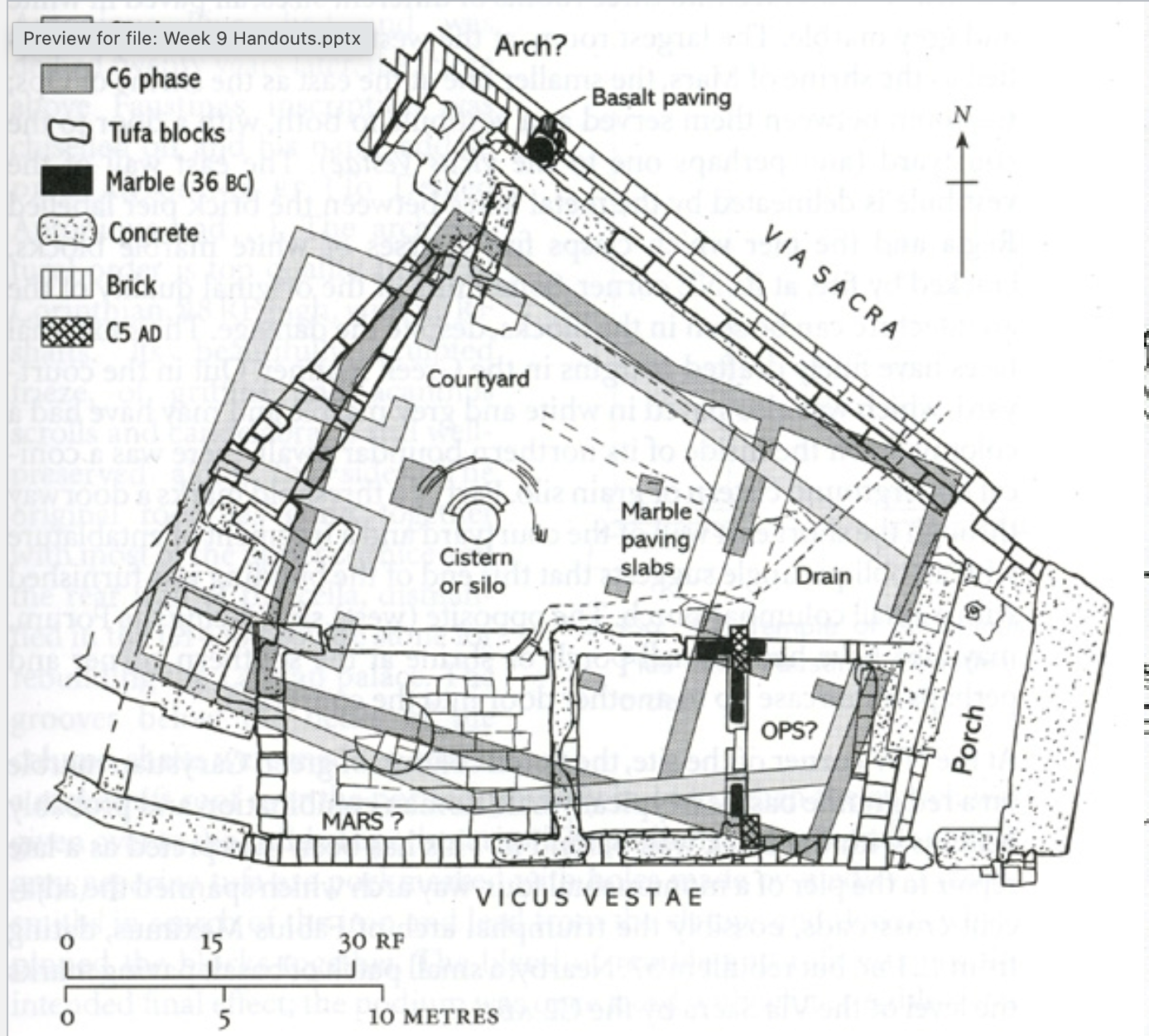
Regia
has layers dating to 6th
“Rex” - home of rex? (again, hard to know the extent of the rex”
notably on the side of the Forum Boarium - built on ridges to put it at less risk (other side has other structures)