Invertebrate Lab
 Call Kai
 Learn
Learn Practice Test
 Spaced Repetition
 Match
Match Flashcards
 Knowt Play
1/23

There's no tags or description
Looks like no tags are added yet.
Name | Mastery | Learn | Test | Matching | Spaced | Call with Kai | Chat |
|---|
No analytics yet
Send a link to your students to track their progress
24 Terms
Sampling Design
Must have a control site and replication
Often used for bioassessments
Control site upstream of the potential pollutant and test sites downstream of the pollutant source
Number of sample sites depends on the study, but at least 3 sample sites
Bioassessments
Sampling is performed to determine whether the stream is impacted by point or non-point sources of pollution
Often required for National Pollutant Discharge Elimination System (NPDES) Permits
EPA developed procedures in the 70s and 80s for performing these called Rapid Bioassessment Protocols
Rapid Bioassessment Protocols (70s/80s)
Required that, at a minimum, each sample site be sampled with 3 replicate quantitative samples and 1 qualitative sample
But this took a very long time (was not rapid)
Quantitative Sampling
Qualitative Sampling
Quantitative Sampling
Sampling a known surface area or volume to determine precise density estimates
Very precise, and the data could be used in statistical analyses
Qualitative
Sampling diverse habitats to determine what was living there
Does not provide precise density estimates
Quantitative: Surber Sampler (Square Foot Sampler)
Samples a square foot of substrate in lotic systems
Limited to 1 foot of depth and does not work on mud, bedrock, boulders, or any substrate greater than 1 foot in size

Quantitative: Hess Sampler
Samples a known surface area of substrate in lotic systems
More adaptable than the Surber Sampler since it can sample deeper habitats and a wide variety of substrates
Heavier weight allows for sampling bedrock and boulder substrates

Quantitative: Artificial Substrate Sampler
Determines the density of colonizing organisms by providing a known surface area of available substrate for invertebrates to colonize
Allows for sampling numerous lotic and lentic habitats

Quantitative: Dredge Samplers
Used in lentic systems and deep pools of lotic systems
Limited to soft bottoms that can be excavated by the dredge
A known volume of sediment is sampled and the density of organisms is determined for that volume
Can be dangerous

Qualitative: Kick Seine
1 square meter of fine mesh netting that is weighted at the bottom and supported on the sides by two poles
Works best in riffle areas of lotic ecosystems where water is shallow and agitated at the surface
Requires more than one person to sample (one holds the net, while the other disturbs the substrate upstream of the net by kicking)

Qualitative: D-frame Net
Fine-meshed net on a D-shaped frame attached to a handle
Can be used in a variety of lotic and lentic habitats
Can be used as a kick net if placed on the substrate and the substrate is disturbed immediately upstream of the net by kicking

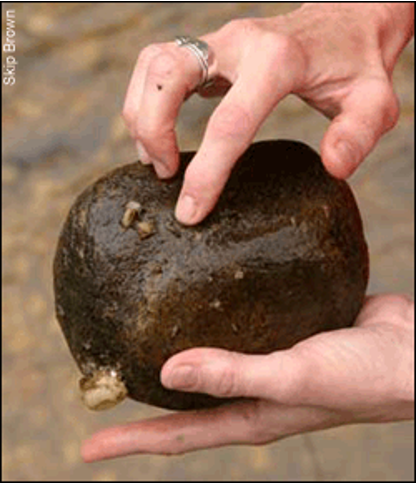
Qualitative: Rock Turning
Picking up rocks and looking closely to find organisms
Organisms are then carefully removed with forceps
New Bioassessment Protocols
Unless densities are required, new protocols utilize qualitative sampling
If density is required, the EPA method is still used
The State of TN requires collection of a minimum of two kick-seine samples per site (1 from a fast riffle area and 1 from a slow riffle area); the samples are combined, and approximately 200 organisms are randomly picked from the combined sample for ID
Multimetric Analysis is performed, and results are compared to a reference condition for the ecoregion in question
This results in more sites being sampled daily (less time)
Multimetric Analysis
Metrics Include:
Taxa Richness
EPT richness/intolerant organisms (mayflies, stoneflies, caddisfly)
% EPT
% Oligochaeta and Chironomidae/tolerant organisms
% Clingers/intolerant organisms
% Nutrient Tolerant Organisms/tolerant organisms
North Carolina Biotic Index
Order: Collembola (Springtails)
Small, wingless
Forked apendage = furcula
Ventral tube = collophore
Often found on moist vegetation near stream banks

Order: Ephemeroptera (Mayflies)
Dorso-lateral abdominal gills
One claw at the end of the legs
Usually (2 or) 3 tails, but the number of tails is not the primary characteristic
EPT - water quality indicator

Ephemeroptera: Family Baetidae
Small nymphs (2-3 mm)
Often hairy
May have 2 or 3 tails
Ex: Baetis

Ephemeroptera: Family Isonychiidae
Monogeneric Family
Have long fringe of setae on inner margin of front pair of legs
Swim like minnows
Isonychia

Ephemeroptera: Family Heptageniidae
Large, very common family of clinging mayfly nymphs
Have flat heads with dorsal eyes
Gills are important for ID
5 genera in this area:
Heptagenia
Stenonema
Maccaffertium
Stenacron
Epeorus
Family Heptageniidae: Heptagenia
All seven pairs of gills look alike and are rounded on the end

Family Heptageniidae: Stenonema
Gills on segment 7 are lance-shaped
Gills on abdominal segments 1-6 are rounded at the ends

Family Heptageniidae: Maccaffertium
Similar to Stenonema, except ends of the gills on abdominal segments 1-6 are squared off and flat

Family Heptageniidae: Stenacron
Gills on abdominal segment 7, lance-shaped
Gills on abdominal segments 1-6 are pointed on ends

Family Heptageniidae: Epeorus
Has 2 tails and large overlapping gills
