OFFICIAL ACCT 210 FCs (Exam ch1-4)
 Call Kai
 Learn
 Practice Test
 Spaced Repetition
 Match
 Flashcards
 Knowt Play
1/22

There's no tags or description
Looks like no tags are added yet.
23 Terms
Managerial Accounting
Determine what our product cost is (managers, officers, internal users)
Financial Accounting
Report what our product cost is (stockholders, creditors, regulators, external users)
Functions of Management
planning (max short-term profit, increase stock price, plan expansion)
directing (coordinate activities/human resources, incentivize employees, hire/train)
controlling (track activities, determine whether goals met w/ budget)
Organizational structure
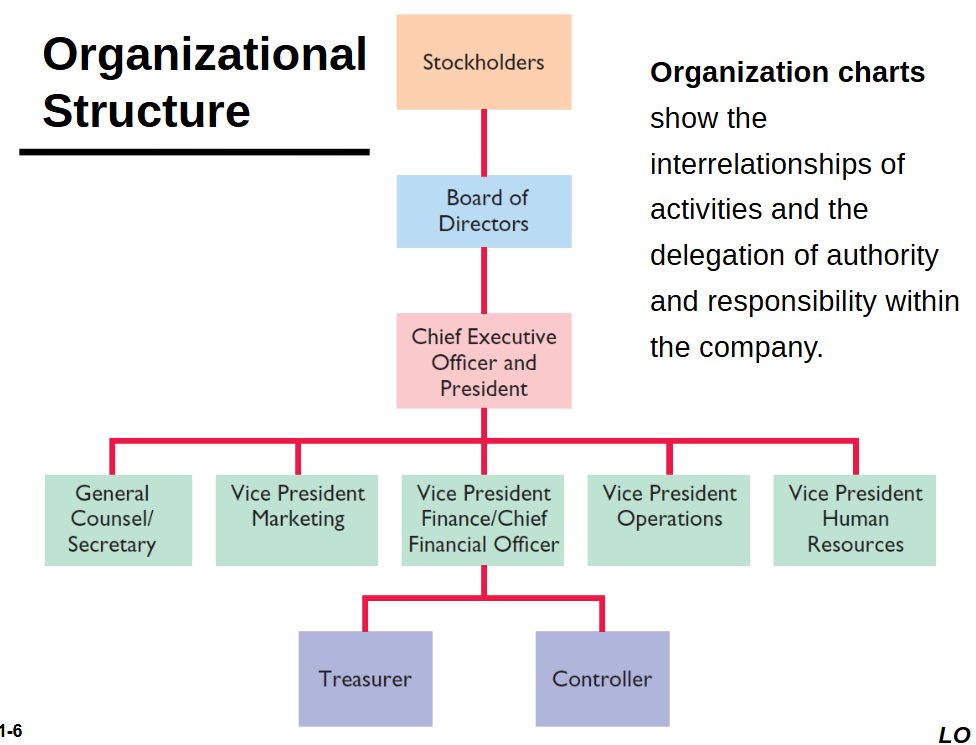
Questions managers ask
What costs are involved in making a product or providing a service?
If we decrease production volume, will costs decrease?
What impact will automation have on total costs?
How can we best control costs?
Manufacturing (mfg) Process
Activities and processes that convert raw materials into finished goods (manufactured goods sold to a customer)
Comprised of DM, DL, MOH
3 Classes of Manufacturing Costs
Direct Materials (DM)
Direct Labor (DL)
Manufacturing Overhead (MOH) - catches any mfg costs that aren’t DM or DL
Raw Materials (DM or IM)
can be physically and directly associated with the finished product during the mfg process
Direct Materials (DM)
Basic materials and parts used in mfg process
i.e. leather, laces, boxes footballs go in
Indirect Materials (IM)
Part of MOH
not physically part of the finished product
impractical to trace (cost too small to account for)
Factory Labor (DL or IL)
total workforce and human effort
for operating manufacturing facility and converting raw materials into finished goods
Direct labor (DL)
(factory) employees physically and directly associated with converting raw materials into finished foods
i.e. factory workers, people all lacing, sewing, etc
Indirect labor (IL) - Part of MOH
(factory) employees with no physical association with finished product OR for which is impractical to trace costs to goods produced
i.e. factory supervisor, wages of factory maintenance, factory janitors
Manufacturing Overhead (MOH)
costs indirectly associated with the finished product
Also called factory overheard, indirect manufacturing cost, or burden
all other manufacturing costs not direct material/labor
i.e. equipment depreciation(like on the factory), utility costs for factory, rent/lease for factory
Shipping doesn’t count as MOH BUT shipping raw materials does count
Product Costs
Product Costs = Manufacturing Costs
DM, DL, MOH
Costs that are an integral part of producing the product
Recorded in an “inventory” account
Not an expense (COGS) until the finished goods are sold
Asset on balance sheet (B/S) until sold
Total Manufacturing Cost (equ)
Total Manufacturing Costs = DM + DL + MOH
i.e. Journal Entry (JE) when incurred for Product Costs
Dr Inventory
Cr Cash or Accounts Payable (A/P)
i.e. JE when product is sold for Product Costs
Move the costs from an asset on the balance sheet to an expense on the income statement (I/S)
Dr Cost of Goods Sold (COGS)
Cr Inventory (Inv)
i.e. Recording the economic benefit received from the customer for Product Costs
Dr Cash or Accounts Receivable (A/R)
Cr Sales Revenue
Period Costs
NOT Manufacturing Costs
Charged as an expense as incurred
Non-manufacturing costs (not making product)
Includes selling and administrative expenses
NOTHING to do with factory or manufacturing (mfg) process
i.e. advertising, sales, salaries, commissions, depreciation on office building or equipment, utility costs for office building
i.e. JE when incurred (no other b/c paid) for Period Costs
Dr Expense Account
Cr Cash or A/P
i.e. Record a utility bill for office building
As a normal expense because it’s a period cost
Dr utilities expense
Cr cash or A/P
i.e. Utility bill for the factory
MOH (asset) doesn’t go on the B/S but will later be put on it
Dr MOH
Cr cash or A/P