tests & experiments; a&p lab practical 2
 Call Kai
 Learn
 Practice Test
 Spaced Repetition
 Match
 Flashcards
 Knowt Play
1/34

Earn XP
Description and Tags
(Maitra Lab)
35 Terms
Purpose of the blind spot test
Demonstrates the optic disc, the part of the retina with no photoreceptors
Key finding in the blind spot test
The dot disappears when its image falls on the blind spot
Purpose of the Snellen eye chart
Tests visual acuity (sharpness of vision)
Normal visual acuity on the Snellen chart
20/20
Below-normal visual acuity on the Snellen chart
20/40 or any ratio with a value less than one
Better-than-normal visual acuity on the Snellen chart
20/15
Purpose of the astigmatism chart
Detects uneven curvature of the refracting surfaces (cornea or lens)
Normal finding on the astigmatism chart
All radiating lines appear equally dark and distinct
Abnormal finding on the astigmatism chart
Some or all lines look blurred or lighter than others, indicating astigmatism
Purpose of the depth perception test
Tests binocular vision and the ability to judge depth
Key observation in the depth perception test
Lining up the arrows is easiest with both eyes open; with one eye covered, alignment is poorer
Purpose of the ophthalmoscopic exam
Lets the examiner view the interior of the eye, including the fundus and optic disc
Key sign you are in the right spot with the ophthalmoscope
A red circular area (the red reflex) appears
Ophthalmoscope: patient needs a convex (red, positive) lens
Hyperopia (farsightedness), if the examiner's eyes are normal
Ophthalmoscope: patient needs a concave (black, negative) lens
Myopia (nearsightedness), if the examiner's eyes are normal
Key precaution during the ophthalmoscopic exam
The subject should not look directly into the light
Purpose of the otoscope
Examines the external acoustic meatus and the tympanic membrane (eardrum)
Purpose of the Weber test
Distinguishes conduction deafness from sensorineural deafness
Weber test: normal result
The tone is equally loud in both ears
Weber test: sound louder in one ear
Conduction deafness in that ear (the skull bone conducts the sound)
Weber test: sound heard only in one ear
Sensorineural deafness in the other ear; the tone is heard in the unaffected ear
Purpose of the Rinne test
Compares air-conduction and bone-conduction hearing
Rinne test: positive (+) result
Subject hears the fork by air conduction after bone conduction fades, so hearing is normal
Rinne test: negative (-) result
Subject hears the fork by bone conduction after air conduction fades, indicating conduction deafness
Purpose of the Romberg test
Assesses equilibrium and the function of the dorsal column of the spinal cord
Key thing to watch for in the Romberg test
Swaying (side-to-side or front-to-back), compared between eyes open and eyes closed

whats the name of this test? what’s it for?
snellen eye chart; visual acuity
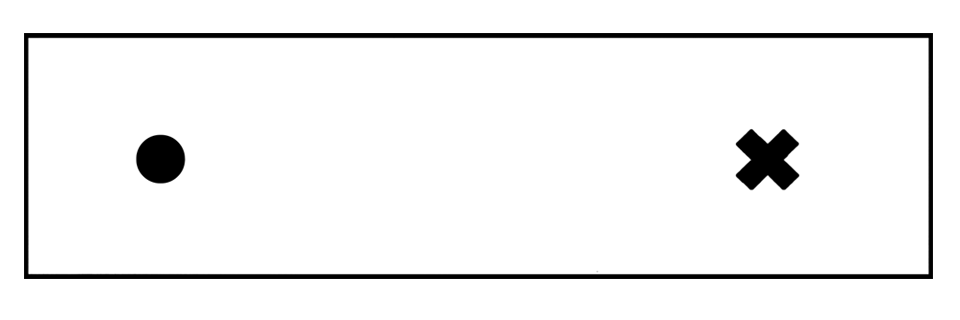
what’s this used for?
blind spot test
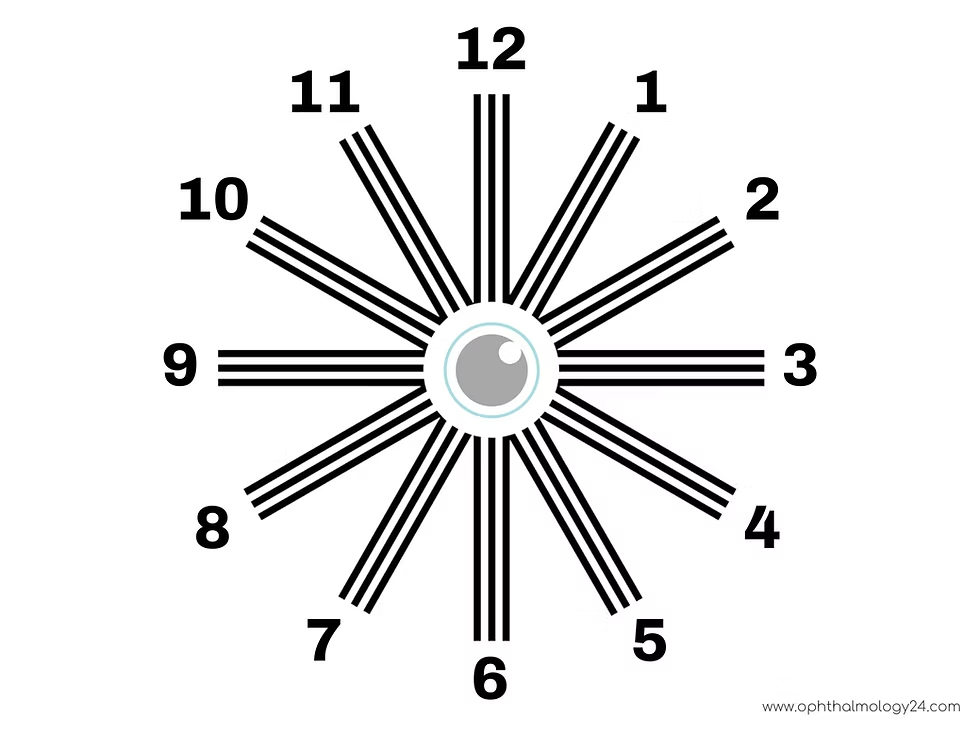
what’s the name of this test?
astigmatism test
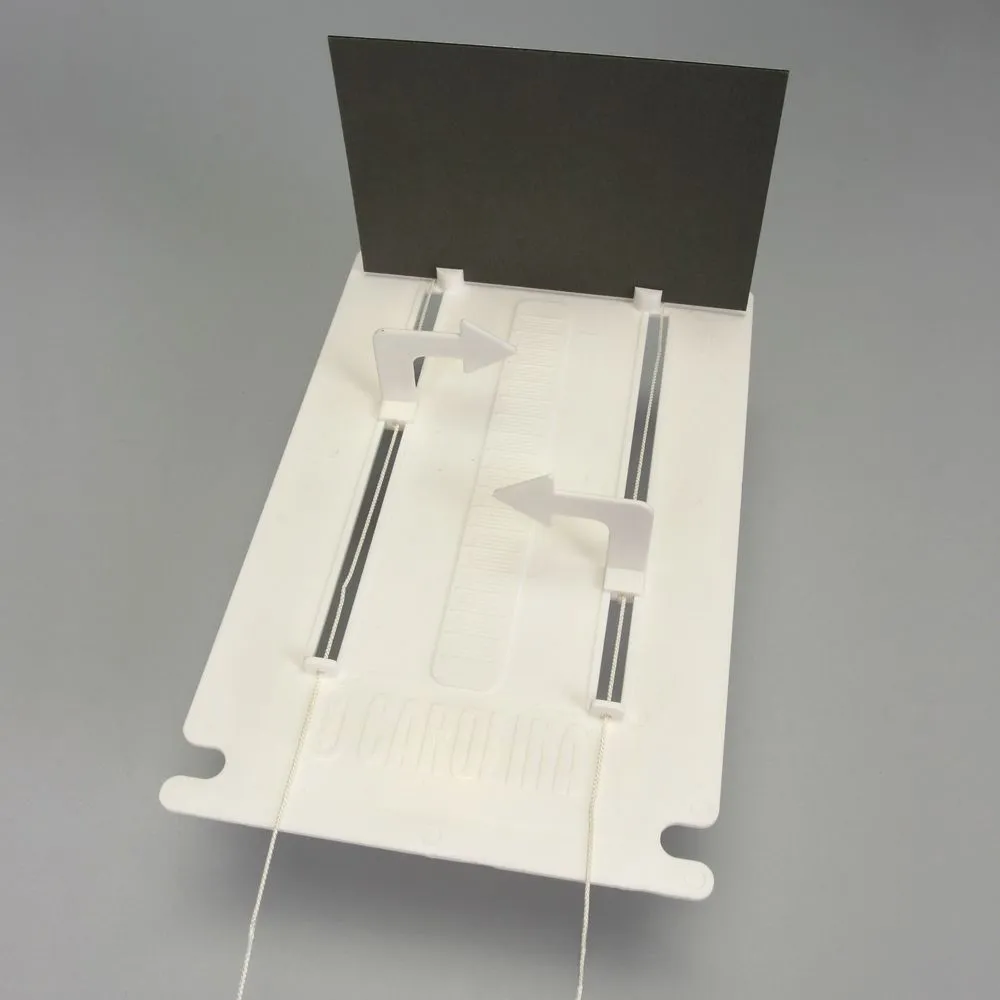
what’s this test?
depth perception test

what testing instrument is this?
ophthalmoscope (to check eyes)

what testing instrument is this?
otoscope (to check ears)

what test is this?
weber test

what test is this?
rinne test
what is the ideal Hz of a tuning fork for the weber and rinne tests?
512 Hz; but 256 Hz is okay as well if 512 Hz isnt available