Final Exam, Genetics/ Biol 2153 Final- Larkin
 Call Kai
 Learn
 Practice Test
 Spaced Repetition
 Match
 Flashcards
 Knowt Play
1/135

There's no tags or description
Looks like no tags are added yet.
136 Terms
The wobble hypothesis
Francis Crick
Telomerase is only made in immortal cells: gametes and stem cells
Cancer cells often reactivate telomerase and often have longer telomeres
The absence of telomerase in most somatic cells may contribute to aging (telomeres become shorter = speed up aging)
Cells do not contain reverse translation so any modifications made to a protein will not cause an inherited modification in the genome
Watson and Crick confirmed the triplet code of DNA, theorized the existence of an adapter molecule (tRNA), and proposed the central dogma of molecular biology, that information travels from DNA to RNA to protein
Central dogma concept relates to the "no inheritance of acquired characteristics" concept (giraffes do not get their long necks from stretching-Lamarck idea)
Lamarck coined the term "biology"
Prokaryotic genes are transcribed and translated within the same cellular compartment (no nucleus)
eukaryotic genes are transcribed and translated in separate compartments separated by the nuclear membrane
Eukaryotic gene expression involves additional RNA processing (RNA splicing)
snRNA, rRNA, tRNA, and mRNA are all encoded by gene and are all transcribed
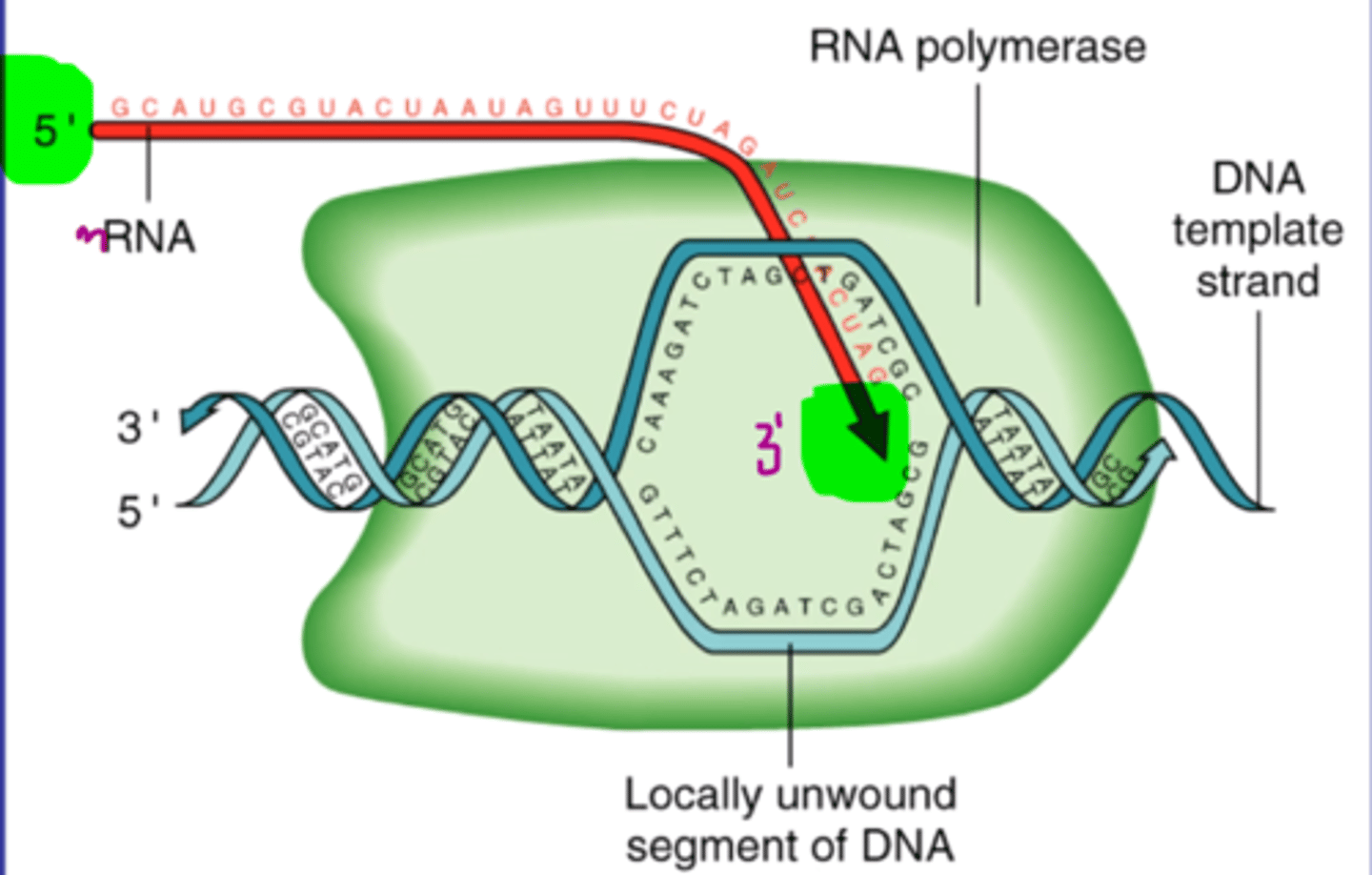
the template strand or noncoding is the complementary strand of the sequence that will be in the RNA
The nontemplate or coding strand matches the Sense RNA strand
Difference between RNA polymerase and DNA polymerase:
-RNA polymerase uses NTPs (ribonucleotides) not dNTP's
-RNA polymerase does not need a primer
RNA polymerase creates a bubble of unwound DNA
5' prime end of mRNA is made first
Initiation (transcription) is the step where most regulation occurs
the DNA sequences required for initiation of transcription
promoter
prokaryotic transcription require -10 sequence and -35 sequence
sigma factor protein binds to the minus -35 sequence and directs RNA polymerase to recognize -10 sequence to start transcription
fewer hydrogen bonds (A and T regions) make it easy to pull apart (-10 sequence)
RNA polymerase adds first nucleotide at +1
Specificity of promoters is due to sequence-specific DNA binding proteins (transcription factors)
Eukaryotic transcription initiation requires basal transcription factors and regulatory transcription factors
eukaryotic promoter for transcription is the TATA box at position -25
other binding sites in eukaryotic transcription are CAAT, GC, and octamer boxes
TATA binding protein (TBP) is a component of basal transcription factor called TFIID that binds the TATA box and plays crucial role in assembling the collection of basal transcription factor to attract RNA polymerase
HIV life cycle
Attachment/Binding (CCR5 antagonist) - maraviroc
Fusion (fusion inhibitors) -Enfuvirtide (not widely used)
Reverse Transcription
-NRTI - Abacavir, didanosine, emtricitabine, lamivudine, stavudine, tonofovir, zalcitabine, zidovudine
-NNRTI - delavirdine, efavirenz, nevirapine, etravirine, rilpivirine
Integration (Integrase Inhibitors -gravir (raltegravir, dolutegravir, elvitegravir))
Replication
Assembly
Budding (Protease Inhibitors -Atazanavir, Fosamprenavir, Indinavir, Lopinavir/Ritonavir, Nelfinavir, Saquinavir, Tipranavir, Darunavir)
HIV
single stranded RNA genome
a lipid bilayer from its host cell (stolen from host)
reverse transcriptase
Watson and Crick
Developed the double helix model of DNA.
DNA
A complex molecule containing the genetic information that makes up the chromosomes.
anti parallel strands and base pairing
5 > 3
space filling model of DNA
Watson and cricks contributions:
1. double helix model
2. H bonded base pairing
3. DNA strands antiparallel
Roslind Franklin discovered:
the helix structure of DNA via X-ray diffraction
1. helical structure
2. distance between bases = 0.34 nm
3. repeat distance = 3.4 nm
genome size
The amount of DNA contained in one copy of a genome
eukaryotes have larger genomes than prokaryotes
-E. coli = 1 mm long genome
-Human genome = 2,000 mm long (diploid) 2 meters
eukaryotes need greater genome compaction than prokaryotes
composition of chromatin
DNA and protein
the material eukaryotic chromosomes are composed of
DNA from individual yeast chromosomes separated by _____
gel electrophoresis
each chromosome contains a single specific linear DNA molecule
Eukaryotic dna
unwinds in multiple areas as DNA is replicated
linear
DNA in super coils around nucleosomes
Nucleosome
repeating subunit of chromatin fibers, consisting of DNA coiled around histones
nucleosome core
4 histones (H2A, H2B, H3, H4) - 2 copies of each
and in an incomplete nucleosome = Histone H1
146 bp of DNA
Human metaphase chromosome
30 nm fivers are cold of nucleosomes
giving many levels of compacting DNA into chromosomes.
Nucleus found to contain
lots of large, acidic polymer rich in P, N, and carbohydrate- DNA
yet, seemed less structurally complex than protein, and most believed protein was the genetic material
F. Griffith
discovered genetic transformation in Streptococcus pneumonia
something in heat-killed (dead) bacteria could change phenotype of live bacteria
Oswald Avrey
set out to identify this "transforming substance"
Avery, MacCleod, and McCarty:
DNA is the transforming substance, not protein or RNA, & therefore DNA is probably the genetic material
When was bacteria and their viruses (bacteriophage) used (started to be used) in genetics
in the 1940s and 50s
life cycle of bacteriophage
entry of the nucleic acid causes the cessation of host cell DNA replication and protein synthesis
the host cell machinery is used for viral replication and synthesis of viral proteins
spontaneously assembly
cell lysis
Early in infection: virus takes over cell
Late in infection: production of new virus particles
Martha Chase and Alfred Hershey
discovered that DNA is the hereditary material in viruses
Provided more evidence DNA was the genetic material
Hershey-Chase Experiment
determined that DNA is the genetic material
Based on:
DNA has phosphorous but no sulfur
protein has sulfur, but try little phosphorous
Protein was labelled with Sulfur while DNA was labeled with Phosphorous
Only DNA gets into cell to replicate
human immunodeficiency virus (HIV), an RNA virus
Lipid bilayer
Reverse transcriptase in core
RNA genomes
the HIV life cycle
1. virus attaches to CD4 receptor (and other receptors) on hist cell by gp 20
2. viral RNA genome is transcribed into DNA by reverse transcriptase
3. Viral DNA is integrated into host genome
4. Integrated viral genome is transcribed into HIV genomic RNA and HIV mRNA
5. HIV particles are assembled and released from the cell by budding
note on the HIV lifecycle
1. reverse transcription of RNA genome --> DNA
2. Integration of viral DNA into host genome
3. Production of viral mRNA, proteins, and viral RNA genome
4. Assembly of mature virus and budding from cell surface
Nucleic acids have three main components:
1. phosphate
2. 5 carbon sugar (ribose or deoxyribose)
3. nitrogenous base
Structures of four DNA bases
know all the structures
RNA vs. DNA
ribose vs. deoxyribose, single stranded vs. double stranded, uracil vs. thymine
Structure of a Polynucleotide Chain
1. phosphodiaster linkage
2. 5' & 3' ends
Watson and Crick used 2 main lines of evidence to work out DNA structure
1. Erwin Chargaff: base ratios A=T, G=C
2. Roslind Franklin and Maurice Wilkins: X-ray diffraction of DNA fibers shows helical structure
Antiparallel strands and base pairing
strands run in opposite direction
base pairing by H-bonds
Space filling model of DNA
Watson & Crick's contributions:
1. double helix model
2. H-bonded base pairing
3. DNA strands antitparalles
5' --> 3'
3'<-- 5'
Genome sizes of organisms
Eukaryotes have larger genomes than prokaryotes
E coli genome
Human Genome
1mm long
2000 mm long (diploid (TWO meters!!)
Eukaryotes need greater genome compaction than prokaryotes!
Composition of chromatin
chromatin: the material eukaryotic chromosomes are composed of
Eukaryotic DNA is packaged into particles called
nucleosomes
DNA in supercoils around nucleosomes
Nucleosome structure
DNA is outside and histones are mainly inside
Core- four histones (H2A, H2B, H3, H4- 2 copies each)
146 bp of DNA
in an incomplete nucleosome: Histone H1
eukaryotic gene expression
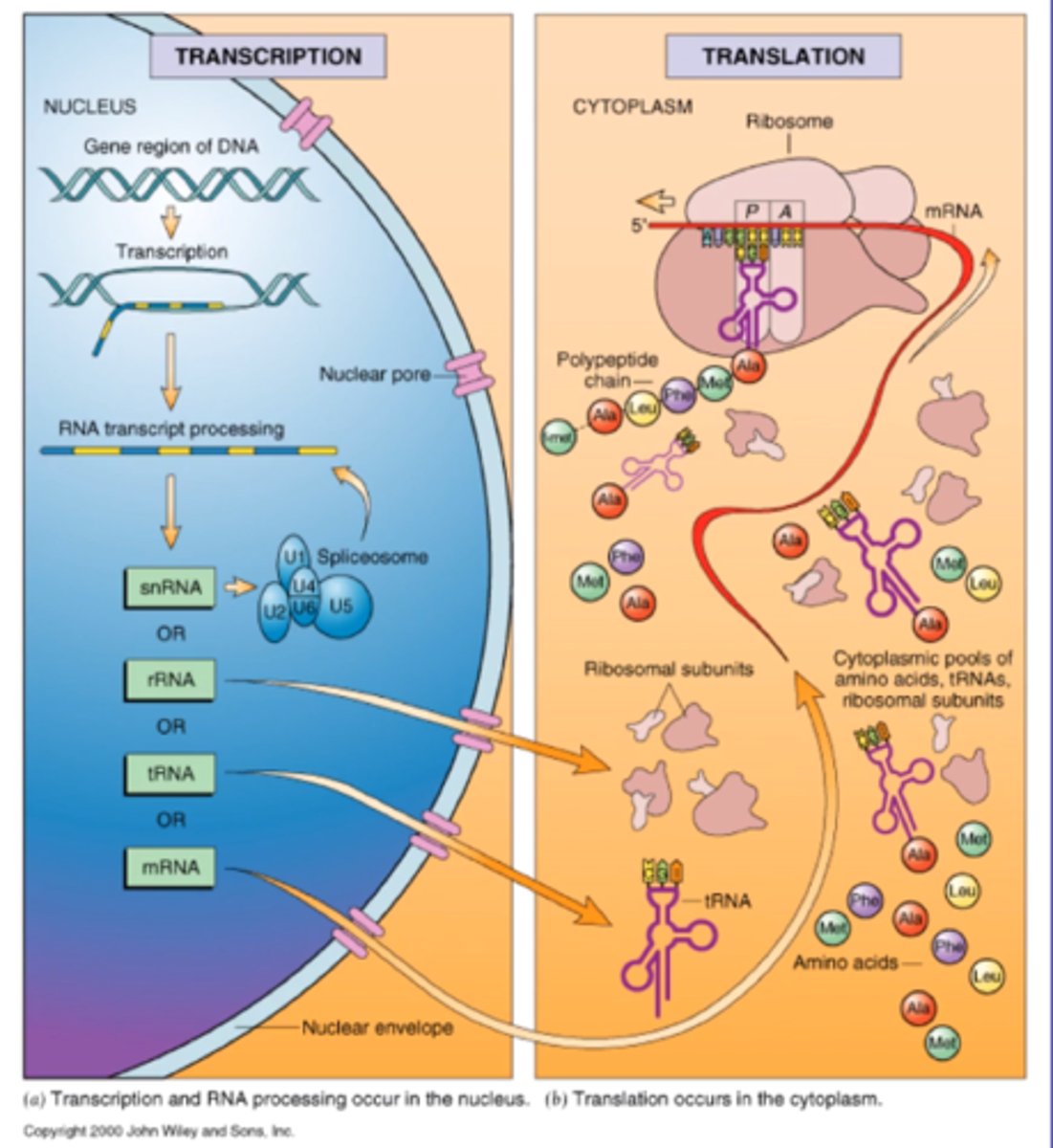
5' and 3'
The tails of histones in nucleotides are subject to reversible covalent modifications
methylation of histone tails tends to lead to closed chromatin and tightly compacted nucleosomes that are harder to transcribe and is correlated to shutting off, decreased transcription
acetylation and phosphorylation of histone tails tends to lead to open chromatin and larger gaps lead to easier, increased to transcribe
transcription factors play a role in regulating chromatin
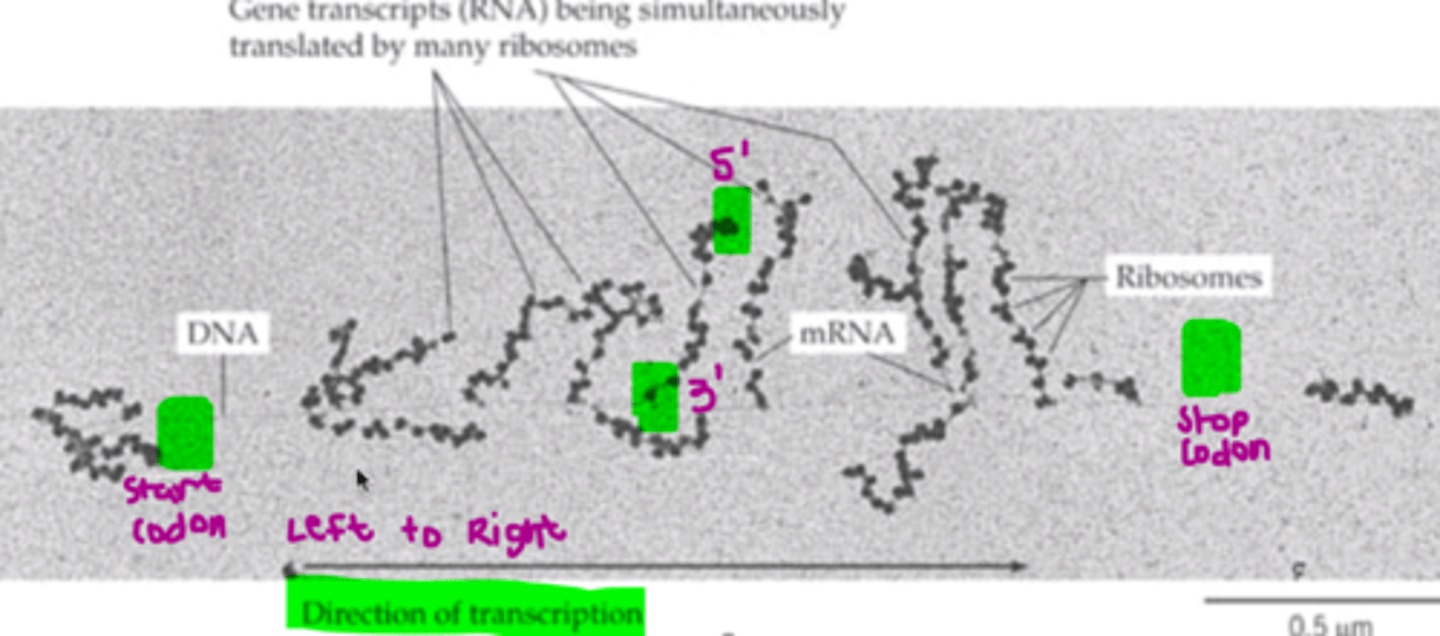
in prokaryotes, translation is occurring at the same time as mRNA transcription
prokaryotes diagram
eukaryotic modification post transcription:
1.) 7-MG Cap is added to the 5' end. 5' cap (methyG, linked to 5' to 5')
2.) Poly (a) tail is added to 3' end
3.) removal of introns (rna splicing)
Introns interrupt, but do not
scramble the DNA sequence that encodes a polypeptide
eukaryotic genes are interrupted by introns
if introns are not removed than the correct protein would not be produced
amino terminus (N-terminus)
carboxy terminus (C-terminus)
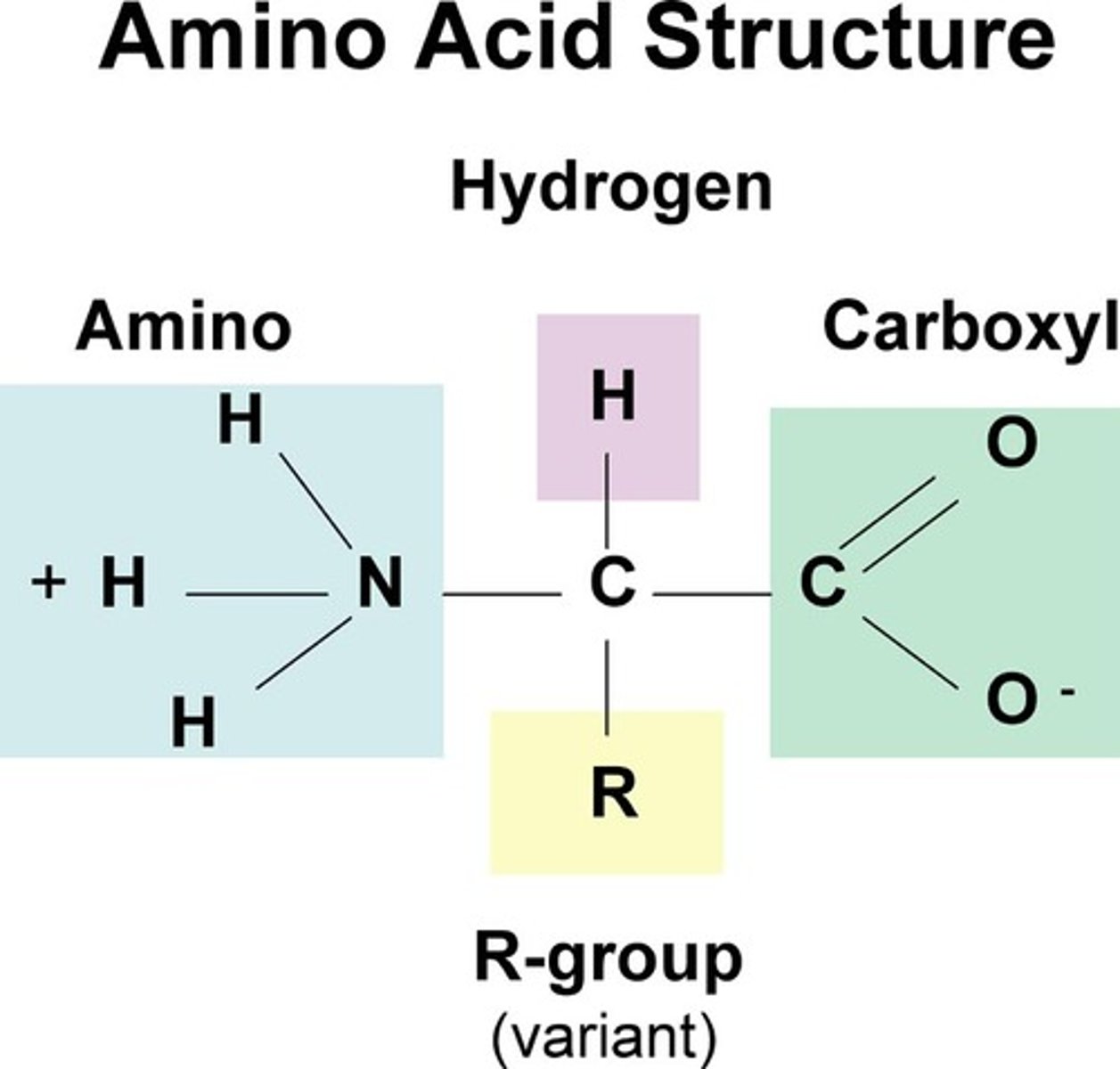
amino acids with hydrophobic (nonpolar) side chains: drives protein folding
Glycine, L-Alanine, L-Valine, L-Leucine, L-Isoleucine, L-Proline, L-Phenylalanine, L-Tryptophan, L-Cysteine
amino acids with hydrophilic (polar) side chains:
L-Serine, L-Threonine, L-Tyrosine, L-Asparagine, L-Glutamine
Amino acids with acidic side chains
aspartic acid, L-glutamic acid
Amino acids with basic side chains
L-lysine, L-arginine, L-histidine
Gene DNA sequence determine protein sequence so a single nucleotide change from a T could change a normal beta globin to a sickle cell globin substituting a glutamic amino acid that is hydrophobic (no water)
Francis Crick tried to figure out how mRNA could direct the synthesis of proteins. (tRNAs)
tRNAs act as an adaptor between nucleic acids and amino acids
Anticodon of tRNA base-pairs with codon in mRNA, in antiparallel orientation
3' end of each tRNA is charged with a specific amino acid by aminoacyl-tRNA synthetase
There are one to four different tRNAs per amino acid
there is an aminoacyl-tRNA synthetase for each tRNA
charging of a tRNA with the correct amino acid is essential for the genetic code to work
In eukaryotic translation, ribosomes (40S subunit and methionin) find the start codon by binding to the 5' cap and scanning from the 5' end of the mRNA to 3' until they find the first AUG start codon. Once that happens the 60S subunit joins to complete ribosome.
In prokaryotic translation, ribosomes recognize the start codon directly by binding to the Shine Delgarno sequence near the start codon
5'-to-3'; N terminus to C terminus
mRNA is synthesized in the ______ direction, which corresponds to the ______ of the protein.
Methionine is at the N terminus of the amino acid
Phenylaniline is at the C terminus of the amino acid
translation elongation:
1. insertion of aminoacyl-tRNA at the A site
2. Requires GTP and elongation factors
3. peptide bond formation catalyzed by 23S rRNA (growing peptide bond transfers from site P to A site
4. translocation of ribosome requires elongation factors
The Genetic Code:
1) Nucleotide triplets (codons) code for individual amino acids
2) Code is degenerate, more than one codon per amino acid
3) Code is ordered, codons for chemically similar amino acids often similar in sequence
4) Code is nearly universal (minor changes in mitochondrial code)
the occurrence of more than one codon per amino acid is called
degeneracy
occurs when the third base may be either of the two pyridines (U or C) or either of the two purines (A or G)
partial degeneracy
any of the four bases may be present at the third position in the codon and the codon will still specify the same amino acid (ex: Valine is encoded by GUU, GUC, GUA, and GUG
complete degeneracy
order in the genetic code has evolved as a way of minimizing mutational lethality
occurs when the first two nucleotides in mRNA codon are sufficient to determine the amino acid in the polypeptide specified by the mRNA
complete degeneracy
If the G:C base pair occupies the third (3′) position of the triplet,
hydroxylamine will induce amino acid substitutions only in cases where the genetic code is NOT degenerate, that is, where the base present as the 3′ nucleotide of the codon determines its meaning. Only two codons are not degenerate at the 3′ position; they are 5′-AUG-3′ (methionine) and 5′-UGG-3′ (tryptophan)