Week 8: Air Pollution
 Call Kai
 Learn
Learn Practice Test
 Spaced Repetition
 Match
Match Flashcards
 Knowt Play
1/88

There's no tags or description
Looks like no tags are added yet.
Name | Mastery | Learn | Test | Matching | Spaced | Call with Kai | Chat |
|---|
No analytics yet
Send a link to your students to track their progress
89 Terms
What is air pollution?
A contamination of the atmospheric environment
Addition of foreign substance
A change in the normal concentration of gases in the atmosphere
The contamination must cause ____ to something or someone.
harm
All types of air pollution can be divided into ___ basic types
two
Primary air pollutants
are emitted directly into the atmosphere. For example, carbon monoxide is emitted by cars and light-duty trucks.
Secondary air pollutants
are formed within the atmosphere by chemical reactions involving precursors that are emitted into the atmosphere. Ozone a primary component of “smog” is formed by sunlight-driven reactions involving volatile organic compounds (VOC) and nitrogen oxide precursors.
Sources of air pollution:
natural
Anthropogenic
global
regional
local
indoor
natural
A normal occurrence, or something found in nature e.g., volcanoes, fires, oceans, dust pollen, plants, microbes
Anthropogenic
Done or enhanced by human activity e.g., dust, chemical processes, accidents, mining/agriculture, industry, mobile sources (transportation)
global
Global climate change, stratospheric ozone depletion
Regional
Long-Range Transboundary Air-Pollution (LRTAP), acid rain, regional smog transport
Local
Urban smog, urban air quality
Indoor
Indoor, occupational
What are the major outdoor air pollutants?
Carbon oxides
Nitrogen oxides (NO) and nitric acid (HNO3)
Sulfur dioxide (SO2) and sulfuric acid (H2SO4)
Particulate Matter (PM)
Ozone (O3)
Volatile organic compounds (VOCs)
Carbon Oxides
Carbon monoxide (CO)
Carbon dioxide (CO2)
Sources:
Human health and environmental impact
Nitrogen oxides (NO) and nitric acid (HNO3)
Sources:
Acid deposition
Photochemical smog
Human health and environmental impact
Sulfur dioxide (SO2) and sulfuric acid (H2SO4)
Sources
Human health and environmental impact
Particulate Matter (PM)
Suspended particulate matter (SPM)
Fine
Ultrafine
Ozone (O3)
Human and environmental impact
Volatile organic compounds (VOCs)
Hydrocarbons and terpenes
Sources
Human and environmental impact
Chemical Reactions That Form Major Outdoor Air Pollutants
*don’t need to memorize
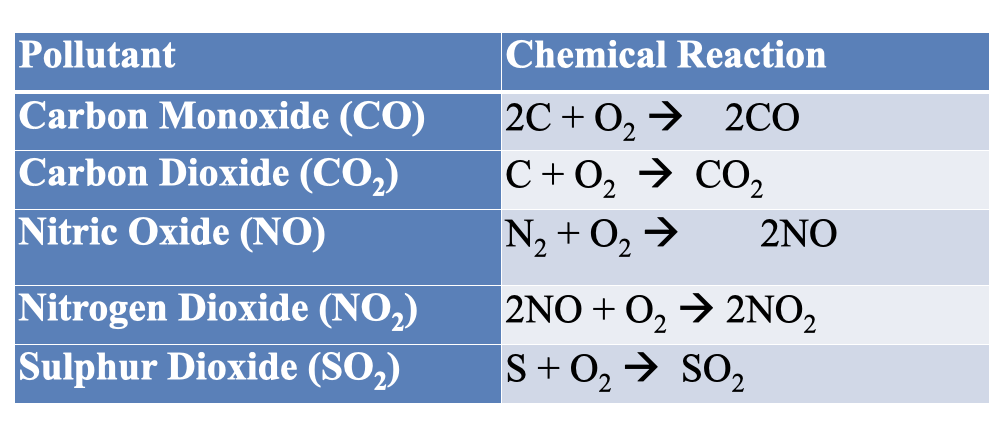
Air pollutant impacts
Smog formation
Human health
Ecosystem health
Acidification (acid rain)
Greenhouse effect
Ozone depletion
The big five air pollutants in Canada (Criteria pollutants)
Nitrogen oxides
Sulphur oxides
Particulate matter
Carbon monoxide
Volatile organic compounds
Air Quality Criteria:
labels linking dose and degree of harm
gives description of AQ (“good”, “unhealthy”)
Air Quality Standard:
maximum concentration associated with protecting public health and welfare
basis of law and regulation
_ million premature deaths due to air quality
7
The ________________ on Canada’s National Ambient Air Quality Objectives (NAAQOs) enacted in 1971 is the basis for air quality guidelines in Canada
Federal Clean Air Act
The Act gave the federal government the authority to:
Conduct a national program of air-pollution surveillance;
Establish air-quality objectives (targets).
The job of regulating air pollutants in Canada is shared between the ______ and the __________________, which were meant to harmonize standards between regions.
NAAQOs
Canada-Wide Standards
Policies in Canada
The federal government works in conjunction with the provinces to set guidelines
For all intra-provincial emissions, the provinces establish their target policies
Almost all of Canada’s air pollution policies are command-and-control.
Reluctance to impose specific standards.
Regulation mostly in terms of guidelines that suggest a range of pollution targets
Objectives set at 3 different levels
The maximum desirable level
The maximum acceptable level
The maximum tolerable level
Currently only ________________ exceeds the maximum acceptable level in major urban areas in the country.
ground-level ozone
The maximum desirable level
is the long-term goal for air quality and provides a basis for an anti-degradation policy for unpolluted parts of the country and for the continuing development of pollution control technology.
The maximum acceptable level
is intended to provide adequate protection against effects on soil, water, vegetation, materials, animals, visibility, and personal comfort and well-being.
The maximum tolerable level
denotes time-based concentrations of air contaminants beyond which, owing to a diminishing margin of safety, appropriate action is required without delay to protect the health of the general population.
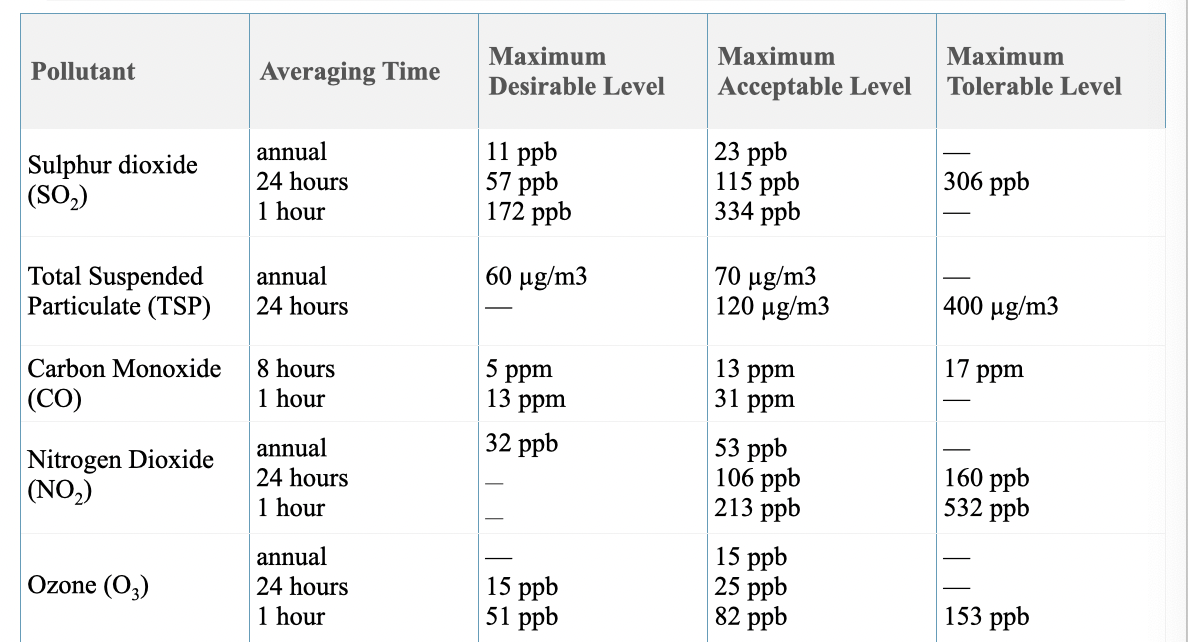
Table of National Ambient Air Quality Objectives & Guidelines in Canada
*do not have to memorize
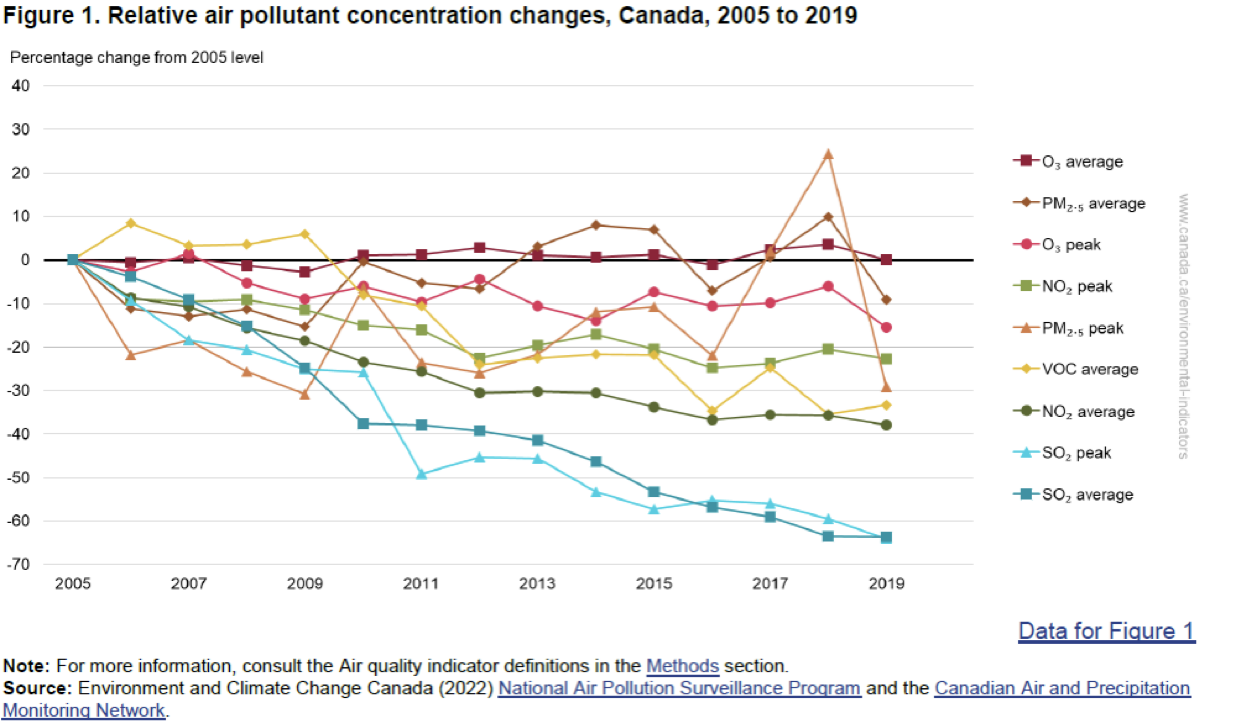
Relative Air pollutant concentrations changes, Canada, 2005 to 2019
*notice peak at 2017 = wildfires
Air Quality Health Index
(AQHI) is a public information tool that is used by Canadians to protect their health on a daily basis from the negative effects of air pollution.
The AQHI has been developed by Health Canada and Environment Canada, in collaboration with the provinces and key health and environment stakeholders.
The AQHI is a scale that measures the __________ associated with local air pollution levels.
health risk
The AQHI helps individuals ______________________ by providing information on the level of risk associated with pollution levels and identifying those at risk.
make decisions to protect their health
Features of AHQI:
Health messages customized to each category for both the general population and the ‘at risk’ population.
Current hourly AQHI readings and maximum forecasted values for today, tonight and tomorrow.
Enable individuals to assess their own health risk based on symptoms they experience, even if they have no known health problems.
Once individuals learn what Index reading triggers their own symptoms, they can use the Index forecasts to plan their outdoor activities.
How is the AQHI calculated?
The AQHI is calculated based on the relative risks of a combination of common air pollutants which are known to harm human health.
pollutants included in calculating AQHI:
Ozone (O3) at ground level,
Particulate Matter (PM2.5/PM10) and
Nitrogen Dioxide (NO2).
Ground-level Ozone (O3)
is formed by photo-chemical reactions in the atmosphere.
It can be a major component of smog during the summer, especially during hot sunny weather, but is generally low in the winter time.
Air pollutants that contribute to ozone formation are emitted by vehicles, industrial facilities and natural sources such as vegetation.
Under some weather conditions, ozone can also be transported down to the ground from the ozone-rich upper atmosphere.
Particulate Matter (PM2.5)
Is a mixture of tiny airborne particles that can be inhaled deep into the lungs.
PM particles can either be emitted directly by vehicles, industrial facilities or natural sources like forest fires, or formed indirectly as a result of chemical reactions among other pollutants.
Particulate matter can reflect both local air pollution sources or widespread air pollution episodes.
Nitrogen Dioxide (NO2)
Is released by motor vehicle emissions and power plants that rely on fossil fuels.
It contributes to the formation of the other two pollutants.
Nitrogen dioxide is often elevated in the vicinity of high traffic roadways and other local sources.
All three:
can have effects on human health even as a result of short-term exposure. All of these pollutants can pose health risks at low levels of exposure, especially among those with pre-existing health problems.
In the development of the AQHI, a formula that combined these three pollutants was found to be the best indicator of the health risk of the combined impact of the mix of pollutants in the air.
The AQHI is measured on a scale ranging from _-_
1-10+
The ________ the number, the greater the health risk associated with the air quality.
HIGHER
The AQHI index values are also grouped into health risk categories:
AQHI Value | Risk Level |
1 to 3 | Low health risk |
4 to 6 | Moderate health risk |
7 to 10 | High health risk |
10+ | Very high health risk |
Low 1-3 (At risk vs general population)
At risk:
Enjoy your usual outdoor activities.
General population:
Ideal air quality for outdoor activities.
moderate 4-6 (At risk vs general population)
At risk:
Consider reducing or rescheduling strenuous activities outdoors if you are experiencing symptoms.
General population:
No need to modify your usual outdoor activities unless you experience symptoms such as coughing and throat irritation.
High 7-10 ( At risk vs general population)
At risk:
Reduce or reschedule strenuous activities outdoors. Children and the elderly should also take it easy.
General population:
Consider reducing or reschedule strenuous activities outdoors if you experience symptoms such as coughing and throat irritation.
Very High 10+ (At risk vs general population)
At risk:
Avoid strenuous activities outdoors. Children and the elderly should also avoid outdoor physical exertion.
Reduce:
Or reschedule strenuous activities outdoors, especially if you experience symptoms such as coughing and throat irritation.
AQHI issues and limitations
Monitoring capacity and missing data
no monitor/sparse distribution of air quality monitors
short term monitor lapses
Representativeness of monitoring
ie. we know microvariation is a risk, but model is based on macrolevel surveillance
Where Does PM Originate?
Sources may emit PM directly into the environment or emit precursors such as sulfur dioxide (SO2), nitrogen dioxide (NO2), and volatile organic compounds (VOCs), which are transformed through atmospheric chemistry to form PM.
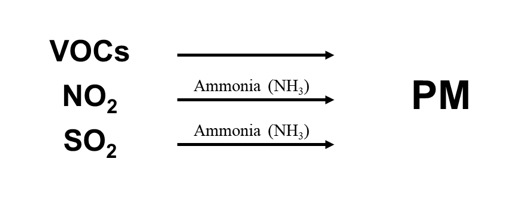
Sources of PM and PM Precursors
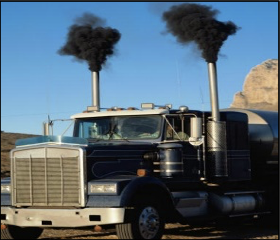
mobile sources
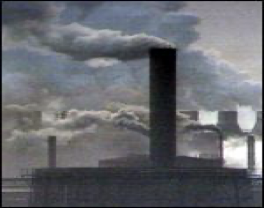
Stationary sources
area sources
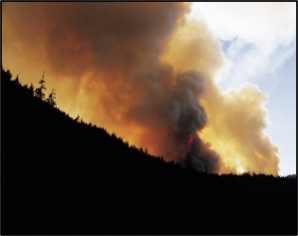
natural sources
Mobile sources
(vehicles)
VOCs, NO2, PM
Stationary sources
(power plants, factories)
NO2, SO2, PM
Area Sources
Area Sources
(drycleaners, gas stations)
VOCs

Natural Sources
(forest fires, volcanoes)
PM
Determinants of PM Concentration
Weather patterns
Wind
Stability (vertical movement of air)
Turbulence
Precipitation
Topography
Smokestack height and temperature of gases
Nearby natural and built structures may lead to downward moving currents causing aerodynamic or building downwash of smokestack emissions.
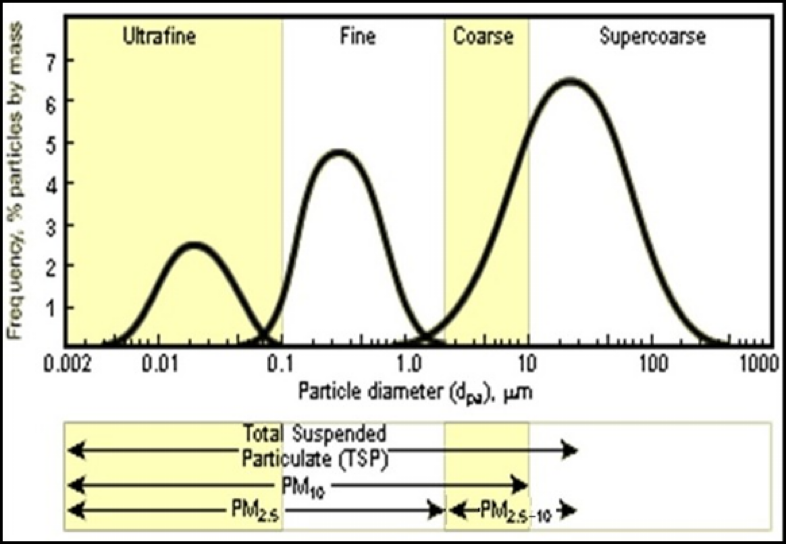
Particulate Matter: Aerodynamic Diameter
Establishing a particle size definition for irregularly shaped particles necessitates the use of a standardized measure referred to as the aerodynamic diameter, measured in microns or micrometers (μm), a unit equal to one millionth of a meter.
The graph shows the distribution of the _ main particle size categories, with the categories
4
By comparison, a human hair is approximately 70 microns in diameter.
Why is size important in Particulate matter
Size is important to the behaviour of PM in the atmosphere and human body and determines the entry and absorption potential for particles in the lungs.
Particles larger than 10 mm
Are trapped in the nose and throat and never reach the lungs.
Particles 10 mm in diameter or less
Are of most concern for their effects on human health.
Particles between 5 and 10 mm
Are removed by physical processes in the throat.
Particles smaller than 5 mm
reach the bronchial tubes
Particles 2.5 mm in diameter or smaller
are breathed into the deepest portions of the lungs.
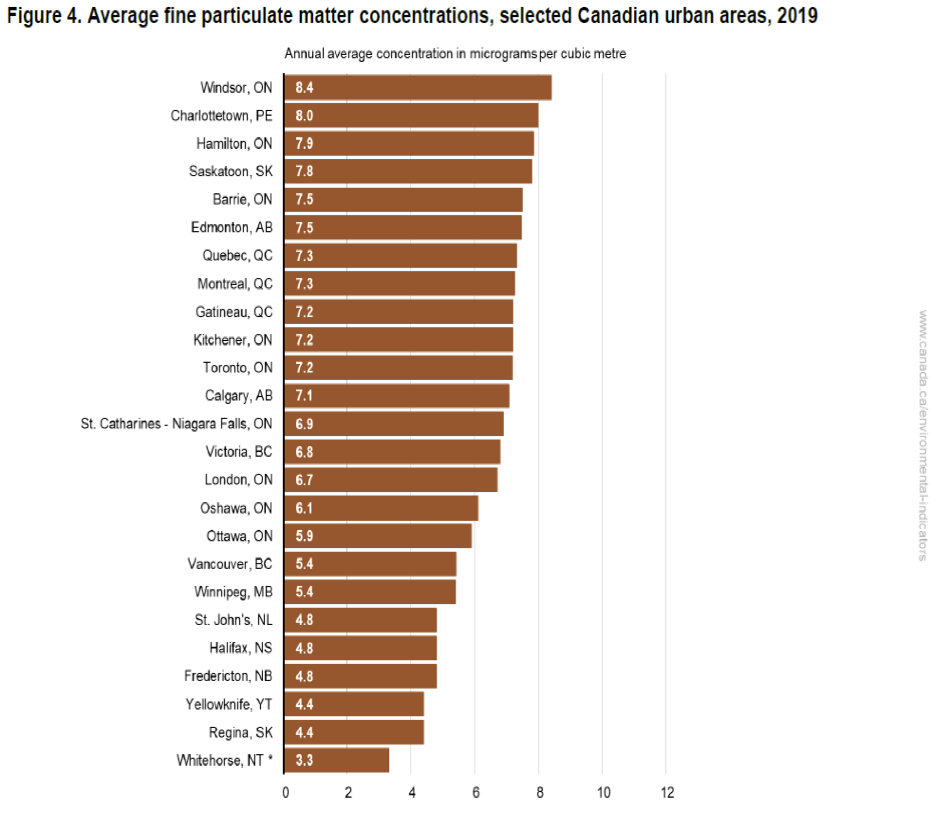
Average fine particulate matter concentrations in urban areas
Average PM2.5 concentrations in Canadian urban areas differ from one location to another and from year to year.
These differences are partly due to differences in emissions of pollutants, variations in weather conditions that influence PM2.5 formation, dispersion and regional transport and variations in transboundary flows of pollution, primarily from the United States.
Exceptional events, such as wildfires, can also impact average PM2.5 concentrations measured in urban areas.
PM2.5 concentrations in Canada
In 2019, among the selected urban areas
Windsor and Charlottetown had the highest average PM2.5 concentrations
Whitehorse and Regina and Yellowknife had the lowest concentrations
What Adverse Health Effects Have Been Linked to PM?
Premature death
Lung cancer
Exacerbation of COPD
Development of chronic lung disease
Heart attacks
Hospital admissions and ER visits for heart and lung disease
Respiratory symptoms and medication use in people with chronic lung disease and asthma
Decreased lung function
Pre-term birth
Low birth weight
Cardiovascular diseases
How Does PM Cause Health Effects?
Several theories have been advanced as to the mechanism of action. It is likely that more than one mechanism is involved in causing PM-related health effects.
Theories include the following:
PM leads to lung irritation which leads to increase permeability in lung tissue;
PM increases susceptibility to viral and bacterial pathogens leading to pneumonia in vulnerable persons who are unable to clear these infections;
PM aggravates the severity of chronic lung diseases causing rapid loss of airway function;
PM causes inflammation of lung tissue, resulting in the release of chemicals that impact heart function;
PM causes changes in blood chemistry that results in clots that can cause heart attacks.
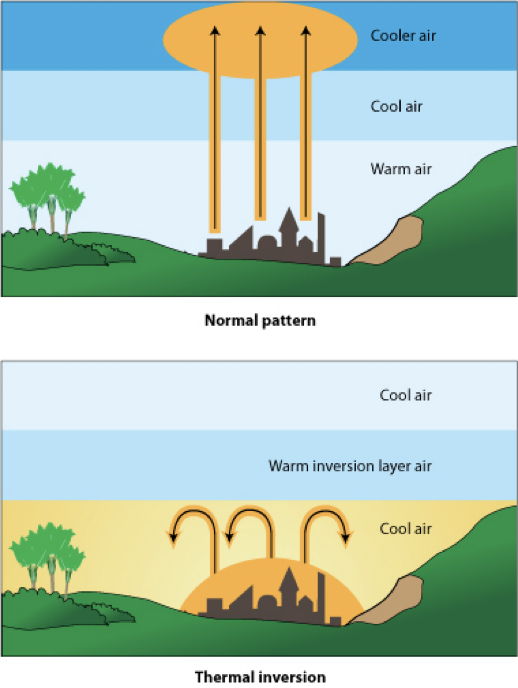
What is an inversion?
An inversion is an extremely stable layer of the atmosphere that forms over areas.
The role of inversions
Temperature inversions trap pollutants close to the ground.
These inversions involve layers of hot air sitting above cooler air near ground level.
When particles accumulate in the air layer, they are unable to rise into the atmosphere where winds will disperse them.
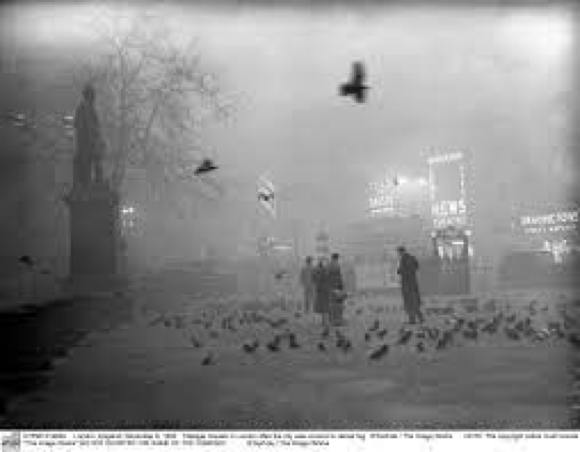
1930: Meuse River Valley, Belgium
An inversion led to a high concentration of pollutants during a period of cold, damp weather
Main sources: zinc smelter, sulfuric acid factory, glass manufacturers
60 deaths recorded
1948: Donora, Pennsylvania
Similar inversion to Meuse River Valley
Main sources: iron and steel factories, zinc smelting, and an acid plant
20 deaths observed
1952: London
Killer fog
Primary source: domestic coal burning
4,500 excess deaths recorded during week- long period in December
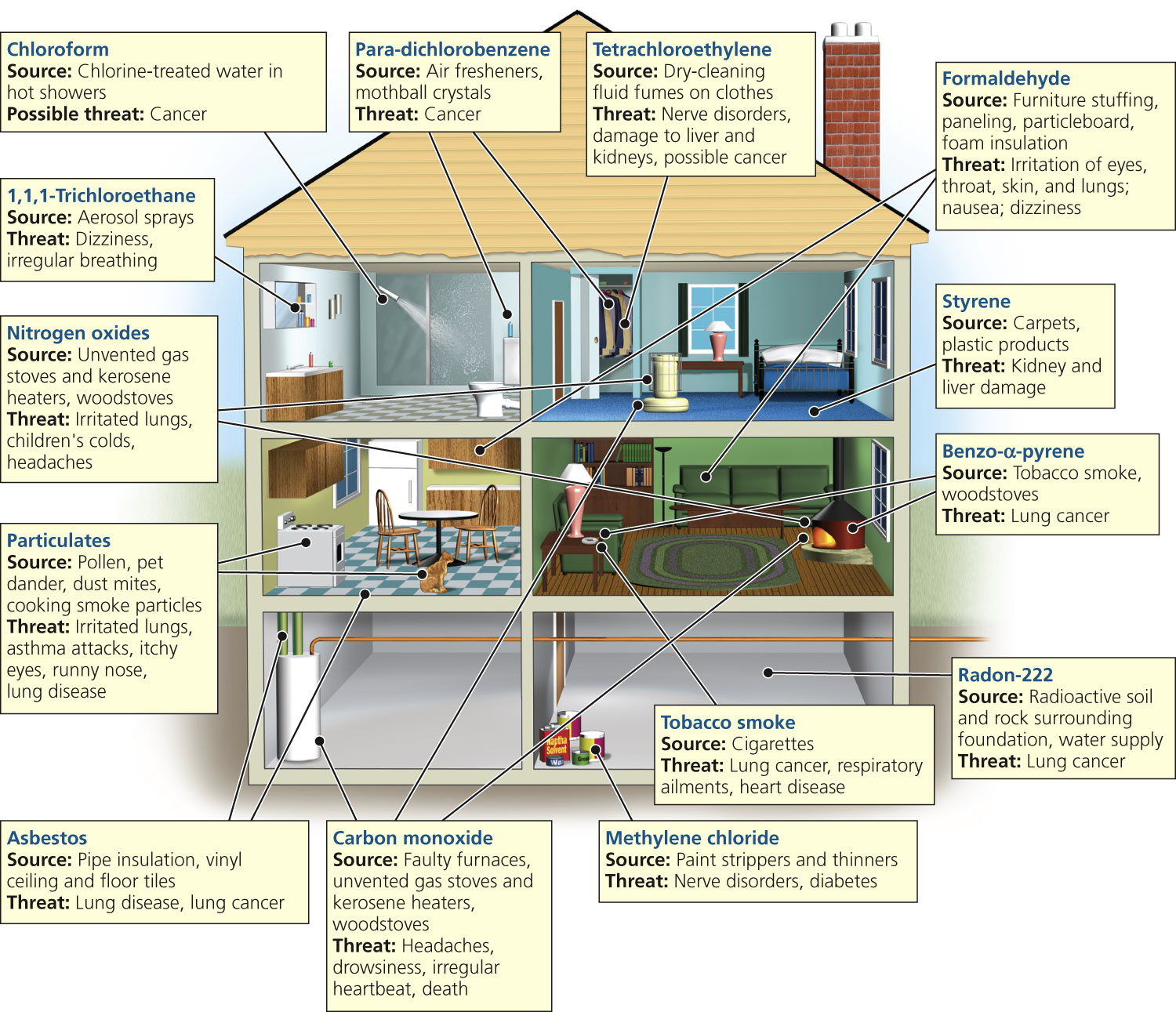
Indoor Air pollutants
Asbestos from fireproofing and floor tiles
CO from smoking, space heaters, stoves
Formaldehyde from carpets, paneling, tiles
Particulates form dusting, smoking, fireplaces
NOX from stoves
Ozone from photocopiers
Radon diffused from the soil
SO2 from space heaters
Volatile organic compounds (VOCs) from smoking, paints, solvents, cooking
The most threatening indoor air pollutants are:
smoke and soot from the burning of wood and coal in cooking fires (mostly in less-developed countries), cigarette smoke, and chemicals used in building materials and cleaning products.
Biological Contaminants:
Mold and Mildew
Dust
Indoor Air Pollutants - Developing countries
Nearly one-third of the world's population use solid fuels such as wood, animal dung, and crop residues as their primary source of domestic energy use
Cooking and heating with solid fuel on open fires or traditional stoves emits a complex mixture of organic compounds and gases, which include carbon monoxide (CO), oxides of nitrogen (NOx) and sulphur (SOx), aldehydes, polycyclic aromatic hydrocarbons (PAHs), volatile organic compounds (VOCs), chlorinated dioxins, fine particulate matter (PM), and free radicals.
Health problems associated with household air pollution (HAP)
from solid fuel/biomass fuel use includes, but is not limited to, respiratory tract infection exacerbation of inflammatory lung conditions, cardiac events, asthma, chronic obstructive pulmonary disease (COPD), low birth weight and tuberculosis.
in developed countries __________ pollution is greater than __________air pollution
indoor
outdoor
Why?
11 of the common air pollutants higher inside than outside
Greater in vehicles than outside
Health risks magnified: people spend 70–98% of their time is indoors or in cars
Who is at greatest risk from indoor air pollution?
Children under 5 and the elderly
Sick
Pregnant women
People with respiratory disorders or heart problems
Smokers
Factory workers
4 most dangerous indoor air pollutants
Tobacco smoke
Formaldehyde
Radioactive radon-222 gas
Very small particles
Other possible indoor air pollutants
Pesticide residue
Pb particles
Living organisms and their excrements
E.g., Dust mites and cockroach droppings
Airborne spores of molds and mildews
*sick building syndrome
Types of Air Pollution and Health Studies
Ecologic study – Examines the association between exposure rates and disease rates in a group over time. In ecologic studies, the exposure and disease status of individuals in the group are unknown. Therefore, one limitation of this study design is that those exposed and those with the disease may not be the same individuals.
Time-series study – Analyzes a series of data points that results from repeated measurements over time. Adjustments are made for cyclical or seasonal trends such as daily peaks in PM levels or annual influenza trends in order to identify larger trends that demonstrate the association between exposure and disease.
Cohort study – The health status of individuals in a cohort (i.e., group of study participants) whose exposure status is known at the start of the study is monitored over time to see if there is an association between their exposure and particular health outcomes.