Final exam review
 Call Kai
 Learn
 Practice Test
 Spaced Repetition
 Match
 Flashcards
 Knowt Play
1/11

There's no tags or description
Looks like no tags are added yet.
12 Terms
Urban plants
Pollution: the urban atmosphere
Dust
soot, cement, tiny particles formed from emissions of sulfur dioxide and other coal burning
natural resources
Urban soils
lack of leaf litter/organic layer
compaction
low water-holding capacity→ due to loss of organic matter and compaction
chemical pollution, heavy metals
erosion
de-icing salts
fill
Hydrology
higher average precipitation than adjacent rural area
5-10% more precipitation and more cloud/fog than surrounding urban areas
impervious surfaces: roads, buildings, prevent water infiltration ( increase run-off)
flooding increases in the city and downstream
less water retained in soils→
ecosystem services
provisioning
regulating
cultural
supporting
ecosystem functions of urban plant
temperature reduction
food/habitat for wildlife
eorsion and flood control
aesthetic
nurtrinet asborpition in wetlands
soil building on degraded land
colonization of bare ground
carbon sequesteration
oxygen production
street trees
drivers of evolutionary change
pollution
human activities
biotic invasion
abiotic factors
water stress
temperature
salinity→ street salt; irrigation
pollution
biotic factors:
pollinators (high) depends on surrounding landscape
parasites
fragmentation (low) depends on surround landscape
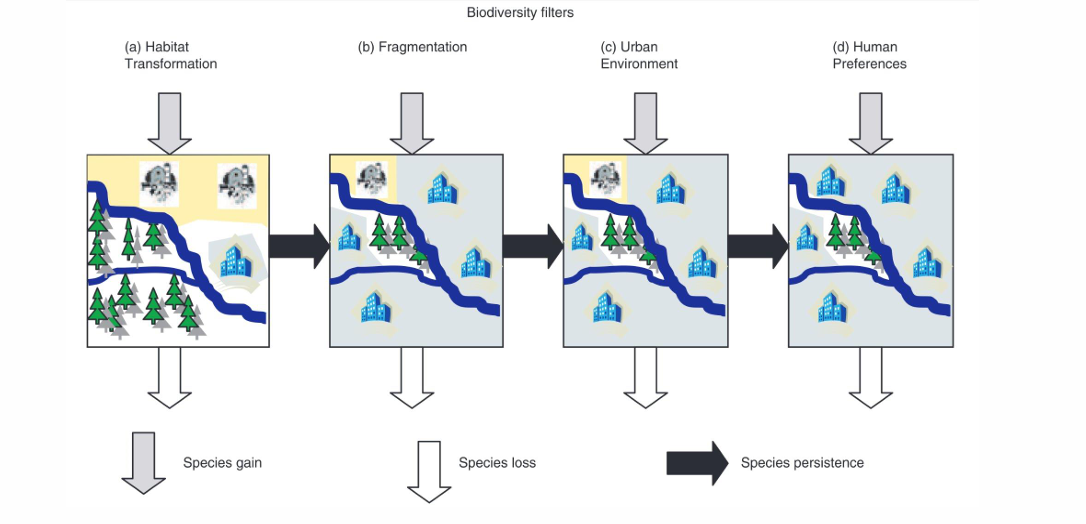
what influences urban plant communities?
habitat transformation→ fragmentation→ urban environment→ human preferences

Water stress
caused by compacted soils; runoff vs permeation of rainwater
water stress response:
wilting
poor growth
leaf drop
lower overall fitness
more susceptible to disease; herbivory