03physical growth, maturation and aging
 Call Kai
 Learn
 Practice Test
 Spaced Repetition
 Match
 Flashcards
 Knowt Play
1/25

There's no tags or description
Looks like no tags are added yet.
26 Terms
With which steps prenatal development starts and which factors influence the growth?
Starts with the fusion of an ovum and spermatozoon
genetics and extrinsic factors influence normal and abnormal embryonic and fetal growth
What does Epigenetics mean in the context of development?
Epigenetics refers to how development follows a genetic plan that is actively influenced and modified by environmental factors (genes x environment interaction) (e.g. crocodile eggs)
How do maternal smoking affect prenatal and infant health?
Tobacco smoke acts as a harmful extrinsic factor (teratogen). It impairs fetal nourishment/oxygenation in utero and significantly increases the risk of Sudden Infant Death Syndrome (SIDS / Plötzlicher Kindstod)
What is the protective infant head-turning reflex?
An involuntary survival reflex where a newborn placed face-down on a surface automatically turns its head to the side to keep the airways clear
In which two ways are organs and tissues growing at the fetal development?
Hyperplasia: is an increase in the absolute number of cells
Hypertrophy is an increase in the relative size of an individual cell
What are the two directions growth tends to proceed at fetal development?
!definitely exam relevant!
Cephalocaudal: is the direction of growth beginning at the head and extending toward to the lower body (this is why control overtime head and neck muscle develops first (around month 2-3) = first thing baby can do → lift neck)
Proximodistal: is the direction of growth proceeding from the body toward the extremities
What does plasticity mean at fetal development?
Plasticity, in regard, to growth, is the ability of tissue to subsume functions otherwise carried out by other tissues
How does fetal nourishment work?
(Very important)
Fetus is nourished by the diffusion of oxygen and nutrients between fetal blood and maternal blood in the placenta
blood stream of mother can’t mix with the baby’s one

How old has the mother to be so the pregnancy is called a „risk pregnancy“ and what hereditary disease is showing up more often onward these age?
35, downsyndrome
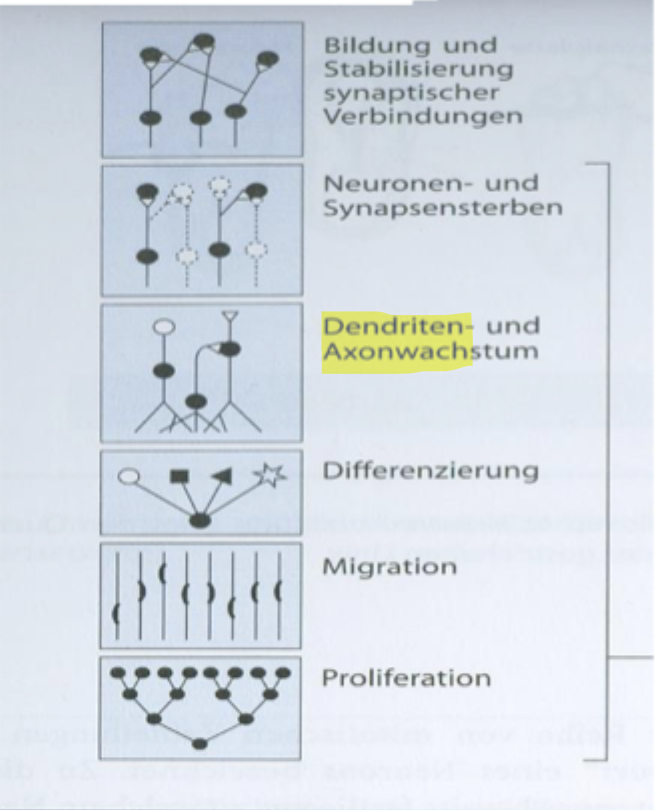
How do genes and cell differentiation shape embryonic development?
Gene Direction: Genes direct continuous development of embryo in a precise and predictable pattern.
Neural Growth: Neurons form at an average rate of 250,000 cells/min or 4000 per sec. in utero
Human brain, contains more than 100 Mrd. of neurons at birth
What is differentiation?
The process where cells become specialized to form specific tissues and organs
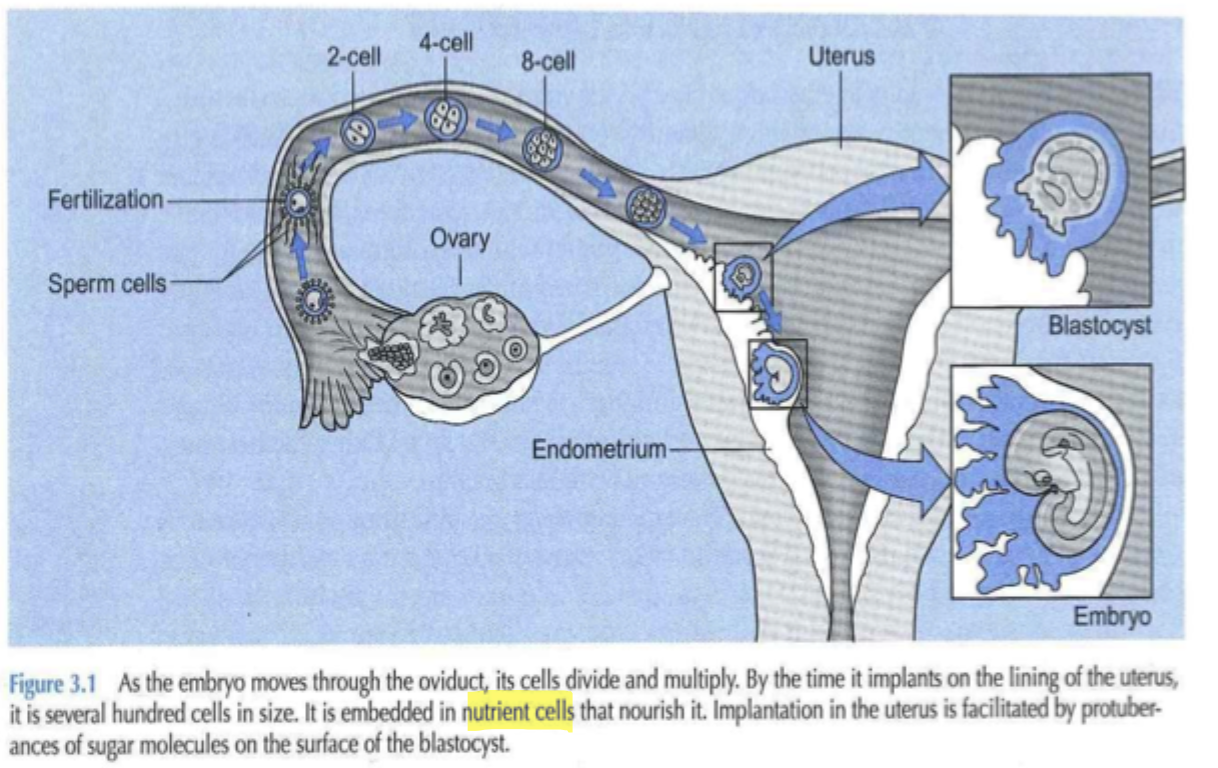
Where does fertilization occur and where does the embryo implant?
Fertilization occurs in the oviduct (fallopian tube). The dividing cell mass then travels to the uterus, where it implants as a blastocyst into the endometrium (uterine lining)
What are teratogens and which specific viruses act as hazardous extrinsic agents during prenatal development?
Teratogens are chemical agents, drugs, or viruses that cause abnormal fetal development upon exposure. Key examples include the Rubella virus (especially dangerous during the first 4 weeks of pregnancy) and Herpes viruses
What endocrine and ovarian changes characterize menopause in aging women?
Menopause is marked by the depletion of functional egg cells in the ovaries and a sharp decrease in gonadal hormones (estrogen)
What are Congenital defects at the abnormal prenatal development?
Congenital defects are anomalies present at birth, regardless of wether their causes are genetic or extrinsic
What two causes are there for Congenital defects at abnormal prenatal development?
genetics: dominant disorders occur when one parent passes on a defective gene. They can also result from new mutation or alteration/deletion of a gene during egg or sperm cell formation
Mutations can come from hazardous environmental chemicals (particulate matter, radiation mercury, nuclear), maternal age or spontaneously
Extrinsic: harmful environmental substances (teratogens) or physical conditions passing through the fetal nourishment system (if the placenta is permeable)
What are typical results out of a Congenital defect?
single or multiple malformations of an organ, limb or body region
Deformation of a body part
Disruption in development resulting fromm the breakdown of normal tissue
What are other prenatal extrinsic factors?
external/internal pressure on the infant (+pressure from another fetus in utero)
Extreme internal environmental temperature (fever)
Exposure to x-rays
Changes in atmospheric pressure (hypoxia)
Environmental pollutants (Schadstoffe)
What are the three main parts during the developmetn of a baby?
prenatal development
Abnormal prenatal development
Postnatal development
What is postnatal growth?
Postnatal growth proceeds in a precise and orderly pattern, but individual variability and not linear
What pattern does overall postnatal growth follow, and how do individual/sex differences express themselves?
Growth Pattern: Overall body growth follows an S-shaped (sigmoid) curve (rapid infant growth, steady childhood phase, adolescent growth spurt, leveling off in adulthood), the slope of the curve can vary from average
Universality vs. Variability: The sigmoid shape is universal for both sexes, but timing and slope vary individually and between sexes (e.g., girls start their adolescent growth spurt earlier than boys; boys are taller → different average value)
In which two parts postnatal growth is differ? (Relative growth)
Among body parts and body systems: some body parts must growth faster than others (in childhood: the legs growth faster than the trunk and the head)
What is the definition of physiological maturation?
Physiological maturation is the developmental process leading to a state of full function. Appearance of secondary sex characteristics during the adolescent growth spurt is a function of maturation
What are extrinsic influences on postnatal growth (+ 1e.g.)?
during periods of rapid growth, just after birth and in early childhood and early adolescence, growth is particularly sensitive to alteration by environmental factors
Catch- up growth: = recovery of growth
Catch-up growth ist recovery growth that helps the body recover some or all of the growth lost due to negative environmental influence after that influence is removed
E.g. importance of fat tissue in babies → fat tissue important for developmetn, fat is needed for the myelination of nerve cells, fat helps to protect baby against cold (thermoregulation); excessive birth weight (~5kg) maybe associated with increased health risks (e.g. diabetes), including higher risk of later metabolic problems

How does body weight and fat mass change in adulthood and aging, and how do lifestyle and sex differences play a role?
Adulthood (20–50 years): Weight gain is strongly influenced by lifestyle changes (e.g., lower activity levels). Women gain an average of 11.8 kg and men 8.2 kg
Biological Context (Women): Women naturally hold higher fat mass (10–14 kg more than men) as an energy reserve for pregnancy/lactation
Older Adulthood (After 50): Overall body weight declines due to the loss of bone and muscle tissue, even though relative fat mass continues to increase

Why does body height decrease in older adulthood, and what structural/chemical changes occur in aging bones?
Height Decrease: Height reduces due to aging/wear of tissues, specifically the compression and flattening of the intervertebral cartilage discs between the vertebrae.
Bone Mineral & Density Loss: Bones lose density (osteoporosis). While children have roughly equal parts organic (kollagen, protein) and inorganic (calcium, minerals) components, older adults have up to seven times more inorganic material in bone tissue, making bones more brittle and prone to microfractures.
Extrinsic Modifiers: Hormone levels, diet, and weight-bearing exercise strongly influence the rate of bone loss
(Elastische Anteil = organisch fehlt dadurch werden Knochen im Alter spröder, denn → Bones lose density; older bones have up to 7x more inorganic material (ratio shift), making them brittle)