Chapter 11 - DNA Replication and Recombination
 Call Kai
 Learn
 Practice Test
 Spaced Repetition
 Match
 Flashcards
 Knowt Play
1/74

There's no tags or description
Looks like no tags are added yet.
75 Terms
Bacterial Defense Mechanisms
Restriction enzymes and DNA methylation (self): ‘innate’
CRISPR/Cas: ‘adaptive’

Restriction enzymes
Cut DNA at specific recognition sequences
A restriction enzyme is a endonuclease whose activity is restricted to a specific DNA recognition sequence.
The DNA sequences recognized are usually palindromic
The cleavage can be straight across the double-helix, leading to blunt end, or staggered across the helix leading to sticky ends
DNA fragments are produced by DNA restriction
Palindromic DNA
Ex. 5’…GAATTC…3’
3’…CTTAAG…5’
Restriction enzymes
Most recognition sequences are palindromic, and restriction enzymes often cleave these sequences in an offset manner

Restriction and Electrophoresis
After separation, DNA or RNA fragments are visualized by staining with the dye ethidium bromide and examination under ultraviolet light
DNA Sequence analysis
This is the dideoxy chain termination sequencing, developed by Fred Sanger (receiving his 2nd Nobel prize).
This method is based on in vitro DNA synthesis. Tubes have all four dNTPs and a small amount of one of the ddNTP (e.g. ddATP or ddGTP, etc.).
The dideoxy nucleotides lack the hydroxyl group on both the 2’ and 3’ carbons. No more extension of DNA molecule!
In the first variation of this method, a radioactive nucleotide is added to the sequencing reaction for detection. In the second iteration, fluorescent nucleotides were used for detection.

DNA Replication Learning Goals
Understand how we came to know that DNA replication is semi-conservative
Understand the molecular basis of DNA replication
Know the enzymes and their roles
Appreciate how DNA lends itself to copying, but also recognize some of its quirks and shortcomings
A model of DNA replication
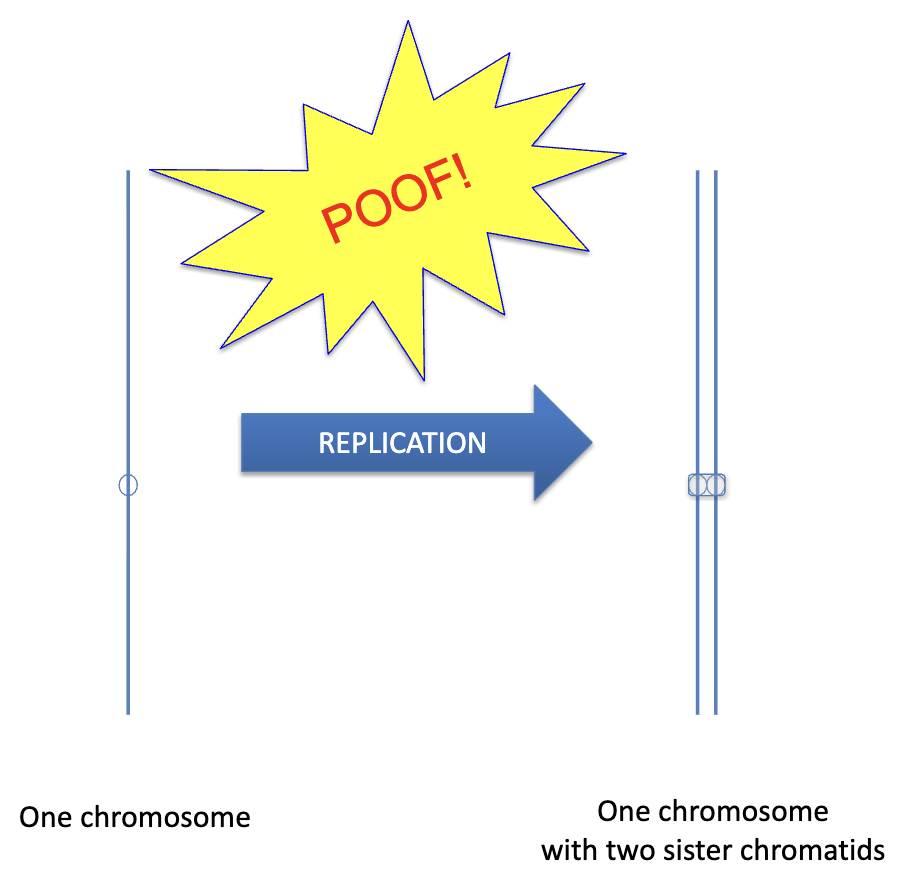
The Meselson-Stahl experiment
The Meselson-Stahl experiment demonstrated that:
DNA replication is semiconservative…
… or, in other words, each new DNA molecule consists of one old strand and one newly synthesized strand

Comparing the original figure to the one in the textbook

Semi-conservative replication is also true in eukaryotes
Taylor-Woods-Hughes experiment looked at radioactive label in root tip cells
image is a, there is b on recording plz update

Tasks during DNA replication
Many Complex Tasks Must Be Performed during DNA Replication
The replication origin(s) must be recognized
in bacteria there is one origin; in eukaryotes, there are many
There are seven key issues that must be resolved during DNA replication:
unwinding of the helix
reducing increased coiling generated during unwinding
synthesis of a primer for initiation (5’ to 3’ direction)
DNA synthesis and proofreading (to prevent errors)
discontinuous synthesis of the second strand
removal of the RNA primers
joining of the gap-filling DNA to the adjacent strand
Genetic approaches were used to find the genes necessary for replication
A number of genes involved in DNA replication have been identified by conditional mutations
These mutants survive (replicating DNA and completing cell division) at low permissive temperatures but show phenotypes at higher temperatures
Don’t memorize gene names, just think about the proteins that come from them

The origin of replication
Prokaryotes have one origin of replication (oriC)
E. coli has 4.6 × 10^6 bp in one circular DNA molecule.
Two replication forks move away from the origin, and terminate on the opposite side of the genome.
The origin is recognized by the DnaA protein.
Bidirectional is from both forks going around

Recognition of the origin
In E. coli, the replication origin, oriC, is bound by 10-20 copies of DnaA protein in the “9-bp” repeat region
This wrapping denatures the adjacent AT-rich DNA, stabilized by SSB (single-stranded binding protein), which allows the DnaBC helicase to bind and further unwind the DNA helix.

Recognition of oriC
The unwinding of the AT-rich region is the crucial step in the initiation of most origins, prokaryotic and eukaryotic ones… Initial binding [of DnaA-ATP to a high affinity site] …then serves as an anchor for the cooperative binding of ATP-DnaA to [low affinity sites in oriC] … DnaA bends the DNA by 40° upon binding [and the] topological stress in this complex unwinds the DNA in the AT-rich region… Cooperative binding to the double-stranded AT-rich region is therefore presumably the limiting step in the initiation reaction, followed by unwinding [and helicase interaction for further unwinding]

Replication: DNA synthesis
Priming the reaction to provide a 3’-OH for synthesis to start. The catalytic reaction is a nucleophilic attack on the incoming phosphate to form a phosphoester bond. Unwinding of a helix creates “knots” in the structure.
DNA synthesis
Requirements for DNA synthesis
DNA template (in pink)
Primer to provide a 3’-OH (in blue)
DNA-dependent DNA polymerase
Deoxynucleotides(dNTPs)
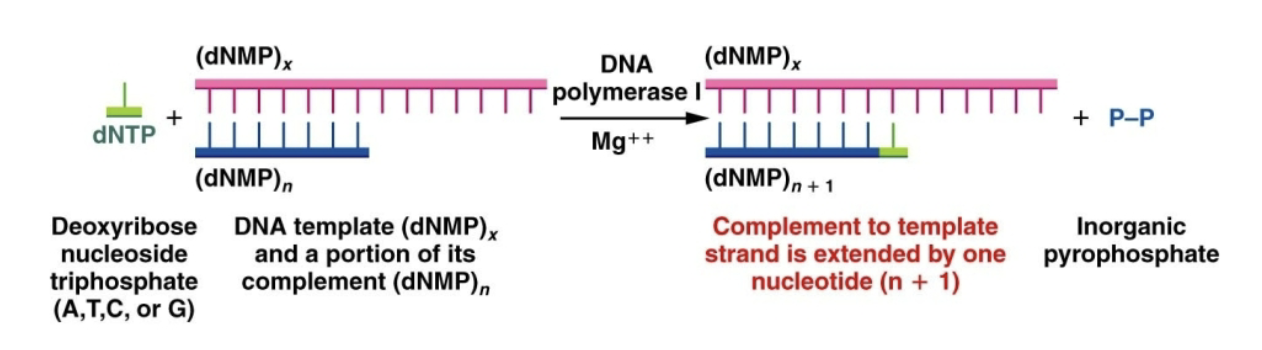
Formation of a phosphodiester linkage in a DNA synthesis reaction
The incoming base (purple) is a nucleotide triphosphate.
The 3’-OH is a nucleophile, attacking the phosphorus atom of the α-phosphate group.
Pyrophosphate is the leaving group. Pyrophosphate is hydrolyzed to two inorganic phosphate groups, making the bond formation non- reversible.

Tension and topology
When you uncoil a helix, it causes overcoiling ahead of the fork

DNA Topology - Twisting and Writhing
Advanced replication forks and strand separation →
DNA overwinding →
Supercoiling
i.e Tw + Wr would stay constant during replication unless an enzyme counteracts this physical property

More tension and topology
DNA topoisomerases, like gyrase, create nicks in the phosphodiester backbone. This lets the molecule unwind to release the tension
Mechanism of gyrase (a Type 1 Topoisomerase)
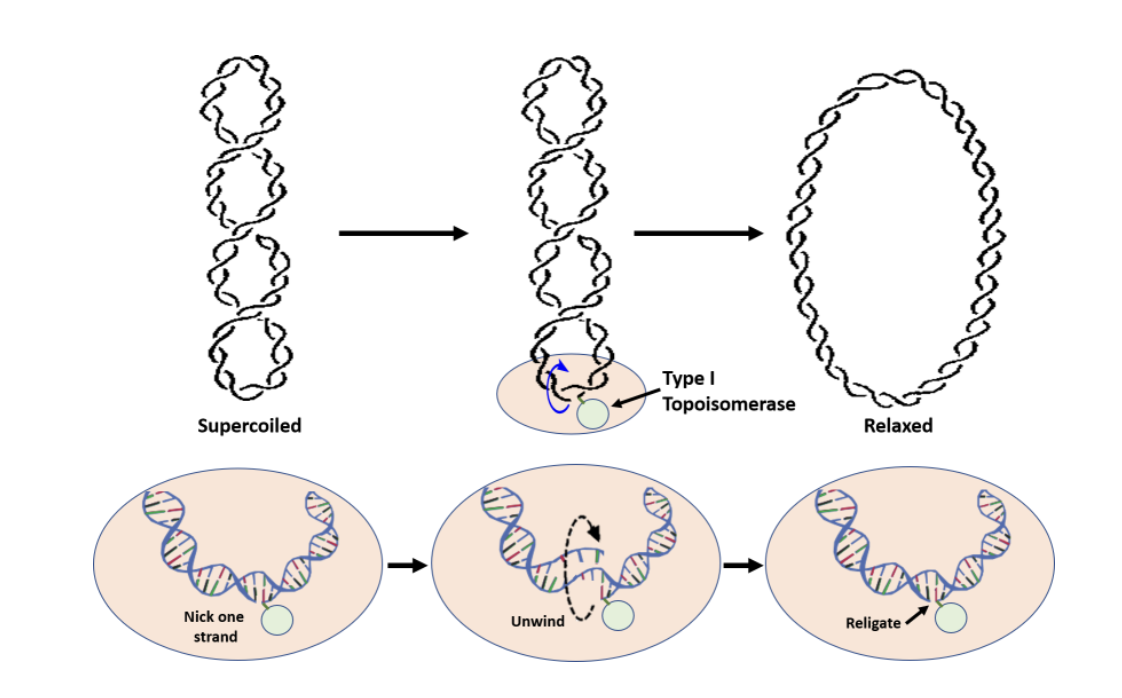
DNA replication causes torsional stress of DNA that is counteracted by DNA gyrase
DNA configuration in the absence of DNA gyrase; the overwound DNA inhibits further replication

Primers are required to start synthesis
DNA polymerase can add nucleotides to a 3’ end
It can extend a growing DNA chain, but it can’t initiate one
So, what does it do in the absence of a 3’ end? Nothing! (really!)
Primase, an RNA polymerase, will synthesis an RNA primer on a DNA template
Primase binds to the DnaB helicase and SSB
It synthesizes a short run of RNA; this will serve as the primer
DNA polymerase can take over from there

What’s happening at the replication forks?
The DNA helix is being unwound (helicase) and stabilized (single-stand binding protein)
Torsional stress is being relieved (by gyrase) as the fork moves forward
DNA polymerase is catalyzing the polymerization of the newly forming DNA strand
Nucleotides are added at the 3’ end of the growing molecule
Leading and lagging strands
Primase synthesizes a short RNA primer on the ssDNA
DNA polymerase extends from these primers with DNA, in the 5’ to 3’ direction. The direction of synthesis is important.
As more DNA is unwound (by helicase), the leading strand has continuous synthesis towards the moving fork, but new primers have to be made on the opposite strand: discontinuous synthesis

Replication from primers at the forks
Initiation bubble forms (DnaA, helicase, SSB)
Primase forms RNA primers
DNA polymerase is loaded on DNA
(by the “Gamma complex”)
Primase leaves
DNA polymerase is bound to DNA
(The beta-clamp subunit is responsible)
increases “processivity”; the extent of DNA synthesis is longer
Synthesis begins on leading strand

DNA polymerases
DNA synthesize (polymerize) DNA in the 5’ to 3’ direction
Prokaryotic DNA polymerase III is responsible for most of the DNA replication in prokaryotes
DNA polymerase I fills in gaps (see below)
DNA pol II is important for DNA repair
But…., they can do more than that
Can also reverse course and remove nucleotides (exonuclease activity) in the 3’ to 5’ direction
“Proofreading” capacity decreases the error rate by a factor of 100
Prokaryotic DNA Polymerase I can remove nucleotides in the 5’ to 3’ direction
Responsible for removing RNA primers and replacing them with DNA by extending the adjacent DNA strand
Leading and lagging strands again
DNA polymerase I removes the RNA and replaces it with DNA
DNA ligase joins all of the fragments together on the lagging strand

DNA polymerase I removes the RNA primer
DNA synthesis leaves a nick between DNA and RNA
Pol I binds to nick 5’→3’ Exonuclease activity removes RNA primer
5’→3’ DNA polymerase activity synthesizes DNA to fill gap
DNA Ligase comes in and seals the nick (creates a phosphodiester bond)

E. coli DNA polymerases

E. coli DNA polymerases pt2

Many complex tasks must be performed during DNA replication
Seven key replication issues are solved by key enzymes
unwinding of the helix (DnaA initially, helicase, SSB)
reducing increased coiling generated during unwinding (topoisomerases, gyrase)
synthesis of a primer for initiation (primase, aka an RNA polymerase)
DNA synthesis and proofreading (to prevent errors) (DNA polymerase III, DNA polymerase I)
discontinuous synthesis of the second strand (DNA pol III, DNA pol I)
removal of the RNA primers (DNA pol I)
joining the DNA fragments (DNA ligase)
Eukaryotic DNA synthesis is similar but more complex than DNA synthesis in prokaryotes
Large size of genome requires coordination of the replication initiation at many different replication origins.
16 chromosomes and ~350 replication origins in yeast
46 chromosomes and ~80,000 replication origins in mammals
Linear chromosomes present a replication problem at the ends.
Telomere addition by telomerase extends chromosomes
Replication origins - eukaryotic
In eukaryotes, there are multiple replication origins.
There are about 80,000 origins in a mammalian genome; 250-400 in the yeast genome. This allows all of the genome (in humans, 6 billion base pairs in total) to be replicated in a few hours.
A replicon is the length of DNA that is replicated following one initiation event at a single origin.
Replication proceeds bidirectionally from each origin.
Like bacteria, eukaryotes have origin recognition proteins, helicases, and single strand binding proteins that play the same molecular roles. You do NOT need to know their names.
Eukaryotic DNA polymerases
In eukaryotes, there are several more polymerases.
Pol a and b are the major forms of the enzyme involved in initiation and elongation.
Pol a possesses low processivity, a term that reflects the length of DNA that is synthesized by an enzyme before it dissociates from the template. Pol a functions in synthesis of the primers during initiation on the leading and lagging strands.
Polymerase switching occurs, and Pol a is replaced by Pol b for elongation.

The End (The Telomere)
Replication problems at the ends of linear chromosomes
Structure stabilizes ends, protecting them from exonucleases
End replication problem
Lagging strand synthesis at the end of the chromosome is a problem because once the RNA primer is removed, there is no free 3'-hydroxyl group from which to elongate.
This is a big problem because there is a loss of genetic material at every cell division and with every generation (see gap b in figure).
Telomeres are the eukaryotic solution to the replication problems at the ends of chromosomes.

Telomere
Telomeres are specific sequences located at the ends of linear chromosomes
They consist of long stretches of short repeating sequences.
They provide a means to copy fully the lagging strand.
They preserve the integrity and stability of chromosomes (preventing recombination).
Telomerase
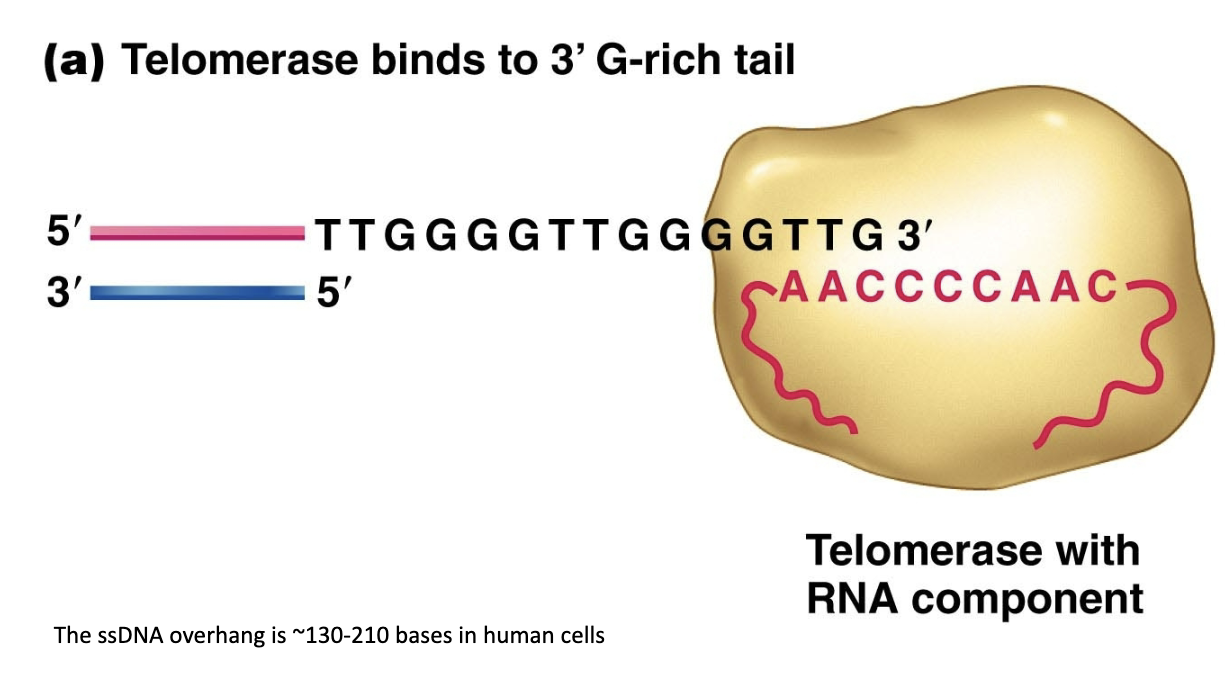
Telomerase directs synthesis of the telomere repeat sequence to fill the gap.
This enzyme is a ribonucleoprotein with an RNA molecule that serves as the template for the synthesis of its DNA complement.
In other words, telomerase is an RNA-dependent DNA polymerase (a reverse transcriptase!)

Telomerase and synthesis of the repeats a)
Telomerase and synthesis of the repeats b)

Telomerase and synthesis of the repeats c)

Telomerase and synthesis of the repeats d)
More repeats are added than are lost when primer is removed

Telomerase adds bases in groups of 6

Telomeres adopt unusual structures: T-loops and G-quadruplexes
T-loops and G-quadruplexes are thought to prevent DNA repair pathways from detecting ends as double strand breaks and degrading or fusing the chromosome ends

Telomeres adopt unusual structures: T-loops and G-quadruplexes

Telomeres vary in length
Telomere length varies greatly between species (the double stranded repeat region)
~ 300 base pairs in yeast → 2-50 kilobases in humans
Telomere length varies with age
Human telomeres shorten by ~70 bp/year (depending on tissue)
Why? Telomerase is shut off in somatic cells!
Provides a limit to number of divisions (Hayflick limit – 50-70 cell divisions)

Telomere loss protects against cancer

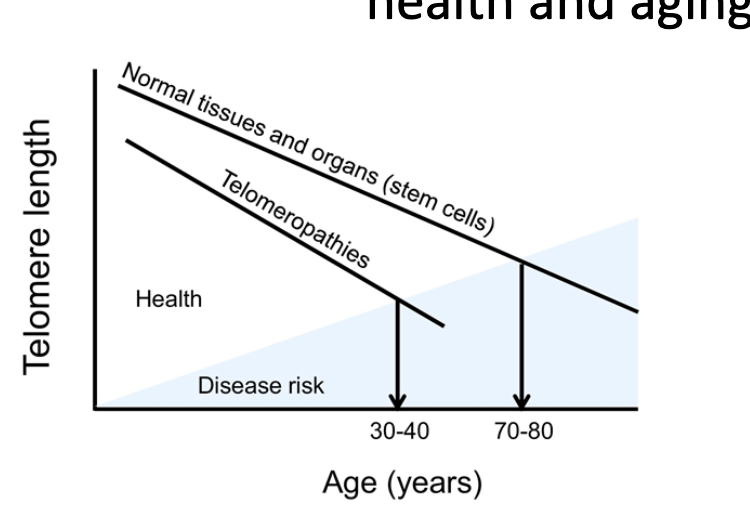
Shorter telomeres are associated with poorer health and aging
Telomeropathies are diseases caused by mutations affecting telomere length
(too short → faster age-related disease)
Why aren’t longer telomeres selected for to ameliorate these effects?
E. coli DNA polymerases
Extra sides
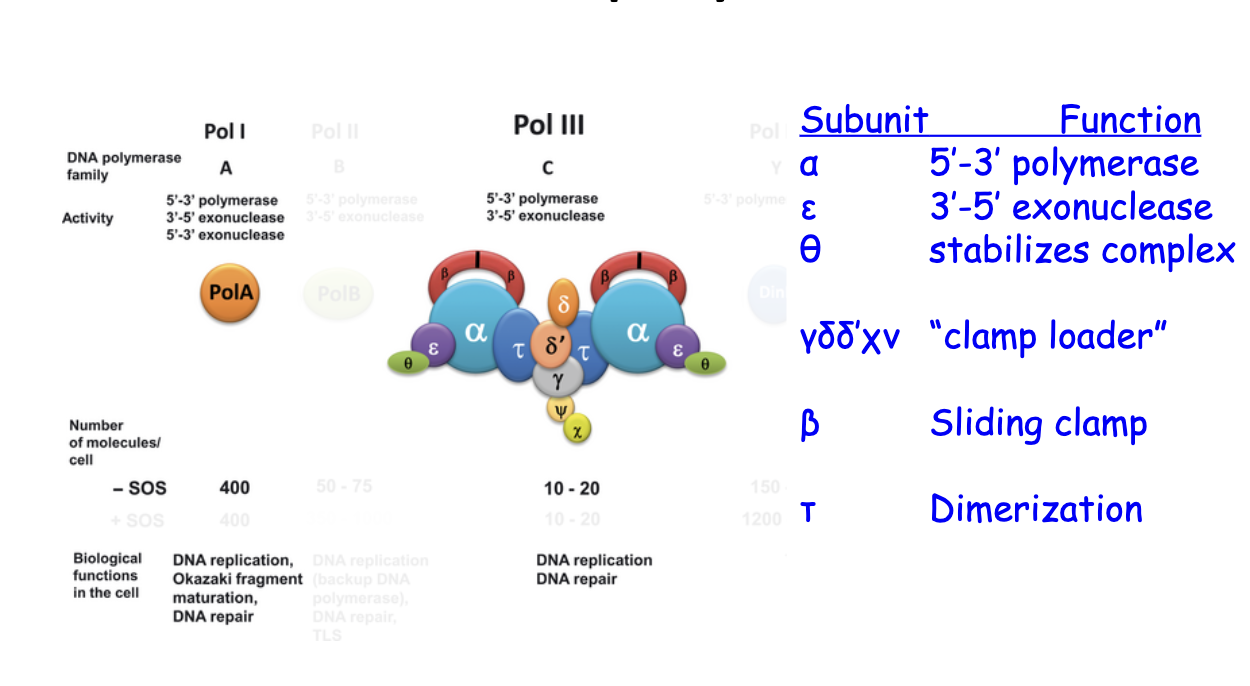
E. coli DNA polymerase III is the main enzyme for DNA replication
Extra slides

E. coli DNA polymerases
Extra slides

Rate of telomere shortening is predictive of species life span
Extra slides

E. coli - replication at the fork

Learning goals for recombination
Understand the molecular basis of recombination
Know the single-strand-break repair model; importance of the Holliday junction (from the book)
Understand how DNA does it: the double strand break model (see in Ch. 15 Mutation & Repair)
Important: Recombination is precise – between base pairs; at chiasmata in meiosis.
Gene conversion – it is a consequence of the repair of small differences from heteroduplex formation
Recombination and it’s importance
During meiosis, recombination puts together good alleles at different loci (evolutionary reasoning)
Might be the benefit of sexual reproduction
Used to map locations of genes relative to each other
In bacterial, necessary for Horizonal Gene Transfer
In meiotic cells and mitotic cells, it can repair double strand breaks, fixing or causing inversions, translocations
Template mediated (from the sister chromatid)
An alternative is non-homologous end-joining (NHEJ)
In immunology, recombination is responsible for the diversity of immunoglobulins found in B cells
This is somatic recombination: same mechanism (i.e., same dance of the DNA strands) but in somatic cells
Recombination in meiosis

Homologous recombination in yeast
what is a holliday junction
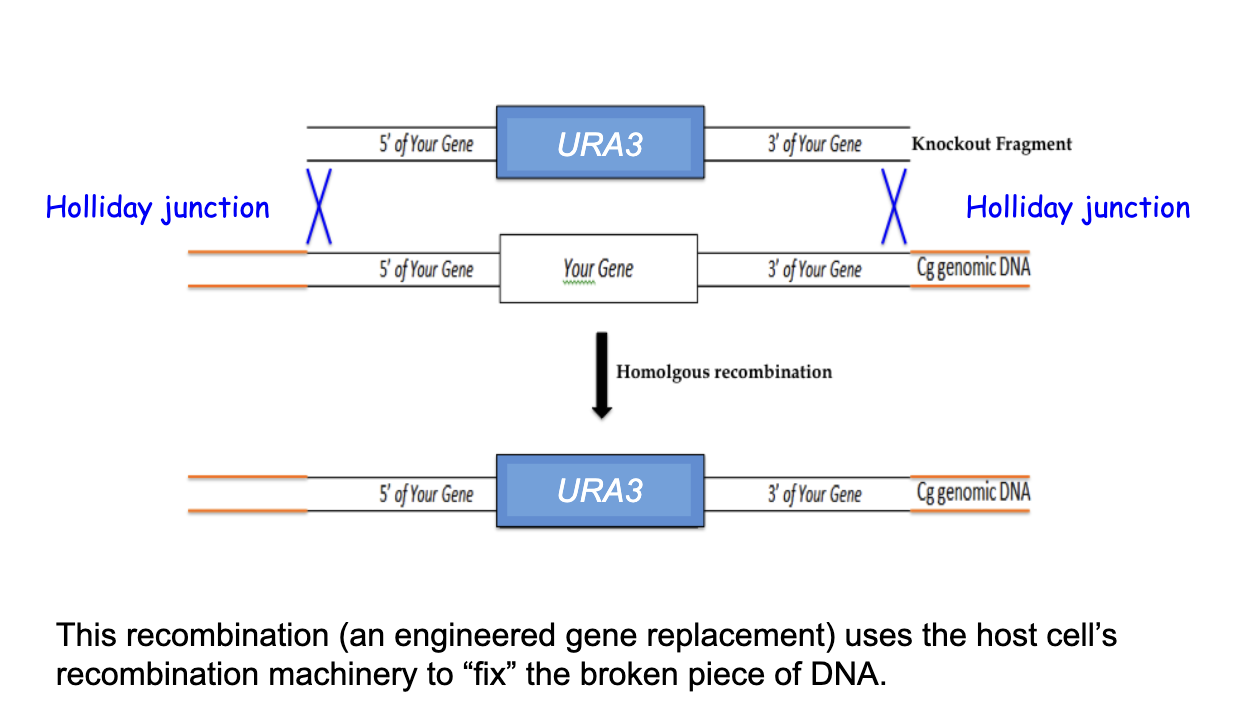
Phage lambda integration (prophage)
Integration:
Lysogenic phage (like λ) do this to make a prophage; shown is integration. Excision is the reverse process with the same enyzmes.
Integration of the F plasmid to make an Hfr.
Phage P1 integrates using loxP sites (instead of attP or attB) to make a lysogenic prophage; the name of the catalytic enzyme is CRE.
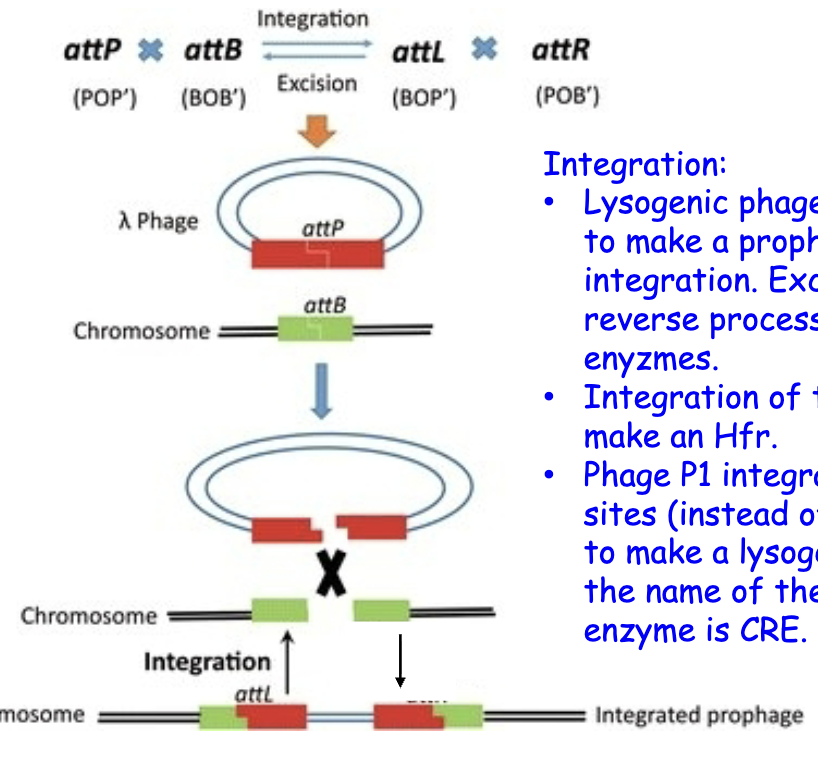
Cre-Lox used in mouse genetics
another slide in presentation to look at
Shows Cre LoxP mouse

Holliday juncture and recombination model
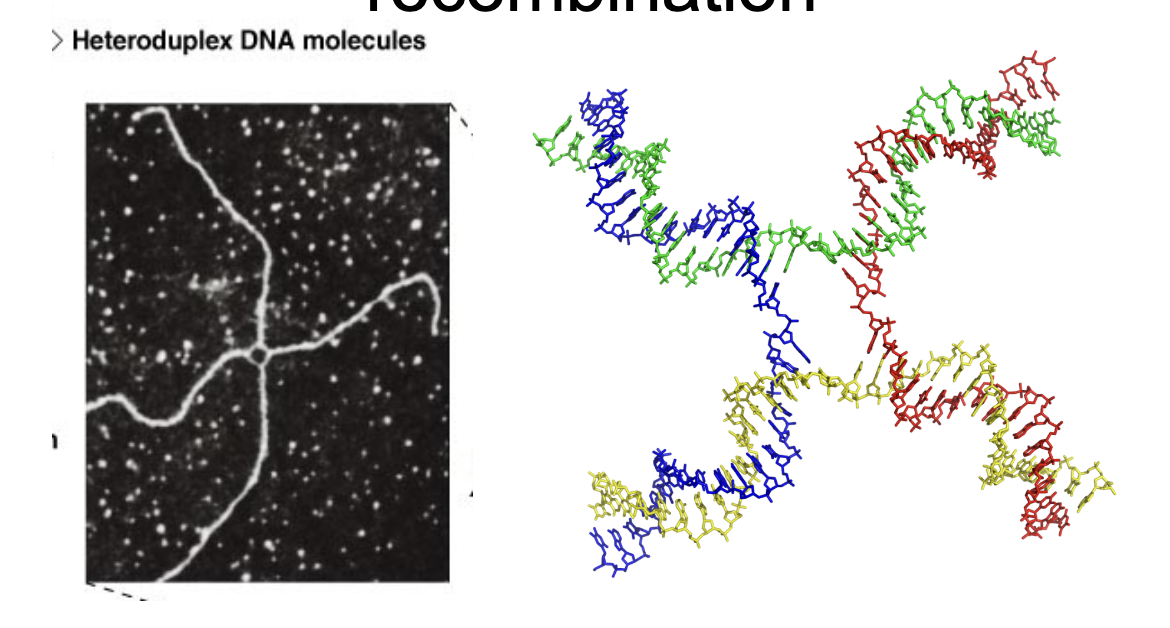
Holliday structure and recombination

Holliday steps in detail
Notice the linkage:
A-B and a-b
Notice the polarity of the strands
An enzyme nicks the DNA; i.e., cuts one phosphodiester bond on one of the strands.

Holliday in detail
Proteins mediate strand exchange
Helicase activity is required

Holliday more in detail
Ligation connects the strands

Branch Migration
Branch migration moves the region of heteroduplex formation.
Important to make sure molecules are homologous.
Note that if there are small, single nucleotide differences, there would be mismatches. These would be repaired and could lead to ‘gene conversion’.
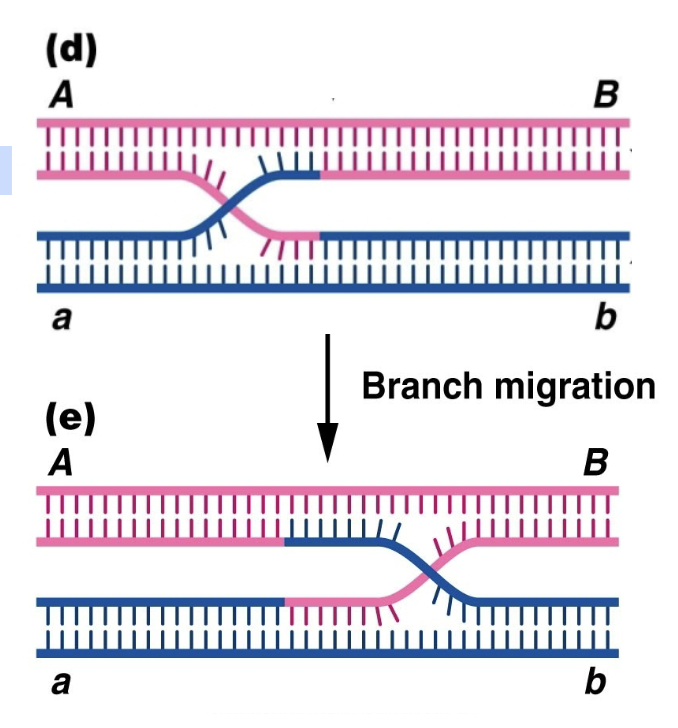
Branch migration through a Holliday junction

Reorientation of the structure

More image

Resolution of the Holliday Junction
The crossed DNA strands must be separated from each other - i.e. the structure must be resolved
Cut and then re-ligate

Formation of the recombinant DNA
Note the association of A with b, and a with B
A Recombinant!
What would happen if cut was horizontal instead of vertical?
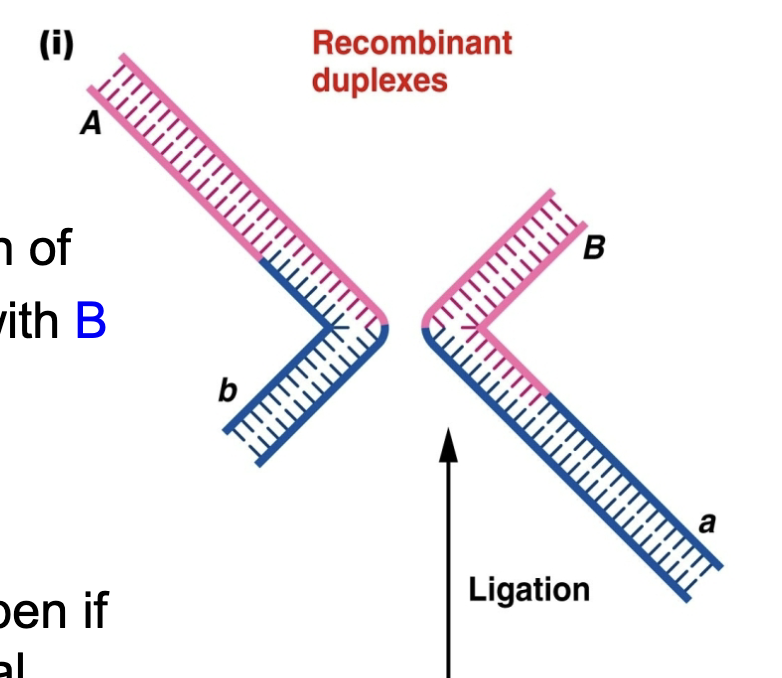
Potential gene conversion
What would happen if cut was horizontal instead of vertical?
Note the association of A with B, and a with b with heteroduplex in middle
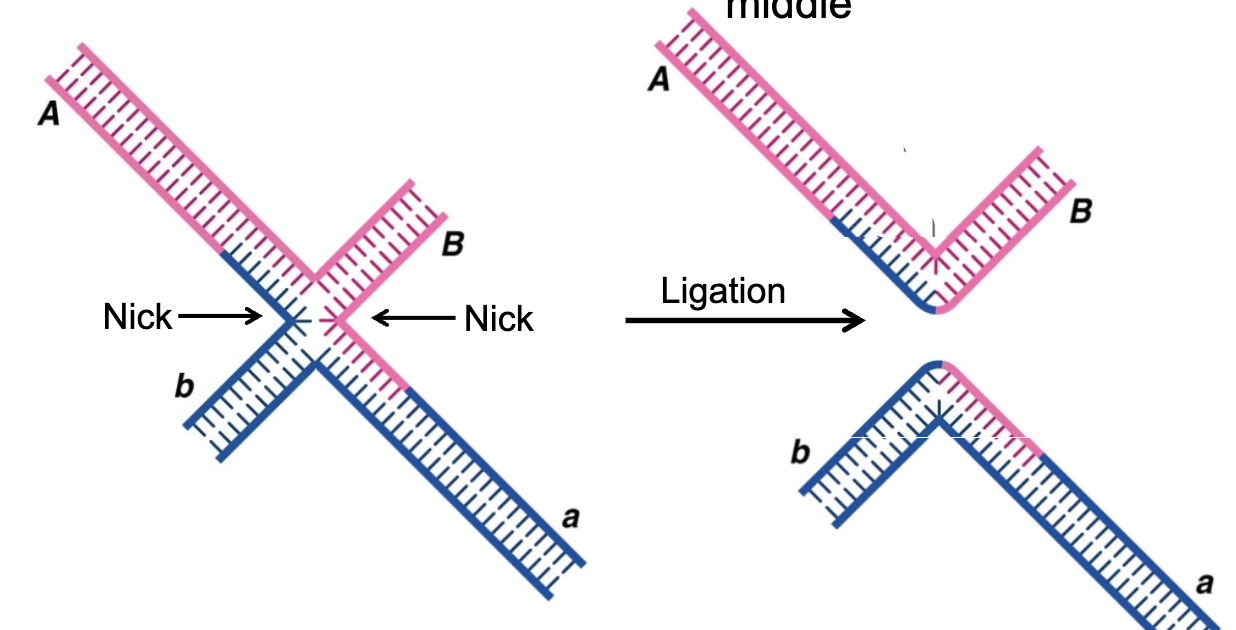
Holliday structure and recombination
