health assessment exam 2
 Call Kai
 Learn
 Practice Test
 Spaced Repetition
 Match
 Flashcards
 Knowt Play
1/119

There's no tags or description
Looks like no tags are added yet.
120 Terms
nociceptive pain
nociceptors detect painful sensations and transmit them to the CNS
examples: mechanical, thermal, chemical trauma to tissue (smashing finger in car door, touching hot stove)
typically predictable, acute
neuropathic pain
abnormal processing of of the pain message due to injury to nerve tissue
ex. phantom limb pain, shingles, multiple sclerosis
less predictable, can become chronic
visceral pain
originates from internal organs
described as dull, squeezing, cramping
often accompanied by diaphoresis, vomiting, pallor
somatic pain
originates from musculoskeletal tissues or the body surface and is easy to localize
can cause nausea, tachycardia, hypertension
deep somatic pain: aching or throbbing
cutaneous pain: superficial, sharp, or burning
referred pain
felt in an area away from the source
ex. pain from a cardiac episode may cause referred pain in the arm or neck
age related perceptions of pain
babies: infants can experience pain even before birth, infants born premature can have low level of inhibitory neurotransmitters which help block pain
aging adults: pain is not a normal process of aging, older adults need adequate pain relief too!!!, pain is a signal that something is wrong
men have been raised to be more stoic about pain, women have higher sensitivity to pain (women tend to have more reported migraines)
RUQ
liver
gallbladder
ascending colon
LUQ
stomach
descending colon
spleen
RLQ
appendix
ovaries and fallopian tubes
LLQ
descending colon
ovaries and fallopian tubes
peritoneum
double layer of membrane that lines the abdominal cavity and supports and stabilizes the organs within it
solid viscera (organs)
maintain their characteristic and shape
liver, spleen, kidneys
hollow viscera
may change shape according to current contents
bladder, stomach, intestines
anorexia
a loss of appetite for any reason
dysphagia
difficulty swallowing
hematemesis
vomiting with blood
pica
eating non-foods such as grass, dirt, paint chips
constipation
<3 stools per week, straining, or hard stools
helicobacter pylori
a bacteria that commonly causes stomach ulcers
melena
occult GI bleeding that can cause tarry stools
what is it important to do during the physical exam of the abdomen
INSPECT and THEN auscultate
auscultate prior to percussion or palpation
auscultation, percussion, and palpation of the abdomen
auscultation: begin in the RLQ, normal bowel sounds are gurgling, high pitched, irregular
percussion: tympanic percussion tones over much of the abdomen, dull percussion tones over organs such as the liver, or full bladder, hyperresonance is present with excess gas, if kidney infection present percussion may cause costovertebral (CVA) tenderness
palpation: pt supine w a pillow supporting knees, begin w light palpation to assess tissues (1 cm), then do deep palpation to assess organs or masses
infants and children abdominal assessment findings
inspect umbilical cord at birth, should have 2 arteries and 1 vein
infants and young children usually have protuberant abdominal profile, scaphoid shape can be present with dehydration
organs easier to palpate bc of less developed abdominal profile
aging adult abdomen assessment findings
both males and females tend to accumulate fat deposits as they age
liver size decreases with age so they cannot metabolize medications as quickly as young adults
constipation is a common complaint
hepatitis health promotion
hepatitis A: liver infection caused by a virus that is transmitted via contaminated food or water or person to person contact
symptoms: fatigue, nausea, abdominal pain, loss of appetite, fever, maybe jaundice
vaccine available
hepatitis B and C: liver infection caused by viruses, transmitted via blood and body fluids during sexual contact, sharing of contaminated needles
can be short term or chronic
effective vaccine available for hepatitis b
types of mental disorders: organic
have a specific known cause (alcohol and drug intoxication, high fever, strokes, brain tumors)
types of mental disorders: psychiatric
those for which an organic cause has not yet been established
ex. major depressive disorder, bipolar disorder, schizophrenia
glasgow coma scale
quantitative tool with scores ranging from 3-15 to describe level of consciousness
higher score means higher level of consciousness
tests eye opening response, motor response, verbal response
delirium
sudden (develops over hours to days)
trouble with attention or awareness
usually reversible when trigger is treated
alertness fluctuates widely throughout the day
this is a medical emergency
dementia
gradual (develops over months to years)
trouble with memory and cognitive decline
generally irreversible and progressive
alertness usually steady until late stages
this is a long-term chronic condition
suicide screening
the Ask Suicide-Screening Questions (ASQ) is available free and has been validated in people 8 years and older. The ASQ can be administered in 20 seconds and consists of 4 screening questions
In the past few weeks, have you wished you were dead?
In the past few weeks, have you felt that you or your family would be better off if you were dead?
In the past week, have you been having thoughts about killing yourself?
Have you ever tried to kill yourself?
If the person answers yes to any of the questions or refuses to answer any question, consider it a positive screen. Anyone who has a positive screen should be asked: “Are you having thoughts of killing yourself right now?” If the answer is yes, an immediate full safety/mental health assessment is required. If the person answers no, a brief safety assessment is done to determine if a full mental health workup is needed. In either case, the person should not be allowed to leave until evaluated for safety.
dermatome
area of skin that is innervated mainly by a particular spinal nerve
important dermatome landmarks
thumb at C6
axilla at T1
nipple at T4
umbilicus at T10
groin at L1
knee at L4
cranial nerves in order
olfactory
optic
oculomotor
trochlear
trigeminal
abducens
facial
acoustic
glossopharyngeal
vagus
spinal accessory
hypoglossal
olfactory nerve - 1
function: smell
type: sensory
optic nerve - 2
function: sight, vision
type: sensory
oculomotor nerve - 3
function:
motor: most extraocular movement, opening of eyelids
parasympathetic: pupil constriction, lens shape
type: sensory and motor
trochlear nerve - 4
function: down and inward movement of eye
type: motor
trigeminal nerve - 5
function:
motor: muscles of mastication
sensory: sensation of face and scalp, cornea, mucous membranes of mouth and nose
type: mixed
abducens nerve - 6
function: lateral movement of the eye
type: motor
facial nerve - 7
function:
motor: facial muscles, close eye, labial speech, close mouth
sensory: taste (sweet, salty, sour, bitter) on anterior 2/3 of the tongue
parasympathetic: parotid gland, carotid reflex
type: mixed
acoustic nerve - 8
function: hearing and equilibrium
type: sensory
glossopharyngeal nerve - 9
type: mixed
function:
motor: pharynx (phonation and swallowing)
sensory: taste on posterior 1/3 of tongue, pharynx (gag reflex)
parasympathetic: parotid gland, carotid reflex
vagus nerve - 10
type: mixed
function:
motor: pharynx and larynx (talking and swallowing)
sensory: general sensation from carotid body, carotid sinus, pharynx, viscera
parasympathetic: carotid reflex
spinal accessory nerve - 11
function:
movement of trapezius and sternomastoid muscles
type: motor
hypoglossal nerve - 12
function:
movement of tongue
type: motor
frontal lobe function
personality, behavior, emotions, intellect (includes broca’s area for motor speech)
parietal lobe function
sensation
occipital lobe function
visual reception center
temporal lobe function
auditory reception center plus hearing, taste, and smell
includes wernicke’s area for language comprehension
basal ganglia function
initiates and coordinates movements (such as the arm swing)
thalamus function
relay station for sensory pathways
hypothalamus function
regulates functions such as breathing, temperature, appetite
cerebellum function
coordinates and smooths movement, balance, muscle tone
brainstem function
core of the brain includes autonomic center (for respiration, heart, GI function)
stroke signs
B: balance
E: eyes (losing vision, seeing double)
F: face (if smile is crooked)
A: arm (close eyes hold arm out, if drifting down, stroke indicated)
S: speech (slurred, sounding strange)
T: time (do not waste time, call 911)
gait abnormalities: spastic hemiparesis
characteristic appearance: arm is immobile against the body, with flexion of the shoulder, elbow, wrist, and fingers and adduction of shoulder; does not swing freely. leg it stiff and extended and circumducts with each step (drags toe in semicircle)
possible causes: upper motor neuron lesion of the corticospinal tract (e.g. stroke, trauma)
gait abnormalities: cerebellar ataxia
characteristic appearance: staggering, wide-based gait; difficulty with turns; uncoordinated movement with positive Romberg sign
possible causes: alcohol or barbiturate effect on cerebellum; cerebellar tumor; multiple sclerosis
gait abnormalities: parkinsonian
characteristic appearance: posture is stooped; trunk is pitched forward; elbows, hips, and knees are flexed. steps are short and shuffling. hesitation to begin walking, and difficulty to stop suddenly. person holds the body rigid, walks and turns body as one fixed unit, difficulty with any change in direction
possible causes: parkinsonism
gait abnormalities: steppage
characteristic appearance: slapping quality - looks as if walking up stairs and finding no stair there, lifts knee and foot high and slaps it down hard and flat to compensate for footdrop
possible causes: weakness of peroneal and anterior tibial muscles; caused by lower motor neuron lesion at spinal cord (e.g. poliomyelitis)
stage 1 pressure ulcer
non-blanchable erythema
skin intact
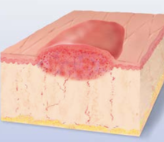
stage 2 pressure ulcer
partial thickness skin loss including epidermis and dermis
presents clinically as a blister, abrasion, or shallow crater
stage 3 pressure ulcer
full thickness skin loss including subcutaneous tissue
presents as a deep crater
stage 4 pressure ulcer
full thickness skin loss including muscle and bone
sinus tracts may be involved
warning signs of skin cancer
A: asymmetry (two halves look different)
B: border irregularity (notching, scalloping, ragged edges)
C: color variations (areas of brown, black, red, blue, white)
D: diameter greater than 6 mm
E: elevation or evolution (sudden appearances or recent changes of a mole)
F: funny looking - “ugly duckling” different from others
macule lesion
define: solely a color change, flat, or circumscribes, of less than 1 cm
example: freckles, hypopigmentation, petechiae, measles, scarlet fever

vesicle lesion
define: elevated cavity containing free fluid, up to 1 cm. clear serum flows if wall is ruptured
example: herpes simplex, early chickenpox, shingles, contact dermatitis

wheal lesion
define: superficial, raised, transient, and erythematous; slightly irregular shape from edema
example: mosquito bite, allergic reaction
pallor
a white color of the skin due to anxiety or fear bc of the peripheral vasoconstriction from sympathetic nervous system stimulation
erythema
intense redness of the skin from excess blood in the dilated superficial capillaries
expected with fever, local inflammation, or blushing in cheeks, neck, and upper chest
cyanosis
bluish mottled color from decreased perfusion; tissues have high levels of deoxygenated blood
best seen in lips, nose, cheeks, ears, and oral mucous membranes
jaundice
yellowish skin color indicating rising amounts of bilirubin in the blood
first noted in the junction of the hard and soft palate in the mouth and in the sclera, then the eyes appear yellow
as levels of serum bilirubin rise, jaundice is evident in the skin over the rest of the body
priority setting
first-level priority problems: airway, breathing, circulation
second-level priority problems: mental status changes, acute pain, infection risk, abnormal lab values, elimination problems
third-level priority problems: lack of knowledge, mobility problems, family coping
infant skin presentations
skin color: mongolian spot, cafe-au-lait spot
skin color change: harlequin color change, erythema toxicum
temporary cyanotic conditions: acrocyanosis, cutis marmorata
hair and nails: lanugo and presence of cyanosis in newborn
physioligic jaundice
carotenemia
moisture, texture, thickness, mobility and turgor
vascularity or bruising - nervus simplex
flexion
bending a limb at the joint
extension
straightening a limb at the joint
abduction
moving a limb away from the midline of the body
adduction
moving a limb toward the midline of the body
pronation
turning the forearm so the palm is down
supination
turning the forearm so the palm is up
circumduction
moving the arm in a circle around the shoulder
inversion
moving the sole of the foot inward at the ankle
eversion
moving the sole of the foot outward at the ankle
rotation
moving the head around a central axis
protraction
moving a body part forward and parallel to the ground
retraction
moving a body part backward and parallel to the ground
elevation
raising a body part
depression
lowering a body part
carpal tunnel syndrome
symptoms and signs: pain, nighttime pain, burning and numbness, positive findings on phalen test, and positive tinel sign, atrophy of thenar muscles
phalen test: person holds both hands back to back while while flexing wrist 90 degrees, in a pt w carpal tunnel this will produce numbness and burning
tinel sign: directly percuss the location of the median nerve at the wrist, in pt w carpal tunnel this will produce burning and tingling
osteoarthritis
noninflammatory condition, involving deterioration of cartilage at joints
joint involvement is often asymmetric or unilateral (due to overuse or overweight)
signs and symptoms: stiffness, swelling, pain with movement, limited ROM, bony nodules
rheumatoid arthritis
chronic inflammatory condition
autoimmune disease
joint involvement is bilateral and symmetric
signs and symptoms: redness, swelling, heat, pain, limited ROM, deformities
how many bones in an adult body
206
cardiac and smooth muscle
involuntary
skeletal muscle
voluntary
tendons
strong fibrous cords that connect muscle to bone
ligaments
fibrous band connecting bone to bone
joints
connection points between bones (can be synovial or non-synovial)
active ROM
modeling the move for the patient and having them perform it themselves
passive ROM
if active ROM is limited, support the weight of the limb as you move it through the expected ROM
scoliosis
abnormal C or S curvature of the spine
can cause a difference in shoulder elevation and in level of scapulae and iliac crests
segments of spine involved: thoracic and lumbar segments of spine