AMS 211 FINAL
 Call Kai
 Learn
 Practice Test
 Spaced Repetition
 Match
 Flashcards
 Knowt Play
1/247

There's no tags or description
Looks like no tags are added yet.
248 Terms

A, B, C, D, E, F, G, H, I , J, K, L, M, N
A. Sparta
B. Bassai
C. Olympia
D. Corinth
E. Aegina
F. Athens
G. Delphi
H. Vergina
I. Pella
J. Olynthos
K. Pergamon
L. Priene
M. Halikarnassos
N. Prinias

A, B, C, D
A. Paestum
B. Motya
C. Akragas
D. Syracuse

What is this?
Sculpture of Apollo of Temple of Zeus

Where was this found?
Olympia, Greece

What is its date?
460 BC

What is it made of?
Marble

How is this object important?
It is a central figure on a pediment on the Temple of Zeus in Olympia
It’s design and expressions are characteristic of sculptures in the Classical period
Is one of the better preserved statues from the Temple of Zeus in Olympia

What is this?
Satrapal Coin of Tissaphernes
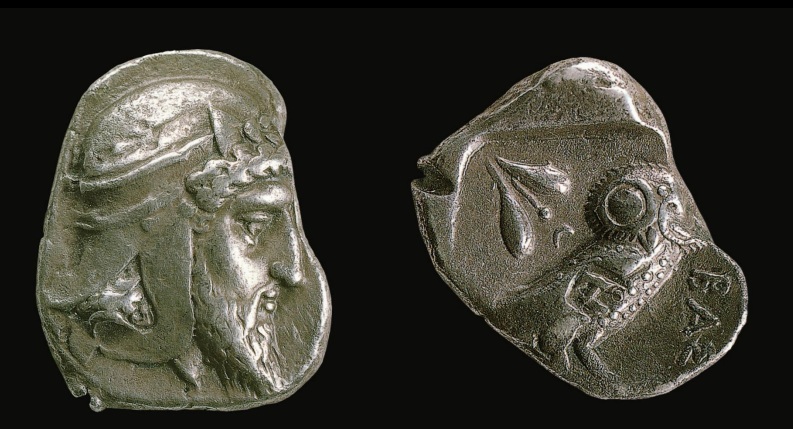
Where was this found?
Likely Inland Greece

What is its date?
420 BC - 395 BC

What is it made of?
Silver

How is this object important?
Displays the more elaborate design coins were having the late classical period
Displays the power the Persians were having over the Greeks through the portrayal of their Satraps on coins
Shows more of a focus on individuals rather than institutions

What is this?
Frieze of Athena fighting giants

Where was this found?
Pergamon

What is its date?
175 - 150 BC

What is it made of?
Marble

How is this object important?
Displays the emotional and physical intensity that is characteristics of sculptures made during the Hellenistic Period
Is a display of celebration against the Gauls through the use of Athena being victorious against the Giants
Depicts how different sculpture in the Hellenistic period is compared to the classical period

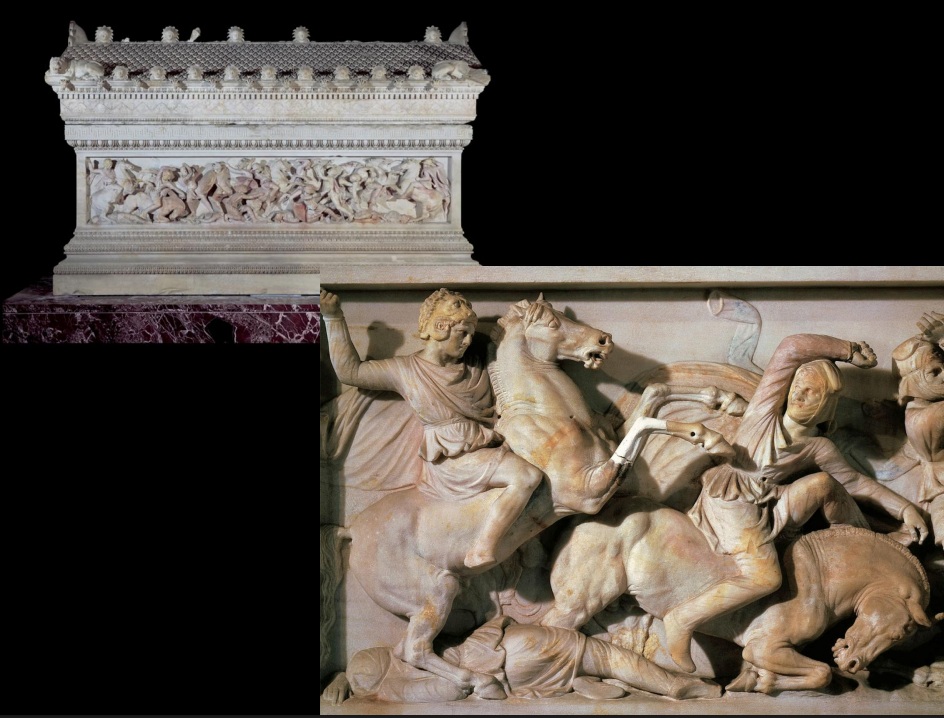
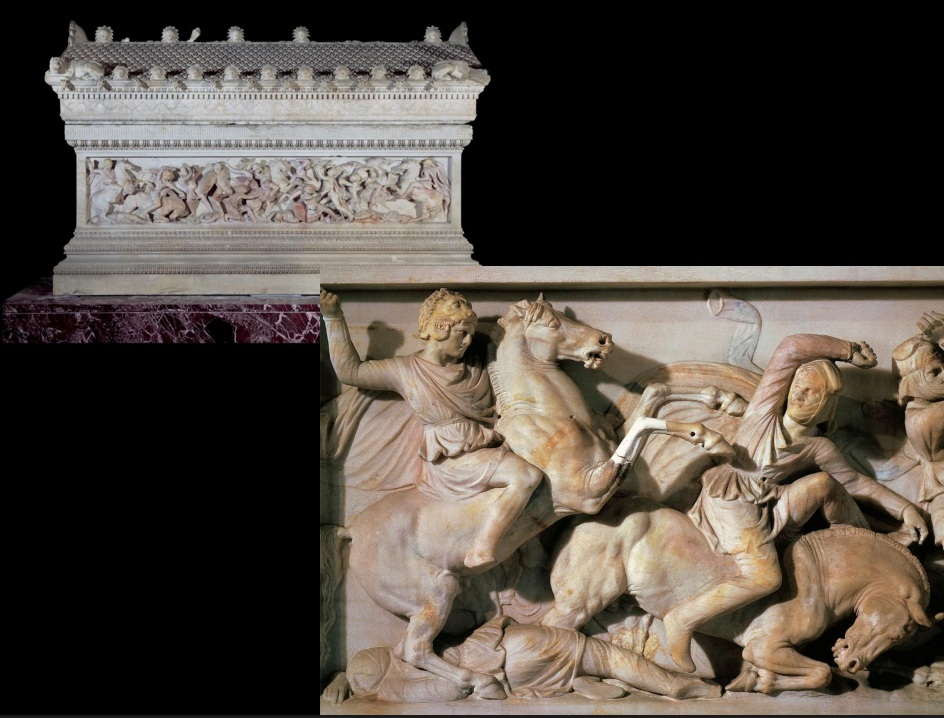
What is this?
Alexander’s Sarcophagus

Where was this found?
Sidon, Lebanon
What is its date?
320 BC

What is it made of?
Marble
How is this object important?
Tomb was likely not Alexander’s but Abdalonymos’, which shows how powerful Alexander’s image was throughout the Mediterranean and East
Is incredibly well preserved
Displays how Alexander is portrayed in the ancient world through him fighting, hunting or his connections with Heracles

What is this?
Marker of Phrasikleia

Where was this found?
Merenda, Attica

What is its date?
540 BC

What is it made of?
Marble

How is this object important?
Depicts the characteristics typical of Kore during the Archaic period
Displays the influence Egyptians had on Greek sculpture during the Archaic Period
Inscription tells us this was a funerary statue of an unmarried girl, which give us an idea on how unmarried women who died were depicted in death during the Archaic period

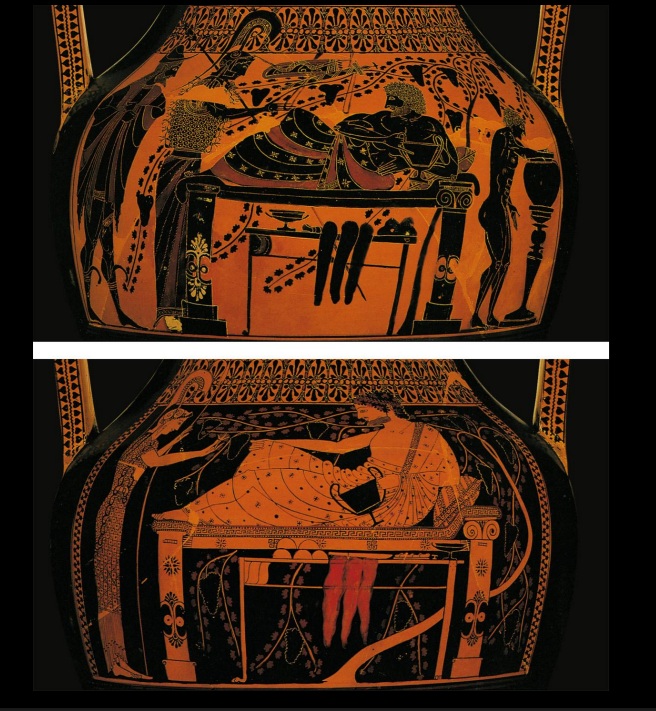
What is this?
Belly Amphora by the Andokides Painter

Where was this found?
Vulci, Italy

What is its date?
520 - 510 BCE
What is it made of?
Terracotta

How is this object important?
Is one of the few vases signed by it’s potter, Andokides
Is an example of a new style of pottery in Athens called “Bilingual Pottery,” where one side is red figure and the other side is black figure
Displays how pottery was changing in the Greek world during the Late Archaic period through their style, pictorial space and iconography
What are common themes in early sculpture
Male Warrior, Females, animals (Griffins)
What are the materials of early Sculpture
Bronze, Terracotta, Ivory
Shifts to sanctuaries from graves for elite expenditure, Greeks beginning to make larger scale sculptures, smaller scale metalwork, marble statues, fewer, lesser grave goods
Sculpture
Some association with Crete, but Orientalizing, head = 3 triangles (Face and hair), imitating Egyptian sculpture wearing wigs
Dedalic Style
17th century mires Greek mercenaries brings back knowledge from Egypt, Marble is new material, technology from Egypt, 664 BCE, Egyptian prince Psamtik hires Greek mercenaries, grants them a trading colony, Naukratis, by 620 BCE, Egyptian contact influences art and religious practice
Developments in sculptures
Greek trading colony, Located in Nile, delta, Polestra, Temple of Apollo
Naukratis
Male nudity being depicted is common, Egyptian influence, Egyptinizing aspect continues for hundreds of years, clenched fists, left leg forward, hairstyle, early forerunner of Kouros statues
Greek sculpture
Represent Gods & Goddesses, Aniconic representstion’s of Gods
Statues as signs
What does Aniconic mean?
Aniconic
What is a Proto-archaic male Greek statue called?
Kouros
What is a Proto-archaic female Greek statue called?
Kore
Male and female statue types, Early behinning in the proto-archaic period, long history afterward, depicting men & women in distinct ways, form of sculpture might be influenced by sculpting marble
Kore & Kouros
Nudity might be because athletes trained and competed in nude, Artists might have based on nude athletes
Cultural Influence
Older period, Developed on the Greek mainland during the late 7th century BCE, popular in the Greek west, flourished through the Hellenistic period, 6 columns x 13 columns, eventually most common, columns stand directly on the stylobate, capital = echinus + abacus, Frieze = triglyphs and metopes
Doric Order
Can be found in Roman period, developed 25 years after the Doric, but centered in East Greece, remained popular (alongside Corinthian order) during the Roman Empire, columns rest on a round base, Capital = volute (upside down scroll) + thin abacus, Frieze = plain or decorated with relief sculpture
Ionic order
columns inside, in center, loses space for statue and impedes the view, long & skinny for temple, replacement of buildings, surrounding area might have been sacred, probably made of wood with roof tiles and decor, early doric temple, metapes made of terracotta & painted, other elements of temple are made of terracotta, drains for water
Temple of Apollo in Thermon
Doric most common, temples to Know (Temple of Hera (Olympia), Temple of Apollo (Corinth), Temple of Artemis (Corcyra)), individual regions has their own traditions/styles, independent city-states, fragmentary geology, places can dominate culture, mainland Greece prefers doric style during this period, temple of Hera used to be made of wood, columns of temple of apollo are made of 1 piece, cycladic islands have marble from Naxos & Pyros
Regional trends in Mainland Greece & Associated areas
Ionic preferred, often massive, dipteral, temples to know: Temple of Hera on Samos, Temple of Apollo at Didyma, Temple of Artemis at Ephesos, often temples are too big to put roof, puts inner courtyard in temples instead, drums for bigger columns, wooden pieces slot in columns - empolio, provides earthquake protection
Regional trends of Temples in Ionia
Two rows of Columns (Forest of columns)
Dipteral
Often Ionic, but some experimentation, often prostyle or distyle in antis, temples to know, Temple of Dionysos, Yria, Naxos, Temple of Demeter, Sangri, Naxos, antis - 2 columns in little bits of wall
Regional trends in the Cyclades
Columns are seperated to side for view of statuem anti’s attached piers
Temple of Hera & Apollo
Large, Pseudo dipteral arrangement, room for 2nd rows of columns, pediment - triangular shape of sculpture decor, first show of pediment, sculpted medusa’s head on roof beam, Medusa’s head used for protection and to ward off evil, is apotopaic
Temple of Artemis at Corcyra
What is a common Apotropaic theme?
Lions attacking things
Located in Delphi, Dedicated to style of Sphinx
Naxian Sphinx
Builds in Terracotta, experimenting with form of temples, columns really close together, anchinos becomes very wide, some issues with local stone, preference for Doric order, but with innovation in plan, some massive temples, Temples to know: Temple of apollo at Syracuse, Temple C and G at Selinus, Temples of Hera at Poseidonia
Regional trends in Magna Graecia/Sicily
Earliest Greek coins in Ionia, slightly before 600 BCE, learned from Lydians, State guarantees weight, purity, value, eventually connected to state identity through iconography, Before coins there was bartering, iron rods, obverse and reverse, debate about whether silver coins used by individuals, economy is under going developments due to development of the state, 6th century, electrum natural aloy, Silver & Gold, bronze coins for buying, promotes state image, images on 1 side, later on both sides, no human images until around alexander the great, debate on coins used by individuals or state payments, Athenian system becomes universally accepted, changes use of metal, less in graves, most were melted down,
Development of coinage
Egyptian influence on masonry and sculptural techniques has a large impact on Greek religious architecture and sculpture, statues work as signs or substitutes, increasing state intervention in religious and economic life in the Archaic period, this leads to an increase in elaborate and permanent temple structures, two important architectural orders, the Doric and Ionic, dominate religious and state architecture, coinage emerges as a standardized means of facilitating state payouts, large statues of importance are new, big temples, specific temples, coinage
Late Archaic period
Kouroi, Korai, a dew other types, Collison of public and private values and ideals, contexts of display, sanctuaries and cemeteries, ideal types, not portraiture, “Archaic Smile", form influenced by technology, importance of patterning in drapery, musculature, etc. House - rider, mother nursing baby, are idealized forms of the body, beard is a sign of an adult Greek man, state governments & wealthy families put up sculptures, dedications in sanctuary of Gods sometimes or grave markers (usually of who is buried), everything is patterned and stylized - repeated powers
Archaic sculpture
Painted, coiled hair, broad shoulders/narrow waist, nude & same pose - male figures, archaic smile - exact reason unknown, but there are theories, large eyes, patterning, big heads early on
Kouroi
Long hair, arm sticking out/near chest, same pose (feet together), clothed, facial expressions, more exaggerated, headdress (polos, crown, headband, etc.) different styles of clothing, originally painted green, red, maybe yellow, brightly colored
Korai
Archaic style sculpture of Goddesses nursing babies - southern Italy, eastern Greece uncomfortable with male nudity, Samos - Korai are more cylindrical in form, some statues more cylindrical may be imitated forms from tree trunks, Italian influence in the western cities, Eastern Greek kouroi wear clothing, Dorian Greeks don’t make many kouroi, Different regions play with msuculature and proportions of Kouroi,
Regional trends
Similar, fairly large - most are just over life size, one is 15 ft, found in sanctuary of Hera on Kouros, Dedication from individual, show of aristocrat in sanctuary,
Kouroi as Ideals
Horses are aristocratic symbols, popular in Athens, tyrants more lax here, Sign of wealth, same deal as Kouroi, but they’re doing stuff, elire sculpture,
Riders
Lots of sanctuaries, near thebes, 2 important religious centers, Ptoos, local hero, State-sponsored dedications vs. private dedications, Sanctuary of Apollo Ptoos, different patterns of dedications, lots of Kouroi by different people,
Kouroi at the Ptoion
Siphnos, Marble, 520 BCE, in Attic, tyrants used them as markers of the halfway point between the city and the rural demes, common near doorways, protective, used as boundary markers & protectors
Herms
Standing female figure with clothing, votive and commemorative functions, are not made until about a generation after Kouroi, and many come from the late Archaic period, stylistic changes traced through the clothing, Chiton, Peplos, Mantle, Elaborate clothes & headresses, clothes is based on different ways of styling & pining a fabric,
Kore Statues
Linen, made of rectangle of cloth with buttons and sleeves, lighter, Eastern Greece
Chiton
Made of wool, folded down from the neck and belted, heavier, area around Athens, traditional & conservative
Peplos
Smaller, oblong cloth with buttons on one side. Worn over right shoulder and under the left arm; himation
Mantle
A type of sculpture in which the figures project from the background wall but remain attached to it; figures are still attached to background, often in grave monument for wealthy
Relief Sculpture
Especially in funerary contexts, for men, Attributed and clothing more common, individualized, in graves for less wealthy people
Attic relief sculpture
Cult statues made of wood mostly in this period, depictions of wooden statues & materials, oldest known stone image to survive, 6th c. head of nymph
Archaic cult statue
*Seated figure, reclining figure < might be family group, Calf-bearer sculpture, shows different poses are starting to happen, begins to have depictions of gods on temples
Variations
Dedicated to Athena, represents a sacrifice
Calf-bearer sculpture
Attempts in terracotta to replicate stone sculpture, painted before fired, used on top of temples for decor, dedication with terracotta figurines, terracotta statues were popular in Southern Italy & sicily,
Terracotta Sculpture
Warriors are common to depict, also depicts girls in running races in Lakonia, as well as sparta so girls had to be physically fit
Bronze statues
Is panhellenic or Regional bigger due to being open to all the Greeks?
Panhellenic
Places of culture exchange, some might have priestess or oracle territorial, independent city-state meet up place in neutral fashion, worship, athletic events, artistic competitive information (music & theater), disseminated, poets promote works here
Panhellenic vs. Regional
Sacrifice and offerings in exchange for divine favor, reciprocity
The Sacred economy
What are the two most famous Panhellenic areas
Olympia & Dephi
Inland, Rural, Zeus but other deities too, the Altis, the Olympic games (Every 4 years, from 776 BCE - 393 CE), began as sacred grove of trees (Altis), Temples eventually built, altars, shrines, site silted up with river sediment after abandonment
Olympia
1st big panhellenic festival, why Greeks kept track of time, late summer, winners city-state might give prizes to winner, beginning in 776 BCE, held every four years in late summer, athletic competitions - running, pentathlon, combat sports, equestrian events, held in honor of Zeus, olive wreath as prize
Olympic Games
Formed gradually over time from the ash, 8th c. “Black layer” - full of ash & dedications, maybe destroyed & spread out, oracle to Zeus? primarily local 10th - 8th century BCE, many small bronze dedications
Ash Altar
Surrounded by temenos wall, Pelops is local figure, peloponnese named after pelops
Heroön of Pelops
Depicts myth of Pelops & Oinomaos
East Pediment of Temple of Zeus
Built mid 5th century, statue of Nike dedicated by a group who broke free from the Spartans, Chryselephantine
Temple of Zeus
Clothes are Gold, Skin is ivory in statues
Chryselephantine
600 BCE, Originally wood & dedicated to Zeus? replaced by stone overtime, doric temple
Temple of Hera
11 small buildings to house dedications, built by city-states, many from cities in the West, best dedications to keep them safe, walks past them to enter stadium
Treasuries in Olympia
Most small terracotta figurines and metal goods (especially armor), some larger and more lavish dedications, Helmut from Miltiades from battle of marathon - where Athens won against Persia, Gold cup dedicated from a son of Corinth
Votive Offerings
Dedications and architectural sculpture, variety of other sculpture, terracotta sculpture from Syracuse
Sculpture
The Pythia, The Amphictyony, was a very powerful place to control, representives of other city-states, Changes hands many times, delivers messages from Apollo, mysticism surrounding them, might have chewed on laurel leaves
The Oracle
Situated in distinct landscape - part way into mountains and at the base of cliffs (Phaidriades), most got here by boat, lower slope of mt. carnassus, sanctuary of Apollo - temenos wall, theater, gymnasium, stadium, Pythian games, include musical & theatrical competitions, active oracle - most active & prominent oracle in the Greek world
Delphi
Some bronze age acitivity, Iron age cult: bronze figurines and tripods, objects from around the Greek world by 8th c. First sacred war (600 - 590 BCE) - happened in Kirrha, Pythian Games established 586 BCE (early 6th century), increase in traffic, prestige, Religious activity starts early,
History of the Sanctuary
Buried in a cache in the Sacred Way, Buried under road within sanctuary, life-size silver bull statue, sculpture made in Chryselephantine style, popular way of depicting divinities, inlaid eyebrows & pupils, bronze eyelashes, etc.
6th Century Votives
Sphinx of Naxos on a giant column, Koroi (of Kleobis & Biton?) - from Herodotus
Civic dedications
Limestone pavilion to house dedications, ca. 570 BCE, among the earliest carved metopes, Dedicated a treasury at Delphi, example of early Doric architecture
The Orthagorids of Sikyon
More elaborate than Olympia, Buildings made of Marble, Treasury of the Athenians, Treasury of the Siphnians
Treasuries at Delphi