NPTE January Final Frontier Practice Questions
 Call Kai
 Learn
 Practice Test
 Spaced Repetition
 Match
 Flashcards
 Knowt Play
1/44

There's no tags or description
Looks like no tags are added yet.
45 Terms
A physical therapist examines a patient with chief concerns of tingling into the 1st, 2nd, and 3rd digits along with muscle wasting over the thenar eminence. Which of the following testing procedures would be the BEST to assess the integrity of the nerve?
A. Have the patient hold both wrists in maximal flexion, dorsum-to-dorsum, for one minute
B. Have the patient hold the elbow in full flexion with the wrists extended for one minute
C. Have the patient grasp a piece of paper between the thumb and the index finger while the examiner pulls the paper and observes for thumb IP joint flexion
D. Have the patient make a fist around the thumb while the examiner ulnar deviates the wrist
A is correct.
Rational: The presentation localizes to the median nerve at the carpal tunnel. Phalens test reproduces these symtoms by increasing intracarpal pressure with sustained wrist flexion. It is the BEST screen for median nerve integrity at the carpal tunnel. B is called the elbow flexion test it is a provocation test for ulnar nerve compression at the cubital tunnel not median. C is Forments sign which tests the ulanr nerve (testing the adductor pollicis) D is Finklesteins which assesses for DeQuarvains Tenosynovitis (APL/EPB)
Setting: Acute care hospital Sex: Male Age: 45 years
Presenting Problem / Current Condition Left distal radius fracture sustained in a fall from an 8-foot ladder onto an
outstretched hand
Weight-bearing orders: Left upper extremity: non-weight-bearing through wrist and hand; weight-bearing as
tolerated through proximal one-third of forearm and elbow
Medical History: Unremarkable
Other information:
Works as a carpenter (10-hour shifts × 5 days)
Left hand dominant; uses power tools and hand tools throughout the shift
Medications: Hydrocodone, Naproxen
Physical Therapy Examination(s)
Vital signs: Normal. Integumentary: Moderate left upper extremity swelling and ecchymosis
Sensation: Tingling in the lateral 3 and a half digits on the volar side
X-Ray imaging: Distal radius dislocated in the dorsal direction
PROM: Left wrist flexion: 25°, wrist extension: 35°. Left elbow and shoulder ROM is normal
Strength: Left wrist flexors and extensors: unable to assess; elbow flexors and extensors good (4/5); shoulder
musculature normal (5/5)
Physical Therapy Plan of Care: Therapeutic exercise, Manual therapy, Therapeutic activities
Which of the following would be
the MOST LIKELY diagnosis?
A. Smith’s fracture
B. Colles’ fracture
C. Scaphoid fracture
D. Boxer’s fracture
B is correct.
A distal radius fracture with the distal fragment displaced dorsally is known as a colles’ (dinner fork) deformity. The MOI for this is a FOOSH. A smith fracture is when the radius has a VOLAR (Palm side) displacement. Scaphoid fracture would have tenderness at the anatomical snuffbox and a boxers fracture is a fifth metacarpal neck fracture
Setting: Acute care hospital Sex: Male Age: 45 years
Presenting Problem / Current Condition Left distal radius fracture sustained in a fall from an 8-foot ladder onto an
outstretched hand
Weight-bearing orders: Left upper extremity: non-weight-bearing through wrist and hand; weight-bearing as
tolerated through proximal one-third of forearm and elbow
Medical History: Unremarkable
Other information:
Works as a carpenter (10-hour shifts × 5 days)
Left hand dominant; uses power tools and hand tools throughout the shift
Medications: Hydrocodone, Naproxen
Physical Therapy Examination(s)
Vital signs: Normal. Integumentary: Moderate left upper extremity swelling and ecchymosis
Sensation: Tingling in the lateral 3 and a half digits on the volar side
X-Ray imaging: Distal radius dislocated in the dorsal direction
PROM: Left wrist flexion: 25°, wrist extension: 35°. Left elbow and shoulder ROM is normal
Strength: Left wrist flexors and extensors: unable to assess; elbow flexors and extensors good (4/5); shoulder
musculature normal (5/5)
Physical Therapy Plan of Care: Therapeutic exercise, Manual therapy, Therapeutic activities
Which of the following would be the MOST LIKELY presentation in this patient?
A. Wasting of the hypothenar eminence
B. Inability to oppose the thumb
C. Inability to perform abduction
of the index finger
D. Wrist drop with inability to
extend the fingers
B, Hypothenar wasting does not allow us to oppose the thumb.
Median nerve compromises the wrist and can cause tingling in the lateral 3.5 fingers. A Colles fracture effects the recurrent thenar branch which inntervates the opponens pollicis, abductor pollicis brevis and supervisial head of flexor pollicis brevis which would result in a loss of thumb opposition. Hypothenar wasting is ulnar nerve involvement and index finfer abduction is the also ulnar nerve via the first dorsal interosseous. Wrist drop is a radial nerve injury
Setting: Acute care hospital Sex: Male Age: 45 years
Presenting Problem / Current Condition Left distal radius fracture sustained in a fall from an 8-foot ladder onto an
outstretched hand
Weight-bearing orders: Left upper extremity: non-weight-bearing through wrist and hand; weight-bearing as
tolerated through proximal one-third of forearm and elbow
Medical History: Unremarkable
Other information:
Works as a carpenter (10-hour shifts × 5 days)
Left hand dominant; uses power tools and hand tools throughout the shift
Medications: Hydrocodone, Naproxen
Physical Therapy Examination(s)
Vital signs: Normal. Integumentary: Moderate left upper extremity swelling and ecchymosis
Sensation: Tingling in the lateral 3 and a half digits on the volar side
X-Ray imaging: Distal radius dislocated in the dorsal direction
PROM: Left wrist flexion: 25°, wrist extension: 35°. Left elbow and shoulder ROM is normal
Strength: Left wrist flexors and extensors: unable to assess; elbow flexors and extensors good (4/5); shoulder
musculature normal (5/5)
Physical Therapy Plan of Care: Therapeutic exercise, Manual therapy, Therapeutic activities
Which of the following would
be the MOST LIKELY presentation in
this patient?
The patient has been coming to physical therapy for 6 weeks and has significant improvement in wrist ROM but continues to experience limitation in end-range wrist flexion. Which of the following is the MOST APPROPRIATE intervention?
A. Dorsal glide of carpal bones
B. Volar glide of carpal bones
C. Medial glide of carpal bones
D. Lateral glide of carpal bones
A is correct.
Rational: The radiocarpal joint consists of the convex proximal carpal row articulating with the concave distal radius. According to the convex-concave rule the roll and glide occur in opposite directions. During wrist flexion the proximal row rolls anterior (volar) and glides posterior (dorsal). So you need a posterior (dorsal) glide of the proximal carpal row to mobilize and improve wrist flexion
A clinician performs a Thomas test on a patient. While the patient holds the right hip and knee firmly to the chest, the left thigh lifts approximately 20° off the table, while the left knee remains in 90° of flexion. This finding MOST LIKELY indicates tightness of which structure?
A. A one-joint hip flexor
B. A two-joint hip flexor
C. The hip external rotators
D. The hip abductors
A is correct
Rational: The iliopsoas is a one joint hip flexior when it is tight the test side thigh cant reach the table and goes into flexion. The knee remains at 90 as the illiopsoas does not cross the knee. You would see knee extension if the rectus femoris as its a two joint muscle. If external rotators were tight it would cause the hip to go into ER
A physical therapist observes a high steppage gait during the swing phase of the right gait cycle as seen in the video. Which of the following conditions is MOST LIKELY to cause the problem?
A. Right hip flexor weakness
B. Right ankle dorsiflexor weakness
C. Right knee flexor weakness
D. Right ankle plantarflexor weakness
Correct answer is B
Steppate gait is the classic compensation for foot drop. When the ankle DF (tibialis anterior, extensor hallucis longus, extensor digitorum longus are all innervated by deep peroneal nerve L4-L5) are wak the foot can DF during swing and the toes drag. The Patient compensates with exaggerated hip and knee flexion to lift the foot high enough to clar the floor.
A. Hip flexor weakness would produce a circumduction, hip hiking or backward trunk lean
C. R knee flexor weakness limits the knee flexion needed in initial swing and produces a stiff knee gait
D. r ankle PF weakness effects push off during terminal stance and preswing which leads to decreased step length
Which of the following is MOST LIKELY seen in a patient with a trigeminal nerve (CN V) lesion?
A. Loss of taste in the anterior 2/3 of the tongue
B. Loss of the corneal reflex (afferent limb)
C. Tongue deviation toward the side of the lesion on protrusion
D. Loss of hearing on the ipsilateral side
B is correct
The corneal (blink) reflex has its afferent limb in CN V1 (opthalmic division of the trigeminal nerve) and its efferent limb in CN7 (orbicularis oculi). When CN V1 sensory input is lost, neither eye blinks when affected cornea is touched. A trigeminal lesion abolishes corneal sensation and so the reflex on that side is affected.
A. Taste to the anterior 2/3 of the tongue is from the chorda tympani branch of CN7
C. Tongue deviation on protrusion indicates a CN XII lesion
D. Hearing loss is a CN 8 lesion
Active range of motion measures 0°–25° of plantarflexion and 0°–5° of dorsiflexion. Which joint mobilization technique is MOST APPROPRIATE to improve dorsiflexion?
A. Anterior glide of the talus on the tibia
B. Posterior glide of the talus on the tibia
C. Lateral glide of the calcaneus on the talus
D. Medial glide of the calcaneus on the talus
B is correct.
Rational: DF occurs at the TC joint where the convex talus moves with the concave tibia and fibula. Based on the CV-CC rule roll and glide are opposite, during DF the talus moves in the direction of bone movement (Anterior) and glides posterior.
A. Anterior glides of the talus on the tibia: replicates the glide that occurs during PF and is used to improve it
C: Lateral glide of the calcaneus on the talus: addresses limited subtalar inversion
D : Medial Glide of the calcaneus on the talus: addresses limited subtalar eversio
A clinician is testing active shoulder range of motion and asks the patient to move the shoulder into full lateral (external) rotation. During lateral rotation at the glenohumeral joint, in which direction will the humeral head slide?
A. Posterior
B. Superior
C. Inferior
D. Anterior
D is correct.
At the GH joing the convex humerial head articulates with the concave glenoid fossa. According to the CV-CC rule roll and glide occur in opposite directions during arthrokinematic motion. During lateral rotation the humeral had rolls posteriorly and glides anterior allowing for full motion
A: Postior glide would be associated with medial rotaiton
B: superior roll would be with adduction
C: Inferior roll would be for abduction
During examination of the shoulder, a patient demonstrates limited and painful active shoulder flexion. Which of the following joint mobilization techniques is MOST APPROPRIATE?
A. Small amplitude oscillations into tissue resistance at the limit of available joint motion in a posterior direction
B. Large amplitude oscillations into tissue resistance up to the limit of available motion in an anterior direction
C. Large amplitude oscillations within the available range of motion in an anterior direction
D. Small amplitude oscillations performed at the beginning of the available range in a posterior direction
D is correct.
At the GH joint shoulder flexion required the use of the CV-CC rule. Shoulder flexion has a anterior roll and posterior glide. To improve mobilization we need to start with small amplitude (Grade1) to address pain and do it in the posterior direction.
A clinician examines a patient and finds that the posterior superior iliac spine is high
on the right, the anterior superior iliac spine is low on the right, and the right leg
appears longer than the left in supine. Which of the following is the BEST INITIAL
intervention?
A. Stretching the right hip flexors to correct right anterior rotated innominate
B. Strengthening the left hip flexors to correct left posterior rotated innominate
C. Strengthening the right hip extensors to correct right anterior rotated innominate
D. Stretching the left hip extensors to correct left posterior rotated innominate
Correct answer is A.
When the anterior inommonate is rotated foward it means that the ASIS is lower than the PSIS on the same side. This leads to the R hip flexors being tight and the R hip extensors being weak. In genral a rule to remember is to ALWAYS STRETCH BEFORE WE STRENGTHEN.
While examining the patient, the physical therapist notices a drop of the left side of pelvis during right midstance, as shown in the image. Based on the examination findings, which of the following nerves is MOST LIKELY affected?
A. Femoral nerve
B. Superior gluteal nerve
C. Obturator nerve
D. Inferior gluteal nerve
B Superior glutea nerve.
The Glute med, Glut min and TFL are all innervated by the superior gluteal nerve. The Glut max is innervated by the inferior gluteal nerve
Impairment: Trendelenberg gait on R side
What would be the MOST APPROPRIATE treatment for this impairment?
A. Stand on right leg and abduct the left leg
B. Stand on left leg and extend the right leg
C. Prone hip extension with the right knee
flexed to 90°
D. Stand on left leg and flex the right leg
A is correct
We want to train in a closed chain position to promote stability on the weak (R) sde while performing contralateral hip abduction (left leg) in the frontal pain. Standing on the R leg and abducting the L stregthens the glut med by activating it like a stabilizer
A clinician is evaluating muscle function during gait. During which phase of the gait ycle does the tibialis anterior contract eccentrically?
A. Initial swing
B. Pre-swing
C. Initial contact
D. Midstance
C is correct.
During initial contract we need to eccentrically (slowly lower) our ankle to accept weight and to avoid foot slap.
A patient comes to an outpatient clinic reporting upper back stiffness and rounded shoulders. On examination, the patient demonstrates protracted scapulae, and internally rotated humerus. Which of the following exercise combinations is MOST APPROPRIATE for this patient?
A. Strengthen the pectoralis major and pectoralis minor and stretch the middle and lower trapezius
B. Strengthen the middle and lower trapezius and stretch the pectoralis major and pectoralis minor
C. Strengthen the upper trapezius and rhomboids and stretch the lower trapezius and serratus anterior
D. Strengthen the latissimus dorsi and pectoralis minor and stretch the middle trapezius and rhomboids
B is correct
Rational: Rounded shoulder posture with scpaualr protraction represents the shoulder components of Janda’s upper crossed syndrome, so you want to address the posture and scapular protraction. In this instance we would expect tight: Pec major/minor, Levator Scapulae, Upper trap and SCM (PLUS), We would also suspect weak: Cervical flexors, Serratus Anterior, Middle/Lower Trap. (Come Share (a) Mango Lassi)
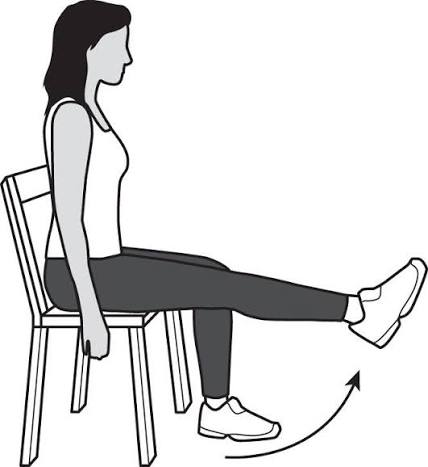
A patient performs the exercise as shown in the image. As the knee approaches full extension, which of the following motions is MOST LIKELY to occur to lock the knee?
A. Lateral rotation of the femur on the tibia
B. Medial rotation of the femur on the tibia
C. Lateral rotation of the tibia on the femur
D. Medial rotation of the tibia on the femur
C is correct.
Rational: The scre home mechanism stabilized the knee when going into full extension, in open extension the tibia will externally rotate to lock the knee into place.
A clinician observes that a patient is unable to maintain scapular retraction and ownward rotation while performing a resisted shoulder extension exercise. Which of the following muscles is MOST LIKELY weak?
A. Weakness of serratus anterior
B. Weakness of lower trapezius
C. Weakness of rhomboid major and minor
D. Weakness of middle deltoid
C is correct
Rational: The wuestion is indiciating wither weakness in the downward rotators or tightness in the upward rotators. The upward rotators are: Upper Trap, Serratus anterior, Lower trap. The downward rotators are: Pec Minor, Levator Scap, Rhomboids.
UR: Upset Thor Smacks Loki
DR: Pirates Love Rum
A clinician is initiating passive range of motion for a patient who underwent arthroscopic supraspinatus repair 10 days ago. Which of the following positions and ranges is MOST APPROPRIATE to begin passive motion?
A. Supine with the arm at the side and elbow at 90°, externally rotated to 20°
B. Standing with the arm in a sling, shoulder forward-elevated to 120°
C. Sitting with the shoulder passively abducted to 90° in the scapular plane
D. Prone with the shoulder passively extended past neutral
A is correct
Rational: In the early phase of rehab following an arthroscopic RTC repair, passive ROM is best performed in supine to support the scapular and reduce the sheer and tensile load on the repair. ER is initiates with the arm at the side and elbow at 90, limited to approximately 30 in the first 4-6 weeks. This approach maintains the ROM while protecting the repair.
Setting: Outpatient Sex: Female. Age: 32 years
Presenting Problem/Current Condition:
• Right calf and ankle weakness that started during a recreational basketball game 4 days ago
• Patient reports a sharp “snapping” sensation in the posterior calf while pushing off for a jump
• Immediately fell forward and was unable to walk on the right leg without assistance
• Bruising along the posterior calf developed the following day
• X-ray revealed no fractures
Medical History:
• No prior calf, ankle, or Achilles injuries. Non-smoker, non-drinker.
Other Information:
• Patient lives alone in a third-floor walk-up. Works as a high school teacher
Patient’s goal is to return to recreational basketball
Medication:
• Ibuprofen and acetaminophen as needed
Physical Therapy Examination(s):
• Bilateral hips, knees, and ankles within normal ROM except right ankle
• Tenderness to palpation: ~3 cm proximal to calcaneal insertion of Achilles tendon
• Strength on MMT: Left ankle: all motions 5/5, Right ankle: Plantarflexion: 1/5, Dorsiflexion: 4/5, Inversion: 4/5, Eversion: 4/5
• Unable to perform single-leg heel raise on the right
Physical Therapy Plan of Care:
• Day 1: Evaluation only
On examination, which special test is MOST LIKELY to be positive in this patient?
A. Thompson test
B. Anterior drawer test of the ankle
C. Talar tilt test
D. Squeeze test of the tibiofibular
A is correct
Rational: There was a full rupture of the achillies tendon, the thompson test tests for the integrity of the achillies tendon
Setting: Outpatient Sex: Female. Age: 32 years
Presenting Problem/Current Condition:
• Right calf and ankle weakness that started during a basketball game 4 days ago
• Reports a sharp “snapping” sensation in the posterior calf while pushing off to jump
• Immediately fell forward and was unable to walk on the right leg without assistance
• Bruising along the posterior calf developed the following day
• X-ray revealed no fractures
Medical History:
• No prior calf, ankle, or Achilles injuries. Non-smoker, non-drinker.
Other Information:
• Lives alone in a third-floor walk-up. Works as a high school teacher
Medication:
• Ibuprofen and acetaminophen as needed
Physical Therapy Examination(s):
• Bilateral hips, knees, and ankles within normal ROM except right ankle
• Tenderness to palpation: ~3 cm proximal to calcaneal insertion of Achilles tendon
• Strength on MMT: Left ankle: all motions 5/5, Right ankle: Plantarflexion: 1/5,
Dorsiflexion: 4/5, Inversion: 4/5, Eversion: 4/5
• Unable to perform single-leg heel raise on the right
Physical Therapy Plan of Care:
• Day 1: Evaluation only
Two weeks following her right Achilles tendon repair, the patient returns to the clinic in a controlled ankle motion (CAM) boot. Which of the following interventions would most likely be CONTRAINDICATED at this stage of rehabilitation?
A. Submaximal isometric plantarflexion in the CAM boot
B. Hip and knee strengthening in non-weight-bearing positions
C. Towel-based toe-curl exercises for foot intrinsics
D. Active dorsiflexion stretching
Correct Answer: D
Rational: Active DF stretching places tensile load on the healing achillies tendon by lengthening it across the TC joint. In Phase 1 of rehab you should not have any DF past neutral. All other options are thing you can/should do.
Setting: Outpatient Sex: Female. Age: 32 years
Presenting Problem/Current Condition:
• Right calf and ankle weakness that started during a basketball game 4 days ago
• Reports a sharp “snapping” sensation in the posterior calf while pushing off to jump
• Immediately fell forward and was unable to walk on the right leg without assistance
• Bruising along the posterior calf developed the following day
• X-ray revealed no fractures
Medical History:
• No prior calf, ankle, or Achilles injuries. Non-smoker, non-drinker.
Other Information:
• Lives alone in a third-floor walk-up. Works as a high school teacher
Medication:
• Ibuprofen and acetaminophen as needed
Physical Therapy Examination(s):
• Bilateral hips, knees, and ankles within normal ROM except right ankle
• Tenderness to palpation: ~3 cm proximal to calcaneal insertion of Achilles tendon
• Strength on MMT: Left ankle: all motions 5/5, Right ankle: Plantarflexion: 1/5,
Dorsiflexion: 4/5, Inversion: 4/5, Eversion: 4/5
• Unable to perform single-leg heel raise on the right
Physical Therapy Plan of Care:
• Day 1: Evaluation only
The patient is now 6 weeks post-op, has been cleared for full weight-bearing without he CAM boot, and wants to return to walking outdoors. Which of the following footwear recommendations is MOST APPROPRIATE at this stage?
A. Athletic shoe with no heel lift
B. Rocker-bottom shoe with a 4-5 cm heel lift.
C. Standard shoe with a 1-1.5 cm heel lift.
D. Negative-heel (lower than normal) shoe.
Correct Answer: C
Rational: A shoe with a slight heel allows for some PF while the achillies is healing.
A clinician evaluates a patient who reports difficulty performing a strong pulling motion, bringing a heavy object toward the body. On examination, the patient demonstrates weak elbow flexion when the shoulder is flexed but improved strength when the shoulder is extended. Which of the following is the MOST LIKELY cause of this finding?
A. Passive insufficiency of the biceps brachii
B. Active insufficiency of the biceps brachii
C. Passive insufficiency of the brachialis
D. Active insufficiency of the triceps brachii
Correct Answer: B
Rationale: Active insufficiency occurs when a muscle that crosses two joints cant generate optimal force because its overly shortened. The biceps crosses the shoulder and elbow joint. When the shoulder is flexed the biceps is already shortened proximally. Attempting to flex the elbow further required additional shortening which limits the ability to generate force.
A patient reports lateral foot pain during distance running. Gait analysis reveals a high medial longitudinal arch with lateral weight-bearing throughout stance and limited subtalar pronation. Which of the following orthotic interventions would MOST LIKELY benefit this patient?
A. Medial post under the first metatarsal head
B. Medial heel wedge
C. Posterior leaf-spring ankle-foot orthosis
D. Lateral post under the fifth metatarsal head
Correct Answer: D
Rational: Excessive foot supination often presenting as a pes cavus or rearfoot varus pattern shifts weight laterally during stance and reduces shock absorption. A lateral post placed under the fifth metatarsal head supports the lateral forefoot distributes weight more evenly and reduces lateral overload.
A clinician evaluates a patient with reduced mobility of the right hip. The clinician notes that hip flexion is greater when the knee is flexed compared to when the knee is extended. Which of the following is the MOST LIKELY cause of this finding?
A. Passive insufficiency of the hamstrings
B. Passive insufficiency of the quadriceps
C. Active insufficiency of the iliacus
D. Active insufficiency of the hamstrings
Correct Answer: A
Rational: when the knee is extended, the hamstrings are lengthened over both joints limiting hip flexion. When the knee is flexed the hamstrings are slackened allowing for greater hip flexion.
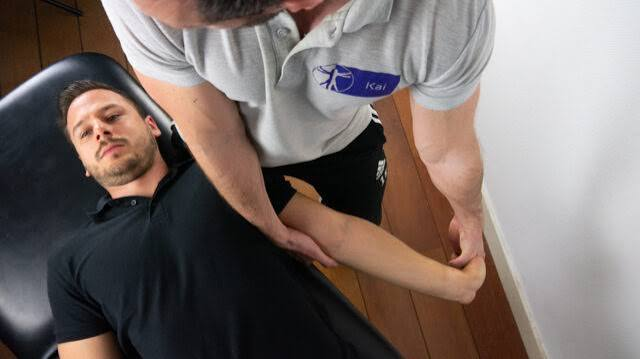
The patient reports of numbness and tingling in the forearm. The physical therapist decides to perform upper limb tension test on the patient. The test in the picture below is found to be positive. Based on the findings, which nerve is MOST LIKELY causing the numbness and tingling?
A. Anterior interosseous nerve
B. Ulnar nerve
C. Radial nerve
D. Musculocutaneous nerve
Correct Answer: D
The test being performed is the ULTT 2 which assesses Median, Axillary and Musculocutaneous nerves.
Its good to know the others as well
ULTT 1: assesses for Median, and Anterior interosseous nerve (MAIN)
ULTT 2: Median, Axillary, Musculocutaneous
ULTT 3: Radial
ULTT 4: Ulnar


To unlock the knee, when going from position A to position B, as shown in the image. Which of the following motions is MOST LIKELY to occur?
A. Lateral rotation of the femur on the tibia
B. Medial rotation of the femur on the tibia
C. Lateral rotation of the tibia on the femur
D. Medial rotation of the tibia on the femur
Correct Answer: A
In open chain we know that the tibia has to move laterally to lock in the screw home and rotate medial to unlock. In closed chain this flips, so the FEMUR will medially rotate to medial to lock and lateral to unlock. When we are squatting we are UNLOCKING so we are looking at a LATERAL ROTATION OF THE FEMUR TO UNLOCK.
Tibia in OKC goes lateral to Lock
TIbia in OKC goes medial to unlock
Femur in CKC goes MEDIAL to LOCK
Femur in CKC goes LATERAL to UNLOCK
Excessive upward rotation of the left scapula is noted as the patient attempts shoulder abduction. Which of the following muscles is MOST LIKELY to contribute to excessive scapular rotation?
A. Weakness of serratus anterior
B. Weakness of lower trapezius
C. Weakness of rhomboid major & minor
D. Weakness of pectoralis major
Correct Answer: C
Excessive upward rotation in abduction indicated uncontrolled motion of the upward rotators aka weakness of downward rotators. The down ward rotators are Pec Minor, Levator scapulae, and Rhomboid Major/minor.
A physical therapist is initiating passive and assisted movements for a patient who underwent surgical repair of a full-thickness rotator cuff tear six days ago. Which of the following positions is MOST APPROPRIATE for the patient?
A. Patient in sitting with arm abducted 70° with slight flexion
B. Patient is supine with arm abducted 45° with slight flexion
C. Patient in sitting with arm abducted 15° with slight flexion
D. Patient in supine with arm abducted 90° with slight flexion
Correct Answer: B
In general the safest position is supine when rehabing someone this early. and then minimizing the amount of abduction sicne it is a full thickness tear.
A patient reports difficulty gripping their tools at work tightly, and they repeatedly fall from their hand. On examination, the physical therapist notices that they can grip the tools tightly with their wrist in extension but struggles to do so with the wrist in flexion. What is the MOST LIKELY cause of this issue?
A. Passive insufficiency of both flexor digitorum profundus and extensor digitorum
B. Passive insufficiency of flexor digitorum and active insufficiency of extensor digitorum
C. Active insufficiency of flexor digitorum profundus and passive insufficiency of xtensor digitorum
D. Active insufficiency of both flexor digitorum profundus and extensor digitorum
Correct Answer” C
Rational: When the wrist if flexed the flexor digitorum profundus becomes shortened, limiting its ability to generate force for gripping. THis is active insufficency. The extensor digitorum is in a stretched position when the wrist is flexed reducing its ability to extend the fingers efficently. This is passive insufficency. THe flexor digitorum profundus ( finger flexor) becomes activley insufficent and the extensor digitorum (finger extensor) becomes a passivley insufficent. Both contribuing to gripping difficulties
Setting: Outpatient
Sex: Male
Age: 55 years old
Presenting Problem/Current Condition:
• Coronary artery bypass (CABG) surgery 3 months ago. Patient is stable and wants to start cardiac rehab to improve cardiovascular endurance.
Medical history:
• Myocardial infarction (MI), metabolic syndrome, history of smoking x 15 years, Hypertension, BMI of 30
Other Information:
• Lives alone in a condominium complex, has an elevator to his floor. Independent with ADLs and functional
activities.
• Medication: Aspirin daily.
• Vitals: Resting BP: 133/88 mm Hg, HR: 75 bpm and RR: 24 breaths/min
Physical Therapy Examination(s):
• Ambulates independently without any assistive device on level surface, experiences shortness of breath on inclined surface
• EKG findings: Prolonged PR interval
Which of the following is MOST APPROPRIATE to measure the increased metabolic demand placed on the heart?
A. Systolic blood pressure
B. Rate pressure product
C. Diastolic blood pressure
D. Heart rate
Correct Answer B
Rational: Myocardial O2 demand= Rate pressure product. THe rate pressure product (RPP) is a measure used to estimate myocardial work load and oxygen demand of the heart. It is calculated by multiplying the HR by the SBP. The formula gives an indication of how hard the heart is working and is particularly useful in evaluating cardiac function during exercise or stress testing. A higher RPP indicates increased cardiac work load and O2 consumption.
Setting: Outpatient
Sex: Male
Age: 55 years old
Presenting Problem/Current Condition:
• Coronary artery bypass (CABG) surgery 3 months ago. Patient is stable and wants to start cardiac rehab to improve cardiovascular endurance.
Medical history:
• Myocardial infarction (MI), metabolic syndrome, history of smoking x 15 years, Hypertension, BMI of 30
Other Information:
• Lives alone in a condominium complex, has an elevator to his floor. Independent with ADLs and functional
activities.
• Medication: Aspirin daily.
• Vitals: Resting BP: 133/88 mm Hg, HR: 75 bpm and RR: 24 breaths/min
Physical Therapy Examination(s):
• Ambulates independently without any assistive device on level surface, experiences shortness of breath on inclined surface
• EKG findings: Prolonged PR interval
A physical therapist is administering the six-minute walk test to assess the aerobic capacity of this patient. Which of the following statements regarding the test is MOST ACCURATE?
A. The physical therapist must walk with the patient to observe SpO2 on the pulse oximeter
B. “Warm-up” or practice test should not be performed immediately before the test.
C. The patient is allowed to take rest/breaks with the timer paused
D. The results of this test help to determine the cause of dyspnea
Correct Answer: B
Rational: If a practice test is done, wait for an hour before administering the second test. The SpO2 should not be used for constant monitoring during the test. The technician must not walk with the patient to observe the SpO2. The patient is allowed to slow down and stop as needed but the timer continues. The 6MWT does not determine peak O2 uptake, diagnose the cause of dyspnea on on exertion or evaluate the cause or mechanisms for exercise limitation
Setting: Outpatient
Sex: Male
Age: 55 years old
Presenting Problem/Current Condition:
• Coronary artery bypass (CABG) surgery 3 months ago. Patient is stable and wants to start cardiac rehab to improve cardiovascular endurance.
Medical history:
• Myocardial infarction (MI), metabolic syndrome, history of smoking x 15 years, Hypertension, BMI of 30
Other Information:
• Lives alone in a condominium complex, has an elevator to his floor. Independent with ADLs and functional
activities.
• Medication: Aspirin daily.
• Vitals: Resting BP: 133/88 mm Hg, HR: 75 bpm and RR: 24 breaths/min
Physical Therapy Examination(s):
• Ambulates independently without any assistive device on level surface, experiences shortness of breath on inclined surface
• EKG findings: Prolonged PR interval
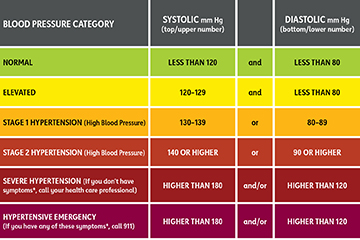
Which of the following categories is the MOST APPROPRIATE classification for this type of hypertension?
A. Normal
B. Elevated
C. Prehypertension
D. Stage 1
Answer: D
Rational: Blood pressure guidelines indicate that SBP 130-139 AND DBP 80-89 are classified as Stage 1 hypertension
Normal: SBP <120 and DBP <80
Elevated : SBP 120-129 AND DBP <80
Stage 1: SBP 130-139 OR DBP 80-89
Stage 2: SBP 140+ OR DBP 90+
Hypertensive Crisis: SBP 180+ and/OR DBP 120+ ← MEDICAL EMERGENCY
A healthy patient is working out on a stationary bike in an outpatient physical therapy clinic. After the first four minutes of constant-load and submaximal exercise, the VO2 reaches a steady state. What does this indicate?
A. Levels of lactic acid in the blood have reached a steady state
B. The adenosine triphosphate demand is being met aerobically
C. The exercise should be discontinued immediately
D. The respiratory rate is insufficient to meet the adenosine triphosphate demand
Correct Answer: B:
Rational: When VO2 reaches steady state during constant load submaxial exercise it means the energy demand is now being MET aerobically. Early in exercise ATP is supplied by anaerobic systems but once steady state occurs, oxygen delivery is sufficient to meet metabolic needs. This indicates efficient aerobic metabolism, not a need to stop exercise or an issue with respiratory rate.
During aquatic therapy, a patient is immersed to the level of sternoclavicular notch. Which of the following is the MOST EXPECTED physiological response to aquatic therapy?
A. Decreased cardiac output
B. Increased venous return
C. Increased heart rate
D. Increased VO2 response
Correct Response: B
Rational: when we are in water the hydrostatic pressure acts on the LE increasing venous return. Only 3 thing increase in water: CO, work of breathing, SV.
A patient’s chart states that they have been taking beta-blockers for the past
five years. Which of the following statements is correct regarding an exercise
training program?
A. Greater benefits from cardiovascular exercise to be achieved at lower systolic blood pressure rather than at higher systolic blood pressure levels
B. Need to use measures other than heart rate to determine intensity of exercise
C. Lower heart rate targets should be used to maximize cardiovascular training benefits in patients taking beta-blockers
D. Need for longer warm-up periods and cool-down periods during exercise sessions
Correct Answer: B
Rational: Beta blocks blunt te HR responce to exercise making HR an unreliable indicator of exercise intensity. As a result we would use RPE. Longer warm up/ cool downs are indicated in cardiac populations (post transplant)
A clinician is performing cardiac auscultation and hears a “dub” sound. Which of the following is associated with this heart sound?
A. Closing of bicuspid and tricuspid valves
B. Opening of bicuspid and tricuspid valves
C. Closing of aortic and pulmonary valves
D. Abnormal heart sound
Correct Answer: C
Rational: Lub is the closing of Tricuspid and Mitral (bicuspid), Dub is the closing of aortic and pulmonary valve. Option A is Lub. B wouldn’t make a sound. and D would be S3/S4 sounds (S3 indicating HF and S4 indicating heart failure)
Setting: Outpatient Sex: Female. Age: 62 years old
Presenting Problem/Current Condition:
• Status post percutaneous coronary intervention (PCI) with drug-eluting stent placement to the left anterior descending artery 10 weeks ago
• Patient is medically stable and has been referred for outpatient cardiac rehabilitation to improve aerobic capacity
Medical history: Type 2 diabetes mellitus, hyperlipidemia, hypertension, BMI of 32, former smoker (quit 8 years ago)
Other Information:
• Lives with spouse in a single-story home. Independent in ADLs and IADLs. Retired schoolteacher.
• Medication: Aspirin daily, atorvastatin, lisinopril
• Vitals: Resting BP 142/92 mm Hg, HR 88 bpm, RR 18 breaths/min
Physical Therapy Examination(s):
• Ambulates independently without any assistive device on level surface, experiences shortness of breath on inclined surface
• EKG findings: Prolonged PR interval
The clinician begins an exercise tolerance test on the patient. Which of the following measurements MOST LIKELY reflects the metabolic workload imposed on the myocardium during exercise?
A. Rate pressure product
B. Mean arterial pressure
C. Pulse pressure
D. Resting heart rate
Correct Answer: A
Rational: rate pressure product calculated (HRxSBP) is the most direct indicator of myocardial oxygen demand and metabolic workload imposed on the heart during exercise. As workload rises both HR and SBP increase and their product tracks the cardiac stress. RPP is widely used during graded exercise testing and at the onset of chest pain to quantify cardiac stress
Setting: Outpatient Sex: Female. Age: 62 years old
Presenting Problem/Current Condition:
• Status post percutaneous coronary intervention (PCI) with drug-eluting stent placement to the left anterior descending artery 10 weeks ago
• Patient is medically stable and has been referred for outpatient cardiac rehabilitation to improve aerobic capacity
Medical history: Type 2 diabetes mellitus, hyperlipidemia, hypertension, BMI of 32, former smoker (quit 8 years ago)
Other Information:
• Lives with spouse in a single-story home. Independent in ADLs and IADLs. Retired schoolteacher.
• Medication: Aspirin daily, atorvastatin, lisinopril
• Vitals: Resting BP 142/92 mm Hg, HR 88 bpm, RR 18 breaths/min
Physical Therapy Examination(s):
• Ambulates independently without any assistive device on level surface, experiences shortness of breath on inclined surface
• EKG findings: Prolonged PR interval
During the six-minute walk test, the patient becomes short of breath at minute 4 and asks to stop. Which of the following actions by the clinician is MOST APPROPRIATE?
A. Stop the test and document the distance walked at the point of stoppage
B. Pause the timer while the patient rests, and resume timing when walking restarts
C. Walk closely behind the patient and provide continuous verbal encouragement
D. Allow the patient to stop and rest while the timer continues to run
Correct Answer: D
Rational: During a 6mWT you are assessing endurance of a patient, the patient is allowed to use ADs and stop, rest breaks can be seated if needed (time keeps going).
Setting: Outpatient Sex: Female. Age: 62 years old
Presenting Problem/Current Condition:
• Status post percutaneous coronary intervention (PCI) with drug-eluting stent placement to the left anterior descending artery 10 weeks ago
• Patient is medically stable and has been referred for outpatient cardiac rehabilitation to improve aerobic capacity
Medical history: Type 2 diabetes mellitus, hyperlipidemia, hypertension, BMI of 32, former smoker (quit 8 years ago)
Other Information:
• Lives with spouse in a single-story home. Independent in ADLs and IADLs. Retired schoolteacher.
• Medication: Aspirin daily, atorvastatin, lisinopril
• Vitals: Resting BP 142/92 mm Hg, HR 88 bpm, RR 18 breaths/min
Physical Therapy Examination(s):
• Ambulates independently without any assistive device on level surface, experiences shortness of breath on inclined surface
• EKG findings: Prolonged PR interval
Based on the AHA/ACC blood pressure guidelines, which of the following categories BEST describes this patient's resting blood pressure of 142/92 mmHg?
A. Elevated
B. Stage 1
C. Stage 2
D. Hypertensive crisis
Correct Answer: C
Rational: A BP of 142/92 is considered to be Stage 2 hypertension based off of the AHA guidelins.
Normal: SBP <120 and DBP <80
Elevated : SBP 120-129 AND DBP <80
Stage 1: SBP 130-139 OR DBP 80-89
Stage 2: SBP 140+ OR DBP 90+
Hypertensive Crisis: SBP 180+ and/OR DBP 120+ ← MEDICAL EMERGENCY

A clinician monitors a patient during an incremental aerobic exercise test on a treadmill. As the workload progressively increases, which of the following blood pressure responses is MOST LIKELY observed in a healthy patient?
A. Systolic blood pressure rises linearly while diastolic blood pressure remains relatively constant
B. Systolic and diastolic blood pressures both rise linearly with workload
C. Systolic blood pressure remains constant while diastolic blood pressure rises linearly
D. Systolic and diastolic blood pressures both decrease progressively with workload
Correct Answer: A
Rational:
A patient has been training and living at an altitude of 10,000 feet above sea level for 4 weeks. Which of the following physiological adaptations is MOST LIKELY observed at this stage of altitude acclimatization, compared with the initial response?
A. Decreased stroke volume
B. Decreased heart rate
C. Increased cardiac output
D. Increased blood pressure
Correct Answer: A
Rational: Prolonged altitude exposure (roughly 2-4 weeks) the CV system normalizes some of the initial responses while developing chronic adaptations. Heart rate remains elevated but BP and CO return to baseline as plasma volume contracts and SV decreases. Decrease in SV is a hall mark CV adaptation distinguishing the acclimatization phase from the initial response at altitude
A patient is performing aquatic therapy with immersion to the level of the xiphoid process. Which of the following cardiovascular responses is MOST EXPECTED?
A. Increased systolic blood pressure
B. Increased heart rate
C. Decreased stroke volume
D. Decreased heart rate
Correct Answer: D
Rational” Three things go up in aquatic therapy ( CO, WOB, SV) every other metric goes down.
A patient who has been taking a beta-blocker for the past five years is participating in a graded exercise test. Which of the following changes will MOST LIKELY be observed in this patient, as compared to someone not taking the medication?
A. Higher heart rate at peak exercise
B. Lower systolic blood pressure response at the same workload
C. Higher rating of perceived exertion at the same workload
D. Lower oxygen uptake (VO2) at the same workload
Correct Answer: B
Rational: Beta blockers block epinephrine from binding to beta androgenic receptors which DOES NOT allow for HR and BP to rise. The result of someone who has chronically taken beta blockers would be a LOWER SBP due to the lack of epinephrine binding.
A patient has completed a 12-week aerobic exercise training program. Compared to baseline measurements, which of the following cardiovascular adaptations is MOST LIKELY observed at rest after the program?
A. Decreased resting heart rate
B. Increased resting heart rate
C. Decreased resting stroke volume
D. Increased resting systolic blood pressure
Correct Answer: A
Rational: Chronic aerobic training produces a lower resting HR, driven by increased resting stroke volume from left ventricular hypertrophy. Resting Cardiac output is preserved because the higher SV offsets the lower HR. A reduced resting HR is a good indicator of improved CV fitness
A clinician is performing cardiac auscultation and hears a “lub” sound.Which of the following is associated with this heart sound?
A. Closing of bicuspid and tricuspid valves
B. Opening of bicuspid and tricuspid valves
C. Closing of aortic and pulmonary valves
D. Abnormal heart sound
Correct Answer: A
Rational: Lub is the closing of Tricuspid and Mitral (Bicuspid) valves, Dub is the closing of Aortic and Pulmonary valves.