Textbook geology terms
 Call Kai
 Learn
 Practice Test
 Spaced Repetition
 Match
 Flashcards
 Knowt Play
1/89

There's no tags or description
Looks like no tags are added yet.
90 Terms

Minerals
form in specific three-dimensional lattices, and the nature of the lattices and the type of bonding within them have important implications for mineral properties.

Mineral grouping
according to the anion part of their formula, with some common types being oxides, sulphides, sulphates, halides, carbonates, phosphates, silicates, and native minerals.
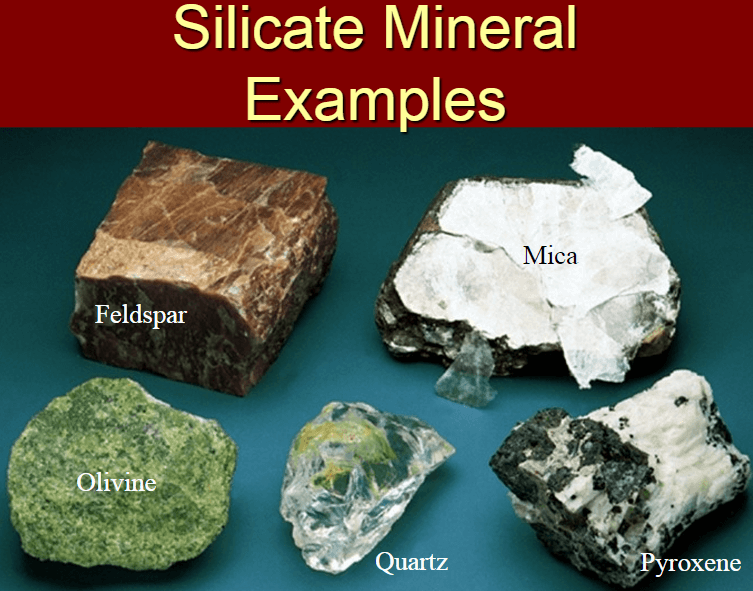
Silicate minerals
by far, the most important minerals in Earth’s crust.
They all include silica tetrahedra (four oxygens surrounding a single silicon atom) arranged in different structures (chains, sheets, etc.).

Ferromagnesian silicates
rock-forming silicate minerals that contain substantial amounts of iron (Fe) and/or magnesium (Mg) in their chemical structures

Formation of minerals
Most minerals in the crust form from the cooling and crystallization of magma. Some form from hot water solutions, during metamorphism or weathering, or through organic processes.
Properties of minerals
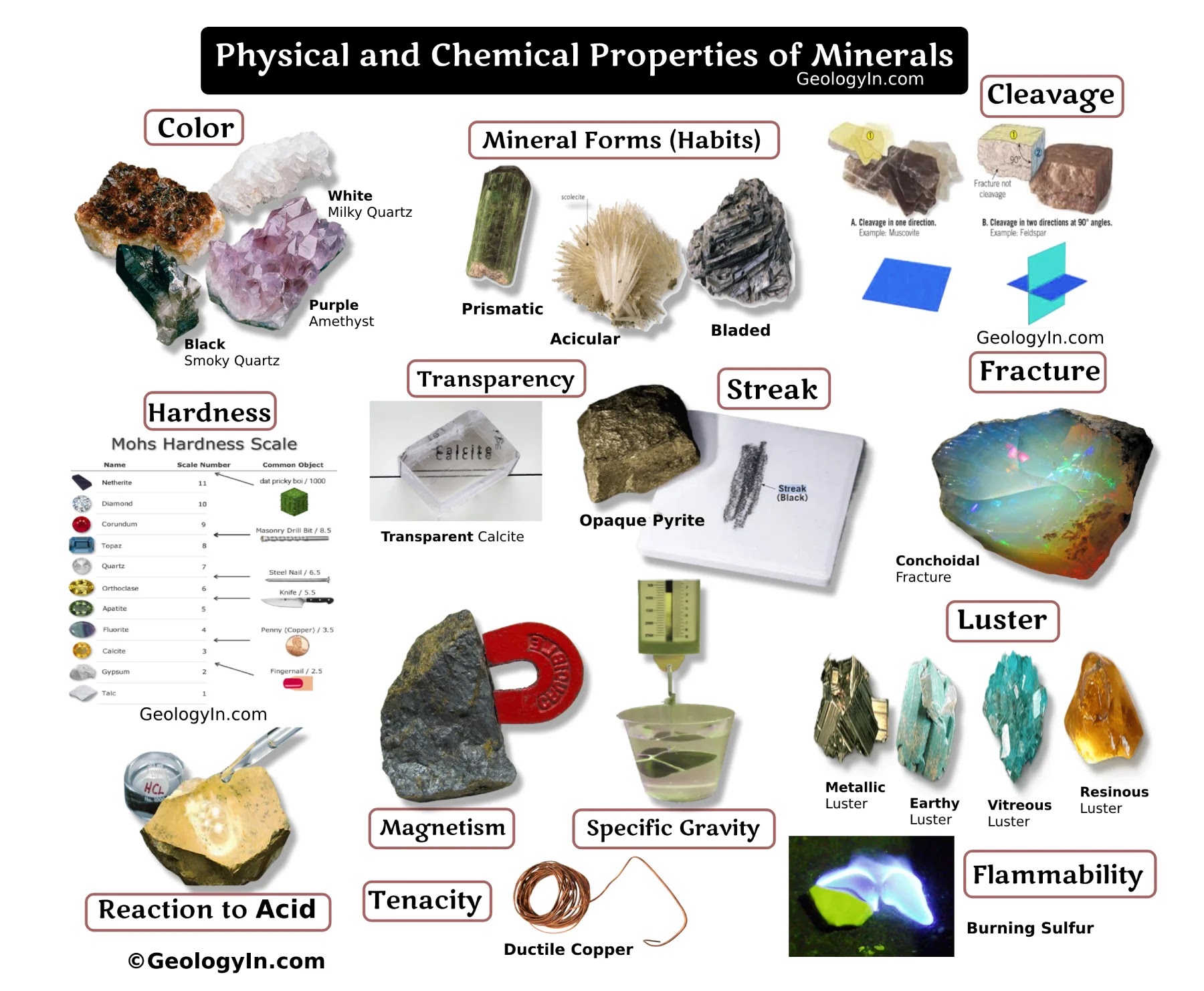
Some of the important properties for mineral identification include hardness, cleavage/fracture, density, lustre, colour, and streak colour.

Three types of rock
igneous, sedimentary, metamorphic

igneous
formed by magma

sedimentary
formed from fragments of other rocks or precipitation from solution

metamorphic
formed when existing rocks are altered by heat, pressure, and/or chemical action

rock cycle
processes that contribute to cycling of rock material among three types.
driven by Earth’s internal heat, and by processes happening at the surface, which are driven by solar energy.

magma
molten rock, and in most cases, it forms from partial melting of existing rock

main processes of magma formation
decompression melting and flux melting

Range of magma composition
ultramafic, mafic, intermediate, felsic

Mafic rocks
rich in iron, magnesium, and calcium, and have around 50% silica

Felsic rocks
rich in silica (~75%) and have lower levels of iron, magnesium, and calcium and higher levels of sodium and potassium than mafic rocks
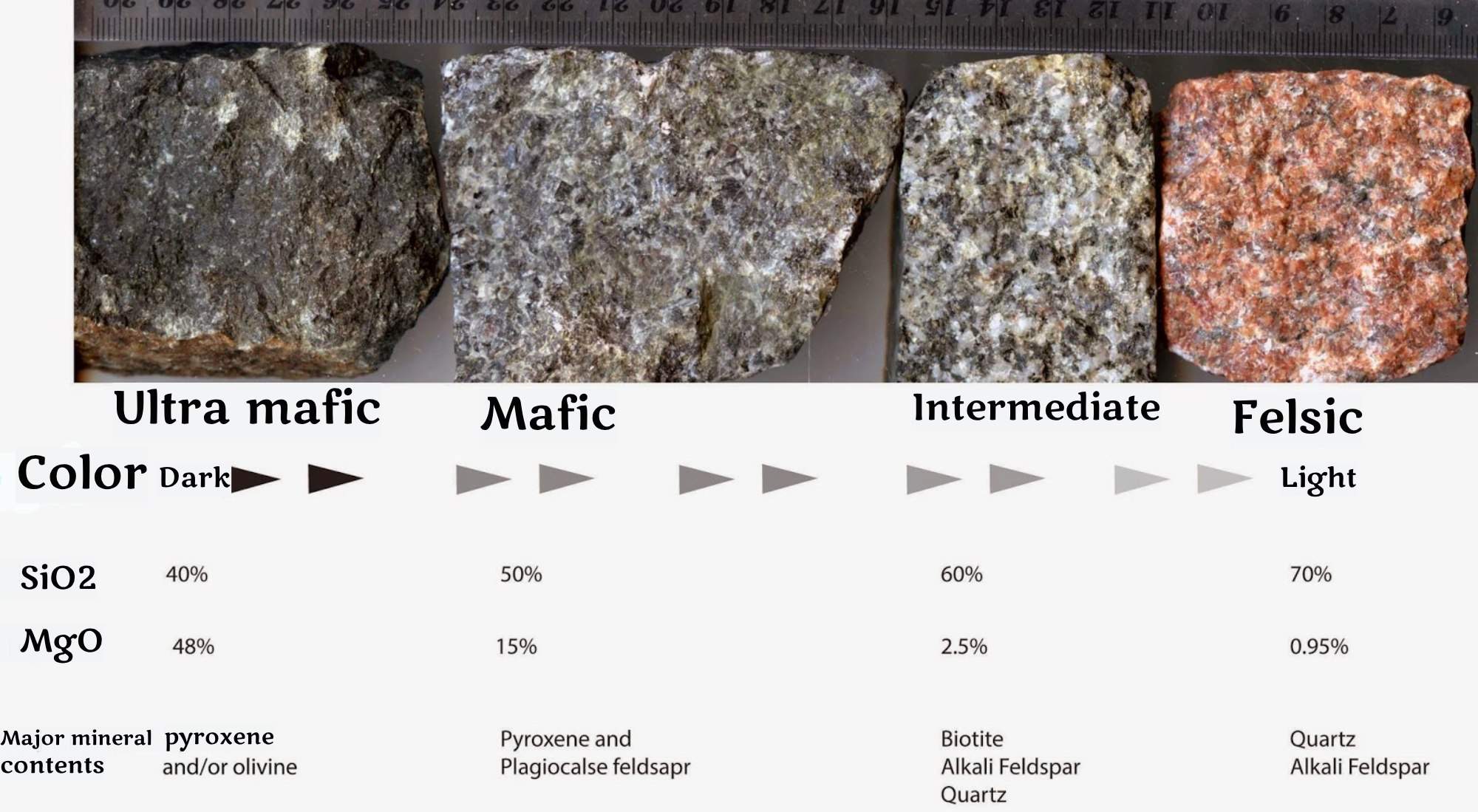
Intermediate rocks
compositions between felsic and mafic

Crystallization of magma
As a body of magma starts to cool, the first process to take place is the polymerization of silica tetrahedra into chains.
This increases the magma’s viscosity (makes it thicker) and because felsic magmas have more silica than mafic magmas, they tend to be more viscous.

Bowen reaction series
allows us to predict the order of crystallization of magma as it cools
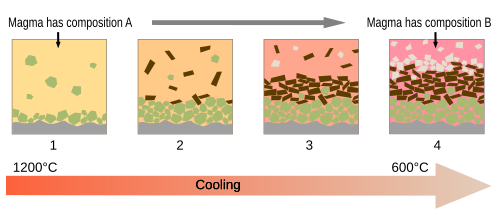
Fractional crystallization
separation of early-forming crystals
modifies magma

classification of igneous rock
based on their mineral composition and texture.
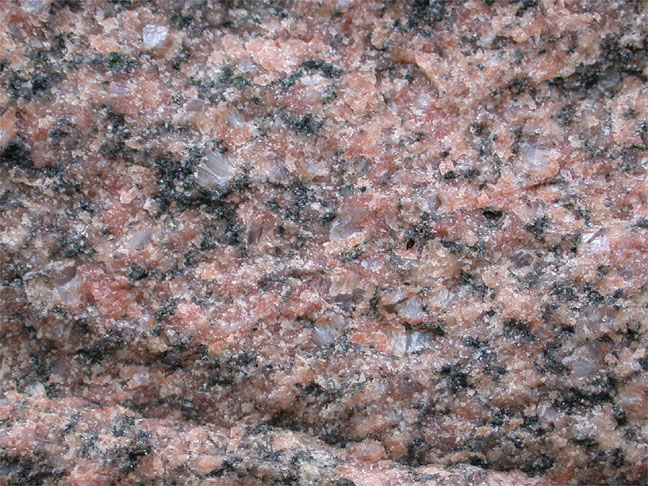
Phaneritic
crystals are visible to the naked eye
most intrusive igneous rocks

Porphyritic
larger crystals in a matrix of smaller crystals
this texture happens when there were were two stages of cooling (slow then fast)

Pegmatitic
very large crystals
this texture happens if the cooling was extremely slow, or if water was present during cooling

How magma intrudes into country rock
pushing it aside or melting through it

Types of intrusive igneous rock bodies
irregular (stocks and batholiths)
tabular (dykes and sills)
or pipe-like

Batholiths
have exposed areas of greater than 100 km2

Stocks
exposed areas less than 100 km2

Sills
parallel to existing layering in the country rock

Dykes
cut across existing layering in the country rock
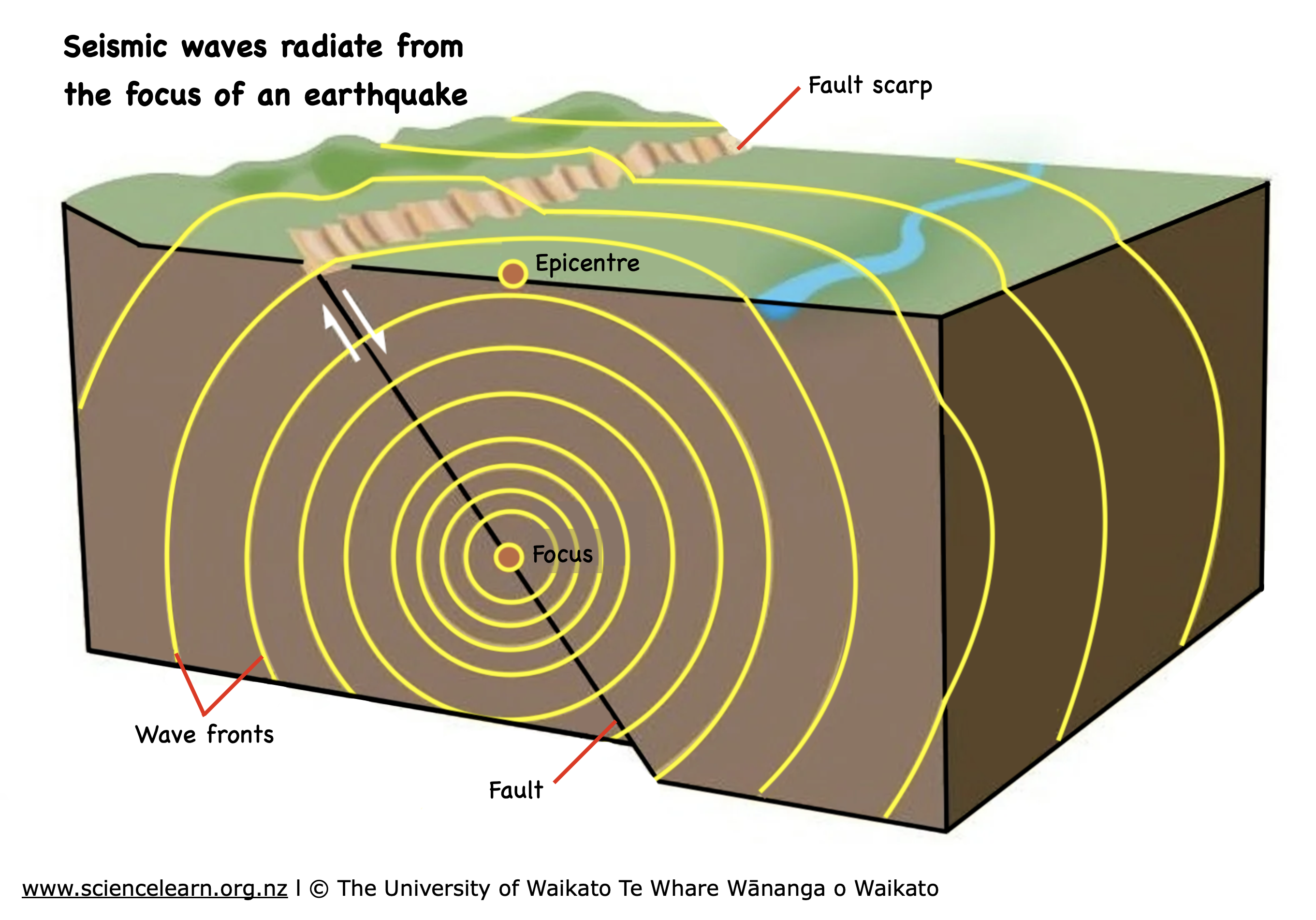
Seismic waves
travel through earth
either P-waves or S-waves

P-waves
compression, or “push” waves

S-waves
shear waves

Differences in P-wave and S-wave motion
P-waves are faster than S-waves, and can pass through fluids.
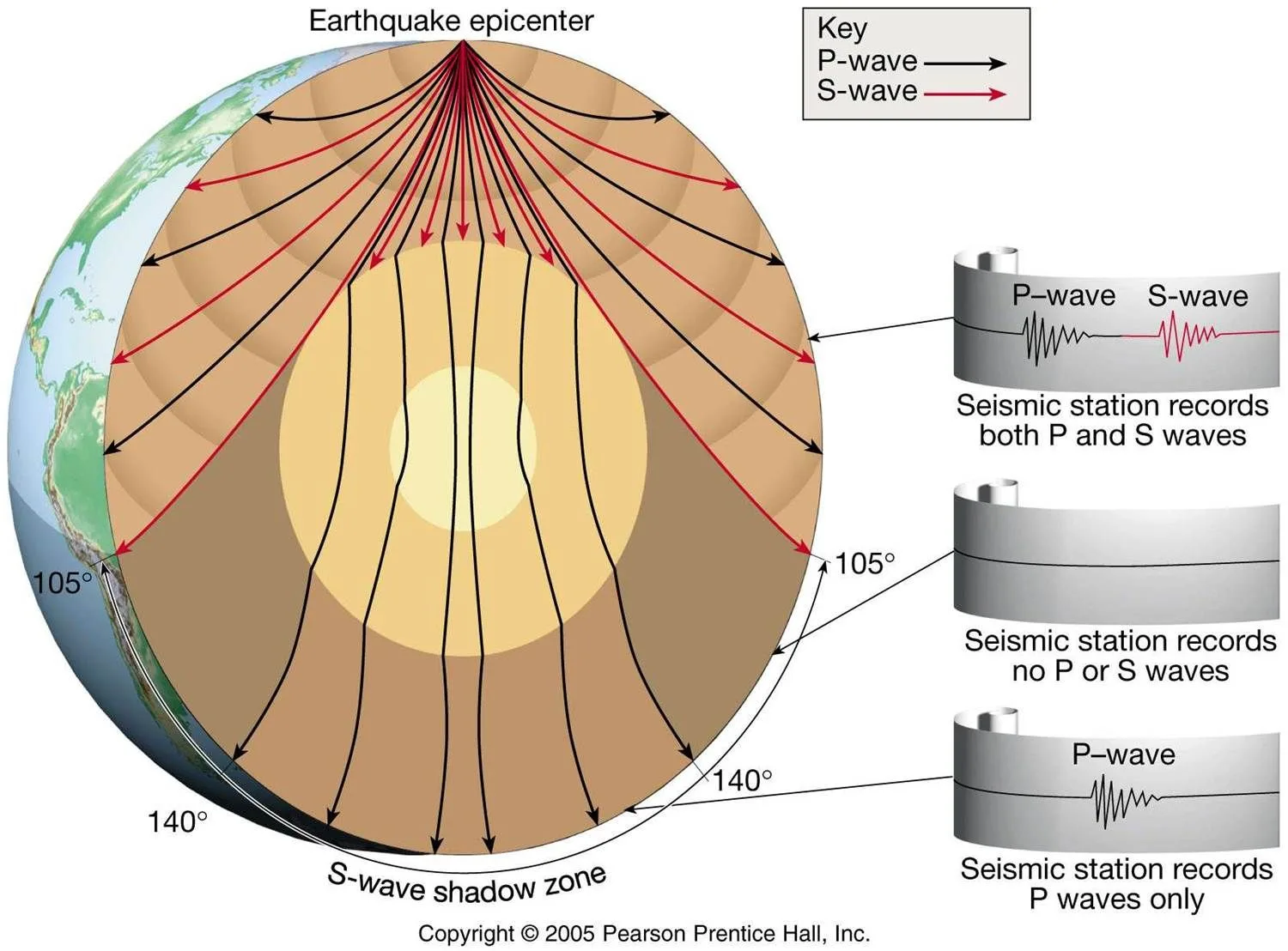
Things seismic waves can tell us
the nature and temperature characteristics of the various parts of Earth’s interior

Earth’s internal temperature
increases with depth (to around 5000°C at the centre)
but there are significant variations in the rate of temperature increase.
These variations are related to differences in composition and the existence of convection in the mantle and liquid part of the core.
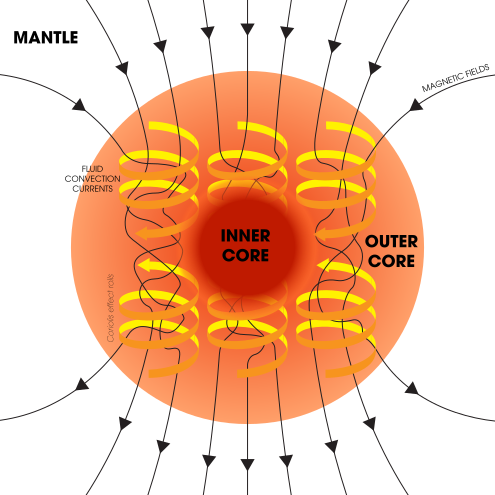
Magnetic field cause
outer-core convection

Magnetic force directions
different at different latitudes

Polarity of the magnetic field
not constant, and has flipped from “normal” (as it is now) to reversed and back to normal hundreds of times in the past

Isostasy
The “plastic” nature of the mantle, which allows for mantle convection, also determines the nature of the relationship between the crust and the mantle.
The crust floats on the mantle. Where the crust becomes thicker because of mountain building, it pushes farther down into the mantle.
Oceanic crust, being heavier than continental crust, floats lower on the mantle.

Evidence for continental drift in early 20th century
included the matching of continental shapes on either side of the Atlantic and the geological and fossil matchups between continents that are now thousands of kilometres apart

The established theories of global geology (before plate tectonics)
permanentism and contractionism
but neither of these theories was able to explain some of the evidence that supported the idea of continental drift.

Strides made in understanding Earth in mid 20th century
discovering magnetic evidence of continental drift
mapping the topography of the ocean floor
describing the depth relationships of earthquakes along ocean trenches
measuring heat flow differences in various parts of the ocean floor
mapping magnetic reversals on the sea floor

Earth’s lithosphere
made up of over 20 plates that are moving in different directions at rates of between 1 cm/y and 10 cm/y
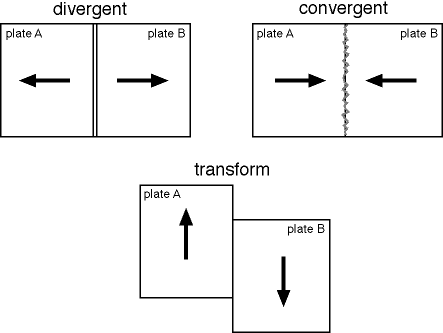
Three types of plate boundary
divergent
convergent
transform

Divergent plate boundary
plates moving apart and new crust forming
form where existing plates are rifted apart, and it is hypothesized that this is caused by a series of mantle plumes

Convergent plate boundary
plates moving together and one being subducted
Subduction zones are assumed to form where accumulation of sediment at a passive margin leads to separation of oceanic and continental lithosphere

Transform plate boundary
plates moving side by side

Mechanisms for plate motion
widely believed that ridge-push and slab-pull are the main mechanisms , as opposed to traction by mantle convection
Mantle convection is a key factor for producing the conditions necessary for ridge-push and slab-pull

Ridge-push and slab-pull
push of oceanic lithosphere down from a ridge area
and
pull of oceanic lithosphere down into the mantle
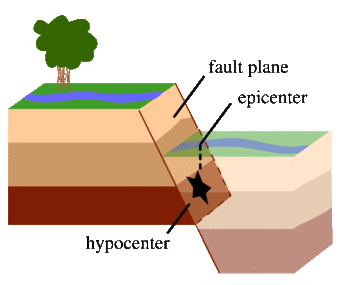
Earthquake
the shaking that results when a body of rock that has been deformed breaks and the two sides quickly slide past each other
The rupture is initiated at a point but quickly spreads across an area of a fault, via a series of aftershocks initiated by stress transfer
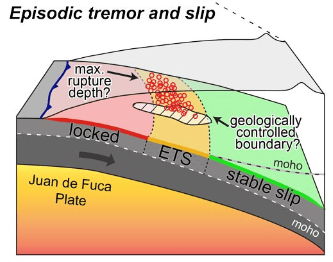
Episodic tremor and slip
a periodic slow movement, accompanied by harmonic tremors, along the middle part of a subduction zone boundary

Location of most earthquakes
at or near plate boundaries
especially at transform boundaries (where most quakes are at less than a 30 kilometre depth) and at convergent boundaries (where they can be at well over a 100 kilometre depth)

The largest earthquakes
happen at subduction zones, typically in the upper section where the rock is relatively cool

Magnitude
a measure of the amount of energy released by an earthquake, and it is proportional to the area of the rupture surface and to the amount of displacement.
Although any earthquake has only one magnitude value, it can be estimated in various ways, mostly involving seismic data

Intensity
a measure of the amount of shaking experienced and damage done at a particular location around the earthquake
will vary depending on the distance to the epicentre, the depth of the earthquake, and the geological nature of the material below surface

Serious consequence of most large earthquakes
damage to buildings
amount of damage is related to the type and size of buildings, how they are constructed, and the nature of the material on which they are built

Other important consequences of earthquakes
fires, damage to bridges and highways, slope failures, liquefaction, and tsunami
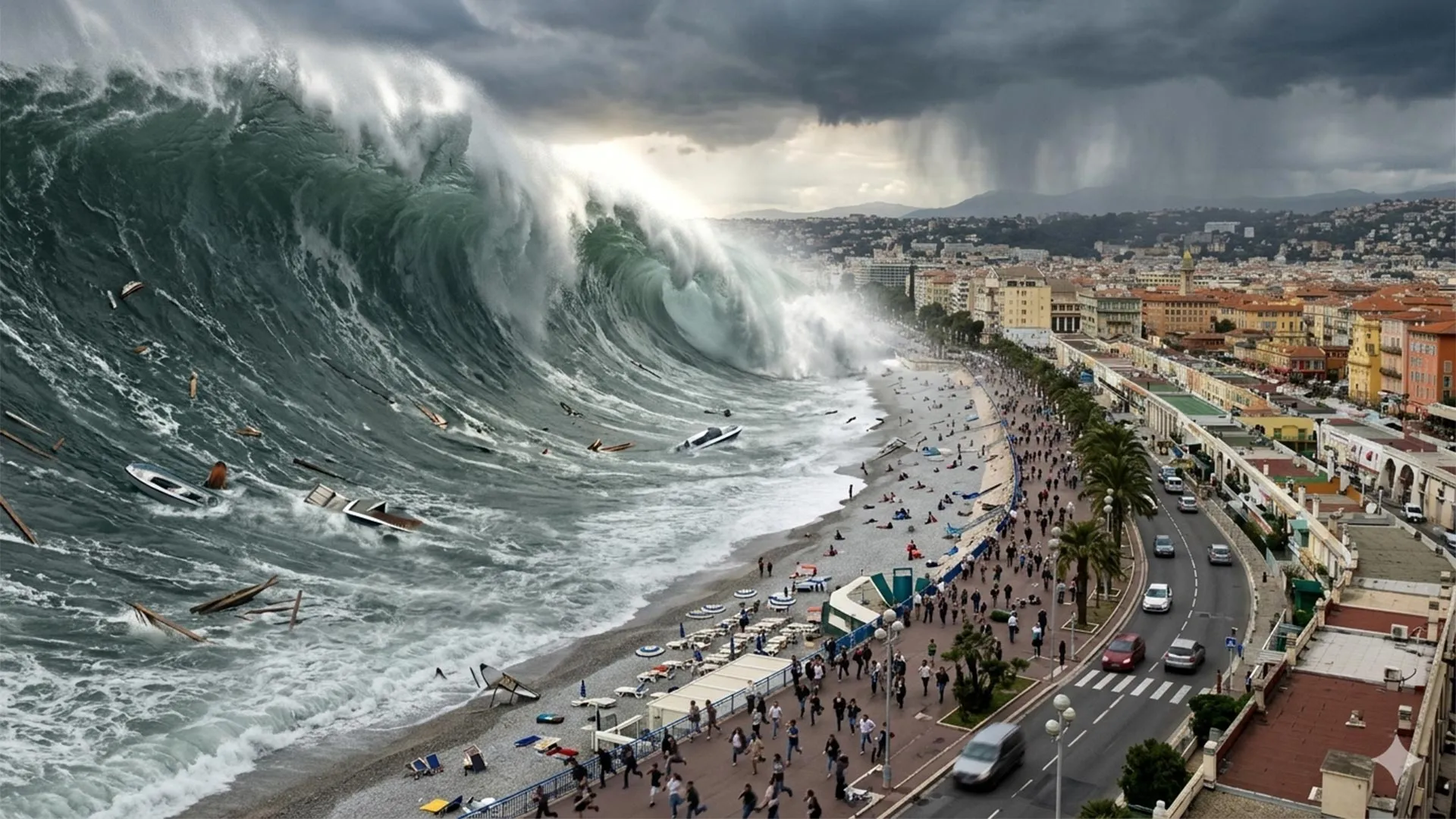
Tsunami
almost all related to large subduction earthquakes

Stress
includes compression, extension and shearing
typically originates from plate-boundary processes.

Response of rock that is stressed
either elastic or plastic strain
may eventually break
response depends on its composition and structure, the rate at which strain is applied, and also to the temperature of the rock body and the presence of water.

Folding
generally a plastic response to compressive stress, although some brittle behaviour can happen during folding

Antiform
An upward fold

Synform
A downward fold

The axis of a fold
can be vertical, inclined, or even horizontal
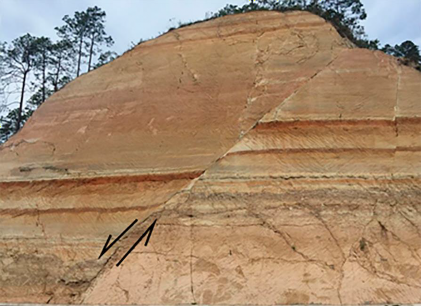
Fractures
joints
typically form during extension, but can also form during compression
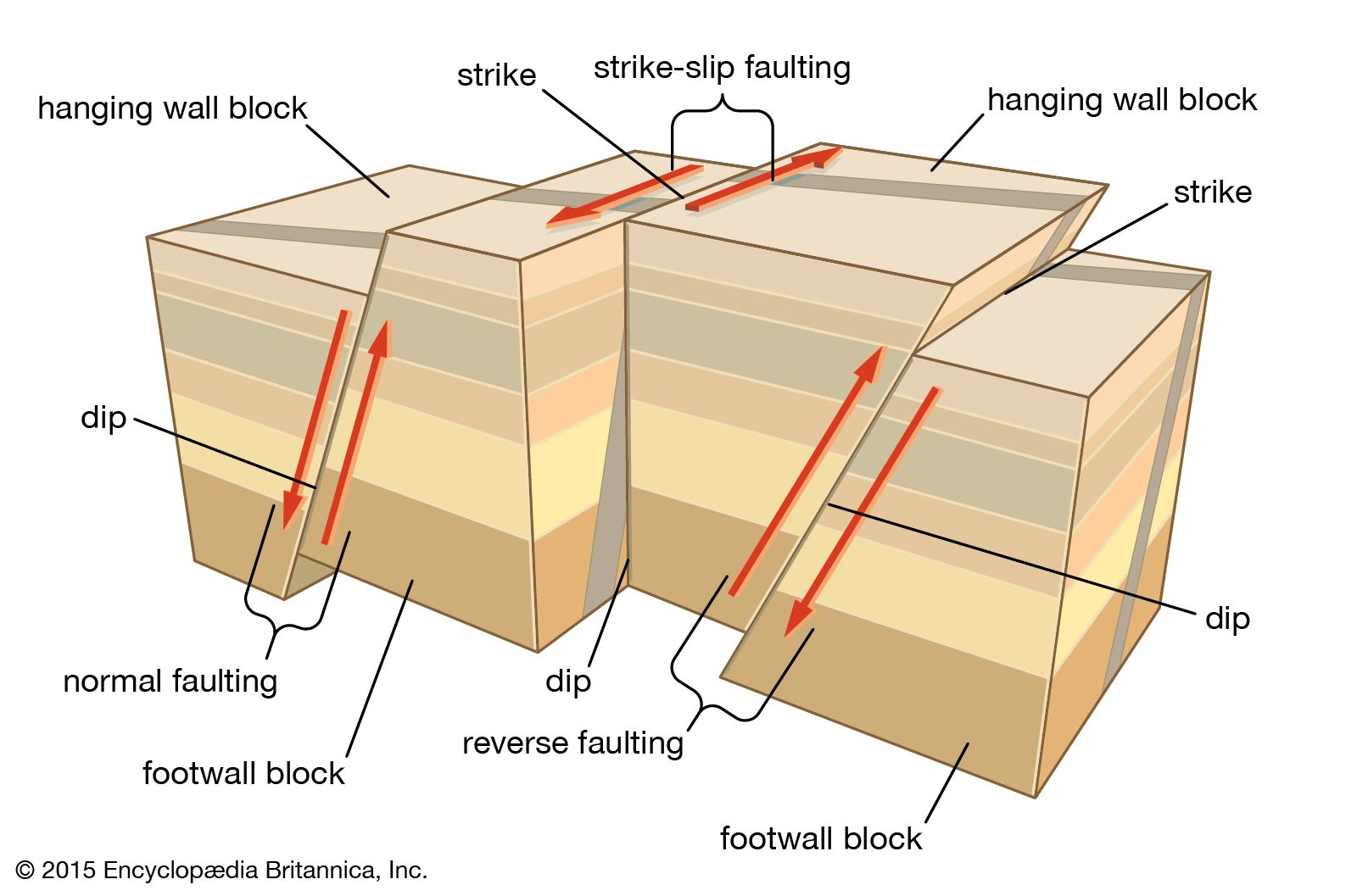
Faulting
involves the displacement of rock
can take place during compression or extension
as well as during shearing at transform boundaries

Reverse faulting
a non-vertical fault along which the hanging wall (upper surface) has moved up relative to the footwall

Thrust faulting
a low angle reverse fault

Big bang
The universe began 13.77 billion years ago when energy, matter, and space expanded from a single point

Evidence for big bang
the cosmic “afterglow” from when the universe was still very dense
red-shifted light from distant galaxies, which tell us the universe is still expanding.

Elements produced by big bang
hydrogen, helium, and lithium

Production of heavier elements
come from nuclear fusion reactions in stars
Large stars make elements such as silicon, iron, and magnesium, which are important in forming terrestrial planets.
Large stars explode as supernovae and scatter the elements into space.

How to build a solar system
Solar systems begin with the collapse of a cloud of gas and dust.
Material drawn to the centre forms a star, and the remainder forms a disk around the star.
Material within the disk clumps together to form planets.

Ordering of our solar system
In our solar system, rocky planets are closer to the Sun, and ice and gas giants are farther away. This is because temperatures near the Sun were too high for ice to form, but silicate minerals and metals could solidify.

Earth’s first 2 billion years
heated by radioactive decay, collisions with bodies from space, and gravitational compression.
Heating melted Earth, causing molten metal to sink to Earth’s centre and form a core, and silicate melt to float to the surface and form the mantle and crust

Origin of the moon
collision with a planet the size of Mars knocked debris into orbit around Earth, and the debris coalesced into the moon

Origin of earth’s atmosphere
the result of volcanic degassing, contributions by comets and meteorites, and photosynthesis

Volcanism connection to plate tectonics
Most volcanoes are associated with convergent plate boundaries (at subduction zones), and there is also a great deal of volcanic activity at divergent boundaries and areas of continental rifting.

Volcanos at convergent boundary
magma is formed where water from a subducting plate acts as a flux to lower the melting temperature of the adjacent mantle rock.

Volcano at divergent boundary
magma forms because of decompression melting
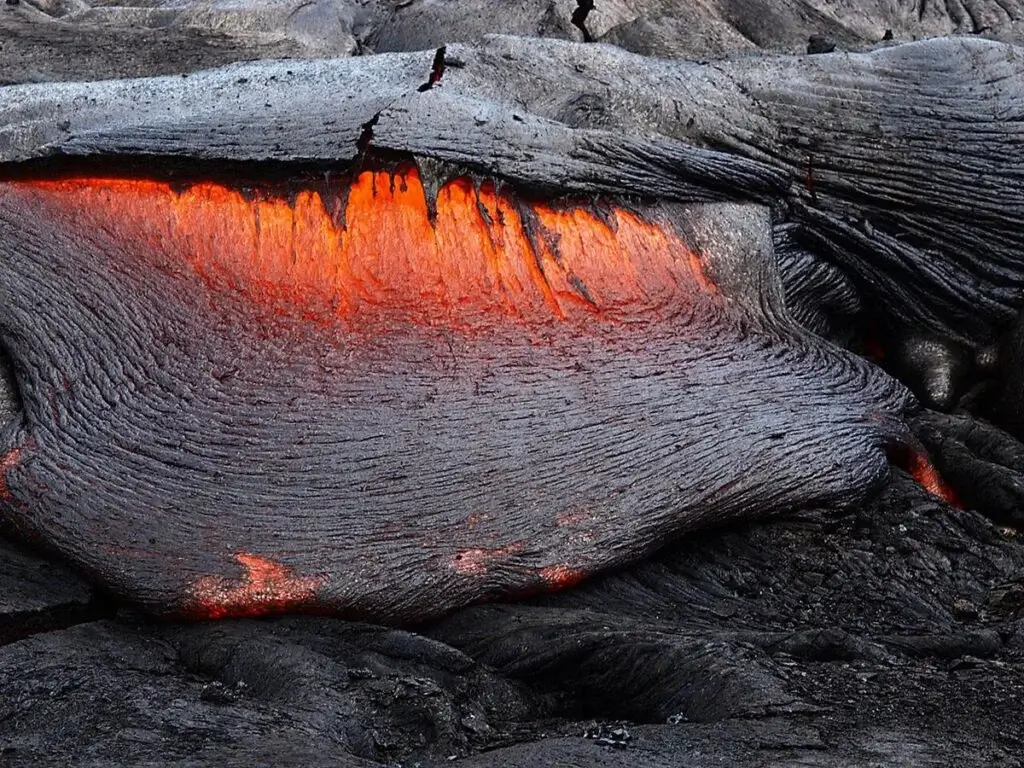
Magmas in volcanic regions
initially mafic in composition, but they can evolve into more felsic types through interaction with crustal rock, and as a result of crystal settling within a magma chamber.

Felsic magma
tend to have higher gas contents than mafic magmas, and they are also more viscous. The higher viscosity prevents gases from escaping from the magma, and so felsic magmas are more pressurized and more likely to erupt explosively.

Cinder cone volcanos
relatively small volcanoes that were formed during a single eruptive event and are composed mostly of mafic rock fragments

Composite volcanos
normally associated with subduction, and while their magma tends to be intermediate on average, it can range all the way from felsic to mafic. The corresponding differences in magma viscosity lead to significant differences in eruptions style

Shield volcanos
are associated with mantle plumes, and have consistently mafic magma which typically erupts as lava flows

Pyroclastic density currents
some as hot as 1000˚C can move at hundreds of kilometres per hour and will kill anything in the way

Lahars
volcano-related mudflows, can be large enough to destroy entire towns
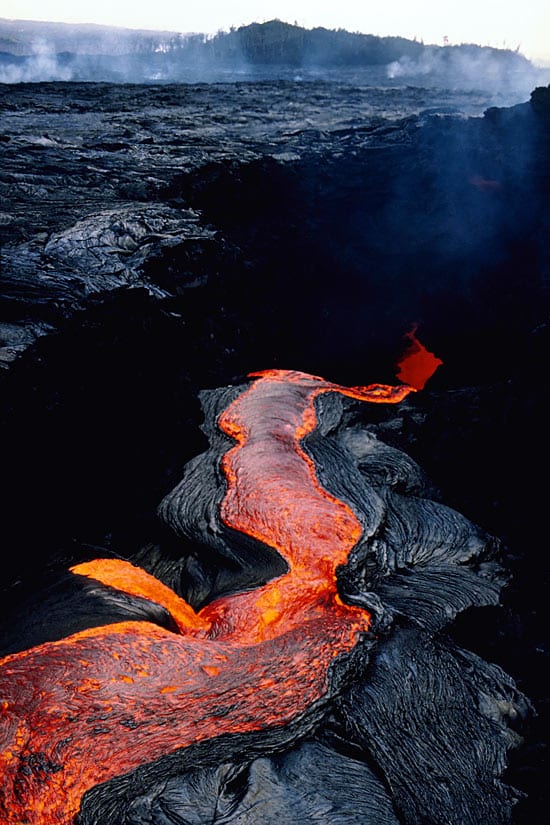
Lava flows
destroy anything in their paths, but tend to move slowly enough so that people can get to safety

Volcanic ash and gases
can lead to short-term significant climate cooling.