Med Term Chapter 13 - Ear
 Call Kai
 Learn
 Practice Test
 Spaced Repetition
 Match
 Flashcards
 Knowt Play
1/64

There's no tags or description
Looks like no tags are added yet.
65 Terms
ear
organ of hearing and balance; includes the external ear, middle ear, and labyrinth or inner ear
external ear
consists of the auricle and external auditory canal (meatus)
auricle
external, visible part of the ear located on both sides of the head; directs sound waves into the external auditory canal (also called pinna)
external auditory canal
short tube that ends at the tympanic membrane. The inner part lies within the temporal bone of the skull and contains the glands that secrete earwax (cerumen). (also called external auditory meatus)
middle ear
consists of the tympanic membrane and the tympanic cavity containing the ossicles
tympanic membrane
semitransparent membrane that separates the external auditory canal and the middle ear cavity. The tympanic membrane transmits sound vibrations to the ossicles. (also called eardrum)
tympanic membrane is derived from the Greek tympanon, meaning drum, because of its resemblance to a drum or tambourine.
ossicles
bones of the middle ear that carry sound vibrations. The ossicles are composed of the malleus (hammer), incus (anvil), and stapes (stirrup). The stapes connects to the oval window, which transmits the sound vibrations to the cochlea of the inner ear.
eustachian tube
(yū-STĀ-shan) (toob)
passage between the middle ear and the pharynx; equalizes air pressure on both sides of the tympanic membrane
inner ear
consists of the labyrinth and connectors of the vestibular and the cochlear nerves
labyrinth
bony spaces within the temporal bone of the skull made up of three distinct parts: the cochlea, the semicircular canals, and the vestibule. The cochlea facilitates hearing. The semicircular canals and the vestibule facilitate equilibrium and balance.
cochlea
coiled portion of the inner ear containing the sensory organ for hearing; connects to the oval window in the middle ear
semicircular canals and vestibule
sensory organs of balance; contain receptors and endolymph that provide sensory information about the body’s position to maintain equilibrium
vestibulocochlear nerve
cranial nerve responsible for hearing and balance; composed of vestibular fibers and cochlear fibers (also called acoustic nerve or auditory nerve)
vestibular nerve
cranial nerve branch that conveys information about position and balance from the semicircular canals and vestibule to the brain
cochlear nerve
cranial nerve branch that conveys information about sound, including volume and frequency, from the cochlea to the brain
mastoid bone
portion of the temporal bone of the skull posterior and inferior to each auditory canal; contains mastoid air cells that drain into the middle ear cavity behind the external auditory canal (also called mastoid process)
labyrinthitis
inflammation of the labyrinth
mastoiditis
inflammation of the mastoid bone
myringitis
inflammation of the tympanic membrane (eardrum)
otalgia
(ō-TAL-ja)
pain in the ear
otomycosis
(ō-tō-mī-KŌ-sis)
abnormal condition of fungus in the ear (usually affects the external auditory canal)
otopyorrhea
(ō-tō-pī-ō-RĒ-a)
discharge of pus from the ear
otorrhea
(ō-tō-RĒ-a)
discharge from the ear (may be serous, bloody, consisting of pus, or containing cerebrospinal fluid)
otosclerosis
(ō-tō-skle-RŌ-sis)
hardening of the ear (stapes) (caused by irregular bone development and resulting in hearing loss)

acoustic neuroma
benign tumor within the inner ear that forms along the vestibulocochlear nerve; may cause hearing loss and damage structures of the cerebellum as it grows

cholesteatoma
(ko-le-stē-a-TŌ-ma)
cystlike mass composed of epithelial cells and cholesterol occurring in the middle ear; may be associated with chronic otitis media
Ménière disease
(me-NYĀR) (di-ZĒZ)
chronic disease of the inner ear characterized by a sensation of spinning motion (vertigo), ringing in the ear (tinnitus), aural fullness, and fluctuating hearing loss; symptoms are related to a change in volume or composition of fluid within the labyrinth

otitis externa (OE)
inflammation of the outer ear, specifically the auditory canal

otitis media (OM)
inflammation of the middle ear
ototoxicity
adverse pharmacologic reaction causing damage to the vestibulocochlear nerve; results in abnormalities of hearing and balance
presbycusis
(prez-bi-KŪ-sis)
hearing impairment occurring with age
tinnitus
(TIN-i-tus)
inging in the ears
(Note: the ending is itus and not itis, the usual ending for inflammation)
vertigo
sense that either one’s own body (subjective vertigo) or the environment (objective vertigo) is revolving; may indicate inner ear disease
Benign paroxysmal positional vertigo (BPPV): is characterized by brief episodes of vertigo associated with a change in the position of the head, such as turning over in bed or sitting up in the morning. In BPPV, normal calcium carbonate crystals called otoconia break loose and shift within the labyrinth, triggering an episode of vertigo.
cochlear implant
pertaining to the cochlea implant (surgically inserted electronic device that converts sound into electrical impulses. The impulses stimulate the auditory nerve to carry the signal to the brain, which learns to interpret the signal as sound. The damaged part of the ear is bypassed.)
labyrinthectomy
excision of the labyrinth
mastoidectomy
excision of the mastoid bone
mastoidotomy
incision into the mastoid bone
myringoplasty
surgical repair of the tympanic membrane
myringotomy
surgical repair of the tympanic membrane
otoplasty
surgical repair of the (outer) ear

stapedectomy
excision of the stapes (performed to restore hearing in cases of otosclerosis; the stapes is replaced by a prosthesis)
tympanoplasty
surgical repair (of the hearing mechanism) of the middle ear (including the tympanic membrane and the ossicles)
tympanostomy
creation of an artificial opening into the middle ear

audiogram
(graphic) record of hearing

audiometer
instrument used to measure hearing
audiometry
measurement of hearing
electrocochleography
(ē-lek-trō-kok-lē-OG-ra-fē)
process of recording the electrical activity in the cochlea (in response to sound)
otoscope
(Ō-tō-skōp)
instrument used for visual examination of the ear

otoscopy
(ō-TOS-ko-pē)
visual examination of the ear
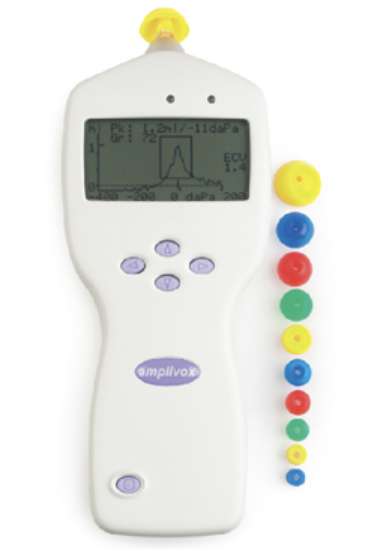
tympanometer
(tim-pa-NOM-e-ter)
instrument used to measure middle ear (function)
tympanometry
measurement of middle ear (function)
audiologist
specialist who studies and treats (impaired) hearing
audiology
study of hearing
otolaryngologist (ENT)
(ō-tō-lar-ing-GOL-o-jist)
physician who studies and treats diseases of the ear, (nose), and larynx (throat); (also called otorhinolaryngologist)
otolaryngology
(ō-tō-lar-ing-GOL-o-jē)
study of the ear, (nose), and larynx (throat) (branch of medicine that treats diseases of the ear, nose, and throat); (also called otorhinolaryngology)
aural
(AW-rul)
pertaining to the ear
cochlear
(KOK-lē-ar)
pertaining to the cochlea
vestibular
pertaining to the vestibule
vestibulocochlear
(ves-tib-ū-lō-KOK-lē-ar)
pertaining to the vestibule and the cochlea
AOM
acute otitis media
BPPV
benign paroxysmal positional vertigo
OE
otitis externa
OM
otitis media
ENT
ears, nose, throat; otolaryngologist
HOH
hard of hearing