management of wet AMD
 Call Kai
 Learn
 Practice Test
 Spaced Repetition
 Match
 Flashcards
 Knowt Play
1/11

There's no tags or description
Looks like no tags are added yet.
12 Terms
what is the optometric management of dry AMD (6)
No proven treatment to reverse drusen, RPE disturbances or geographic atrophy
Optimise refractive correction
Monitor - can suddenly evolve into exudative AMD
Educate px - address modifiable risk factors (diet, exercise, smoking cessation, vitamin supplements) and risk of conversion to neovascular AMD
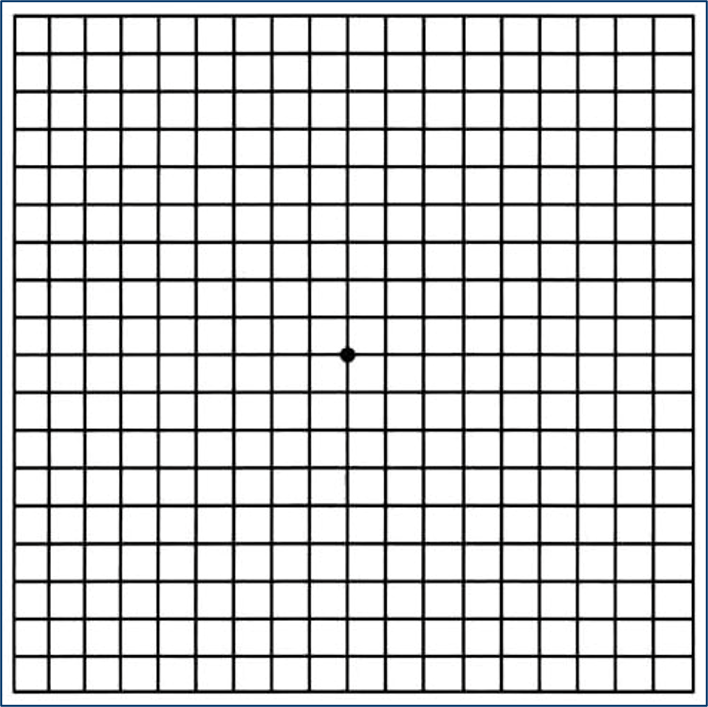
Self-monitoring - Amsler chart
Low vision assessment and rehabilitation
How can we monitor AMD in practice (6)
•Importance of regular eye examinations
•SOS visits - if new sx or worsening sx
•VA (distance and near) - and optimise
•Dilated eye examination
•Macular OCT - monitoring signs of change/progression
•Amsler
How can patients self-monitor/report AMD (7)
Amsler chart - educate px on how to use this
Can use chart or even look at straight lines - window/door frame
Monitor monocularly
With reading glasses on - varifocals can cause distortion
Ensure holding at right distance - 40cm?
Check once a week - regular routine
If any patches of distortion - is there any change - ensure prompt reporting of changes
what are some non-modifiable risk factors of AMD (3)
age
race
family history
Explain what modifiable risk factors we can address when managing AMD (5)
Smoking cessation - Smokers are four times more likely to go blind in old age - As soon as you quit, the risk begins to reduce - support: GP, NHS, local support groups, apps, treatments - remember smoking is not the be all end all
Healthy eating (supplements) - red, amber and green - leafy green veggies and fish - vitamins
Exercise regularly
UV protection
Maintain normal blood pressure and cholesterol
Explain the recommendation of nutritional supplements for px with AMD (4)
Can advise px to take these
AREDS study - reduction in the risk of progression to advanced AMD by 25% over 5 years - specific formulation of supplements - recommended for all patients with medium to high risk of progression - Large drusen / Medium drusen with pigmentary abnormalities / Wet AMD in fellow eye
When advising supplements, remember to mention that this may/may not help with reducing progression
Some supplements can interfere with absorption of blood-thinning medication - liaise with GP
Explain the significance low vision assessment and rehabilitation in managing px with AMD (4)
low vision aids
non-optical aids
electronic aids
Helpful if struggling with specific tasks – reading, seeing labels in supermarkets etc. - look more into specific ones
what is the optometric management of wet AMD (4)
Fast-track referral to secondary care/retinal specialist/AMD specialist service - within 2 weeks
NB: Retinal oedema ↑hypermetropia/↓myopia while it is present - transient, so don’t prescribe glasses
Low vision rehabilitation services
Optometric follow-up - routine eye tests still required
What further investigations (secondary care) can be carried out for patients with wet AMD (4)
•LogMAR VA
•OCT of macula: Critical in diagnosis and monitoring - thickening and fragmentation of RPE - subretinal and sub-RPE fluid - haemorrhage - scarring
•Fluorescein fundus angiography or OCT-A
•Indocyanine green (ICG) angiography - to see more of choroid blood circulature
what secondary care treatment is used for px with wet AMD (4)
Anti-VEGF therapy
Inhibits growth of new blood vessels - less fluid leakage
Intravitreal injections - Anti-VEGF drugs: Lucentis, Eylea, Avastin - To PRESERVE vision and is a long-term treatment
Various protocols for this tx - e.g. monthly for 3 months, then monthly or bimonthly up to 12 months, then treat and extend

what are the benefits of anti-VEGF therapy (2)
•80% treated eyes have stabilisation of vision (loss of less than 15 letters of vision)
•30% treated eyes have improved vision (gain of 15 letters)
what are the risks of anti-VEGF therapy (6)
Infection
haemorrhage
retinal detachment or tear
poor response
cataract
theoretical risk of stroke