Ear function
 Call Kai
 Learn
 Practice Test
 Spaced Repetition
 Match
 Flashcards
 Knowt Play
1/75

There's no tags or description
Looks like no tags are added yet.
76 Terms
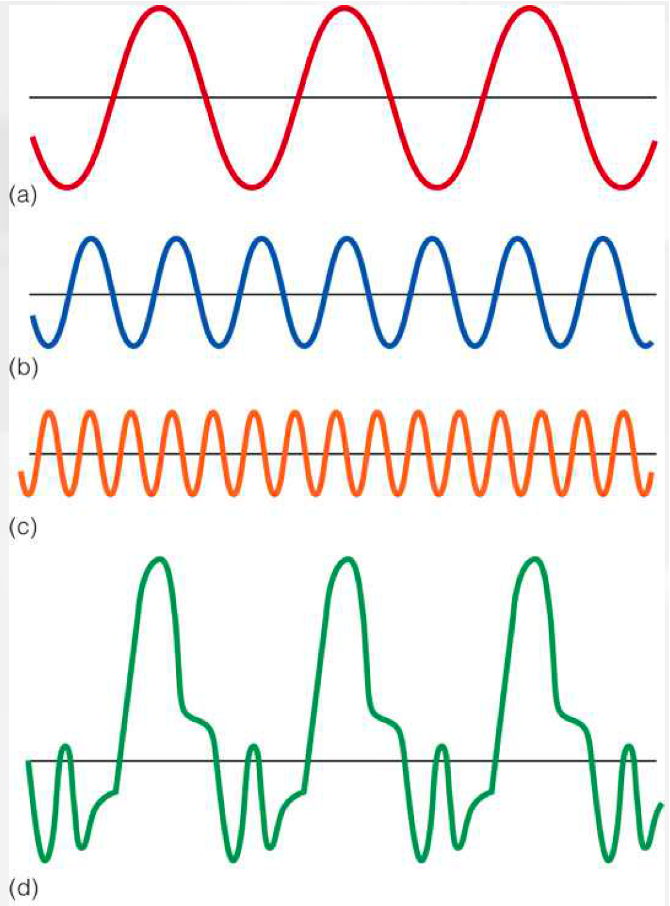
alternate peaks of compressed air and valleys where the air is less compressed
what are sound waves?

hearing
perception of energy carried by sound waves
amplitude
measured in dB (sound pressure level)
difference in pressure between the high and low peaks of a wave
defines sound intensity

sound pressure level
logarithmic measure of the effective pressure of a sound relative to a reference value
high dB sound overstimulates or physically stresses receptor cells, reducing their sensitivity
frequency
measured in Hz
primary determinant of perceived pitch

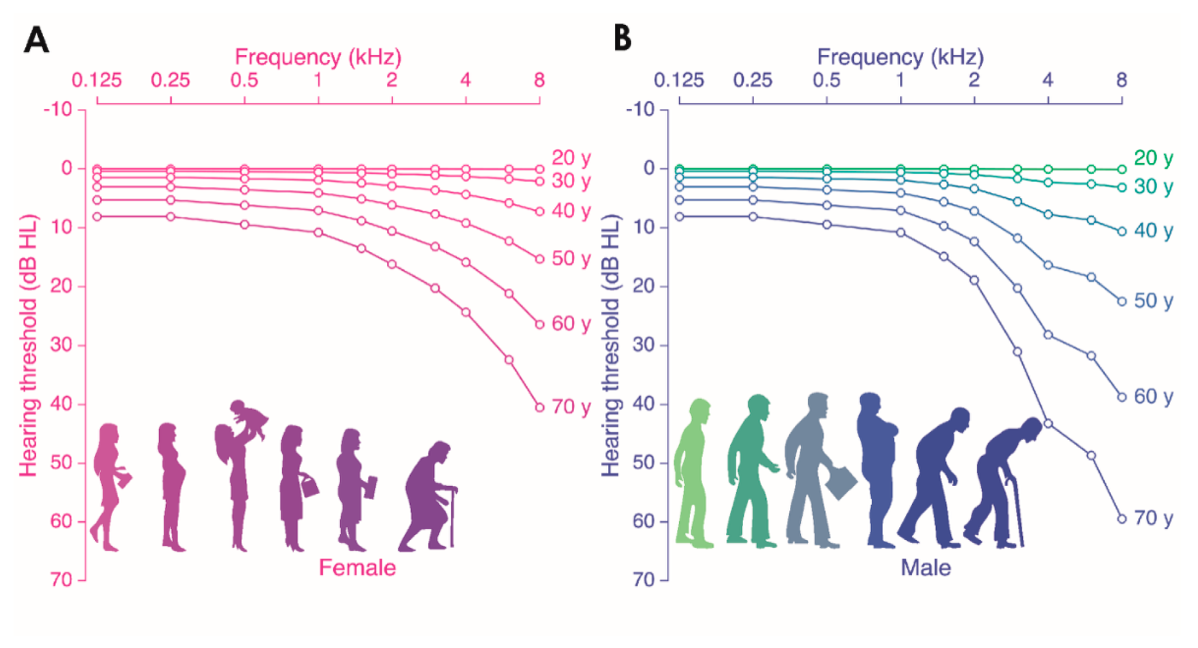
presbycusis
age-related hearing loss
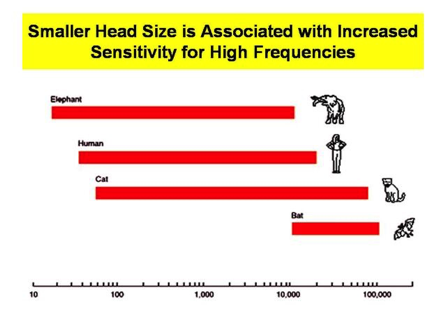
what animal has the highest sound sensitivity?
cats
cat hearing frequency
45-64k Hz
dog hearing frequency
67-45k Hz
what animal has 18 muscles per ear?
dogs
head size, smaller head size is associated with increased sensitivity. dogs with larger head=lower sensitivity
what may predict the ability to hear high frequencies?
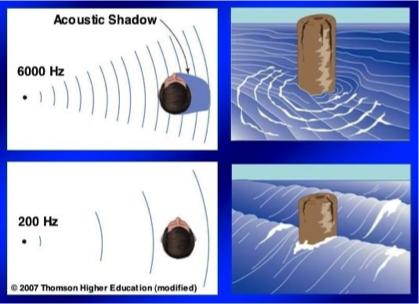
low-frequency diffraction
In the low-frequency, long wavelengths easily wrap around the head. Both ears receive nearly identical sound pressure levels, leaving no shadow behind the head.

high frequency shadowing
In the high-frequency, short wavelengths are blocked and reflected by the head. This creates a low-pressure "shadow" zone on the opposite side, reducing volume at the far ear by up to 15 to 20 dB.
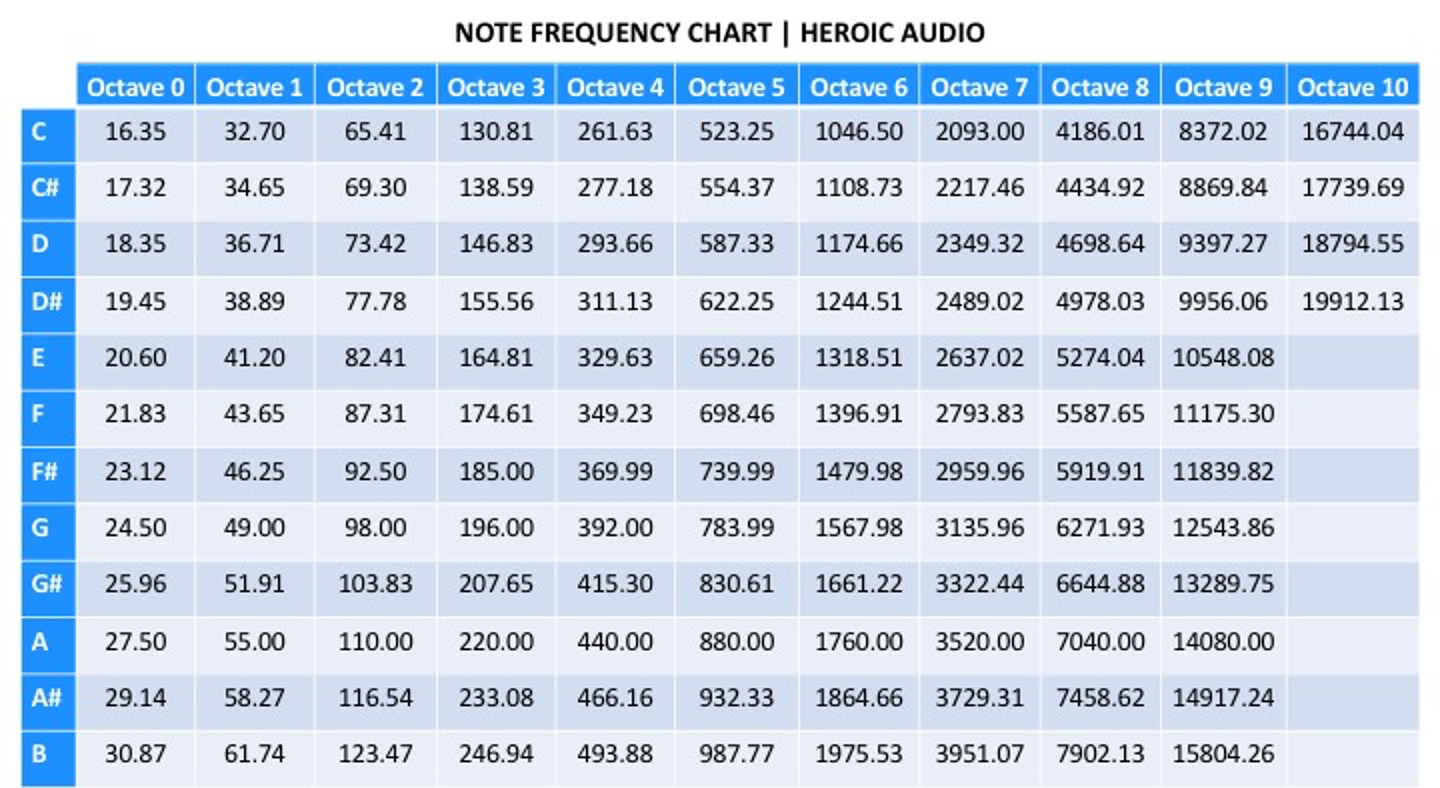
multiple of 2
what separates octaves?
timbre
all other properties of sound
created by the multiple frequencies added together and make up complex tones

additive synthesis
process of adding harmonics to create complex sounds
what predisposes dogs to otitis?
L shaped canal
traps moisture, wax, debris and ventilates poorly
swelling, wax and pus block canal and causes conductive hearing loss
chronic otitis externa can rupture the eardrum can cause otitis media
anatomy of the cat ear
cats have a large septum that divides the middle ear into 2 chambers.
acoustic mechanics: Acts as a chamber that shapes acoustic resonance across a range of frequencies. The large combined volume boosts low-frequency hearing, and the septum smooths the high-frequency response.
clinical signs: Compartmentalization can trap exudate in one chamber during otitis media or polyps, complicating drainage and sometimes requiring bulla osteotomy or permanent hearing loss

facial n
cause facial paralysis, drooping lip and ear, no blink, dry eye
sympathetic fibers
horners syndrome, miosis, ptosis, enopthalmos, 3rd eye protrusion
otitis interna
Head tilt, nystagmus, ataxia; sensorineural deafness
sound transmission through ear
enters ear canal and becomes vibrations that hit the tympanic membrane
vibration is transmitted to the 3 bones in middle ear
the fluid waves hit membranes of cochlear duct (perilymph and endolymph)
NT release onto sensory neurons > vestibulocochlear n > brain
dissipated back into middle ear at the round window (energy exits)
impedance mismatch
air-fluid mismatch causes loss, sound is reflected
middle ear overcome the loss of sound by increasing sound pressure
resonance
–External auditory canal (around 3000 Hz)
–Middle Ear (around 1200 Hz)
–both help ear carry sounds in frequency range of peak sensitivity (1000 to 3000 Hz)
size difference
•between tympanic membrane and oval window (hydraulic advantage)
–largest effect (approximately 17 times)
stapedial reflex
Barking triggers stapedial reflex (muscles contracts inside ear and mutes its own barking)- bc barking can be damaging.
both middle ear muscles contract thx to facial n and trigeminal n (tensor tympani)
stiffens ossicular chain whoch reduces transmission of low frequencies
stria vascularis
what produces endolymph?
K+
what mediates depolarization and repolarization of hair cells?
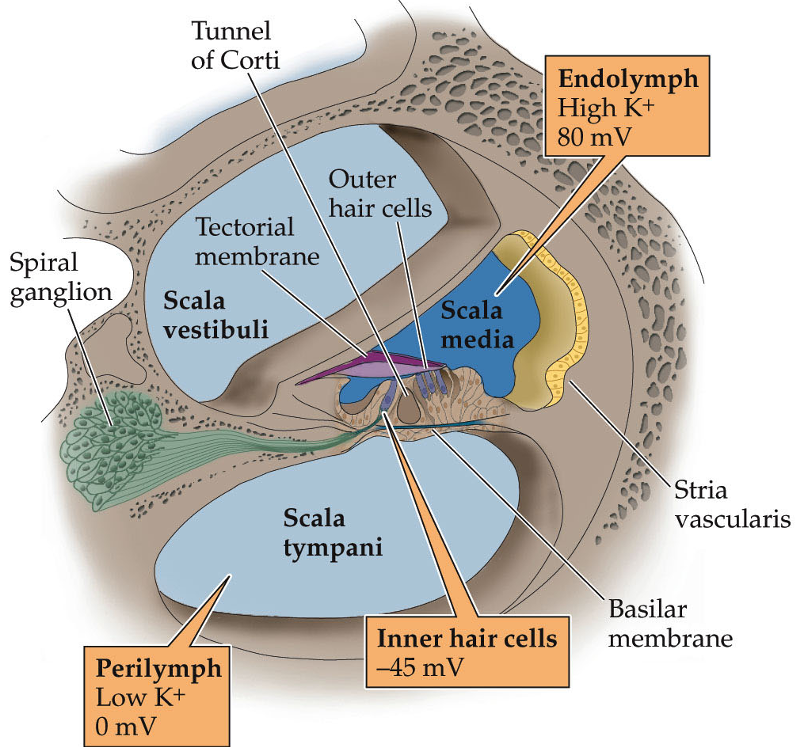
endochlear potential
drives inward K+ current for depolarization of hair cells
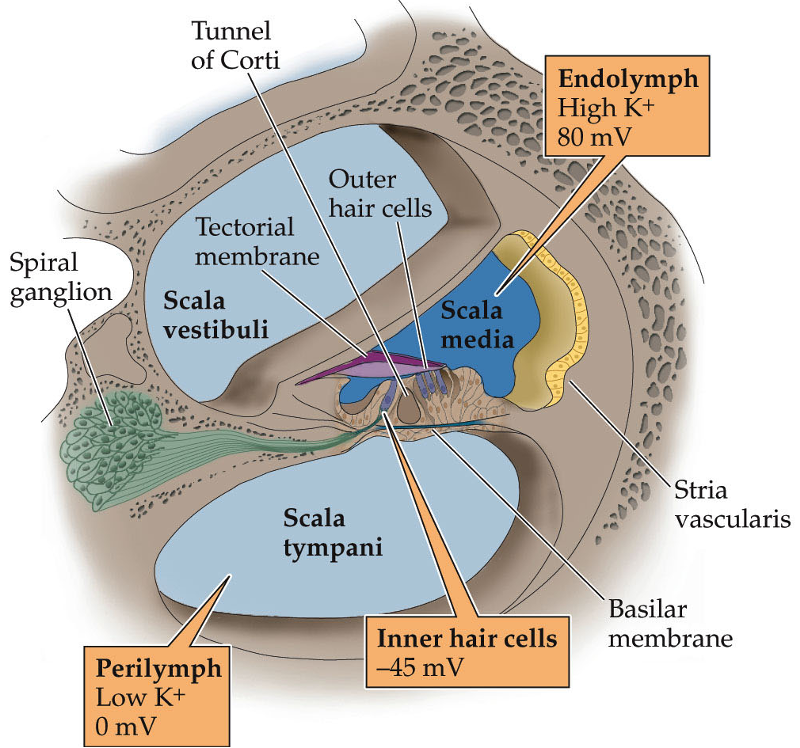
intracellular fluid
endolymph cations like…
CSF and extracellular fluid
perilymph cations like…
stria vascularis
vascularized, multilayered epithelial structure in the lateral wall of the cochlear duct (scala media) that produces potassium-rich endolymph and generates the positive endocochlear potential.
intermediate cells
melanocytes
release K+ through channels generating the endocochlear potential (80+ mV) required for hearing.

vertical movement of the basilar membrane
what bends the stereocilia of the hair cells?

stereocilia
contain cation channels, bundles of actin, hair-like projections and when they move they open/close K+ channels

bending away
what hyperpolarizes hair cell?

bending toward the tallest stereocillium
what depolarizes hair cell?
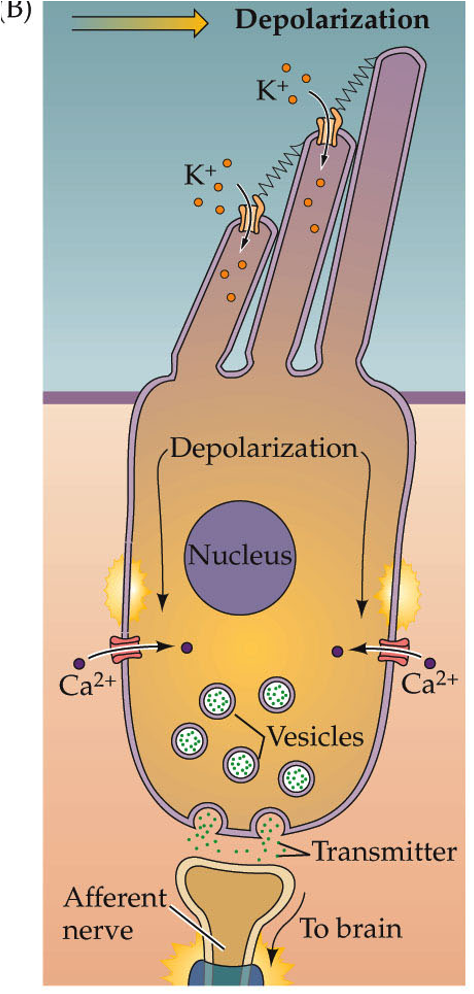
signal transduction in hair cells
In normal conditions (not bend) there are background activity,
When hair moves in opposite direction, closes channel
Bending back and forth provides sensitivity

pitch
Represented by the spatio-temporal pattern of discharge in a specific population of receptors as determined by the place and pattern of vibration of the basilar membrane

loudness
Total amount of excitation (firings) of a population of receptors as determined by the amplitude of vibration of the basilar membrane

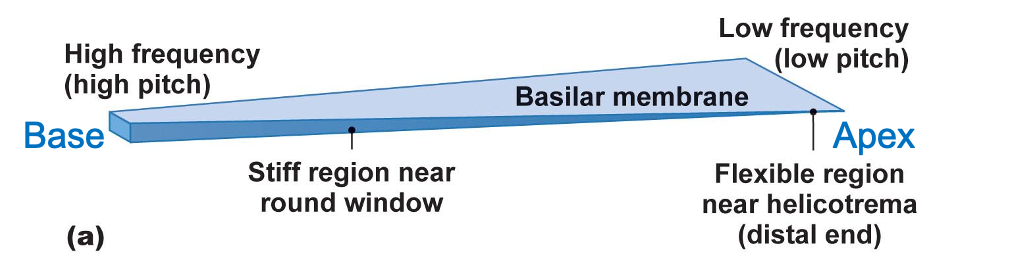
mass
(width) increases from base to apex
stiffness
•decreases from base to apex
results in base of the basilar membrane resonates at high frequencies, apex at low frequencies
fourier analysis
•The highest response in auditory nerve fibers to the sine-wave components of complex tones
•The cochlea automatically breaks down complex tones into their component frequencies- it’s performing Fourier analyses (simplify complex/noisy data)

electromotility
OHCs change length with membrane voltage
•Depolarization → shorten; hyperpolarization → lengthen
•Motor protein: prestin, in the lateral membrane
DPOAE test
•Two tones (f1, f2) played into the ear canal
•Healthy cochlea produces a third tone (2f1 – f2), recorded by a microphone in the canal
present > OHCs and middle ear working
absent > OHC damage or blocked canal
does not test inner hair cells
location of stimulus
•The brain uses timing differences rather than neurons to localize sound
Where is coming from
1. Brain analyzes Timing differences (1st L then right ear segun source of sound location)
intensity differences

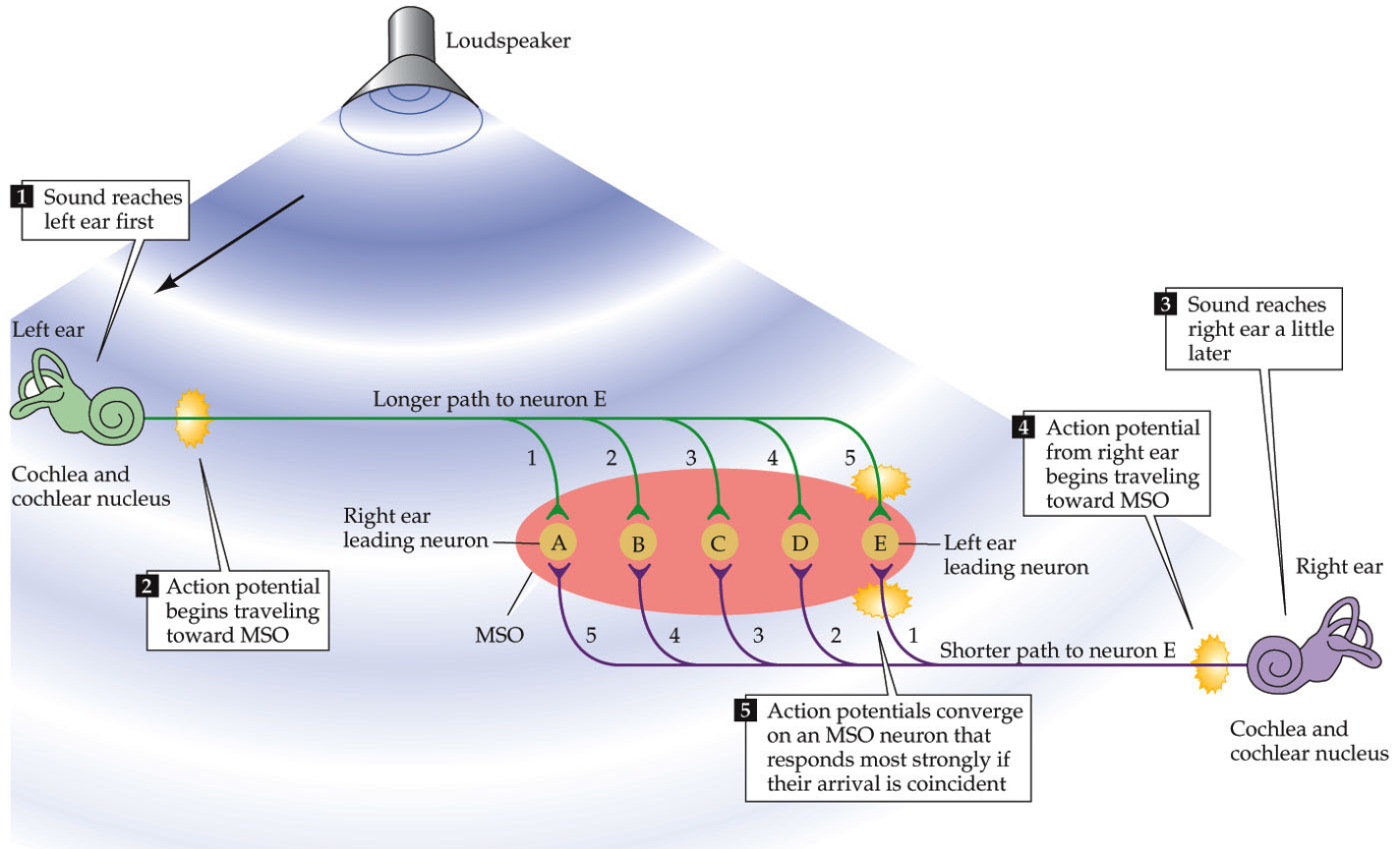
medial superior olive
computes the location of a sound by interaural time differences
lateral superior olive
encode sound location through interaural intensity differences

interaural time difference
cue: sound reaches near ear first
best for low frequencies
medial superior olive
coincidence detection of input from both ears
interaural level difference
cue: head blocks sound > quieter in the far ear
best for high frequencies
lateral superior olive
mechanism: excitation from near ear vs inhibition from far ear
tonotopic
all major CNC levels have ____ organization (parallel, bilateral pathways)

unilateral lesions
_____ above the cochlear nuclei in either brain stem or cerebrum do not cause deafness
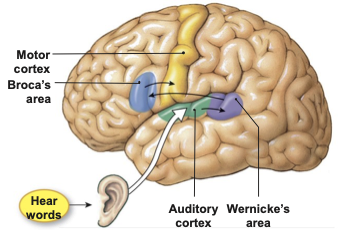
broca
near motor cortex
vocalization
wernicke
near auditory cortex
understanding of words and emotional cues
categories of deafness
conductive
central
sensorineural
conductive deafness
No transmission through either external or middle ear
air conduction ABN but bone conduction is normal
central deafness
Damage to neural pathway between ear and cerebral cortex or to cortex itself
sensorineural deafness
•Damage to structures of inner ear
both air conduction and bone conduction ABN
weber test
Place the base of a struck tuning fork on the bridge of the forehead, nose, or teeth. In a normal test, there is no lateralization of sound. With unilateral conductive loss, sound lateralizes toward affected ear. With unilateral sensorineural loss, sound lateralizes to the normal or better-hearing side.

rinne test
Place the base of a struck tuning fork on the mastoid bone behind the ear. Have the patient indicate when sound is no longer heard. Move fork (held at base) beside ear and ask if now audible. In a normal test, AC > BC; patient can hear fork at ear. With conductive loss, BC > AC; patient will not hear fork at ear.

behavioral test
bilateral ear (misses unilateral deafness bc animals use vibration and visual cues)
BAER air conduction
tests each ear separately, uses clicks through an insert earphone
cochlea to midbrain
BAER bone conduction
vibrator on skull, which bypasses the canal and middle ear
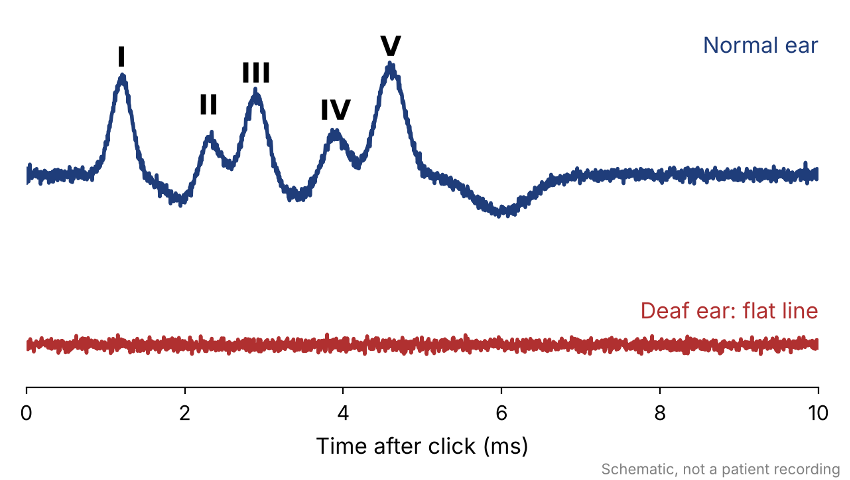
BAER test
The hearing test -brainstem auditory evoked potential
detects electrical activity in the cochlea and auditory pathways in the brain
the response waveform consists of a series of peaks
Peak= normal, hear
flat line= deaf
CN VIII
the first wave in a BAER test is formed by what generator/nerve?
why are some animals born deaf?
stria vascularis does not have melanocytes due to genes that supress pigmentation (they keep the K+ rich endolymph) > ahir cells degenerate after birth
pigmentation genes
Piebald locus
merle locus
dominant white in cats
ototoxicity
drugs that damage ear=toxic to hair cells = damage inner and middle ear and is irreversible
loop diuretics, cisplatin: high doses
aminoglycosides (gentamycin, otomax, mometomax, neomycin: systemic or topical with a ruptiured eardrum, permanent
chlorhexidine: Topical when the eardrum is ruptured; cats especially sensitive
aminoglycosides
•enter hair cells through open transduction channels → free radicals → hair-cell death
loop diuretics
block NKCC1 in strial marginal cells → endocochlear potential falls within minutes
temporary threshold shift
recovers in hours to days- overwork of sensory cells (stressed or fatigue) because they get bend
permanent threshold shift
hair-cell loss, permanent
synaptopathy
•IHC–nerve synapses lost (high-threshold, low-spontaneous-rate fibers) even when thresholds recover.
prevention: sound-absorbing kennels, ear protection for working dogs
presbycusis in older dogs
high frequencies are lost first
•Hair-cell loss at the base, spiral ganglion loss, strial atrophy
•Owners notice: sleeps through arrivals, ignores name, startles when touched
can birds and fish regrow hair cells?
yes, from supporting cells