ERTH305 Midterm 1
 Call Kai
 Learn
Learn Practice Test
 Spaced Repetition
 Match
Match Flashcards
 Knowt Play
1/137

There's no tags or description
Looks like no tags are added yet.
Name | Mastery | Learn | Test | Matching | Spaced | Call with Kai | Chat |
|---|
No analytics yet
Send a link to your students to track their progress
138 Terms
What are fossils, and where does the name come from?(3)
Fossils are vestiges of ancient life
Comes from latin for “to be dug out from the Earth”
According to early definition, minerals were also considered fossils
What is the most basic classification for vestiges of ancient life forms, and where do they differ?(2)
Fossils: older than 11700 years
Subfossils: younger than 11700 years; not all younger vestiges of life are considered fossils
What are the three classifications of fossils according to their nature?(3)
Body Fossils: preserve a part of the organism, or are structures that reflect a part of the organism; hard and soft body parts
Trace Fossils: preserve a certain activity of an organism
Chemical Fossils: only small components of the original organism are preserved(DNA, fossil fuels etc)

Body or Trace fossil?
Body; Stony coral

Body or Trace fossil?
Body; Cephalopod shells

Body or Trace fossil?
Body; Trilobite

Body or Trace fossil?
Body; Cephalopod

Body or Trace fossil?
Body; Mollusc

Body or Trace fossil?
Body; Insect

Body or Trace fossil?
Trace; movement of an unknown organism

Body or Trace fossil?
Trace; vertical galleries dug by an unknown organism

Body or Trace fossil?
Trace; moving traces left by a belemnite on the sea floor

Body or Trace fossil?
Trace; moving traces left by a polychaete worm
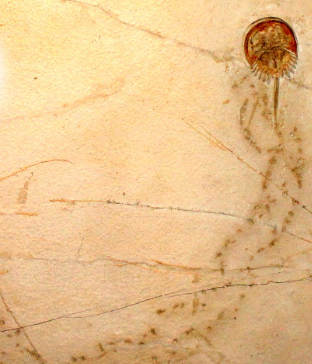
Body or Trace fossil?
Both; moving traces and the organism that left them, a horseshoe crab
What is the process of fossilization?(2)
A highly destructive process that transforms a dead organism into a fossil
Not all living organisms, or organisms that once lived on Earth, will be fossilized
What are the conditions of fossilization?(2)
The organism must be buried rapidly(eg landslide), or there is a high rate of sedimentation within the basin
Anoxic conditions at the bottom of the basic increases the fossilization potential
Explain Petrification, and if it is casual or high-quality fossilization(3)
Casual
Occurs in the case of fossils that present a porous internal structure
Both lithification and permineralization
Explain Lithification, and if it is casual or high-quality fossilization(3)
Casual
Occurs in the case of fossils that present a porous internal structure
The transformation of the hard body parts into stony material
Explain Permineralization, and if it is casual or high-quality fossilization(3)
Casual
Occurs in the case of fossils that present a porous internal structure
Pore filling with different minerals
Explain Recrystallization, and if it is casual or high-quality fossilization(3)
Casual
Transformation of one mineral of the hard body parts into another
Most frequent is calcification, where aragonite transforms into calcite
Explain Carbonization, and if it is casual or high-quality fossilization(3)
Casual
Life forms on Earth are dominated by CHON SP
Elements are expelled during burial and transformed into carbon
Explain Moldic Fossilization, and if it is casual or high-quality fossilization(4)
Casual
Complete or partial removal or hard body parts
Forms an empty space inside sedimentary rocks, leaving lithified sediment
Driving process is dissolution
Explain Replacement, and if it is casual or high-quality fossilization(3)
Casual
Empty space from moldic fossilization is filled with a newly precipitated mineral
One example is pyritization
Explain Impression, and if it is casual or high-quality fossilization(2)
Casual
Fossils that are produced by the weight of a dead fossil imprinted on a soft sediment
Explain Fossilization in Amber, and if it is casual or high-quality fossilization(2)
High-quality
Amber is a natural resin with high viscosity
Explain Fossilization in Tar Pits, and if it is casual or high-quality fossilization(2)
High-quality
Happens in tar swamps, where hydrocarbons from Earth’s interior reach the surface
Explain Congealment, and if it is casual or high-quality fossilization
Trick question, do not need to know. If it is an answer, it is incorrect
Explain Desiccation, and if it is casual or high-quality fossilization
Trick question, do not need to know. If it is an answer, it is incorrect
What is a Fossil Lagerstätten?(3)
“Fossil Ores”
Fossils where soft body parts are preserved
Approximately 100 known, including the Burgess Shale and Chengjiang Fauna

What kind of fossilization is this?
Permineralization
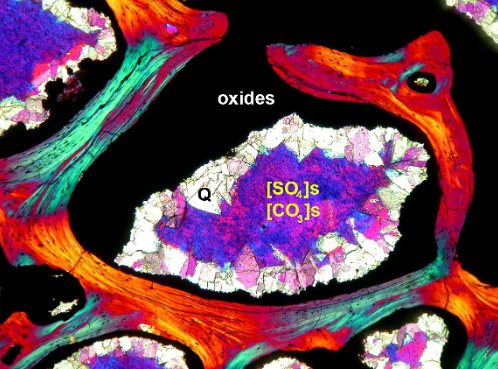
What kind of fossilization is this?
Permineralization

What kind of fossilization is this?
Petrification; Lithification, and Permineralization

What kind of fossilization is this?
Petrification; Lithification, and Permineralization

What kind of fossilization is this?
Recrystallization
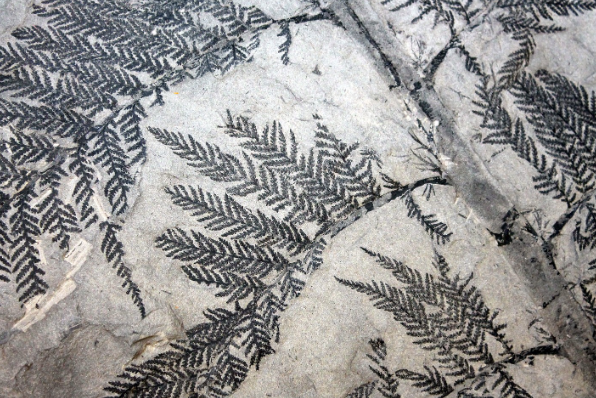
What kind of fossilization is this?
Carbonization

What kind of fossilization is this?
Moldic Fossilization
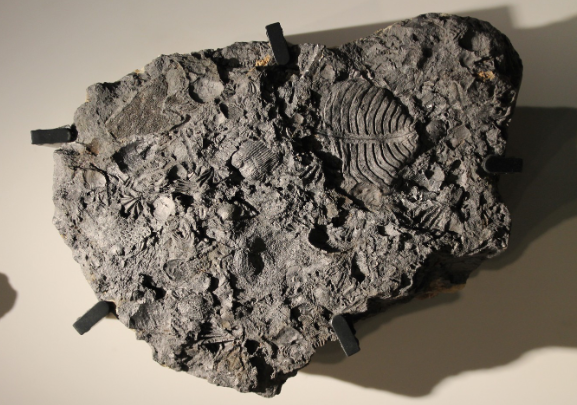
What kind of fossilization is this?
Moldic Fossilization
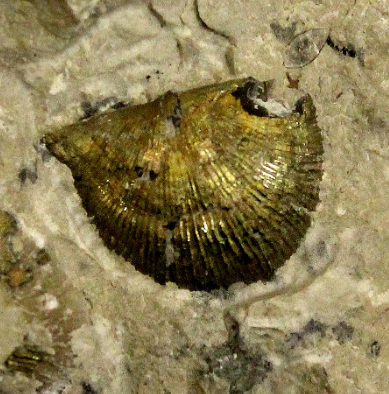
What kind of fossilization is this?
Replacement (pyritization)

What kind of fossilization is this?
Impressions

What kind of fossilization is this?
Fossilization in amber

What kind of fossilization is this?
Fossilization in tar pits

What kind of fossilization is this?
Fossil Lagerstätten - Burgess Shale

What kind of fossilization is this?
Fossil Lagerstätten - Chengjiang Fauna
What is the difference between relative and absolute time?(2)
Relative: no numbers
Absolute: numbers
What are Steno’s Principles of Stratigraphy?(4/5)
Principle of Layer Superposition
Principle of Layer Successive Formation(fake)
Principle of Original Layer Horizontality(actually 2)
Principle of Lateral Layer Continuity(actually 3)
Principle of Cross-Cutting Relationships(actually 4)
What is the principle of layer superposition?
In a sequence of undisturbed layers, the oldest layer is at the bottom
What is the principle of successive layer formation?
At a layer’s formation time, only fluid existed above it
What is the principle of original layer horizontality?(2)
Layers should all have been horizontal, and if they are not, they have been disturbed
However, layers at the sea floor may be irregular, because the sea floor itself is not flat
What is the principle of lateral layer continuity?
Strata extend in all directions until they terminate by thinning at the margins of the basin
What is the principle of cross-cutting relationships?
Any feature, such as a fault, fracture or intrusion, is younger than the rock that it disturbs.
What are the two steps of calculating geological time?(2)
Development of the relative geological time scale
Development of a method to calculate the age of a mineral formation
Explain the development of the geological time scale(3)
Started in 1665, is still ongoing
Involves the arrangement of layers of rocks into order by age
Was first done for sedimentary, then expanded to metamorphic and igneous
When did people start calculating the age of mineral formations?(2)
Started in 1912, still ongoing
First consistent results produced in 1970
Main points of the hadean eon(2)
No rock record
Earth was mostly molten
Main points of archean eon(2)
Start: Oldest rocks
End: Formation of convection currents, modern plate tectonics
Main points of proterozoic eon(2)
First animals
Start of modern plate tectonics
Main points of phanerozoic eon
Lots of rocks with large fossils
How long was each eon?(4)
Hadean: ~600 million years
Archean: ~1.5 billion years
Proterozoic: ~ 2 billion years
Phanerozoic: ~500 million years
Paleozoic/Mesozoic boundary(3)
Ocean conveyor collapse
Great dying
Raised temperatures
Mesozoic/Cenozoic boundary
Asteroid that killed the dinosaurs
What are the 4 major events on Earth?(4)
Asteroid Bombardment: Hadean → Archean
Atmosphere Character Shift: Archean → Proterozoic
Extensive Glaciations: Neoproterozoic
Ocean Conveyor Collapse: Paleozoic → Mesozoic
What was the hadean asteroid bombardment?
During the Hadean eon, multiple asteroids struck the Earth, causing the surface to never solidify, and oceans to vaporize
What was the atmosphere character shift?(2)
Cyanobacteria evolved to produce oxygen as a byproduct
Volcanic outgassing transitioned to a more oxidizing state
What were the extensive glaciations?(3)
Snowball Earth
Due to dimmer Sun
Due to dramatic drop in atmospheric carbon dioxide
What was the ocean conveyor collapse?(3)
Wiped out 90% of marine life, 70% of terrestrial life
The great dying
Volcanic eruptions pumped greenhouse gases carbon dioxide and sulfur dioxide into the atmosphere
What is paleontology?(2)
A subdiscipline of geology that studies the vestiges of ancient life forms
Close connection with biology, distant connection with genetics
What is paleobiology?
Basically a fake science that does not offer enough data integration with geology as paleontology does.
What are the 6 subdivisions of paleontology?(6)
Micropaleontology: the study of microscopical fossils
Paleoalgology: the study of fossil algae
Paleobotany: the study of fossil plants
Palynology: the study of fossilized reproduction structures of higher plants
Invertebrate paleontology: the study of invertebrate animals
Vertebrate paleontology: the study of animals with an axial skeleton
What are the 4 related sciences of paleontology?(4)
Paleoecology
Paleobiogeography
Biostratigraphy
Evolutionary paleontology
Who wrote the initial Linnaean hierarchy, and what was it called?(4)
Carl Linnaeus
“Systema Naturae”
Current edition is 10th edition
It did not become important or used until after Linnaeus’ death
What is the original Linnaean hierarchy?(5)
Kingdom
Class
Order
Genus
Species
What is the improved Linnaean hierarchy?(7)
Kingdom
Phylum
Class
Order
Family
Genus
Species
What is the modern Linnaean hierarchy(8)
Kingdom
Phylum → Subphylum
Superclass → Class → Subclass → Infraclass
Superorder → Order → Suborder → Infraorder
Superfamily → Family → Subfamily
Tribe → Subtribe
Genus → Subgenus
Species → Subspecies
What are the 5 main kingdoms in paleontology?(5)
Bacteria
Protista
Fungi
Plantae
Animalia
What are the kingdom bacteria?(4)
Includes primitive organisms that do not have a well-differentiated nucleus and cytoplasm
Includes bacteria and cyanobacteria
Oldest known organisms from the fossil record
Occur mostly as stromatolites
What is the kingdom protista?(3)
Have a well-differentiated nucleus that can be simple or multiple
Includes plant-like protistans(Algae)
Includes animal-like protistans(Protistans)
What is the kingdom plantae?(3)
Includes the land plants, which evolved as a result of the invasion of land in the Late Silurian
They are autotrophic photosynthetic organisms
Includes bryophytes, seedless plants, and plants with seeds
What are bryophytes?
Small, non-vascular land plants
Mosses
What is the kingdom animalia?(4)
Multicellular eukaryotes
Includes both invertebrate and vertebrate animals
Have the highest rate of evolution among the five kingdoms, as evidenced by the fossil record
Often have high movement capabilities and evolved high levels of intelligence

What kingdom does this belong to?(2)
Kingdom bacteria: stromatolites

What kingdom does this belong to?(2)
Kingdom protista: algae

What kingdom does this belong to?(2)
Kingdom protista: algae
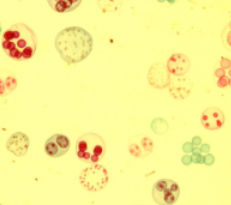
What kingdom does this belong to?(2)
Kingdom protista: algae

What kingdom does this belong to?(2)
Kingdom protista: algae

What kingdom does this belong to?(2)
Kingdom protista: algae

What kingdom does this belong to?(2)
Kingdom protista: protistans

What kingdom does this belong to?(2)
Kingdom protista: protistans
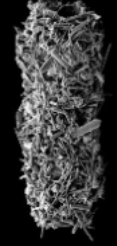
What kingdom does this belong to?(2)
Kingdom protista: protistans

What kingdom does this belong to?(2)
Kingdom protista: protistans

What kingdom does this belong to?(2)
Kingdom protista: protistans

What kingdom does this belong to?(2)
Kingdom protista: protistans
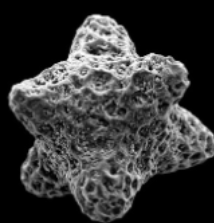
What kingdom does this belong to?(2)
Kingdom protista: protistans
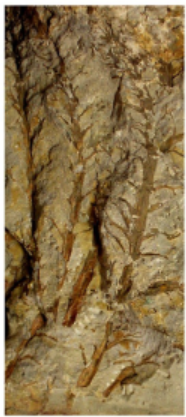
What kingdom does this belong to?(2)
Kingdom plantae: seedless plants

What kingdom does this belong to?(2)
Kingdom plantae: seedless plants

What kingdom does this belong to?(2)
Kingdom plantae: seedless plants
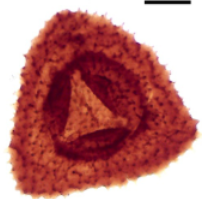
What kingdom does this belong to?(2)
Kingdom plantae: seeded plants

What kingdom does this belong to?(2)
Kingdom plantae: seeded plants

What kingdom does this belong to?(2)
Kingdom plantae: seeded plants

What kingdom does this belong to?(2)
Kingdom plantae: seeded plants

What kingdom does this belong to?(2)
Kingdom animalia: invertebrate animals