Hormones
 Call Kai
 Learn
 Practice Test
 Spaced Repetition
 Match
 Flashcards
 Knowt Play
1/60

There's no tags or description
Looks like no tags are added yet.
61 Terms
Major Endocrine glands male
Pituitary gland
Thyroid gland
Adrenal gland
Testis
Major Endocrine glands Female
Pineal gland
Thymus
Pancreas
Ovary

Why is the relationship between the hypothalamus and anterior and posterior lobes of the pituitary gland important
the relationship between the hypothalamus and anterior and posterior lobes of the pituitary gland is important in the production of the correct hormone
How are secretions of the pituatry gland controlled
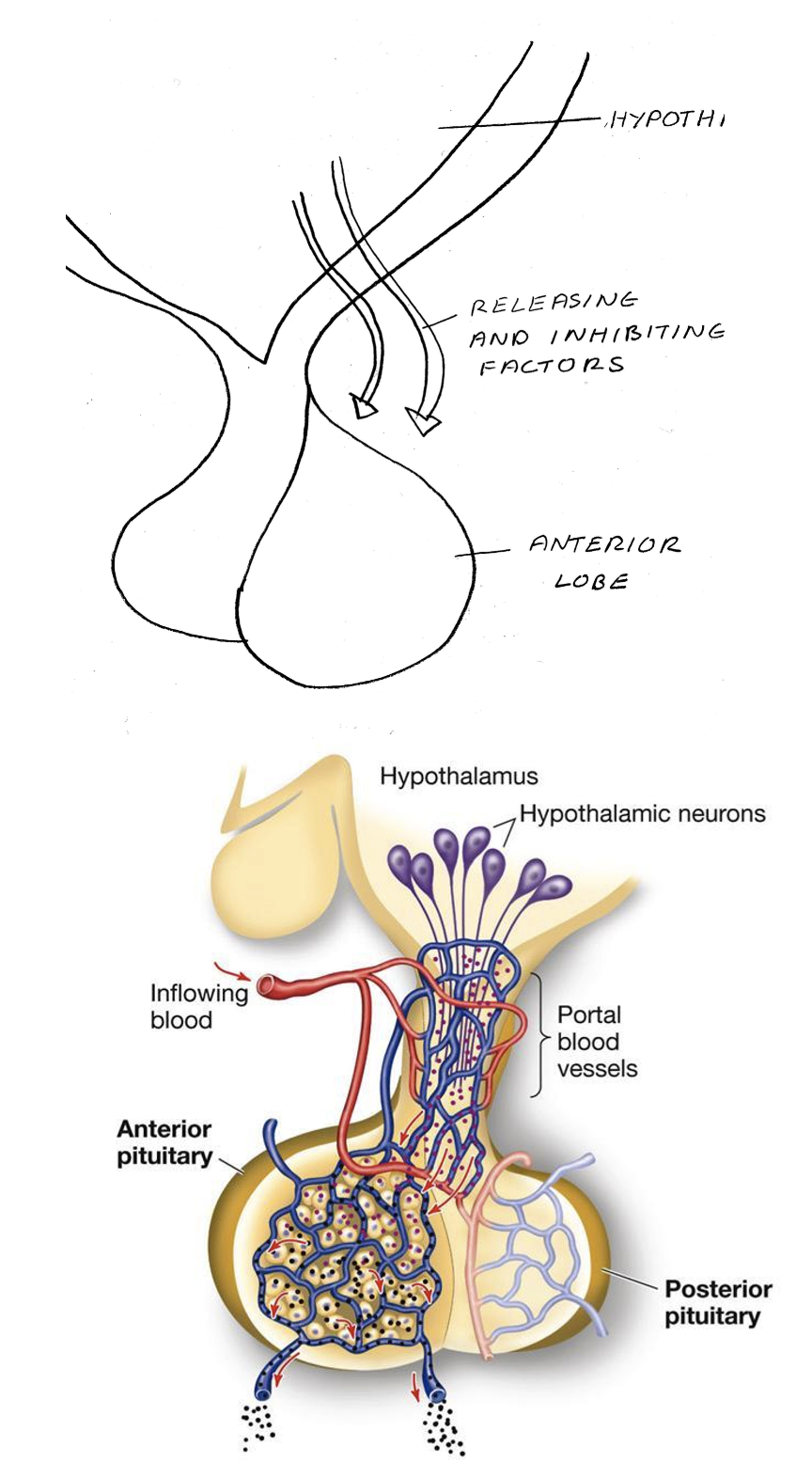
the secretions of the pituitary gland are controlled by the hypothalamus by either neurosecretory cells or blood transport (via hypophyseal portal veins veins [hypothalamus to anterior pituitary]) of releasing or inhibiting factors
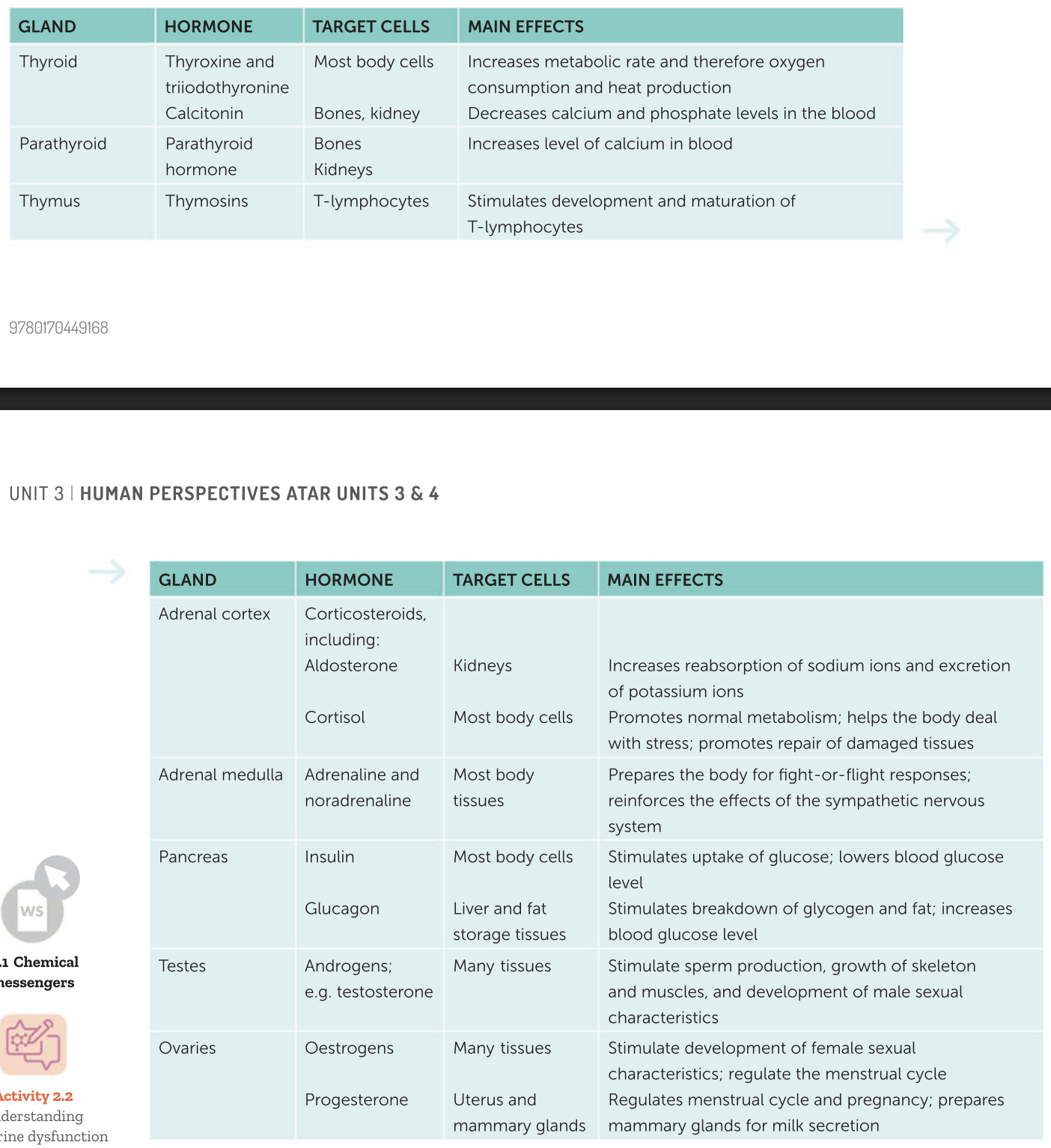
Hypothalamus hormone, specific target organs and specific effects
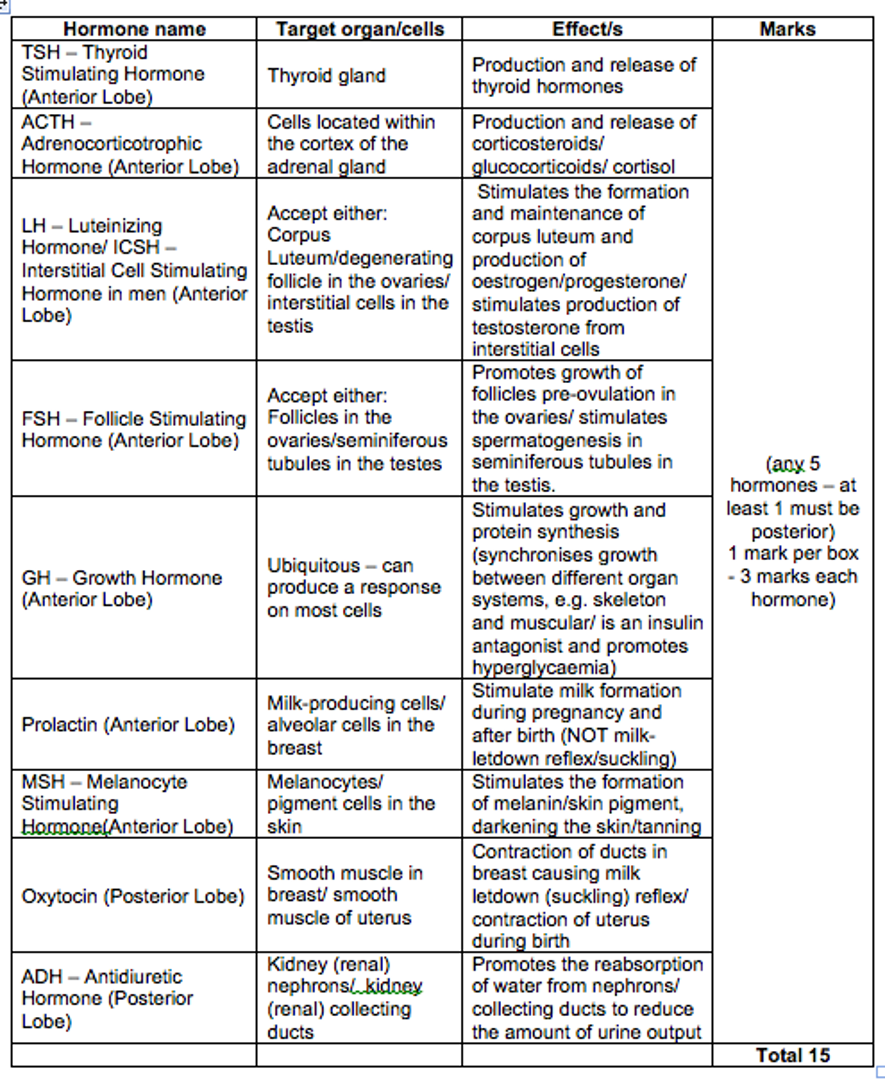
hypothalamus (ADH, oxytocin, releasing and inhibiting factors),
pituiatry gland hormone, specific target organs and specific effects
pituitary gland (FSH, LH, GH, TSH, ACTH, prolactin)
pancreas gland hormone, specific target organs and specific effects
pancreas (insulin, glucagon),
parathyroid gland hormone, specific target organs and specific effects
parathyroid hormone (PTH),
thyroid hormone, specific target organs and specific effects
thyroid (thyroxine, calcitonin)
adrenal glands gland hormone, specific target organs and specific effects
adrenal glands (adrenaline/noradrenaline, aldosterone, cortisol)
Hypothalamus
Location: base of the brain above the pituitary
Function: regulates basic body functions e.g. body temperature and water balance
Functions are carried out through pituitary gland
The pituitary
Joined to the hypothalamus by a stalk called
the infundibulum.
regulates the functions of other endocrine glands.
Anterior and posterior lobes both influenced by the hypothalamus but function independently of each other.
Why is Posterior Lobe Pituitary considered not a true gland
does not produce substances (only stores & releases substances).
Posterior Lobe Pituitary
Location: Posterior/dorsal (back)
Grows from nerve tissue.
Joined to the hypothalamus by nerve axons (fibres) that come from nerve cell bodies in the hypothalamus and pass through the infundibulum.
Hormones are produced by specialised neurosecretory cells in the hypothalamus.
Hormones travel via nerve axons (fibres) to the posterior lobe.
Hormones release is triggered by nerve impulses initiated in the hypothalamus and conducted along axons
Axon terminals store and release hormones into the blood.

Posterior Pituitary Target
TARGET – Smooth muscle in mammary gland ducts, smooth muscle of uterus.
TARGET – Distal Convoluted Tubule and Collecting Duct

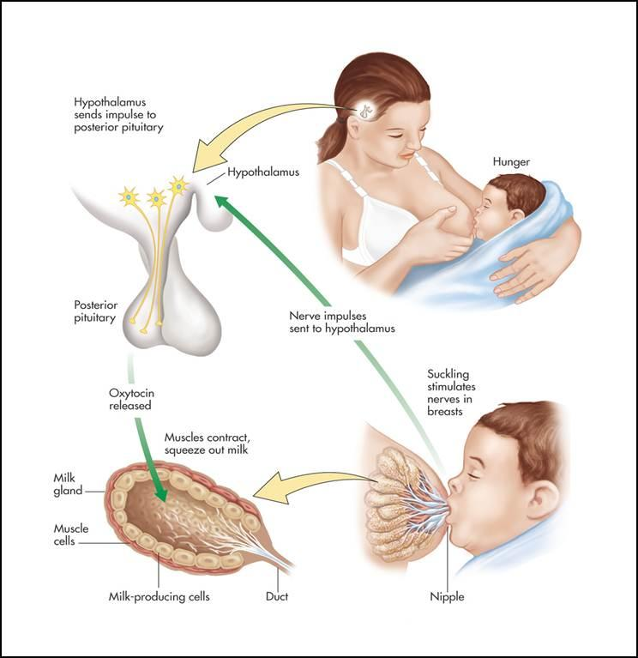
Posterior Pituitary – Releases oxytocin – (produced in hypothalamus)
Oxytocin – targets smooth muscle of uterus, smooth muscle mammary gland ducts
Oxytocin - stimulates the contraction of smooth muscles of the uterus during labour (child birth) and stimulates contraction of the cells of the mammary gland ducts resulting in release of milk during breast feeding.nOxytocin – targets smooth muscle of uterus, smooth muscle mammary gland ducts
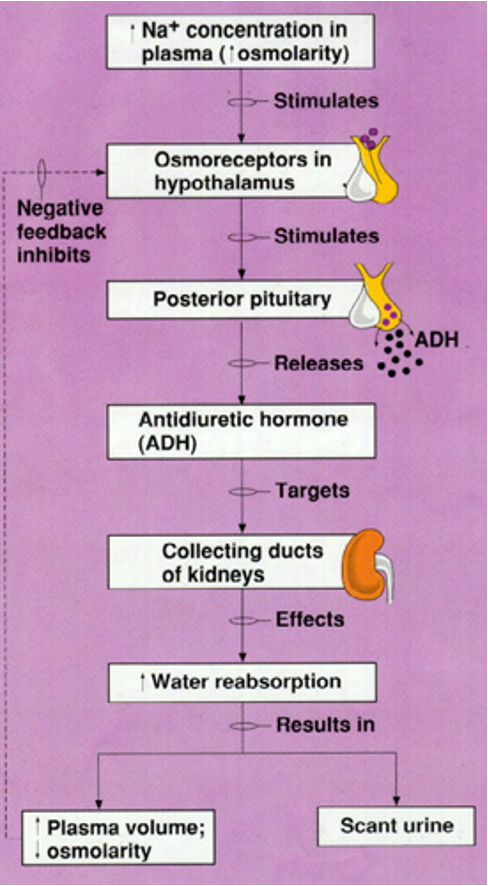
Posterior Pituitary – Releases ADH – (produced in hypothalamus)
Antidiuretic Hormone (ADH) – targets kidney tubules specifically the distal convoluted tubule and the collecting duct
Increases the permeability of the kidney tubules to water (distal convoluted tubule and collecting duct) and causes more water to be removed from the urine into the body; i.e. water reabsorbed into the body (and thus urine output reduced)
Anterior lobe
Anterior/Ventral (front)
Grows from tissues in the mouth
Releasing and inhibiting factors from the hypothalamus stimulate or inhibit the release of hormones
Hormones are manufactured, stored and released as needed, from the anterior lobe (secreted = implies produced and released)
The hypothalamus and pituitary gland location
Brain
Thyroid and parathyroid location
neck and the adrenal glands
Pancreas location
pelvic cavity
Gonads and Ovaries location
Pelvic cavity
Pineal gland location
brain
Thymus location
lies ventral to the thorax.
Anterior lobe
nAnterior/Ventral (front)
nGrows from tissues in the mouth
nReleasing and inhibiting factors from the hypothalamus stimulate or inhibit the release of hormones
nHormones are manufactured, stored and released as needed, from the anterior lobe (secreted = implies produced and released)
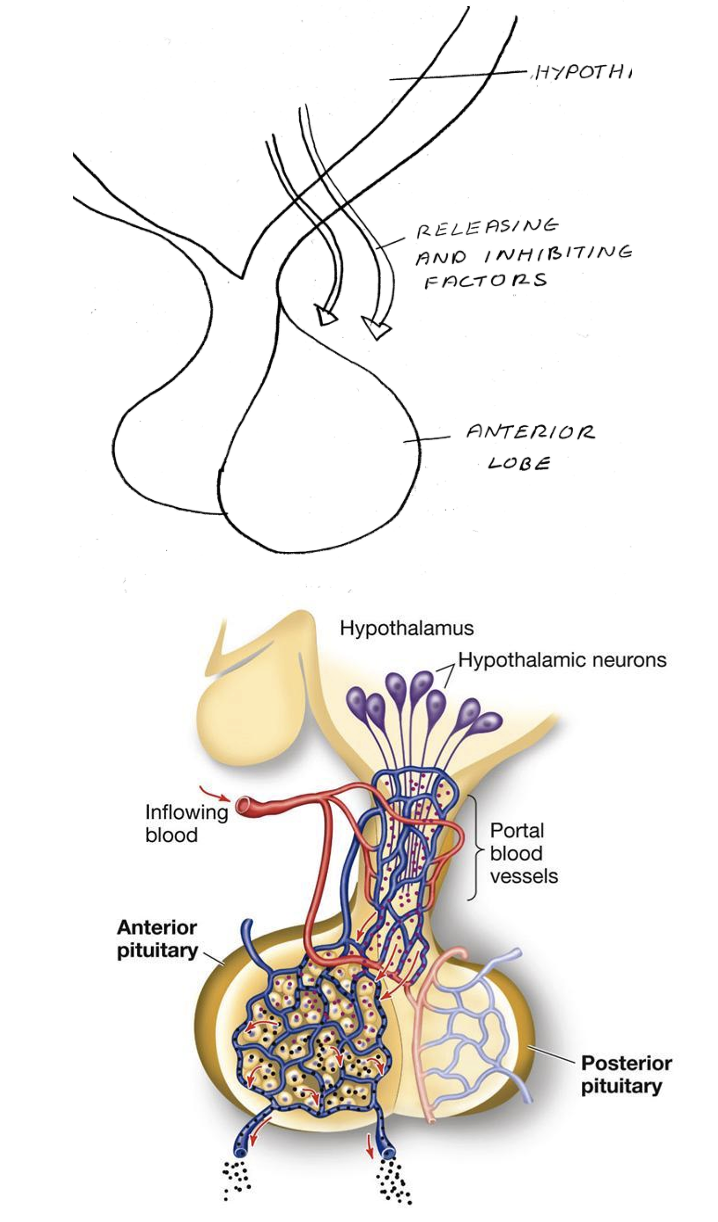
Anterior lobe inhibiting factors
NOTE: Only two INHIBITING FACTORS – Prolactin & Growth Hormone
Relationship between Hypothalamus and Anterior pituitary gland
The hypothalamus controls the secretions of the anterior pituitary
anterior pituitary controls the secretions of the thyroid, adrenal cortex, and gonads, which are also endocrine glands.
Anterior lobe hormones acting directly on target cells (GH)
Growth Hormone targets most body cells (ubiquitous)
Growth Hormone (GH) acts on body cells to promote growth, particularly of the skeleton. It increases the rate at which amino acids are taken up by cells and built into proteins.
GH is secreted throughout life as it helps to maintain organ size once maturity is reached.
Anterior lobe hormones acting directly on target cells (prolactin)
Prolactin targets the mammary gland cells
Prolactin acts on the mammary gland cells of the breast to promote milk production
Anterior lobe hormones that influence other glands
Gonadotrophins: Follicle Stimulating Hormone (FSH) and Luteinising Hormone (LH). Influence the Ovary and Testes.
Thyroid Stimulating Hormone (TSH). Influences the Thyroid.
Adrenocorticotrophic Hormone (ACTH). Influences the Adrenal gland (Adrenal Cortex)
Anterior lobe
Hormones are manufactured, stored and released as needed, from the anterior lobe
Describe the processes leading to the secretion of hormones from the anterior lobe into the bloodstream.

Explain why the posterior lobe is not considered to be a true endocrine gland.

Use the two hormones released by the anterior lobe of the pituitary gland to complete the following table. (4 marks)
Adrenocorticotrophic
Luteinising hormone

The hypothalamus also regulates the production of adrenalin. However, the pathway taken from the hypothalamus to the adrenal gland differs markedly from the pathway taken through the pituitary gland to other target cells. Explain. (1 mark)

Progesterone production is dependent on the hypothalamus. If progesterone levels in the bloodstream are low, the hypothalamus responds. Describe this response. (1 mark)

Describe the relationship between the hypothalamus and the anterior and posterior lobes of the pituitary gland. (6 marks)

Endocrine glands
Produce hormones.
Secrete directly into the tissue (intercellular / extracellular) fluid.
Hormones pass into the capillaries and are carried around in the blood, no ducts – i.e. ductless glands.
Work more slowly than the nervous system in coordinating homeostasis.
Exocrine glands
Secrete into ducts (canal or passage)


Steroid Hormones
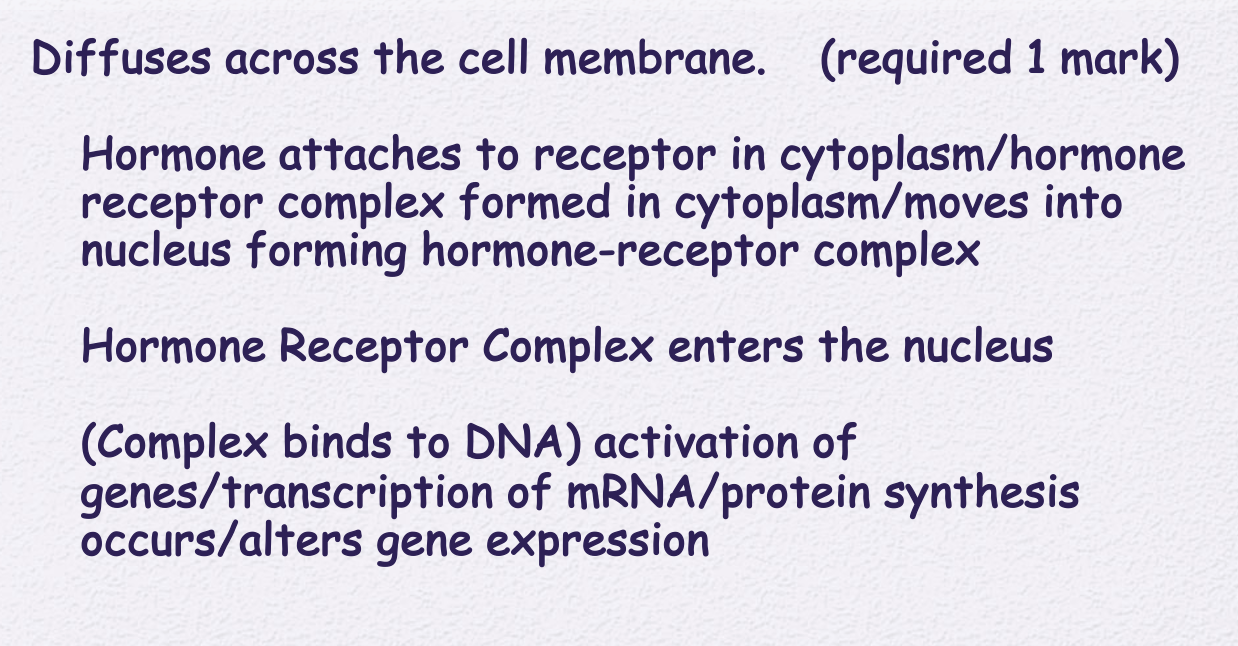
Steroid Hormones - soluble in lipids.
Pass through cell membrane by diffusion.
Combining with receptor protein in the cell. Receptor in cytosol on mitochondria or in nucleus.
Receptor is specific.
Hormone – Receptor complex passes into nucleus and activates genes which control production of particular proteins.
Slower acting (effects take place in hours/days).
Examples: testosterone, cortisol


Amines, Peptides and Protein Hormones
•Amines, Peptides and Protein hormones are insoluble in lipids.
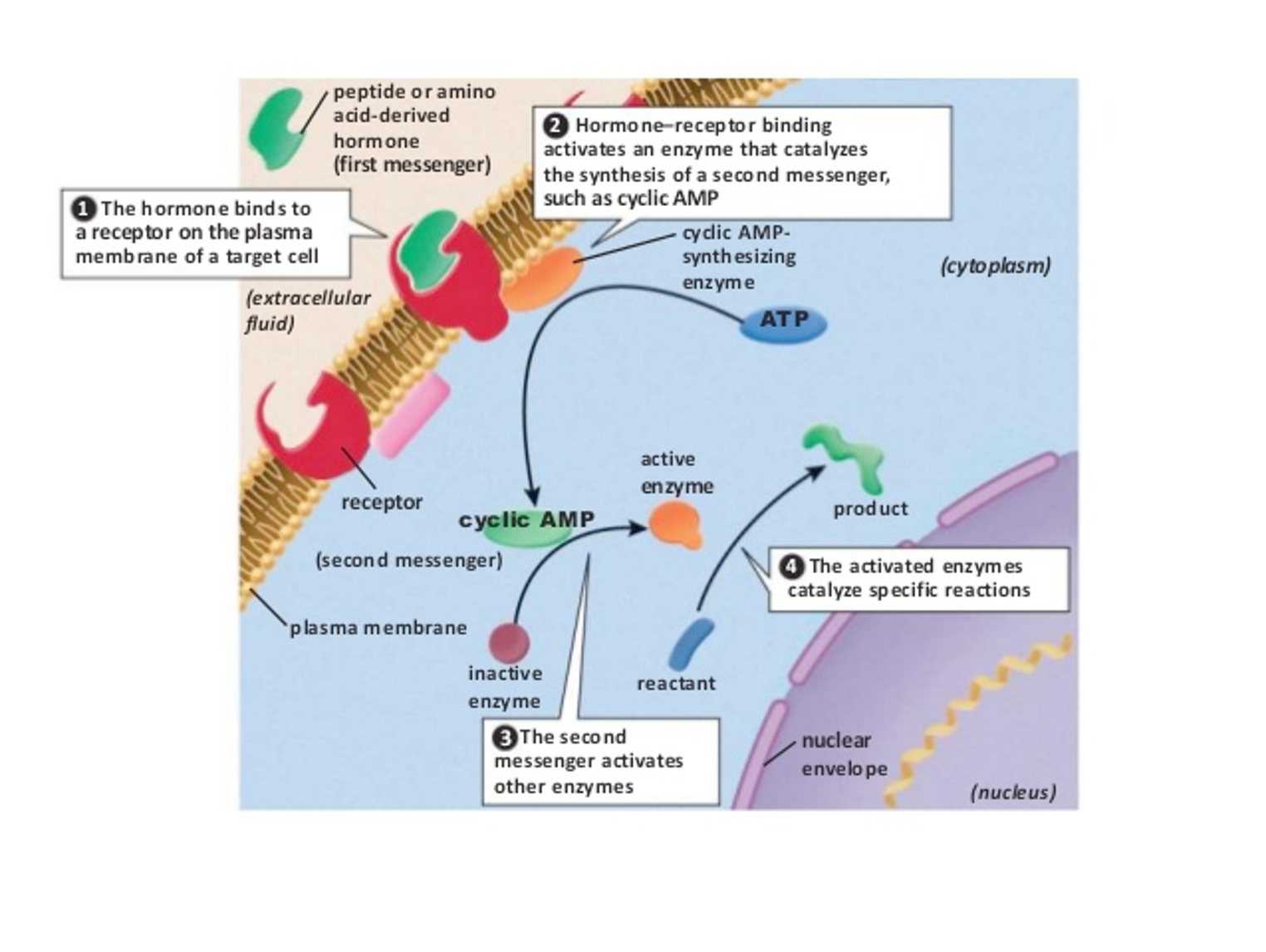
•Attach to receptor (specific) molecule on cell membrane of target cell.
•Receptor-Hormone complex causes secondary messenger to diffuse through cell and activate enzymes.
•Faster acting (seconds or minutes).
•Amine, e.g. noradrenaline & adrenaline, thyroxine, melatonin (which is created by the pineal gland)
•Peptides, e.g. ADH, oxytocin
•Proteins, e.g. FSH, LH, insulin, growth hormone
Amines, Peptides and Protein Hormones





Enzyme Amplification
- a very small stimulus can produce a very large effect.
Hormone Clearance:
•Breaking down the hormone molecules turns the hormone off.
•Some hormones are broken down in the target cells
•Most are broken down in the liver and kidneys.
•The degraded hormones are excreted either in the bile or in the urine.

two types of glands in the body
exocrine and endocrine
Exocrine glands secrete
into a duct that carries the secretion to the body surface or to one of the body cavities. Sweat glands, mucous glands, salivary glands and the glands of the alimentary canal are examples of exocrine glands.
Endocrine glands
secrete hormones into the extracellular fluid that surrounds the cells that make up the gland. The secretion then usually passes into the capillaries to be transported by the blood. Endocrine glands are sometimes called ductless glands.
steroid hormones
oestrogen, progesterone, cortisol and aldosterone
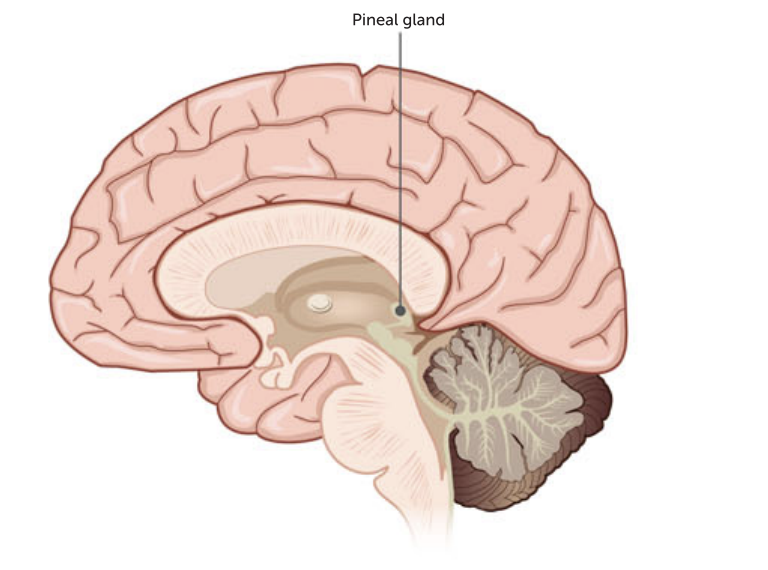
secretes melatonin