Westcott Course Physiology Lab Final
 Call Kai
 Learn
 Practice Test
 Spaced Repetition
 Match
 Flashcards
 Knowt Play
1/298

There's no tags or description
Looks like no tags are added yet.
299 Terms
Plasma membrane

Regulates movement into and out of a cell

Proteins

one hydrophilic head and two hydrophobic tails

Cytosol

Active

Simple Diffusion
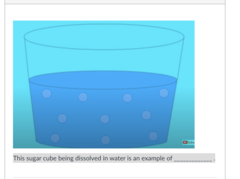
CO2, H2O, non-polar

Polar

Facilitated diffusion

CO2, outside

Facilitated diffusion

Ion

Leaky

Carrier mediated diffusion
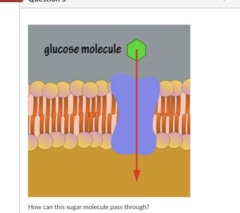
passive movement of water through a selectively permeable membrane.

outside the cell

active transport

Vesicle, plasma

Osmosis

Skeletal

Motor neuron

Sensory neuron

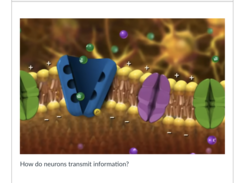
through changes in the electrical potential of the membrane
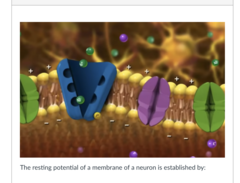
the unequal distribution of Potassium and Sodium ions
Dendrites

Summation

axon

Depolarization

Synaptic cleft

Neurotransmitters

Synaptic Cleft

Action potential

Presynaptic vesicles
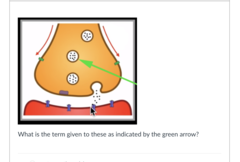
action potential, depolarization
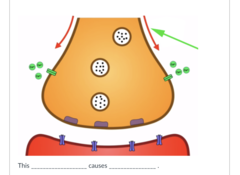
Docking proteins

action potential, depolarization, open voltage gated channels, dock to chemical on the surface of vesicles, vesicles merge and dump neurotransmitters.

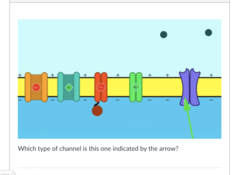
Chemically-gated
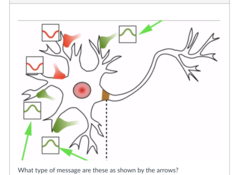
Excitatory
Build, receptor

Tendons

Epimysium

Muscle fascicle

Perimysium

Nucleus

Myosin

Actin

Calcium

Troponin

Myosin head

600

Actinable

Enlarging of the muscle is referred to as
Hypertrophy
Motivational

Adduction

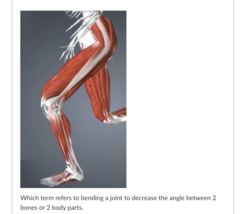
Flexion
All of these are types of muscles
Abduction

Tendons

Fascia

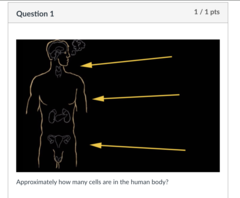
100 trillion
Hypothalamus

Pituitary gland

regulates your body's metabolism

Parathyroid gland

Adrenal
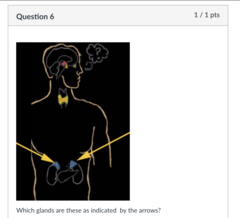
Which gland produces cortisol, a stress hormone?
Adrenal
Gonads

Pancreas

Paracrine

About how tall did Robert Pershing Waldow grow?
9 ft
Achondroplasia occurs when there is a
Lack growth hormone receptors
Too much thyroid hormone is also known as
Hyperthyroidism
What is there a lack of to produce the condition known as goiter
Iodine
What gland is responsible for producing cortisol
Adrenal
If you are consuming too much sugar, the cells can stop recognizing insulin, this is known as:
Type II Diabetes
Sugar

Toxicity

Insulin

Eat less carbohydrates

blood, ventricle
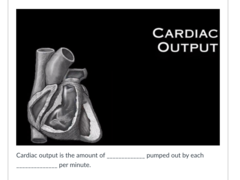
Heart, stroke

75

70

End Diastolic Volume
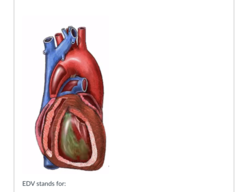
The more ______________ muscle stretches, the more _______________ it contracts.
Cardiac, forcefully
Increased _____________________ stimulation ________________ heart rate.
sympathetic, increases
Exercise activates the __________________ nervous system, _________________ heart rate.
sympathetic, increasing
What are the effects of acetylcholine on the frog's heart rate?
Slows it down
Cardiac output = Heart rate x ___________ ______________ .
Stroke volume
The heart is really just a ____________ .
Pump
According to this video, what is the main "concern" of the heart?
Maintaining pressure
About how many beats per day does the heart pump?
100,000
Most mammals have about the same amount of heartbeats in a lifetime.
True
The heart rests in a double-walled sac called the ____________________ .
Pericardium
Endocardium
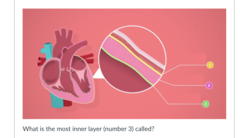
Atria

Valves opening and closing

Aortic Semilunar Valve

Superior Vena Cava
