2026–2027 DECA Hospitality & Tourism Performance Indicators
 Call Kai
 Learn
 Practice Test
 Spaced Repetition
 Match
 Flashcards
 Knowt Play
1/323

There's no tags or description
Looks like no tags are added yet.
324 Terms
What are the four main pathways in the Hospitality and Tourism Career Cluster?
Event Management, Lodging, Restaurant Management, and Travel and Tourism.
What does Tier 1 of the performance indicators focus on?
Business Administration Core.
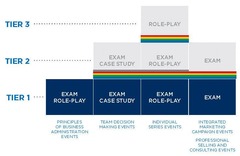
What is the focus of Tier 2 in the performance indicators?
Hospitality and Tourism Career Cluster.
What does Tier 3 represent in the performance indicators?
Specific pathways within the Hospitality and Tourism Career Cluster.
What is the role of performance indicators for PRINCIPLES OF BUSINESS ADMINISTRATION?
They are selected from the business administration core (Tier 1).
What is the significance of the Hospitality and Tourism Professional Selling event?
It uses performance indicators for the exam only.
What are the performance indicators for TEAM DECISION MAKING case studies based on?
They are selected from both the business administration core (Tier 1) and appropriate career cluster (Tier 2).
What does CS represent in the performance indicators key?
Career Sustaining level performance indicator content.
What does SP signify in the performance indicators key?
Specialist level performance indicator content.
What is the focus of the Business Law instructional area?
Understanding business's responsibility to know, abide by, and enforce laws and regulations.
What is one performance element under Business Law?
Acquire foundational knowledge of business laws and regulations.
What does the performance element 'Understand the civil foundations of the legal environment of business' focus on?
Knowledge of contracts.
What is the nature of legally binding contracts?
They are agreements that are enforceable by law.
What is one of the performance indicators related to intellectual property?
Describe methods used to protect intellectual property.
What does the performance element 'Apply knowledge of business ownership' entail?
Establishing and continuing business operations.
What is the focus of the Communication Skills instructional area?
Understanding concepts, strategies, and systems used to obtain and convey ideas and information.
What does the performance element 'Read to acquire meaning from written material' involve?
Identifying sources that provide relevant, valid written material.
What skill does the performance element 'Apply active listening skills' aim to develop?
Demonstrating understanding of what is being said.
What is one of the performance indicators for applying verbal skills?
Obtain and convey information effectively.
What does the term 'active listening' refer to?
The ability to fully concentrate, understand, respond, and remember what is being said.
What is a key component of the performance indicators for the Hospitality and Tourism Cluster?
They are based on extensive review of available online and print literature from industry and education.
What is the purpose of the MBAResearch website?
To provide additional information on performance indicators and the National Curriculum Framework.
What are the key aspects of effective verbal communication?
Asking relevant questions, interpreting nonverbal cues, providing legitimate responses, giving verbal directions, employing appropriate communication styles.
What is the purpose of employing communication styles appropriate to the target audience?
To ensure the message is understood and well-received by the audience.
What performance indicators are associated with effective written communications?
Explaining the nature of effective written communications, selecting appropriate formats, editing and revising work, and writing various types of business correspondence.
What types of written correspondence should be mastered in business communication?
Professional emails, business letters, informational messages, inquiries, persuasive messages, and executive summaries.
How can digital communications expose businesses to risk?
Through potential breaches of confidentiality, miscommunication, and the spread of misinformation.
What is the significance of social media in business communication?
It helps communicate with stakeholders and can impact the achievement of organizational objectives.
What are the key performance indicators for fostering positive customer relationships?
Demonstrating a customer service mindset, developing rapport, responding to inquiries, and adapting communication to cultural differences.
How should conflicts with customers be handled to encourage repeat business?
By effectively managing difficult customers and addressing complaints.
What is the role of customer relationship management (CRM) in business?
To enhance customer satisfaction and loyalty through effective communication and relationship-building strategies.
What are the fundamental economic concepts necessary for business operations?
Understanding economic goods and services, economic resources, supply and demand, and market functions.
What is the importance of understanding the nature of business in society?
To recognize the contributions businesses make to the economy and society as a whole.
What factors affect the business environment?
Economic conditions, competition, regulations, and technological advancements.
What are the types of economic systems?
Traditional, command, market, and mixed economies.
How does government impact business activities?
Through regulations, taxation, and policies that affect business operations.
What is the concept of productivity in business?
The efficiency of production measured by the output generated per unit of input.
What is Gross Domestic Product (GDP)?
The total value of all goods and services produced within a country's borders in a specific time period.
What is the impact of inflation on business?
It can erode purchasing power, increase costs, and affect pricing strategies.
What is the significance of understanding business cycles?
To recognize trends in economic activity that can influence business decisions.
What are the implications of interest rate fluctuations on business?
They can affect borrowing costs, investment decisions, and consumer spending.
What is the role of ethics in customer relationship management?
To ensure fair treatment, transparency, and trust in customer interactions.
How can technology be utilized in customer relationship management?
To analyze customer data, personalize communication, and improve service delivery.
What strategies can be used to reinforce a company's image?
Identifying the brand promise and ensuring employee performance aligns with it.
What is the importance of adapting written correspondence to targeted audiences?
To enhance clarity and effectiveness in communication.
What is the significance of participating in staff meetings?
To clarify objectives, share information, and foster teamwork.
What are the characteristics of a customer service mindset?
Being proactive, empathetic, and focused on meeting customer needs.
What is the impact of small businesses on market economies?
They contribute to job creation, innovation, and economic diversity.
What is the nature of global trade?
Global trade involves the exchange of goods and services across international borders.
How does globalization impact business?
Globalization increases market access, competition, and collaboration across borders.
What are the determinants of exchange rates?
Determinants include interest rates, inflation, political stability, and economic performance.
What cultural considerations impact global business relations?
Cultural norms, values, communication styles, and business practices influence relations.
How do cultural and social environments affect global trade?
They shape consumer preferences, regulatory frameworks, and business practices.
What is the impact of electronic communication tools on global business?
They facilitate real-time communication, collaboration, and information sharing.
What is the impact of major trade alliances on business activities?
Trade alliances reduce tariffs and barriers, enhancing trade flows and economic cooperation.
How does the political environment affect world trade?
Political stability and government policies can either promote or hinder trade.
What role does geography play in world trade?
Geography affects transportation costs, accessibility, and resource availability.
How does a country's history impact world trade?
Historical trade relationships and colonial legacies can influence current trade dynamics.
What is the impact of a country's economic development on world trade?
Economic development levels determine trade capacity, competitiveness, and market access.
How do bribery and foreign monetary payments affect business?
They can lead to unethical practices, distort market competition, and harm reputations.
What are the requirements for international business travel?
Requirements include a passport, visa, proof of citizenship, immunizations, and sponsorship letters.
What is emotional intelligence?
Emotional intelligence is the ability to understand and manage one's own emotions and those of others.
What is self-esteem?
Self-esteem is an individual's subjective evaluation of their own worth.
How can personal biases and stereotypes be overcome?
By recognizing them and actively seeking diverse perspectives and experiences.
Why is assessing personal strengths and weaknesses important?
It helps individuals understand their capabilities and areas for improvement.
What personality traits are desirable in business?
Traits such as adaptability, resilience, and strong communication skills are important.
Why is self-confidence important in business?
It enables individuals to take risks, make decisions, and assert themselves effectively.
What is the importance of demonstrating initiative?
Initiative shows leadership potential and the ability to drive projects forward.
What are ethical work habits?
Ethical work habits include honesty, integrity, and accountability in professional conduct.
How can trust be built in relationships?
By demonstrating reliability, honesty, and open communication.
What are the reasons for ethical dilemmas?
Ethical dilemmas arise from conflicts between personal values and professional responsibilities.
What is the nature of effective communication?
Effective communication involves clarity, active listening, and appropriate feedback.
What is the role of feedback in personal growth?
Feedback provides insights for improvement and helps individuals adjust their behaviors.
What techniques can be used to manage emotional reactions?
Techniques include self-regulation, mindfulness, and constructive feedback.
How can teamwork techniques help accomplish goals?
Teamwork techniques foster collaboration, enhance problem-solving, and improve outcomes.
What is the concept of leadership?
Leadership is the ability to influence and guide individuals or groups toward achieving goals.
What is ethical leadership?
Ethical leadership involves leading with integrity, fairness, and respect for others.
Why is it important to save and invest?
To build wealth and achieve financial goals.
What is the first step in managing personal finances?
Set financial goals.
What is a personal budget?
A plan that outlines expected income and expenses.
How do you determine personal net worth?
By subtracting total liabilities from total assets.
What are tax liabilities?
Obligations to pay taxes based on income and transactions.
What information can be found on a pay stub?
Details about earnings, deductions, and net pay.
What is the purpose of writing checks?
To make payments from a bank account.
Why is it important to maintain financial records?
To track income, expenses, and prepare for taxes.
What does balancing a bank account involve?
Ensuring that the account balance matches the bank's records.
What is charitable giving?
Donating resources to support a cause or organization.
What does managing online accounts entail?
Overseeing digital financial accounts and transactions.
What is the cost of credit?
The total amount paid for borrowing, including interest and fees.
What constitutes the wise use of credit?
Using credit responsibly to avoid excessive debt.
What is credit history?
A record of a borrower's repayment behavior.
What are responsible financial decisions?
Choices that promote financial stability and growth.
How can one protect against identity theft?
By using secure passwords and monitoring financial accounts.
What is the process for paying bills?
Ensuring timely payments to avoid late fees and penalties.
What is a consumer loan?
A loan taken out by individuals for personal use.
What does controlling debt involve?
Managing and reducing outstanding financial obligations.
What is the purpose of preparing personal income tax forms?
To report income and calculate tax obligations.
What options exist for financing a college education?
Scholarships, grants, loans, and savings plans.
What is retirement planning?
Preparing financially for life after employment.
What is estate planning?
Arranging for the management and distribution of one's assets after death.