Task A: Effects of Human Behavior and Communication on the Learning Process
 Call Kai
 Learn
 Practice Test
 Spaced Repetition
 Match
 Flashcards
 Knowt Play
1/45

There's no tags or description
Looks like no tags are added yet.
46 Terms
What is Human Behavior?
Product of factors that lead people to act in predictable ways, attempts to satisfy certain needs
What are Human Needs and Motivation?
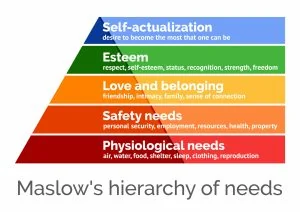
Maslow’s Hierarchy of Needs
■ Physiological, Safety/Security, Love/Belonging, Esteem, Self-Actualization
What is Maslow’s Hierarchy of Needs?
Needs must be met in order of importance. Can impede learning if basic needs are not met.
What is the Physiological Need?
Hunger, thirst, need to use restroom, etc.
What is the Safety/Security Need?
Not feeling physically threatened, out of work, homeless, etc.
What is the Love/Belonging Need?
Both at home and in the flight instructing environment, students need to feel a sense of belonging.
What is the Esteem Need?
Many things students do is aimed at satisfying the need for self-esteem or group esteem. Learning to fly can impress friends, for example, or provide the student with a feeling of well being and accomplishment.
What is the Self-Actualization Need?
The pinnacle of all needs, the feeling that one is doing what they were meant to do, or serving some other higher purpose.
Explain the The Instructor and Learner Relationship
Every learner has an individual learning style, an instructors and learners must have compatible personalities. Instructors must work with the individual learning styles of their students rather than against them.
Personality types (see: Myers Briggs Personality Types) differ, and research shows that learners whose learning style is compatible with an instructors teaching style and personality retain information longer, apply it more effectively, learn more, and have a more positive attitude in general throughout training.
What are Defense Mechanisms?
Used by students who want to avoid some uncomfortable realities
Denial
Repression
Displacement
Rationalization
Compensation
Projection
Reaction Formation
Fantasy
What is Denial?
Denying what has occurred, e.g. “I don’t think the landing was that bad”
What is Repression?
Repressing scary or stressful memories, e.g. the student causes a near-spin and fails to remember it after the lesson.
What is Displacement?
Redirecting negative feelings towards another, e.g. being angry at your friends or family because you’re disappointed in your own purpose.
What is Rationalization?
Making excuses, e.g. “Well ATC was just distracting me, so it was ok”, etc.
What is Compensation?
Trying to compensate for negative performance by emphasizing positive performances
What is Projection?
Attributing your own negative feelings towards another.
What is Reaction Formation?
Choosing to believe something that is the opposite of the truth to avoid facing an uncomfortable reality, e.g. “Who cares, I didn’t care about that anyway”
What is Fantasy?
Psychological escape, daydreaming.
What are Learner Emotional Reactions?
Anxiety, Stress, Feeling of Unfair Treatment, Impatience, Worry or Lack of Interest, Apathy Due to Inadequate Instruction, Normal and Abnormal Reactions to Stress.
What is Anxiety?
Fear of an upcoming, uncertain event. Normal response during flight training.
What is Stress?
Felt during periods of high demand, to a limited degree can improve performance, but can also hurt it at very high stress levels.
What is Feeling of Unfair Treatment?
Students want to feel like they’re treated fairly. It gets in the way of their training if they feel the instructor is unfair, or holding them to unreasonably high standards, particularly early on.
What is Impatience?
Flying circles all day in the traffic pattern is less fun than cross country flying, and many students are impatient to press on with these other activities
What is Worry or Lack of Interest?
Students may not be interested in a particular task, or they may have worries about some aspect of their training, or even non-flying related issues.
What is Physical Discomfort?
Students who are experiencing discomfort won’t learn as well (remember Maslow’s Hierarchy).
What is Apathy Due to Inadequate Instruction?
Students who feel their instructor is unprepared, or treats them poorly, or does not adequately explain tasks or maneuvers may become apathetic, lose motivation, and give up.
What is a Normal Reaction to Stress?
Feelings of frustration, etc.
What is a Abnormal Reaction to Stress?
Laughing, singing, extreme over-cooperation, painstaking self-control, morbid comments
Flight Instructor Responsibilities for Learner Emotional Reactions
Some students are not cut out for flight training. If these are displayed, politely refuse to train, possibly refer to FSDO or authorities depending on severity
Teaching the Adult Learner - The average age of an aviation learner is 30. Unlike primary or secondary school, or even university, most flight students are adults, with busy, active lives. They are pursuing aviation learning goals for their own enjoyment (self-actualization), or career goals. It’s important to keep in mind that these students usually have the following characteristics:
Their primary reason for learning is they find the skill or knowledge useful
They seek training to cope with life changing events (e.g. new jobs, pursuing new careers)
They are autonomous and self-directed and need independence and control
They have a wealth of life experiences that they draw upon
They are goal-oriented, and relevancy-oriented. They want to apply their knowledge immediately.
They are practical, and will focus on elements that they find most useful.
They must be shown respect, like all students.
The need to increase or maintain self-respect is a strong motivator for adult learners.
What are the Basic Elements of Communication?
Source, Symbol, Receiver
What is the Source of Basic Elements of Communication?
The person or object sending the message
What is the Symbol of Basic Elements of Communication?
The words, pictures, symbols, etc, used to convey the message
What is the Receiver of Basic Elements of Communication?
The Listener, reader, decoder, or learner — the individual or individuals to whom the message is directed.
What is Barriers to Effective Communication?
Confusion, Lack of Common Experience, Interference, and Overuse of Abstractions
What is Confusion in Barriers to Effective Communication?
Results when a word is confused with what it is meant to represent. Words an symbols create confusion when they mean different things to different people.
(symbols/symbolized object) - e.g. “stall” like engine vs. “stall” like a wing stall
What is Lack of Common Experience in Barriers to Effective Communication?
In communication, a difficultly which arises because words have different meanings for the source and the receiver of information due to their differing backgrounds.
Metaphors are often used, rely on common experience
What is Interference in Barriers to Effective Communication?
Noisy environment, unmet physiological/basic needs, etc.
What is Overuse in Barriers to Effective Communication?
Talking at too high of a level, e.g. “a bit high” versus “50 feet high”, or “aircraft” versus “airplane”.
Explain Developing Communication Skills and what are some things that help?
Communication skills require development, they don’t happen automatically
Listening
Questions
Instrucional Communication
Instruction Enhancement
Roleplay
Explain Listening and why it is important
Listen carefully to the student, don’t just hear them. Observe their reactions and responses. Think before answering, do not interrupt. Look for underlying feelings.
Explain Questions and why it is important
Ask well-directed questions to discern student understanding, ask student about their feelings on the subject, try to get them to discuss how they are thinking about things
Explain Instructional Communication and why its important
Instructors are at their best when discussing things they know well.
Use past experiences as examples
Student should know the how and the why
Communication hasn’t taken place unless the desired results have taken place
Explain Instructional Enhancement and why its important
A good instructor is always learning, engaging in professional development, keeping up to date.
Explain What Roleplaying is and why its important
It can be useful to pretend to be in an environment. For example, the instructor could pretend to be Air Traffic Control and talk to the student, etc.