Week 12: Biomedical Sciences (Ronayne)
 Call Kai
 Learn
 Practice Test
 Spaced Repetition
 Match
 Flashcards
 Knowt Play
1/83

There's no tags or description
Looks like no tags are added yet.
84 Terms
What are the six classical hallmarks of cancer?
sustained proliferative signaling, evading growth suppressors, resisting cell death, enabling replicative immortality, inducing angiogenesis, and activating invasion/metastasis

How do angiogenesis and metastasis promote cancer progression?
angiogenesis recruits blood vessels for oxygen/nutrients; metastasis allows cancer cells to spread to distant organs
What are the major organelles involved in cancer and their functions?
Nucleus: DNA storage, chromatin organization, mutation hotspots
Mitochondria: ATP, ROS, intrinsic apoptosis
ER: protein folding, UPR/ER stress
Lysosomes: degradation/autophagy
How do drugs cross cell membranes?
passive diffusion (small, lipophilic drugs) or carrier-mediated transport (drugs resembling endogenous substrates)
How do ABC efflux pumps cause multidrug resistance (MDR), and how can it be overcome?
ABC pumps export drugs, reducing intracellular accumulation. Strategies include efflux inhibitors, combination therapy, and nanoparticle delivery
How do receptor tyrosine kinases (EGFR/HER2) promote cancer proliferation?
ligand binding causes receptor dimerization and activates downstream RAS-RAF-MEK-ERK and PI3K-AKT-mTOR signaling
How do GPCRs and ABC transporters contribute to cancer progression?
GPCRs activate second-messenger signaling cascades, including EGFR signaling; ABC transporters (P-gp) promote drug resistance through efflux
What pathways does EGFR activate, and which drugs target EGFR mutations?
RAS-RAF-MEK-ERK and PI3K-AKT-mTOR pathways; EGFR TKIs include erlotinib, gefitinib, and osimertinib
What mechanisms cause resistance to EGFR-targeted therapies?
EGFR T790M mutation, downstream RAS mutations, and MET amplification, which bypasses EGFR to maintain proliferative signaling
What is the Warburg effect, and how is mitochondrial metabolism altered in cancer?
cancer cells often increase glycolysis despite oxygen availability, sometimes reducing reliance on mitochondrial OXPHOS
How does the BCL-2 family regulate intrinsic apoptosis?
BCL-2 inhibits pro-apoptotic BAX/BAK. BAX/BAK form mitochondrial pores, releasing cytochrome c and activating caspases. Venetoclax inhibits BCL-2
What are the major sources of ROS, and how do ROS levels affect cancer?
Mitochondrial ETC complexes I/III and NADPH oxidases.
Low ROS promotes signaling/proliferation; excessive ROS causes DNA damage and genomic instability
How can ROS be therapeutically targeted in cancer?
pro-oxidant therapies increase ROS beyond tumor tolerance, while antioxidant inhibition prevents ROS detoxification, promoting cancer cell death
What are the three UPR sensors, and how do they respond to ER stress?
IRE1α → XBP1s (protein folding/ERAD) or JNK/RIDD (apoptosis)
PERK → eIF2α → ATF4 (adaptation)/CHOP (apoptosis)
ATF6 → Golgi cleavage → folding/ERAD

How does bortezomib exploit ER stress in multiple myeloma?
it inhibits proteasomal protein degradation, causing misfolded protein accumulation, excessive ER stress, and apoptosis
How does the UPR promote cancer survival under stressful conditions?
it increases protein-folding capacity during hypoxia/nutrient deprivation. Oncogenic changes (BRCA1, TSC, PTEN loss; MYC/RAS activation) alter UPR signaling, survival, and apoptosis
What are the major DNA repair pathways and their functions?
MMR corrects replication mismatches
HR repairs double-strand breaks accurately using BRCA1/2 and RAD51
NHEJ repairs double-strand breaks without a template but is error-prone
What proteins regulate the DNA damage response, and what treatments exploit DNA damage?
ATM, ATR, CHK1/2, and p53 regulate damage responses. PARP inhibitors (olaparib) exploit HR deficiency; platinum agents, nitrogen mustards, and topoisomerase inhibitors damage DNA
Why are BRCA-mutated tumors sensitive to PARP inhibitors?
PARP inhibition prevents single-strand break repair, causing double-strand breaks during replication
BRCA-mutated cells lack effective HR repair, resulting in genomic instability and cell death

What determines PARP inhibitor sensitivity and resistance?
HR deficiency increases sensitivity; restored HR repair can cause resistance
Olaparib is used in selected BRCA-mutated/HR-deficient cancers
What mechanisms regulate gene expression in cancer?
RNA polymerases/transcription factors (MYC, p53), mRNA processing, translation initiation (eIFs), and post-translational modifications. HSP90 inhibitors indirectly disrupt protein regulation
What are common post-translational modifications (PTMs), and what do they regulate?
phosphorylation, ubiquitination, acetylation, and methylation regulate protein stability, localization, activity, and protein-protein interactions
How do PTMs regulate p53 activity?
phosphorylation/acetylation promote nuclear localization and transcriptional activity; ubiquitination promotes proteasomal degradation
How do oncogenes differ from tumor suppressors?
oncogenes gain function to promote growth (RAS, MYC, BCR-ABL); tumor suppressors lose function, removing growth restraints or DNA repair (TP53, RB1, BRCA)
How are oncogenes and tumor suppressors targeted therapeutically?
oncogenes may be directly inhibited (e.g., BCR-ABL); tumor suppressor loss may be exploited through synthetic lethality or targeting associated pathways
How do 5-FU, capecitabine, and methotrexate inhibit cancer proliferation?
They disrupt nucleotide synthesis/DNA replication, primarily affecting S phase. Resistance may involve increased target enzymes or drug metabolism
What occurs during each cell-cycle phase, and which proteins regulate checkpoints?
G1: growth/preparation
S: DNA replication
G2: mitotic preparation
M: division
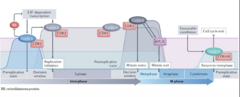
Cyclins D/E/A/B activate CDKs
p53, Rb, and p21 regulate checkpoints
Which cyclin-CDK complexes regulate cell-cycle progression?
Cyclin D-CDK4/6: G1
cyclin E-CDK2: G1/S
cyclin A-CDK2/CDK1: S/G2
cyclin B-CDK1: mitosis
APC/C promotes mitotic exit
What cell-cycle abnormalities commonly occur in cancer?
p53 mutations, Rb inactivation, and cyclin D overexpression cause uncontrolled proliferation and genomic instability; Ki-67 reflects proliferation
How do CDK4/6 inhibitors work, and what are their clinical uses and toxicities?
Palbociclib, ribociclib, and abemaciclib block G1 → S progression in HR+/HER2− breast cancer
Toxicities: myelosuppression, hepatotoxicity, and GI effects
How do taxanes and vinca alkaloids differ?
Taxanes (paclitaxel) stabilize microtubules and prevent depolymerization; vinca alkaloids (vincristine) inhibit polymerization
Both cause mitotic arrest
How do topoisomerase I and II inhibitors differ?
Topo I inhibitors (irinotecan) stabilize single-strand breaks; Topo II inhibitors (etoposide, anthracyclines) stabilize double-strand breaks, causing DNA damage/apoptosis. Anthracyclines can cause cardiotoxicity.
What are the major programmed cell-death pathways and their mediators?
Intrinsic apoptosis (mitochondria/BCL-2), extrinsic apoptosis (death receptors), necroptosis (RIPK1/3, MLKL), and ferroptosis (iron/lipid oxidation). Caspases execute apoptosis
How do pro- and anti-apoptotic BCL-2 proteins regulate mitochondrial apoptosis?
BAX/BAK form pores for cytochrome c release; BCL-2/BCL-XL inhibit them
BH3 mimetics (venetoclax) block BCL-2, restoring apoptosis in selected CLL/AML
How is extrinsic apoptosis activated, and what limits therapeutic targeting?
FAS/TRAIL ligands activate membrane death receptors and caspases. Tumor microenvironment barriers and decoy receptors limit effectiveness; agonist therapies remain investigational
How does PARP contribute to cell death through different mechanisms?
PARP hyperactivation depletes NAD+, causing parthanatos; PARP inhibition causes persistent DNA breaks and apoptosis in HR-deficient/BRCA-mutated cells
What is necroptosis, and why is it a potential cancer therapy target?
Programmed necrosis mediated by RIPK1/RIPK3/MLKL; activating it may kill apoptosis-resistant tumors. Therapies remain investigational
What is ferroptosis, and how does GPX4 regulate it?
Iron-dependent cell death caused by oxidative damage to membrane polyunsaturated fatty acids. GPX4 detoxifies lipid peroxides; GPX4 inhibitors promote ferroptosis.
What are venetoclax's indications and major clinical considerations?
CLL and selected AML regimens (with hypomethylating agents); major concerns include tumor lysis syndrome (requires ramp-up/monitoring) and CYP3A drug interactions
What are the major steps of autophagy, and how is it initiated?
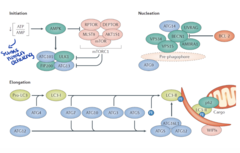
AMPK activation inhibits mTORC1, activating ULK1 → initiation/nucleation → phagophore elongation → autophagosome-lysosome fusion → cargo degradation.
What is mitophagy, and why is autophagy important in cancer?
Mitophagy selectively removes damaged mitochondria
Autophagy recycles cellular components, supporting tumor survival during hypoxia, nutrient deprivation, and treatment stress
How do mTORC1 and AMPK regulate cell growth and autophagy?
mTORC1 promotes protein synthesis, growth, and survival while suppressing autophagy; nutrient scarcity activates AMPK, inhibiting mTORC1 and promoting autophagy
How are mTOR pathways therapeutically targeted?
mTOR inhibitors (everolimus) suppress growth signaling in selected cancers and can increase autophagy. mTORC1 also regulates S6K1, lipid synthesis, and HIF-1α signaling
How do lysosomes contribute to drug resistance?
They sequester weak-base drugs, reducing cytosolic drug concentrations. TFEB regulates lysosomal biogenesis; potential strategies include lysosomal inhibitors and drug redesign
Why are chloroquine and hydroxychloroquine being investigated in cancer therapy?
They inhibit lysosomal autophagy to reduce treatment-induced tumor survival. Studied with chemotherapy/targeted agents; limitations include low potency, off-target effects, and dosing challenges
What is the rationale for combining autophagy inhibitors with anticancer treatments?
to prevent protective autophagy during treatment stress and resensitize tumors; trials combine inhibitors with chemo/targeted agents while monitoring toxicities
What contributes to tumor heterogeneity and treatment resistance?
differentiation/dedifferentiation, cancer stem cells, and interactions with stromal cells, immune cells, and vasculature
What are the three phases of cancer immunoediting?
elimination: immune cells destroy tumor cell
equilibrium: surviving cells persist under immune pressure
escape: resistant cells evade immunity and proliferate

What cellular components make up the tumor microenvironment?
cancer cells, cancer-associated fibroblasts (CAFs), immune cells (T/B cells, macrophages, NK cells, dendritic cells), blood/lymphatic vessels, and stromal components
How is tumor angiogenesis targeted, and what toxicities can occur?
VEGF promotes tumor blood vessel formation; bevacizumab blocks VEGF, while VEGFR TKIs inhibit receptor signaling. Toxicities include hypertension, bleeding, and thrombosis
How do immune checkpoint inhibitors treat cancer?
PD-1/PD-L1 and CTLA-4 blockade restores antitumor T-cell activity
ex. pembrolizumab, nivolumab; biomarkers include PD-L1 and MSI status
Why combine immune checkpoint inhibitors with chemotherapy or targeted agents?
combination strategies may enhance antitumor immune responses and overcome immune evasion
How do cancer stem cells (CSCs) contribute to resistance and metastasis?
CSCs (e.g., CD44+, CD133+) resist therapy through quiescence and enhanced DNA repair, promoting tumor recurrence and metastasis; strategies target CSCs or their microenvironment
What are the emerging hallmarks and enabling characteristics of cancer?
deregulated cellular energetics, avoiding immune destruction, tumor-promoting inflammation, and genomic instability/mutations
How does a genetic alteration guide cancer treatment?
genetic alteration → disrupted pathway → cancer phenotype → biomarker testing → targeted therapy/resistance
How does cancer develop through clonal evolution?
normal cells have regulated growth/repair → early mutations increase survival/proliferation → additional alterations promote invasion, metastasis, and resistance
What is the difference between driver and passenger alterations?
Driver: contributes to cancer initiation, growth, or maintenance
Passenger: accumulates without necessarily providing a selective advantag
What are the major types of genetic alterations?
SNV/point mutation: single nucleotide change
Insertion/deletion: added/removed bases (may cause frameshift)
Amplification/deletion: altered gene copy number
Fusion/rearrangement: abnormal gene fusion or regulation
How do epigenetic alterations differ from genetic mutations?
epigenetic changes alter gene expression without changing DNA sequence, often through DNA methylation or histone modifications
How can DNA mutations change protein function and cell behavior?
DNA → RNA → protein → cell behavior
Mutations may cause constitutive activation, loss of function, altered expression/stability, or impaired DNA repair
Do all DNA mutations cause functional changes or require treatment?
No. Some are silent, and not every functional alteration is clinically actionable
What are the three major classes of cancer genes and their functions?
Oncogenes: gain-of-function promotes growth (EGFR, KRAS, BRAF, MYC, HER2)
Tumor suppressors: loss-of-function removes growth restraints (TP53, RB1, APC, PTEN)
DNA repair genes: defects impair repair (BRCA1/2, MLH1, MSH2)
How do proto-oncogenes become oncogenes?
activating mutations, amplifications, or fusions cause excessive signaling → persistent proliferation, survival, or altered differentiation
What are examples of oncogenic alterations, and what determines their clinical relevance?
EGFR activating variants, KRAS G12D, HER2 amplification
Treatment requires identifying the exact alteration, tumor type, and guideline-supported options
How does tumor suppressor loss promote cancer?
loss of cell-cycle checkpoints, growth restraints, or apoptosis allows damaged cells to survive and accumulate mutations
What are the functions of TP53, PTEN, and RB1?
TP53: DNA damage response, arrest, senescence, apoptosis
PTEN: inhibits PI3K signaling
RB1: controls G1 → S transition
How do DNA repair defects create therapeutic vulnerabilities?
repair deficiencies increase mutations/genomic instability and make tumors dependent on remaining repair pathways, which can be therapeutically inhibited
What DNA repair genes are clinically important?
BRCA1/2: homologous recombination repair; mutations may confer PARP inhibitor sensitivity
MLH1/MSH2: mismatch repair; deficiency can cause MSI-high status
What are the major oncogenic signaling pathways and their functions?
RTK → RAS → RAF → MEK → ERK: proliferation/gene expression
PI3K → AKT → mTOR: growth, protein synthesis, survival
p53/RB: cell-cycle checkpoints, DNA damage responses, apoptosis
How do pathway mutations promote uncontrolled cancer growth?
Activating mutations (e.g., RAS) sustain signaling without growth factors; PTEN/p53/RB loss removes inhibitory controls
How do germline and somatic mutations differ?
Germline: present from conception, throughout the body, potentially inherited, increases cancer susceptibility (BRCA1)
Somatic: acquired during life, generally tumor-specific, may drive cancer or predict treatment response (EGFR)
What should be considered when a tumor mutation suggests inherited cancer risk?
confirmatory germline testing and genetic counseling may be appropriate; inherited susceptibility does not guarantee cancer
What are the major hereditary cancer syndromes and associated genes?
BRCA1/2: breast, ovarian, prostate, pancreatic cancer
MLH1/MSH2: Lynch syndrome (colorectal/endometrial)
APC: familial adenomatous polyposis (colorectal)
TP53: Li-Fraumeni (multiple early-onset cancers)
What tests identify tumor alterations?
Tissue biopsy: tumor diagnosis
NGS/PCR/Sanger: DNA/RNA variants and fusions
IHC: protein expression
FISH: amplification/rearrangement
Liquid biopsy: circulating tumor DNA (ctDNA)
What factors must be considered when interpreting molecular testing?
Exact variant, assay limitations, tumor type, treatment history, and clinical evidence. Variants of uncertain significance (VUS) are not proven actionable
How do predictive, prognostic, and actionable biomarkers differ?
Predictive: likelihood of treatment benefit/harm
Prognostic: expected disease outcome
Actionable: supports a clinical decision in a defined context
What are companion diagnostics and tumor-agnostic biomarkers?
Companion diagnostic: test supporting safe/effective therapy use
Tumor-agnostic biomarker: supports treatment across cancer types when approved criteria are met
Which biomarkers guide targeted cancer therapies?
EGFR variants → EGFR TKIs (NSCLC)
HER2 amplification → HER2 therapies
BRAF V600E → BRAF + MEK inhibitors
BRCA1/2 → PARP inhibitors
dMMR/MSI-high → checkpoint inhibitors
KRAS G12C → KRAS G12C inhibitors
Why must biomarker-directed therapy be individualized?
eligibility depends on exact variant, cancer type, previous treatments, current drug labeling, and guidelines
Why can targeted therapy selectively inhibit cancer growth?
some tumors depend on an altered driver protein/pathway; blocking it disrupts signaling, slowing growth or reducing tumor burden
Why do targeted therapy responses vary, and what should pharmacists monitor?
Coexisting mutations, redundant pathways, heterogeneity, drug exposure, and host factors. Monitor indication, testing, adherence, interactions, and adverse effects
How does tumor heterogeneity cause acquired treatment resistance?
therapy eliminates sensitive clones while resistant clones survive and expand, causing disease progression
What are the three major mechanisms of acquired resistance?
secondary mutations reduce drug binding; bypass signaling activates alternative survival pathways; cell-state changes reduce sensitivity without new driver mutations
How can resistance be evaluated after cancer progression?