NS 1150 Prelim 4
 Call Kai
 Learn
 Practice Test
 Spaced Repetition
 Match
 Flashcards
 Knowt Play
1/211

There's no tags or description
Looks like no tags are added yet.
212 Terms
Evolution of milk
- all mammalian species lactate to support postnatal offspring development
- evolution of specialized mammary glands and unique milk composition to suit offspring needs
Hormones involved in mammary gland development, lactation and involution
- oestrogen
- progesterone
- prolactin
- placental lactogen
- oxytocin
Milk
Nourish
- essential and nonessential fatty acids and amino acids
- micronutrients (vitamins and minerals)
- some fatty & amino acids
- vitamins A, C, D, E, K, Selenium, Zinc
- enzymes, proteins/peptides, milk fat globules, microbes
Communicate
- Stem cells, miRNA/exosomes, Flavor compounds
Protect
- antibodies urea
Icie Macy Hoobler
pioneering biochemist who shaped infant formula formulations and fortification of dairy products with vitamin D. FDA specifies 30 nutrients that must be included in infant formulas
The Mothers, Infants and Lactation Quality (MILQ) Study-setting reference values for human milk
- Recently published (October 2025)
- Collection in 4 countries (Bangladesh, Brazil, Denmark, and The Gambia) where there is no standard maternal supplementation.
- Measured human milk nutrient concentrations and quantified milk volume throughout the first 8.5 mo of lactation (n= 1242)
Human milk composition
- carbs (80g/l)
- fat (about 40g/l)
- proteins (8g/l)
oligosaccharides are the 3rd most abundant component in human milk
HMOs function in the infant gut
a. support beneficial bacteria
b. antimicrobial and antiviral
c. modulate intestine epithelial cells
d. immunomodulatory effects
e. enhance barrier function
What do maternal genes and FUT2/FUT3 determine?
human milk oligosaccharides (HMOs) composition
What does secretor status determine?
HMO concentration and diversity
Why breastfeeding?
short and long-term medical and neuro-developmental advantages of breastfeeding make it a public health imperative
- AAPn& WHO both agree you should breastfeed for two years and beyond
breastfeeding provides long term protection from obesity, asthma, and diabetes.
How is breastfeeding beneficial for lactating mothers
20-24% reduced risk for breast and ovarin cancer
50% reduced risk for type 2 diabetes for mothers with GDM
Reduced risk for postpartum depression
WHOs recommendations
exclusive breastfeeding -6 months. Breastfeeding with complementary foods - 2years of age or longer
Contra-indications to Breastfeeding
- Breastfeeding is rarely contraindicated
Reasons to avoid breastfeeding:
- Untreated HIV infection
- Human T-cell leukemia-lymphoma virus infection
- Ongoing maternal use of illicit drugs (e.g., cocaine, heroin, phencyclidine)
- Temporary cessation of breastfeeding whilst
receiving chemotherapy for cancer treatment
How can parents living with HIV help keep their babies HIV-negative while breastfeeding
- maintaining an undetectable viral load
- attending all health care appointments for parent and baby
- taking HIV medications as prescribed
- exclusive breastfeeding up to 6 months
- early planning with health care team
- preventative medication to baby after birth
What is a mother's own milk is not available?
Pasteurized donor milk (for premature or medically fragile infants.
Infant formula (safe alternative to breastfeeding, albeit with fewer health benefits)
Secretory activation in the early days of lactation
pregnancy - open paracellular pathways
early lactation - closing paracellular pathways
established lactation - closed paracellular pathways
Innovative tools for measuring milk maturation in clinic
- milk biomarker predicts volume in pump-dependent mothers
- handheld milk conductivity sensing device measures secretory activation progress in lactating women
changes in infant weight after birth
poor infant weight gain
reduced breastfeeding confidence
shorter breastfeeding duration
The 0-14 days critical window for initiating milk production
slow weight gain -> formula supplementation -> less demand -> low milk volume -> long-term breastfeeding outcomes
Factors affecting early, unplanned lactation cessation
impaired breast development, hormonal dysregulation, obesity and diabetes, genetic disorders
biological
- impaired secretory differentiation
- metabolic health
- inflammatory conditions
- genetics & epigenetic anomalies
behavioral
- mental health
- knowledge, attitude, intent, self-efficacy
- family & social support
- professional lactation care
economic
- paid and unpaid work
- out-of-pocket expenses
Zinc deficiency symptoms
• Alopecia
• Diarrhea
• Skin lesions
• Taste disorders
• Loss of appetite
• Impaired immune function
• Neuropsychiatric changes
• Growth retardation
Using maternal genetics to prevent zinc deficiency
1 in 2300 in the population carries loss of function mutation in SLC30A2. stuff in milk adds Zn
take home messages
- Milk production requires normal breast development and is tightly regulated by hormones
- Human milk is the recommended nutrition for infants
- Milk is a dynamic biological fluid
- The first 14 days postpartum is a critical window to establish lactation
Why study genetics?
- DNA encodes the genetic information that instructs the function and growth of cells.
- Diversity in DNA sequences can translate to differences in cell function (phenotype).
- Differences in the genetic code impacts our response to nutrition, metabolism, and contribute to several metabolic diseases
Nucleotides and basic DNA structure
DNA is made from a polymer of nucleotides. The nitrogenous base can be a purine, such as adenine(A) and guanine (G), or a pyrimidine, such as cytosine (C)and thymine (T)
DNA has a double helix structure. The sugar and phosphate of the nucleotides form the backbone. The nitrogenous bases are stacked inside.
Francis Crick and James Watson
In April 1953, they published their seminal Nature paper proposing the double helix structure of DNA
Dr. Rosalind Franklin
In 1952, she performed the critical X-ray crystallography experiment on purified DNA to provide the data that informed the DNA structure. 'Photo 51' shows the diffraction pattern of X-rays by DNA crystals.
Chargaff's Rule
In any organism's DNA: A% = T% and G% = C% : A is a base pair with T; G is a basepair with C
Basic structure of gene
A gene is a sequence of DNA that is transcribed to produce a functional RNA and/or protein.
The components of a genes include:
- A promoter sequence to provide binding sites for RNA transcription machinery
- Exons contain the protein coding sequence.
- Introns are non-protein coding sequences
- 5'UTR (Untranslated region) and 3'UTR that contain non-protein coding sequences that are transcribed intoRNA and play a role in regulating the efficiency of protein translation
- Enhancer/silencers which regulate the efficiency of gene transcription
Organization of Human Genome
Human genome contains 3 billion basepairs of nucleotides, encoding approximately 20,000 genes. The human genome is arranged into 46 chromosomes, 22 pairs of autosomes, and 1 pair of sex chromosomes (XX female or XY male)
Mechanisms of genetic changes
The DNA sequence undergoes mutations over time.
- generate diversity in physical characteristics within a population to enable selection based on 'fitness' and to drive evolution of the species.
- loss of fitness, which lead to a spectrum of mild to severe genetic diseases that impacts health.
Where does genetic diversity come from?
1. Genetic mutations
2. Meiosis cell division
3. Sexual reproduction by combining the genetic material from 2 individuals
Mechanisms of genetic mutations
1. DNA damage
2. Exogenous causes
- UV, Irradiation, tobacco, industrial pollutants
3. Endogenous causes
- reactive oxygen special aldehydes
- errors during DNA replication
Consequence of DNA mutations
depends on the nature of the mutation
silent mutation
does not impact the encoded protein sequence
nonsense mutation
leads to a premature stop codon that truncates the encoded protein
missense mutation
changes the encoded amino acid (may or may not impact overall protein function)
frameshift mutation
caused by an insertion or deletion of a nucleotide will change the codon reading frame. This will significantly change the amino acid sequence downstream of the frameshift mutation with significant impact on the encoded protei
Consequence of chromosomal mutations
- Changes to the chromosome lead to more large scale changes to the genetic code.
- Duplicated regions of a chromosome will increase the copy number of genes. This can lead to increased expression of genes within the duplicated region.
- Deleted regions of chromosomes can lead to loss of genes.
- Inversion of a region of the chromosome could disrupt the genes at the border of the inversion.
- Translocation between two different chromosomes can fuse 2 different genes to create a fusion-protein or bring a gene under the control of a different promoter.
Meiosis
Cell division that produces reproductive cells in sexually reproducing organisms.
Asparagus pee smell
Missense single nucleotide polymorphisms (SNPs) in OR2M7 associated with inability to smellasparagus metabolites in urine (asparagus anosmic).
Among 6909 participants (European descent), 39.8% (n=2748) strongly agreed that they couldperceive a distinct odor in their urine after eating asparagus and 60.3% (n=4161) said they couldnot and were classified as asparagus anosmic.
Monogenic disorders in human nutrition and metabolism
Monogenic disorders describe genetic diseases caused by mutation in a single gene.Usually autosomal recessive, where inheriting 2 mutant allele variants of the same gene results in the disease.• Monogenic human disorders in nutrition and metabolism• Absorption disorders: Cystic fibrosis, hereditary hemochromatosis• Metabolic synthesis/processing disorders:Phenylketonuria• Energy generation disorders: mitochondrial defects
Cystic fibrosis
autosomal recessive genetic disorder. Mucus gets stuck, causing the lung to eventually loose function. Pancreatic juices become thick bc they are trapped. very common in european population because the carrier of CFTR mutation confers protection against cholera infection. Cholera is caused by the bacteria Vibrio cholerae. This bacteria secrets a toxin that causes overactivity in the CFTR ion channel, resulting in excessive water loss into the bowel lumen and diarrhoea. CFTR mutant carriers do not suffer cystic fibrosis, but express reduced CFTR ion channels so are less susceptible to the Cholera toxin.
what causes cystic fibrosis?
it is caused by inheriting two mutates CFTR alleles on chromosome 7
What is the role of the CFTR protein in cystic fibrosis?
CFTR transports chloride ions into lumens, helping maintain hydrated, mobile mucus
How does cystic fibrosis affect the lungs and pancreas?
it causes thick mucus buildup in airways and blocks pancreatic enzyme secretion, leading to poor digestion.
what treatment helps with nutrient absorption in cystic fibrosis patients?
oral pancreatic enzyme supplements (pancreases) taken with meals
What is meconium ileus and how is it treated?
another pathology that affects newborn infants with cystic fibrosis. the thickened mucus accumulates in the ileum causing abdominal distension and obstruction of gastrointestinal tract. it can be treated with an enema (lubricant) applied via the rectum (if that doesn't work surgery)
Where is iron absorbed, stored, and utilized in humans?
Absorbed in the small intestine, stored mainly in the liver and macrophages, and used for hemoglobin synthesis and as a co-factor for enzymes/redox reactions.
How is total body iron regulated since there's no physiological route to excrete it?
By controlling iron absorption in the intestine.
What protein regulates iron absorption and release from macrophages?
Hepcidin, released in response to HFE stimulation.
What happens when both HFE alleles are mutated?
Hepcidin release is lost → increased iron absorption and release → toxic accumulation.
What are the normal functions of HFE?
Reduce iron absorption in the bowel and reduce iron release from macrophages
What is the main consequence of increased iron uptake in the body?
Toxic accumulation across multiple organs.
What is the most prominent physical feature of iron overload?
Bronze/darker skin appearance due to iron accumulation.
Which organs can be permanently damaged by iron accumulation?
Heart, liver, pancreas, and brain.
Treatment for hemochromatosis?
Regular phlebotomy (blood removal) to reduce iron levels and drugs that bind to iron chelators, which can be excreted by the kidney in the urine.
What evolutionary hypothesis explains the persistence of HFE mutations?
They may have evolved to minimize the impact of menstruation-related iron deficiency.
Phenylketonuria
- prevents the body from breaking down an amino acid (phenylalanine), leading to toxic buildup
- rare autosomal recessive genetic disorder caused by co-inheriting 2 mutant alleles of the PAH gene located on chromosome 12.
- PAH gene encodes the phenylalanine hydroxylase enzyme that converts the amino acid phenylalanine to tyrosine.
- the loss of PAH enzymatic activity results in toxic accumulation of phenylalanine that interferes with newborn development of brain and nervous system
Phenylketonuria for a newborn
- During pregnancy, the mother's PAH enzyme activity can protect the developing fetus from phenylalanine accumulation.
- All newborns are screened for phenylketonuria using a blood test to test for high levels of phenylalanine in the blood.
Treatment for Phenylketonuria
If diagnosed with the condition, treatment involves avoiding high-protein diet including:
- meat and fish
- eggs and cheese
- nuts and seeds
- flour-based foods, like bread, pasta, cakes and biscuits
- soya, quorn and tofu
Regular blood tests are taken to check the blood levels of phenylalanine.
The common symptoms reflect insufficiency of ATP in muscles, nerves and brain
- Muscle weakness
- Exercise intolerance
- Seizures, headache
- Ataxia (loss of coordination)
- Vision defects
Genes encoded in the nuclear genome
- type of gene essential for mitochondrial function
- mutations in nuclear encoded mitochondrial genes can lead to autosomal dominant, autosomal recessive, and x-linked patterns of inheritance
Genes encoded in the mitochondrial genome
- type of gene essential for mitochondrial function
- all the mitochondria in a developing embryo comes from the egg (mom)
- severity of the mitochondrial disease reflects the # of mutant mitochondria in the eggs.
Non-Mendelian Inheritance
- involve multiple alleles or polygenes
- inheritance of most physical characteristics and human diseases are polygenic where the phenotype is determined by the combination of multiple genes.
- The phenotype can also be influenced by interactions between the environment and genetic factors.
Polygenic traits/diseases
- Phenotype determined by interaction between multiple genes.
- At least 8 genes determine the color of human eyes.
- Depending on the combination of alleles inherited from each parent, this can result in an eye color that falls within a spectrum of colors.
- Generally, a greater number of genes that impacts the phenotype will result in increased complexity in the inheritance pattern of the phenotype.
How do we identify if specific gene(s) play a role in the pathology of a trait or disease?
1. Family History
2. Twin studies
3. Adoption studies
4. Genome wide association studies
Identifying if specific genes play a role in the pathology of a trait or disease using family history
- This involves collecting information on family members with and without disease.
- In Mendelian inheritance, this should lead to predictable pattern of inheritance.
- We can then sequence the affected and unaffected family members to look for genetic mutations
- The family history of a polygenic disease do not exhibit classic Mendelian inheritance pattern.
- Typically, 1 or more first-degree relative (parents and siblings) with the same disease will indicate heritable genetic factors that influence disease development.
- However not all families will exhibit the same pattern of inheritance as different families will share different number or alleles of disease-influencing genes.
- Also, interactions between specific genes and environment will also influence disease onset.
- Another challenge is incomplete information on family members beyond the immediate family circle.
Identifying if specific genes play a role in the pathology of a trait or disease using twin studies
- Identical twins (monozygotic) form as a result of a single embryo dividing into two embryos and share 100% genetic identify.
- Fraternal twins (dizygotic) form from fertilization of two separate eggs by 2 separate sperms respectively and share 50% genetic identity.
- If a disease in monozygotic twins >> dizygotic twins, this suggests a genetic factor plays a role in disease development.

Identifying if specific genes play a role in the pathology of a trait or disease using adoption studies
- Studies compare groups of adoptees with their adopted families as well as their natural families.
- Adoptees typically share no genetic identity with their adopted family, and 50% genetic identify with their biological parents.
- If the disease/trait in adoptees is strongly correlated with the biological parents, this would indicate a genetic component that impacts the development of the disease
Identifying if specific genes play a role in the pathology of a trait or disease using genome wide association studies
- identify a statistically significant association between a genetic mutation and a polygenic disease.
- Essentially an observational case-control study.
- We collect information on genetic mutations from cohorts of individuals with and without the disease.
We look for mutations that are more frequently present in the disease population compared to control population
How do we find the mutations in DWAS studies?
1. Whole genome sequencing to find mutations.
- Expensive and not yet feasible to perform for every subject in large studies.
2. Single nucleotide polymorphism (SNP-point mutations) database. Use existing database with known location of mutations present in the general population
- Rather than sequencing the entire genome of individuals with the disease, we only need to sequence the SNP; much faster and cheaper than whole genome sequencing
Alleles within a population
- 60% of population have T allele frequency
- 39% of the population have C allele frequency
- 1% of the population has G allele frequency
genome wide association studies (GWAS)
- method to identify an association between a genetic mutation and a polygenic disease
- look for mutations that are more frequently present in the disease population
how do we find the mutations in GWAS studies
1. whole genome sequencing
2. single nucelotide polymorphism database
whole genome sequencing to find mutations
expensive and not yet feasible for large studies
single nucleotide polymorphism database (SNP)
- use existing database with known location of mutants present in the general population
- SNPs are point mutants
- faster and cheaper
- highlight a region of the chromosome that could contain the real disease gene
advantages of SNP
- the ability to use a very large sample size to identify a diverse # of genetic variations that contribute to the phenotype
- Rare genetic variants or genetic variants that only affect specific populations can be identified
SNP Map
- More SNPs = more likely that we will find a SNP that associates with the disease.
- Therefore, the typical SNP database will have SNPs that cover the length of each chromosome of the genome.
- The Human Genome Project has revolutionized the ability to discover new SNPs.

Future of Human Genome Project
- The Human Genome Project has revolutionized the ability to discover new SNPs.
- In the future, if we can easily sequence the entire genome of an individual, then we may not even need SNPs to perform GWAS
genetics of obesity
The prevalence of obesity in both adults and children is rapidly rising in almost all populations across the world.
Environmental factors clearly play a major role in driving this increase in obesity prevalence. However, there are also strong genetic components to obesity.
Twin studies on obesity
- This forest plot shows the results of meta-analysis of 88 independent twin studies on the heritability of body mass index.
- Twin studies clearly show the existence of genetic factors that determine body mass index and obesity
Family studies on obesity
Family studies also agrees with twin studies showing the importance of genetic factors in determining body mass index.
- Heritability index range from 0 - 1.
- 0 = The trait is not determined by genetics
- 1 = The trait is completely determined by genetics
Genetics of Obesity
- Both monogenic and polygenic forms of obesity have been characterized.
- Monogenic obesity result from inheritance of mutations in a single gene. These genetic causes of obesity are typically very rare but has a very strong effect on body weight in afflicted individuals.
- Polygenic obesity is much more common but also more complex as each gene variant only has a small effect on body weight
mouse experiment
- Many monogenic mutations that lead to obesity were first identified in mice.
- The best characterized mutant mice is the obese (ob) mouse model discovered in 1950.
- The ob mouse exhibits hyperphagi a (excessive eating) lead to obesity
- To demonstrate that ob mice were deficient in a 'circulating factor' that controlled appetite and body weight, a parabiosis experiment was performed where the blood vessels from a normal mouse was connected to the ob mouse.
- The surgically connected ob mouse showed decreased food intake leading to weight loss.
- By sharing a blood supply, normal mouse must be sharing its satiety factor with the ob.
- In 1994, Jeffrey Friedman and colleagues discovered the mutation in the ob gene encodes for a protein hormone called leptin
Congenital leptin deficiency
A family with congenital leptin deficiency
was reported in 1997. - Affected individuals were homozygous for a single nucleotide deletion in their LEPTIN gene causing a frameshift mutation
The leptin-melanocortin pathway
- In the hypothalamus, leptin acts on leptin receptors on neurons that produce the protein POMC
- POMC undergoes proteolytic cleavage to produce a number of neuroactive peptides (including MSH)
- MSH peptides act on MC4R expressed on neurons in the paraventricular nucleus (PVN) within the hypothalamus, resulting in reduction in food intake and modified energy metabolism

Polygenic obesity
- very predictable
- Monogenic obesity disorders only account for a very small proportion of human obesity (
Polygenic obesity: FTO
An example of an obesity-associated gene identified from GWAS is the FTO (fat-
mass- and obesity-associated) gene.
- GWAS identified several SNPs in the intron of FTO that was significantly associated
with obesity and type 2 diabetes.
- FTO encodes for an α-ketoglutarate-dependent dioxygenase enzyme that removes
methyl groups from RNA.
- The mechanism of FTO in obesity remains unclear.
- However, it later transpired that the obesity association for this locus is, at least in
large part, due to altered regulation of a neighboring gene, iroquois homeobox 3
(IRX3), which has an impact on peripheral adipocyte metabolism .
- This highlights the complexity and limitations in interpreting GWAs
Nutritional Genomics
_Hereditary hemochromatosis
- Phenylketonuria
- Lactose intolerance - genetic deficiency of lactase enzyme
- Alcohol flushing syndrome - genetic mutation in acetaldehyde dehydrogenase 2
enzyme
Nutrigenomics
- the study of the effects of nutrients on the expression of an individual's genetic makeup
- Influence of bioactive components in food on
gene expression and phenotype.
- Can impact gene expression at any point in
the process (Transcription, translation, post
translational modification)
Nutrigenetics
- the study of how genotype (genetic
sequence) determines metabolism of food
components, nutrient requirements, and dietary
tolerances
Nutrigenetic examples
- Hereditary hemochromatosis
- Phenylketonuria
- Lactose intolerance
- genetic deficiency of lactase enzyme
- Alcohol flushing syndrome
- genetic mutation in acetaldehyde dehydrogenase 2enzyme
Nutrigenomics examples
S-Adenosyl-Methionine Deficiency
- Folate provides the methyl group (CH3) that is added onto homocysteine to make methionine, Vitamin B12 is the cofactor for the enzyme methionine synthase.
- Methionine is subsequently converted to S-Adenosyl-Methionine (SAM), which is utilized by DNA methyltransferase enzymes to methylate DNA
- DNA methylation is an important mechanism of silencing gene expression by shutting down transcription of genes
- Folate deficiency limits SAM synthesis, which lead to hypomethylation of DNA, which can lead to inappropriate expression of genes
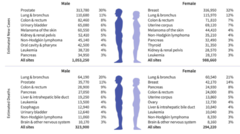
What is cancer?
- Our bodies develop from precise division, differentiation, functional activity, migration and programmed death of cells.
- Cancer is the abnormal growth and spread of cells.
- Arises from failure to control cell growth and migration
- very common
- deaths are increasing, but much less than predicted (by like 3mil) because of better medical intervention, education for the public, and encouraging early screening
Cancer is a genetic disease
- The genetic information encoded in our genome provides the instruction for growth and development.
- Changes in this genetic code can lead to aberrant instructions that causes cancer.
Tumor
Describes an abnormal growth of cells which can be benign (not cancer bc it can't spread) or malignant (cancerous bc it has potential to spread)
Metastasis
The process of forming of new colonies of tumor in distant
organs/tissues.
Benign tumors
Benign tumors do not invade or metastasize other tissues
- Confined to original site of the body.
- Clearly defined and intact boundaries.
- Often physically separated from surrounding tissue by a capsule of connective tissue.
- Cells often resemble the appearance of normal cells
A benign tumor is not a cancer. However, a benign tumor can acquire further genetic mutations to become a malignant tumor.
Malignant tumors
Malignant tumors have the potential to invade and/or metastasize
- Poorly defined boundaries that can exhibit disruption with infiltration of cells into surrounding tissue.
- Malignant cells often exhibit more abnormal appearances including large nucleus, loss of normal cellular structures, and loss of normal organization with neighboring cells
- A malignant tumor = cancer (terms can be used interchangeably)
'Malignant' describes a functional property of the tumor, and a tumor does not have to have formed any metastases to be classified as malignant. The histological appearance of the primary malignant tumor often correlates with its potential to metastasize